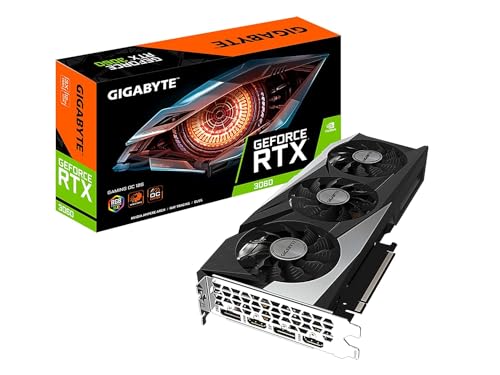
For 1440p esports in 2026, the RTX 3060 12GB remains the value sweet spot, and it's not particularly close at its price. Competitive titles are built to run fast on modest hardware, and the 3060's 12GB of VRAM plus solid 1440p rasterization keeps the games that actually matter for ranked play — CS2, Valorant, League, Overwatch 2, Apex, Dota 2 — well above the refresh rates that high-Hz 1440p monitors demand. If your goal is high, stable frame delivery in esports rather than maxed-out AAA eye candy, this is the card to beat.
🛒 The pick: MSI GeForce RTX 3060 Ventus 2X 12G — around $399 for a known-good, in-stock card. Verify current pricing before buying, since GPU street prices move.
Why the RTX 3060 12GB for esports specifically
Esports performance is about consistency, not peak averages. The 3060 12GB delivers frame times steady enough that a 144 Hz or 165 Hz 1440p panel stays fed in the titles people grind, and its 12GB framebuffer means you're not dropping textures or stuttering when a game's VRAM use creeps up patch over patch — a real advantage over 8GB cards that look cheaper on paper. For a 1440p competitive rig, headroom and stability beat a few extra frames you'll never see on a 60 Hz display.
Real-world frame expectations at 1440p
These are the numbers that matter for ranked play, at competitive (not ultra) settings:
| Title | 1440p competitive settings | Experience on RTX 3060 12GB |
|---|---|---|
| CS2 | Low–medium | Comfortably above 144 fps |
| Valorant | High | Well past 200 fps |
| League of Legends | High | Effectively framerate-capped |
| Overwatch 2 | Medium | 144 fps class |
| Apex Legends | Medium | ~120–144 fps |
| Fortnite | Performance mode | 144 fps class |
The pattern is clear: the truly competitive titles are CPU- and engine-light enough that the 3060 12GB drives a high-refresh 1440p monitor in all of them. The only games that push it are AAA shooters running at max settings, which isn't what an esports rig is optimized for.
Settings that matter more than the GPU
In competitive play, your settings profile does more for frame consistency than another tier of GPU. Cap your framerate a few frames below your monitor's refresh to keep latency low and frame pacing even, disable motion blur and depth of field, and drop shadow and volumetric quality first — they cost the most frames for the least competitive value. Keep textures reasonably high (you have 12GB, use it) and you'll have crisp, readable visuals with the smooth delivery that wins gunfights.
Pair it correctly
A 1440p esports build is only as good as its weakest link. Pair the 3060 with a high-refresh 1440p monitor and a CPU that won't bottleneck competitive titles — a modern six- or eight-core chip is plenty. Fast storage shortens map loads but doesn't affect in-game frames. The point of diminishing returns at this resolution is the GPU, which is exactly why the 3060 12GB's price-to-performance is so compelling for ranked players.
When to step up instead
If you also play AAA single-player games maxed at 1440p, or you're eyeing 4K, the 3060 12GB isn't the right call — a higher tier earns its cost there. But for a dedicated 1440p high-refresh esports machine, spending more buys frames past what your monitor and your eyes can use. Buy the 3060 12GB, put the savings into a better monitor and a comfortable mouse, and you'll climb faster than a pricier GPU would take you.
RTX 3060 12GB vs the obvious alternatives
For an esports-first 1440p rig, the 3060 12GB's competition splits into "cheaper with less VRAM" and "pricier with more frames you can't use." The 8GB cards in its price neighborhood look similar on a spec sheet but give up the framebuffer headroom that keeps frame pacing clean as titles grow — a real long-term liability for a card you want to keep for several seasons. Step up a tier and you'll pay meaningfully more for averages that a high-refresh 1440p monitor in competitive titles simply won't surface; in CS2 or Valorant you're already past your panel's refresh, so the extra silicon idles. That squeeze — more useful VRAM than the cheaper cards, more relevant performance-per-dollar than the pricier ones — is exactly why the 3060 12GB has stayed the value anchor for competitive 1440p.
The 12GB framebuffer is a longevity play
Buying for esports means buying for consistency across years of patches, and VRAM is the spec that ages worst on budget cards. Titles trend upward in texture and asset budgets every season, and an 8GB card that's fine today can start swapping textures and hitching tomorrow. The 3060's 12GB gives you margin: you can run high textures (which are nearly free on frame rate) and keep frame times flat well into the future. For a ranked player who upgrades the monitor and mouse more often than the GPU, that headroom is worth more than a marginal average-fps bump from a smaller-buffer card.
Frequently asked questions
Is the RTX 3060 12GB enough for 1440p in 2026? For esports, yes. Competitive titles run well above high-refresh thresholds at 1440p on the 3060 12GB. For maxed AAA games at 1440p, a higher tier is a better fit.
Why 12GB and not an 8GB card? The 12GB framebuffer keeps textures and frame pacing stable as games grow their VRAM use over time, which matters more for long-term consistency than a small average-fps edge.
What should I pair with it for esports? A high-refresh 1440p monitor and a modern six-/eight-core CPU. Storage speed helps load times but not in-game frame rate.