Yes — a CompactFlash card can replace the IDE hard drive in a Windows 98 PC. CF and IDE/ATA share the same electrical signaling, so a passive CF-to-IDE adapter lets a modern card boot Win98 as a silent, cool-running, shock-tolerant fixed disk. The trick is picking a card that presents itself as a fixed disk (not removable media), keeping partitions inside the era's FAT32 limits, and imaging it on a modern PC first.
Why swap a period drive for CompactFlash
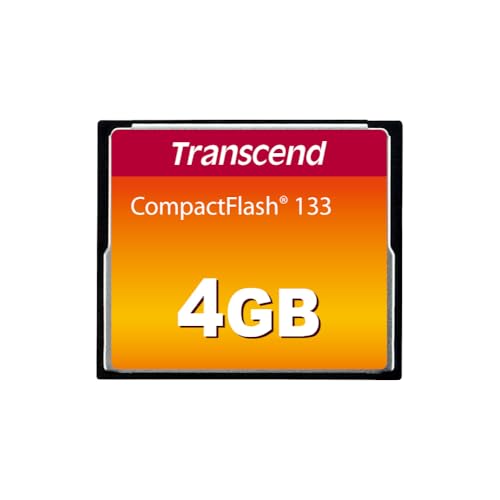
Vintage IDE hard drives — the 4GB to 40GB models that shipped in Pentium II and III machines — are a ticking clock. Bearings dry out, stiction pins the spindle after long storage, and single-platter failures wipe an entire retro install. Even the drives that still power up in 2026 hum at levels that ruin the "silent sleeper" aesthetic most retro builders are chasing. Swap in a Transcend CF133 CompactFlash card behind a $10 adapter and the boot drive drops to zero decibels, generates no heat, and shrugs off transport.
The signaling is the interesting part. CompactFlash was designed in the 1990s to speak PC Card and true IDE natively, which is why a passive adapter — just wires, no controller — works. A period BIOS enumerates the CF card as an IDE hard drive, auto-detects the geometry, and boots FDISK, DOS, and Windows 98 without any additional drivers. There is nothing to install on the OS side, which is why this trick keeps a period-correct install running when the original spinner finally dies.
The tradeoffs are worth naming up front. CF has finite write endurance, so a card getting hammered by heavy swap or logging will wear out faster than a hard drive would (though most retro workloads write very little). Older cards top out around 30 MB/s, which is faster than the vintage drive most people are replacing but slower than a proper SATA SSD. And not every CF card behaves the same way — some enumerate as removable, which upsets DOS and Windows 98 boot loaders. Pick the right card and the retrofit is nearly foolproof.
Key takeaways
- CF and IDE share signaling, so a passive CF-to-IDE adapter turns any CompactFlash card into a fixed disk for a period board.
- Fixed-disk mode matters — a CF card that enumerates as removable media confuses Win98 boot code and Setup.
- Stick to partitions well inside FAT32's practical limits (a 4GB or 8GB primary is a safe target) to avoid BIOS and OS geometry quirks.
- Pre-image the card on a modern PC with a USB-to-IDE adapter — dragging files across a 10 Mb/s vintage NIC is punishment.
- Write endurance is the ceiling. Retro workloads rarely stress it, but keep a disk image backed up.
- A modern SSD behind a SATA-to-IDE bridge is the higher-durability option when write volume matters.
What you'll need
Three parts and a modern PC. Total spend around $60 including the adapter and cable.
- A CompactFlash card that supports fixed-disk mode. The Transcend CF133 4GB CompactFlash card is the retro-community favorite because Transcend's industrial-line CF firmware defaults to fixed-disk enumeration, has MLC NAND rather than the more failure-prone TLC found in cheap cards, and clocks in around 30 MB/s reads. 4GB is generous for a Win98 install with a full DOS-era game library.
- A passive CF-to-IDE adapter. These are cheap, unbranded, and universally available. A 40-pin variant fits a full-size vintage IDE cable and a Molex power lead; a 44-pin variant fits laptop or Compact IDE headers.
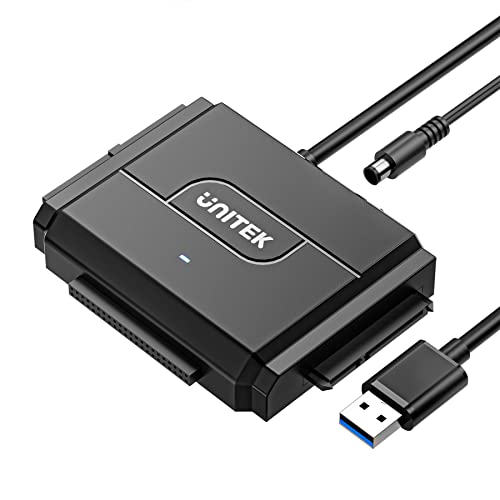
- A USB bridge for a modern PC. The Unitek SATA/IDE-to-USB 3.0 adapter reads both SATA and IDE (and, via the same 40-pin IDE lead plugged into a CF-to-IDE adapter, CompactFlash) on any current machine. This is how you image the card, copy files, or clone a working install from another disk.
Optional: keep an ISO or floppy image of Win98 Setup handy, plus a period FDISK/FORMAT boot disk if you plan to partition inside the retro machine rather than pre-partitioning on the modern host.
Which CF card: why fixed-disk mode and controller matter
If you have not built a CF-as-IDE rig before, this is the one detail worth pausing on. CompactFlash cards report to the host as either "removable" or "fixed" media. Removable-mode cards let the OS eject them, which is exactly wrong for a boot drive — DOS's boot record and Windows 98's Setup wizard both stumble when the "hard drive" they are installing to identifies as ejectable.
Industrial and prosumer CF cards from Transcend, SanDisk (older Ultra II and Extreme III lines), and a few Delkin models default to fixed-disk mode. Cards aimed at digital cameras — the ones stocked at big-box electronics stores — default to removable, and there is no universal way to flip the bit from Windows. This is why retro builders converge on Transcend CF133 and similar: the firmware ships correctly for the use case.
The other spec that matters more than raw megabytes per second is the controller's tolerance for older IDE modes. UDMA-2 (33 MB/s bus) is what most Pentium II and III chipsets negotiate. A card that only exposes UDMA-4 or higher may still work at PIO Mode 4 (16 MB/s) but you'll take a real speed hit. Transcend's CF133 line explicitly lists UDMA-4 compatibility, which is the sweet spot for a Socket 370 board.
Random-write performance is the other real-world axis. Windows 98 hits the swap file constantly; a card with weak random writes will make the OS feel sluggish even if sequential reads look great. MLC-NAND industrial cards (as opposed to today's consumer TLC/QLC) show far more consistent latency, which is why they cost more per gigabyte.
Storage options at a glance
| Option | Capacity | Interface | Silent | Notes |
|---|---|---|---|---|
| Transcend CF133 CompactFlash | 4–32 GB | CF via passive adapter | Yes | Fixed-disk mode, UDMA-4, MLC — the reference retro choice |
| Consumer CF (no-name) | 8–128 GB | CF via passive adapter | Yes | Often removable-mode; unreliable as boot device |
| SD-to-IDE with SD card | 8–256 GB | SD via active bridge | Yes | Cheap; bridge quality varies wildly |
| SATA SSD + SATA-to-IDE bridge | 120 GB+ | SATA via active bridge | Yes | Highest durability; overkill for a period install |
| Period IDE hard drive | 4–40 GB | IDE native | No | Authentic sound, aging bearings, at end of life |
The Win98 gotcha: partition size limits and FAT32 setup
Windows 98 Second Edition supports FAT32 up to 2 TB in principle, but the era's BIOS and Setup wizard rarely tolerate that far. Two concrete limits bite in practice.
LBA translation. Vintage BIOSes cap what they can auto-detect at 8.4 GB, 32 GB, or 128 GB depending on vintage. A Pentium III board from 2000 usually stops at 32 GB unless you flashed a late BIOS update. If you drop a 64 GB CF card into an early board, the BIOS may only see 32 GB and Windows 98 Setup will report the drive with the truncated geometry — usable but confusing.
FDISK's 64 GB reporting bug. Windows 98 SE's FDISK has a well-known integer overflow that mis-reports drives over 64 GB. There is a Microsoft-issued patched FDISK (KB263044) that fixes it, but you will need it on your boot floppy or the partition table you create will be wrong.
Cluster-size scaling. FAT32 uses larger clusters on larger partitions, which wastes space with lots of small files (a Win98 install is exactly that). A 4 GB partition uses 4 KB clusters; an 8 GB partition uses 8 KB clusters. For a boot drive, prefer smaller partitions.
The pragmatic recipe: buy an 8 GB or 16 GB CF card, create a single 4 GB primary partition as active, and leave the rest unformatted or use it as a data partition. That keeps FDISK and Setup in territory they were designed for.
Imaging and moving files with a USB CF/IDE adapter
The fastest way to get a working Win98 install onto CF is to skip the retro machine entirely for the first pass. Plug the CF card into a CF-to-IDE adapter, plug that into an IDE cable, connect the cable to a Unitek USB-to-IDE bridge, and mount the card on your daily-driver PC as a removable USB disk.
From there you have three good workflows:
- Restore a disk image. If you already have a
.imgor.vhdof a working Win98 install (from an emulator, or a previous CF you cloned), write it to the card withddon Linux,Win32DiskImageron Windows, orRufus. Boot the retro machine, and Windows 98 auto-detects the different chipset on first boot and reinstalls drivers. - Fresh install from a modern host. Copy the Win98 Setup files (
\WIN98from the CD) directly to the CF's root, boot the retro machine off a floppy or CF-boot loader, and runSETUP.EXEfrom CF. This eliminates the slow CD-ROM drive from the equation and cuts install time to a few minutes. - Clone an existing drive. If the retro machine still has a working IDE drive you want to migrate off, connect the source and the CF card to the modern host at the same time (source via the Unitek bridge, CF via a second IDE adapter or a native CF reader) and use
ddor a Windows partition tool to clone.
The winning move is doing partition prep on the modern host too. Create the FAT32 partition, mark it active, and copy the Setup files before the CF ever sees the vintage motherboard. Every step you can push onto a modern USB 3.0 workflow saves minutes over doing it inside DOS.
Reliability: CF write wear vs a period hard drive
CompactFlash cards use the same NAND flash that lives inside every SSD and phone. Each cell has a finite number of program/erase cycles — typically 3,000 to 10,000 for MLC, 500 to 3,000 for consumer TLC. For a Win98 boot drive, that means the wear question is entirely about how much you write, not how long the card sits.
Real retro workloads are surprisingly gentle. Windows 98 does write to swap and registry, but the daily write budget for a machine used for a few hours of DOS gaming, some browsing, and light document work is measured in tens of megabytes. Even at the pessimistic end — 100 MB per day, 365 days a year — a 4 GB CF card with 3,000 write cycles per cell has an endurance ceiling somewhere in the hundreds of years for uniform wear. In practice you'll get a decade of daily use before hitting realistic limits.
Period IDE hard drives are the opposite failure mode: they degrade with time rather than use. Bearings dry out during storage, spindle motors seize on power-up after long idle periods, and the platters themselves lose magnetic signal strength over multi-decade timescales. A CF card that sat in a drawer for 15 years will boot immediately; a 20-year-old spinner may not spin.
Where CF genuinely loses is heavy write scenarios: video capture, database work, or a machine used as a build server. If your retro build is doing any of that, spring for a modern SATA SSD like the Crucial BX500 1TB behind a SATA-to-IDE bridge instead. The BX500's wear-leveling is far more sophisticated and its endurance rating is measured in hundreds of terabytes written, not hundreds of gigabytes.
Common pitfalls
- Skipping the fixed-disk check. Buying a "cheap" CompactFlash card from a big-box store, discovering after install that it enumerates as removable, and having to redo everything on a Transcend or SanDisk industrial card is a rite of passage. Buy the right card the first time.
- Trusting the BIOS auto-detect. Some vintage BIOSes lie about CF card geometry and report a smaller-than-actual capacity. If Setup shows less space than the card's label says, check whether a BIOS update is available before you commit the install.
- Running the FDISK that shipped in 1998. The 64 GB bug is real. If you use anything larger than 64 GB, grab the patched FDISK from Microsoft's KB (or partition on a modern host and skip the whole issue).
- Ignoring the Molex power lead. Many CF-to-IDE adapters need Molex power even though CompactFlash cards are 3.3 V. The adapter regulates the rail internally; if you forget to plug the Molex in, the card sits dead on the bus.
- Using the CF as a swap-heavy VM host. CompactFlash is a boot and application drive, not a scratch disk. Move heavy write workloads elsewhere.
When NOT to swap to CompactFlash
Skip CF if your retro build has any of these characteristics:
- The board is Pentium 4 or later with a functional SATA header. By that generation, a proper SATA SSD like the Crucial BX500 is a drop-in that keeps native SATA speed and modern durability. There's no reason to route through IDE.
- You want the authentic acoustic experience. Some retro builders explicitly want the hard-drive whine and seek chatter as part of the period feel. CF removes that entirely.
- Your target OS is Windows XP or NT with heavy paging. XP thrashes swap in ways Win98 does not, and consumer CF cards will feel sluggish. Either move to SSD-over-IDE or add enough RAM to disable the pagefile.
- You're archiving irreplaceable data on the boot drive. CF is durable but single-media; a real SSD with vendor-supported firmware and RMA coverage is a better long-term host for anything you cannot re-image.
Verdict: when CF is the right retro storage
CompactFlash is the right choice for a period-correct Pentium II or III sleeper build where silence, cool operation, and shock tolerance matter more than raw throughput, and where the workload is Win98 gaming, DOS productivity, or light general use. The Transcend CF133 is the specific card to buy because its firmware defaults to fixed-disk mode and its MLC NAND has real endurance headroom.
For a later Pentium 4 build with SATA, or for a machine that will do heavy write workloads, a modern SATA SSD behind a bridge is the more sensible choice. And for the highest-fidelity retro experience where the hard-drive sound is part of the point, a period IDE drive is what you want — until the bearings tell you otherwise.
Bottom line
A Transcend CF133 CompactFlash card plus a $10 passive CF-to-IDE adapter is the fastest, cheapest way to bring a Pentium II or III Win98 retro build into a silent, reliable state. Do the imaging on a modern PC through the Unitek USB-to-IDE bridge, keep the boot partition small enough for era-appropriate FAT32, and back up your install as a disk image so a bad card is a 10-minute recovery rather than a rebuild.