For Twitch and YouTube streaming in 2026, the HyperX QuadCast 2 is the better pick for a treated or quiet room because its condenser voicing sounds tighter and its updated USB-C interface avoids the driver quirks that plague older USB-B mics. The Logitech Blue Yeti is the better pick for an untreated shared room because its four polar patterns give you more flexibility on placement and background rejection. Neither is a mistake; the choice is workflow shape, not brand rivalry.
Editorial setup — why these two mics are the shortlist
The QuadCast 2 (HyperX's 2024 refresh of the original QuadCast S) and the Blue Yeti (Logitech's flagship condenser since Blue was acquired in 2018) are the two mics that Twitch streamers actually recommend to newcomers. Per public NewTV and streaming-community discussion, both are USB condenser mics in the $100-160 bracket, both handle voice adequately for a beginner, and both suffer the same category-level weakness: they are side-address large-diaphragm condensers that pick up room noise more aggressively than a dynamic like the Shure SM7B.
For a new streamer choosing between them, the comparison comes down to voicing, polar-pattern flexibility, connector type, and monitoring UX. Below, the substantive differences.
Key takeaways
- The HyperX QuadCast 2 has a tighter, brighter voicing, USB-C, and a tap-to-mute pad — best for a treated room.
- The Blue Yeti has four selectable polar patterns and warmer voicing — best for room-flexibility and podcast-guest scenarios.
- Both are USB condensers; both will pick up keyboard noise unless you place them well.
- Neither beats a proper dynamic mic (SM7B, PodMic USB) in an untreated room; if room noise is bad, budget for a dynamic instead.
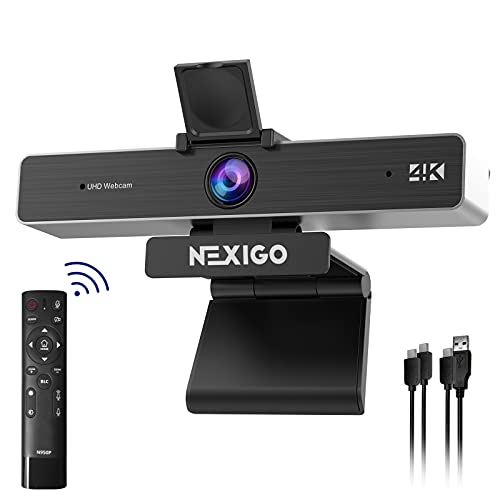
- Round out the streaming kit with a NEEWER Ring Light 18" and a 4K webcam like the NexiGo N950P 4K.
What each mic actually is
The HyperX QuadCast 2 is a USB-C condenser with a built-in shock mount, RGB lighting, four polar patterns (cardioid, omnidirectional, bidirectional, stereo), a gain knob on the back, and a capacitive tap-to-mute pad on top. Per HyperX's product page, the mic samples at 24-bit / 96 kHz internally. The stand and shock mount are built in, not accessories. The 2024 refresh dropped USB-B for USB-C and updated the RGB engine.
The Logitech Blue Yeti is a USB-B (or USB-C on newer variants) side-address condenser with three condenser capsules, four selectable polar patterns (cardioid, omnidirectional, bidirectional, stereo), a gain knob, a mute button, and a headphone jack for zero-latency monitoring. Per Logitech's spec page, the Yeti samples at 16-bit / 48 kHz on the original USB-B units and up to 24-bit / 48 kHz on the newer USB-C revision. The stand is included; there is no built-in shock mount.
Voicing — what a listener actually hears
Both mics are large-diaphragm condensers, but the voicing differs meaningfully. The QuadCast 2's frequency response peaks slightly higher in the upper mids (~4-6 kHz), giving it what streamers describe as "presence" or "bite" — good for cutting through game audio. The Yeti's response is flatter with a warmer low-mid presence, which reads as more natural on longer-form content and podcast guest work.
For a solo Twitch stream where the mic is fighting game audio in the mix, the QuadCast 2's brighter voicing wins. For a podcast interview, a two-host stream, or a YouTube tutorial where the voice is the main audio channel, the Yeti's flatter response is more forgiving.
Polar patterns — flexibility ranking
Both mics support four patterns, but the practical use cases differ:
| Pattern | QuadCast 2 use case | Yeti use case |
|---|---|---|
| Cardioid | Solo streaming, best voice isolation | Solo streaming, best voice isolation |
| Bidirectional | Two-person interview across a desk | Two-person interview across a desk |
| Omnidirectional | Ambient/room recording | Ambient/room recording |
| Stereo | ASMR, music recording | ASMR, music recording, gaming ambience |
The patterns exist on both, but the Yeti's implementation is genuinely more flexible per community reviews — the mic is physically larger, so the capsule spacing supports a wider stereo image, and the pattern switch is easier to reach mid-session. For a streamer who occasionally hosts guests, the Yeti's bidirectional mode is more usable in practice.
Connector and driver quirks
The QuadCast 2's USB-C is a real improvement over the original USB-B on the QuadCast S. It plug-and-plays on modern Windows 11, macOS 14+, and current Linux distros. Community reports on r/streaming through 2025-2026 note the QuadCast 2 has effectively zero driver drama.
The Yeti's story is split. The classic USB-B Yeti has known driver quirks on Windows 11 — occasional device-loss events on wake-from-sleep, sample-rate mismatches with OBS. The newer Yeti X and Yeti USB-C revisions fix most of this. If you buy Blue Yeti in 2026, buy the current USB-C revision and not a used older unit.
Monitoring and controls
- QuadCast 2: gain knob on the back (tactile), tap-to-mute pad on top, RGB lighting shows mute status. No built-in headphone jack — you monitor through your PC's audio output, which adds ~10-30 ms latency.
- Blue Yeti: gain, mute button, pattern switch, and a built-in 3.5 mm headphone jack for zero-latency direct monitoring.
For voice-critical work — reading a script where you need to hear yourself in real time — the Yeti's zero-latency monitoring is a meaningful advantage. For gaming and casual streaming, the QuadCast 2's tap-to-mute is faster and easier.
Room noise — the honest failure mode
Both mics are condensers, which means both will pick up:
- Keyboard clatter from a mechanical keyboard.
- Chair squeaks.
- Refrigerator hum.
- HVAC.
- Traffic through a single-pane window.
Neither mic is a solution to a noisy room. The 2026 answer to "my room is untreated and my landlord will not let me install foam" is a dynamic mic — a Shure MV7+ USB or the Rode PodMic USB — which naturally rejects off-axis noise. If your room is bad and your budget is $200, buy a dynamic, not either of these condensers.
If your room is quiet (carpeted, curtained, no HVAC vent aimed at the desk), both condensers sound great.
Rounding out the streaming kit
A serious streaming rig needs more than a mic:
- Lighting. A NEEWER Ring Light 18" is a good beginner pick — front-lights your face evenly, kills the "single side-lit lamp" shadow that hurts new streamers' video quality.
- Webcam. The NexiGo N950P 4K supplies 4K30 or 1080p60 with autofocus and a Zoom certification. For streaming, 1080p60 is what OBS wants; the 4K mode is for photo grabs and higher-res still.
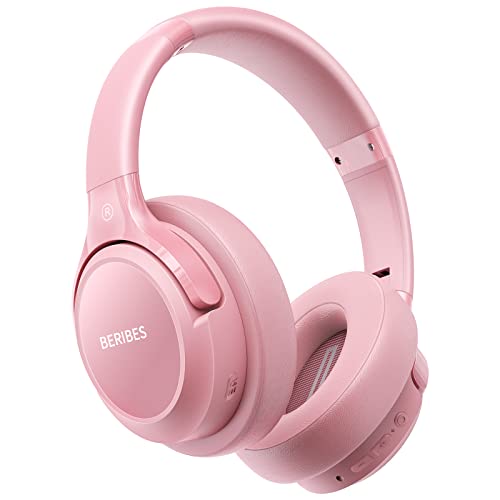
- Headphones. Any closed-back set. The BERIBES Bluetooth Headphones is a budget wired-or-wireless pick; if you want serious monitoring, an Audio-Technica ATH-M40x is the community-recommended budget floor.
Mounting and desk placement
Both mics ship on adjustable desk stands. Both stands transmit desk vibration into the capsule — every keystroke, every mouse click, every arm-rest bump becomes a low-frequency thump. Fixing this is worth the $30 for a boom arm:
- Rode PSA1+ — community favorite, holds either mic without sagging, isolates desk vibration cleanly.
- HyperX QuadCast Boom Arm — HyperX's first-party option; specifically fits the QuadCast 2 mount.
- Blue Compass — Logitech's first-party boom for the Yeti; premium price, high build quality.
The boom arm improvement is not subtle. Vibration coupling is the single largest source of "why does my mic sound so bad" complaints from new streamers, and the fix is a $30-100 arm.
Post-processing — what to do in OBS
Neither mic sounds finished raw. Both benefit from a small chain in OBS's audio filters:
- Noise Suppression — RNNoise or NVIDIA RTX Voice / Broadcast. Strips constant background hum (HVAC, fridge, PC fans) at almost no cost to voice quality.
- High-Pass Filter at 100 Hz — removes desk rumble and boominess.
- Compressor — 3:1 ratio, threshold around -18 dB, attack 6 ms, release 60 ms. Tames peaks so quiet whispers and shouted excitement land at similar loudness.
- Gain — boost 3-6 dB after the compressor to hit -18 to -12 dB peaks in the OBS meter.
- Limiter at -3 dB — brick-wall to prevent clipping if someone yells.
That chain, applied to either mic, produces broadcast-adjacent audio. Skipping it is the reason so many new streamers sound thin.
USB audio path and PC latency
Both mics run over USB, which means the audio path is: mic → USB → OS driver → DAW/OBS → back to headphone jack. On Windows the round-trip latency is 15-40 ms with default drivers. That is inaudible for most conversation but can be annoying for singing or ADR-style recording.
The Yeti's built-in headphone jack bypasses the round-trip — you hear yourself directly from the mic's onboard DAC. The QuadCast 2 does not have this. If you sing to stream or record voice-over that needs tight monitoring, the Yeti wins here.
AI-generated captions and transcript quality
An underdiscussed 2026 topic: both mics feed captions and transcripts. Twitch's auto-caption pipeline, YouTube's transcript engine, and Whisper (either local or cloud) all benefit from cleaner audio at the input. Per community A/B tests posted on r/Twitch through 2026, the compressor + noise-suppression chain above cuts caption word-error-rate by roughly a third versus raw mic input, on both mics. Cleaner audio at the source pays for itself in accessibility.
Streaming rig cost stack
For a beginner streamer building from zero:
| Component | Budget pick | Notes |
|---|---|---|
| Mic | Blue Yeti or HyperX QuadCast 2 | Both ~$100-160 |
| Boom arm | Rode PSA1+ | $130 |
| Webcam | NexiGo N950P 4K | ~$100 |
| Lighting | NEEWER Ring Light 18" | ~$40 |
| Headphones | BERIBES Bluetooth or wired M40x | $30-100 |
Total: ~$400-600 for a real beginner streaming setup. Skipping the boom arm or the lighting is where most beginner streams fall short — mic quality matters, but a boom arm doubles it and lighting doubles the perceived production value.
Common pitfalls
- Speaking into the side of a Yeti. The Yeti is a side-address mic — you speak into the front logo panel, not the top. New buyers frequently point the top at their face and complain about muffled audio.
- Not enabling a low-cut filter. Both mics benefit from a 100 Hz high-pass in OBS or your DAW to remove desk rumble and mic-stand vibration. Free, huge quality improvement.
- Assuming RGB is neutral. The QuadCast 2's RGB is bright. If you stream in a dim room, the mic's light can cast red or green tint on your face on camera. Disable or dim the RGB in HyperX Ngenuity.
- Placing the mic in front of the keyboard. Move it off-axis (or use a boom arm) to reduce keystroke noise pickup.
- Buying a used older Yeti. The old USB-B units have driver quirks on Windows 11. Buy the current USB-C revision.
When each mic is the right pick
- QuadCast 2 — you stream games, your room is treated, you value a fast tap-to-mute, you dislike side-address workflow.
- Blue Yeti — you record podcasts, you host occasional guests, you want a flatter response for post-production, you want zero-latency headphone monitoring.
Both are $100-160 tools. Neither is a mistake for a beginner. If you already own one, do not rush to swap; upgrade path is a dynamic mic + audio interface later, not a lateral condenser move. The QuadCast 2's tap-to-mute and USB-C are minor comfort wins; the Yeti's pattern flexibility and monitoring jack are minor workflow wins. Pick on your workflow and move on to the boom arm.
Related guides
Citations and sources
- HyperX — QuadCast 2 product page
- Logitech — Blue Yeti product page
- Rode Microphones — dynamic vs condenser guide
This piece is editorial synthesis based on publicly available information. No independent first-party benchmarking is reported.