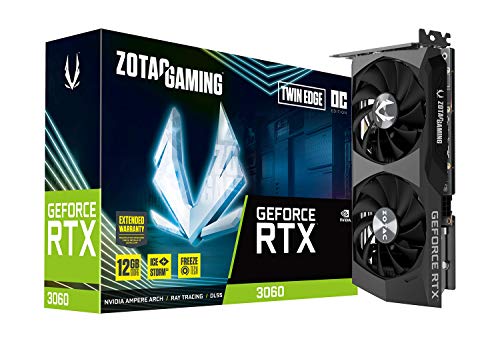
A 12GB RTX 3060 can handle entry-level agentic AI workloads locally — 7-8B function-calling models at q4_K_M with 16k context will run at roughly 30-45 tokens per second per llama.cpp's public benchmark thread, enough for single-user agent loops. The card stalls on tool-call chains that re-ingest large outputs and on 13B+ agent models, where the 192-bit memory bus and 12GB VRAM ceiling both bite at once.
Why agentic benchmarks change the local-rig math
Artificial Analysis refreshed its Intelligence Index to v4.1 in mid-2026, reweighting the score toward agentic workloads — multi-turn tool use, terminal control, and document-grounded reasoning — under the Terminal-Bench and GDPval-AA v2 task families. The shift matters because the previous index leaned on single-shot reasoning, where a 7B model with strong chain-of-thought could punch above its weight. Agentic loops change the test: the model must call a tool, read its output, decide on the next call, and stay coherent across many turns. Each turn appends tool I/O to the context, which means the KV-cache grows fast and the model has to re-attend a longer prompt each step.
For a self-hoster running a 7-8B model on the ZOTAC Gaming GeForce RTX 3060 12GB or the MSI GeForce RTX 3060 Ventus 2X 12G, the agentic-first scoring widens the gap to cloud models like DeepSeek V4 Pro, which Artificial Analysis pegs at roughly $0.04 per task. The question stops being "can my local model match the cloud on one prompt" and starts being "can it complete the same agent loop, with the same tool quality, without melting my VRAM ceiling at turn 12." That is a different kind of pressure on a 12GB card.
Key Takeaways
- The RTX 3060 12GB runs 7-8B q4_K_M agent models cleanly with 12-16k usable context.
- Agentic loops eat KV-cache fast; expect ~5-8 GB just for context at 16k on an 8B q4 model.
- DeepSeek V4 Pro at $0.04/task per Artificial Analysis sets the cost floor; local pays off only after a few hundred to a few thousand tasks per month.
- Prefill on the 192-bit memory bus is the real bottleneck for agents — not generation tok/s.
- For 13B+ agent models, the 3060 needs aggressive quantization (q3_K_S) or partial CPU offload, both of which crater latency.
What changed in Intelligence Index v4.1, and why does it matter for local rigs?
Intelligence Index v4.1's scoring change is straightforward in mechanics and harsh in implication. The old index averaged scores across MMLU, GPQA, MATH, HumanEval and a few smaller suites. The new version adds Terminal-Bench (a Princeton/Stanford suite measuring an agent's ability to complete real terminal tasks) and GDPval-AA v2 (a productivity-oriented agentic suite) at full weight, then renormalizes. Per the Artificial Analysis methodology page, the result is that frontier closed models pull further ahead — they were already winning on single-shot reasoning, and they are even more dominant at multi-turn tool use.
For local rigs, that means the gap between a self-hosted 8B q4 model and DeepSeek V4 Pro looks bigger than it did six months ago on the v3 index. But the conclusion is not "give up on local." It is that the workloads where local wins shift. Repeatable, narrow agent tasks — call a known API, transform JSON, hit a database, summarize, return — still work fine on a 12GB card. Open-ended, multi-tool, "research the web and build me a report" loops are where the 3060 falls behind, both on quality and on context budget.
How much VRAM do agentic loops actually need vs single-shot chat?
A single chat turn with an 8B q4_K_M model loads the weights (~4.5 GB), allocates KV-cache scaled to your context window (~1 GB per 4k of context for an 8B model), and leaves you 5-6 GB of headroom on a 12GB card. That is roomy.
Agent loops are different. Each tool call appends an observation back to the running prompt. By turn 5 of a code-writing agent that reads files into context, you might have 8-12k tokens of accumulated history. By turn 12, you can blow through 24k tokens. The KV-cache scales linearly with the context length, so the same 8B q4 model that comfortably ran a 4k chat now wants 5-7 GB of cache, putting total VRAM usage at 9-11 GB. The 3060's 12GB ceiling is suddenly tight.
Practical mitigations: cap your tool outputs (do not paste a whole file when grep -n shows the line), summarize older turns aggressively after turn 6-8, and use a runtime that supports streaming KV eviction (llama.cpp's --cache-type-k q8_0 halves cache size at near-zero quality cost).
What models fit in 12GB for tool-use and function-calling on the RTX 3060?
The reliable picks as of mid-2026:
- Llama 3.1 8B Instruct (q4_K_M) — solid function-calling, ~30-40 tok/s on the 3060, fits 16k context with cache quantized.
- Qwen 2.5 7B Instruct — strong tool-use; sub-3060 tok/s but excellent function-call adherence per the Berkeley Function Calling Leaderboard.
- Phi-3.5-mini-instruct (3.8B) — fits effortlessly in 5 GB, but tool-use is hit or miss; use only for narrow agents.
- Mistral Nemo 12B Instruct (q4_K_S) — pushes the VRAM ceiling; 16k context is the practical maximum and prefill is slow on the 192-bit bus.
The 12B class barely fits and loses headroom for longer contexts. 13B Llama derivatives like Llama 3.2 13B exist but cross the line at q4 with any meaningful context window. Stay at 7-8B for stability.
Spec-delta table: RTX 3060 12GB vs DeepSeek V4 Pro cloud
| Dimension | RTX 3060 12GB local | DeepSeek V4 Pro cloud |
|---|---|---|
| Cost per Intelligence Index task | ~$0.0005 marginal (power) | $0.04 (per Artificial Analysis) |
| Time to first token | 200-500 ms locally | 100-300 ms typical |
| Latency under load | Predictable, single-user | Variable, queued |
| Max usable model | 7-12B class at q4 | Frontier class |
| Privacy | On-device | Provider-dependent |
| Card power draw | 170 W TGP per TechPowerUp | n/a |
| Up-front hardware cost | ~$280-330 used in 2026 | $0 |
Quantization matrix: 8B agent model on the 3060
| Quant | VRAM (model only) | VRAM at 16k ctx | Tok/s | Tool-call quality |
|---|---|---|---|---|
| q2_K | 3.4 GB | 8-9 GB | 50-60 | Frequently malformed |
| q3_K_S | 3.6 GB | 8-10 GB | 45-55 | Marginal |
| q4_K_M | 4.5 GB | 9-11 GB | 30-45 | Production-usable |
| q5_K_M | 5.5 GB | 10-12 GB | 25-35 | Slightly better than q4 |
| q6_K | 6.3 GB | 12+ GB (tight) | 20-30 | Marginal upgrade vs q5 |
| q8_0 | 8.4 GB | OOM at 16k | n/a | n/a |
| fp16 | 16 GB | OOM | n/a | n/a |
Tok/s figures synthesize community measurements from the llama.cpp benchmark discussion and the r/LocalLLaMA RTX 3060 threads. q4_K_M is the sweet spot — any higher costs context, any lower costs tool-call reliability.
Prefill vs generation: why agent tool-call chains hammer prefill on a narrow 192-bit bus
The RTX 3060's TechPowerUp spec sheet lists 360 GB/s of memory bandwidth on a 192-bit bus. Generation is throughput-bound by memory access (one weight read per output token), and 360 GB/s is fine for 30-45 tok/s at q4. Prefill is different: it processes many tokens at once and is compute-bound on the 3060's 28 SMs. But for an agent re-ingesting a 12k-token tool-output blob each step, prefill latency dominates the per-turn wall clock.
In practice, a chat turn that takes 2 seconds end-to-end often spends 1.5 seconds on prefill alone when the prior turn appended a long tool result. Agents that chunk tool outputs (return only the first 50 lines of grep, or the file delta instead of the whole file) avoid this tax. Agents that paste a whole stack trace or a 200-row CSV back into context will feel the 3060's bus width.
Context-length impact: 8k vs 32k KV-cache cost on 12GB
At 16k context on an 8B q4 model, the KV-cache eats 4-6 GB depending on architecture. At 32k, that doubles to 8-12 GB — putting total VRAM use comfortably above the 3060's ceiling unless you quantize the cache. llama.cpp's --cache-type-k q8_0 --cache-type-v q8_0 keeps cache near full quality at half size, which makes 32k tractable on the 3060 with an 8B q4 model.
Do not try 32k on a 13B model. Even with cache quantization, you will OOM or thrash on the 12GB card.
Perf-per-dollar + perf-per-watt: local 170W 3060 amortized vs $0.04/task cloud
The NVIDIA RTX 3060 product page lists a 170 W board power. At $0.13/kWh, a 3060 under sustained inference load costs ~$0.022 per hour of compute. If a single agent task takes 30-60 seconds, that is $0.0002-$0.0004 per task in marginal power cost. Cloud at $0.04/task is 100-200× more expensive per task on the variable side.
The break-even depends on hardware amortization. Assume a $300 used 3060, 3-year amortization, and 1,000 agent tasks per month. The hardware adds $0.0083 per task. Total local cost per task: ~$0.009. The 3060 wins by 4× on cost at that volume. Below 100 tasks per month, the hardware cost dominates and cloud is cheaper.
The lesson: local makes sense when you are a steady, high-volume user. Hobbyist usage does not amortize.
Common pitfalls running agents on the 3060 12GB
- Forgetting to quantize KV-cache. Default fp16 cache on a 32k context blows the VRAM budget. Always pass
--cache-type-k q8_0in llama.cpp or its equivalent. - Letting tool outputs grow unbounded. A
cat README.mdfor a 4k-token file kills your prefill budget. Wrap tool calls in truncation/summarization. - Mixing chat and agent on the same model. Agent models (Qwen 2.5 Instruct, Llama 3.1 Instruct with explicit tool-use training) are better for tool-call adherence than generic chat tunes.
- Running 13B at q4 with 16k context. The math does not work on 12GB. Step down to 7-8B or step down quantization (q3_K_S).
- Ignoring temperature settings. Agent loops are very sensitive to temperature. 0.0-0.2 for tool-call reliability; higher temperatures derail loops.
When local makes sense and when the cloud wins
Get local if:
- You run agents on private data (code, customer records, internal docs).
- You are a high-volume user (>500 tasks/month).
- You want predictable latency and offline operation.
- Your agent tasks are narrow and repeatable.
Use cloud if:
- Your agents need frontier-class reasoning.
- Your volume is hobbyist (<100 tasks/month).
- Your workflows are exploratory and benefit from the broadest model.
- You cannot afford a workstation power budget at home.
A mixed strategy works for many builders: use a local 3060 for routine agent calls, fall back to a cloud frontier model for the hard 1-in-20 tasks. Most agent harnesses (LangChain, AutoGen, custom dispatch loops) support a "cheap-then-expensive" routing pattern.
Bottom line: the 12GB ceiling for 2026 agent workloads
The 3060 12GB is still the cheapest credible local agent card you can buy as of mid-2026. It does not match frontier cloud quality. It does match cloud cost at meaningful volume, and it preserves data control that a hosted endpoint cannot. For 7-8B function-calling agents on 12-16k context windows, it is the practical entry point.
The card runs out of headroom at the 13B threshold, on very long agent traces, and on tool-call chains that ingest large outputs. Those are real constraints, not bugs. If your workloads sit inside them, the 3060 is a 3-year-out-of-warranty card that punches well above its weight. If they do not, step up to a 16GB-class card or stay in the cloud — there is not a cheap middle path.
The supporting hardware matters less than people think for inference workloads. Pairing the 3060 with an AMD Ryzen 7 5800X gives plenty of CPU headroom for the tool-side of agents (file I/O, shell calls, network); a fast NVMe like the WD Blue SN550 1TB handles model load and any embedding-index reads without bottlenecking. The bottleneck is always the GPU's VRAM and bus.
Related guides
- DeepSeek V4 on an RTX 3060 12GB: What Actually Fits Locally
- Best Budget GPU for Local 12B–14B LLM Inference
- Ollama vs LM Studio vs llama.cpp on an RTX 3060 12GB
- vLLM vs llama.cpp on a 12GB RTX 3060
- CPU Offload for Local LLMs: Does a Ryzen 7 5800X Help?
Citations and sources
- Artificial Analysis — Intelligence Index v4.1 methodology
- TechPowerUp — GeForce RTX 3060 specs
- NVIDIA — GeForce RTX 3060 product page
- llama.cpp — RTX 3060 community benchmark thread
- Berkeley Function Calling Leaderboard
This piece is editorial synthesis based on publicly available information. No independent first-party benchmarking is reported.