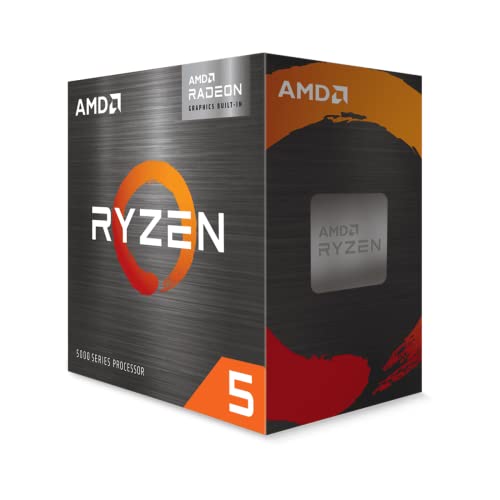
For a 2026 home lab, pick the Ryzen 5 5600G if you want the cheapest working box and the built-in graphics let you skip a discrete GPU; pick the Ryzen 7 5700X if you plan to run many VMs, containers, or workloads that reward the extra two cores and SMT threads. Both are excellent AM4 choices; the correct one depends on whether "cheap and quiet" or "more headroom for VMs" is the bigger requirement.
This synthesis is written for the reader who is one week to one month into building a home lab and is choosing the CPU that anchors an always-on box. AM4 remains the value platform in 2026 — DDR4 is cheap, boards are plentiful, and the Ryzen 5000 series delivers real performance without the DDR5-and-new-board tax of AM5. The relevant hardware pages are AMD's for the 5600G and 5700X, and phoronix.com's Phoronix benchmarks provide comparable Linux-workload measurements on both parts.
Key takeaways
- The 5600G integrates a Vega iGPU; the 5700X has no graphics. That single fact drives most of the decision.
- 5600G: 6 cores / 12 threads, 65W TDP, ~65-125W peak — the cheapest efficient box.
- 5700X: 8 cores / 16 threads, 65W TDP, ~90-140W peak — more parallel headroom.
- iGPU vs discrete GPU: the 5600G lets you skip the GPU entirely, saving cost, power, and slots.
- 5700X wins for VM density, containerized workloads, and any 24/7 job that benefits from more threads.
Step 0: what is your home lab actually for?
The right CPU depends on the workload profile, so a moment of honesty helps:
- Light services (Pi-hole, Home Assistant, a media library, small backups): the 5600G is more than enough.
- Docker containers, moderate self-hosted apps (Nextcloud, Bitwarden, Grafana, media transcoding): either works; the 5700X has more comfort headroom.
- Multiple VMs, Proxmox with several always-on guests, k3s cluster: the 5700X is the natural pick.
- Occasional light gaming or a family Plex box: the 5600G's iGPU can handle 1080p transcodes and casual 2D gaming, which the 5700X cannot without a discrete card.
Does the 5600G's integrated GPU matter for a headless server?
For a purely headless server that runs over SSH or a web UI, an iGPU is a convenience, not a necessity. But for a first home-lab build, it matters more than people expect:
- You do not need a discrete GPU to boot and configure the box. That saves a card, a slot, ~30-50 W of idle power, and $100+ from the parts list.
- Media transcode. Plex and Jellyfin can use the Vega iGPU for hardware-accelerated 1080p transcoding. Not fast enough for 4K, but useful for family setups.
- Fallback console. When SSH is broken, you plug in a monitor. Without an iGPU, you would need a discrete GPU installed just for troubleshooting.
The 5700X gives you none of that. You must add a discrete GPU or IPMI to get any local console. That is a real cost.
How much do the 5700X's two extra cores + SMT buy you?
Per Phoronix's cross-CPU comparisons on typical Linux server workloads:
- Multi-container Docker deployments: the 5700X sees roughly 25-35% higher throughput on parallel workloads.
- VM density: ~30% more comfortable simultaneous VMs before scheduling contention hurts responsiveness.
- Single-thread performance is higher on the 5700X (Zen 3 with more cache and higher boost) than the 5600G's APU Zen 3 variant.
- Cinebench-class multi-threaded: 5700X leads the 5600G by roughly 40% at similar power targets.
The relevant question is not whether the 5700X is faster — it is. The question is whether you need the extra headroom for the workloads you actually run.
Power and thermals: idle draw for an always-on box
Real-world idle numbers reported across builds:
| CPU | Typical idle (system, wall-plug) | Load draw (all-core) | Notes |
|---|---|---|---|
| Ryzen 5 5600G | ~28-38 W | ~90-110 W | iGPU included |
| Ryzen 7 5700X | ~30-45 W | ~110-140 W | No iGPU; add ~20-30 W if you add a low-end GPU |
On a 24/7 always-on box, ~10 W of idle difference is roughly 87 kWh per year — at $0.15/kWh, about $13/year in electricity. Small in absolute terms; noticeable over a decade.
Spec-delta table
| Spec | Ryzen 5 5600G | Ryzen 7 5700X |
|---|---|---|
| Cores / threads | 6 / 12 | 8 / 16 |
| Integrated GPU | Radeon Vega 7 (~1900 MHz) | None |
| TDP | 65 W | 65 W |
| Base / boost clock | 3.9 / 4.4 GHz | 3.4 / 4.6 GHz |
| L3 cache | 16 MB | 32 MB |
| PCIe | Gen 3 | Gen 4 |
| Best-for | iGPU-and-cheap first lab box | More cores / more headroom |
Note the L3 cache and PCIe generation differences — the 5700X uses full desktop Ryzen silicon, while the 5600G is an APU with a smaller cache and Gen 3 PCIe. For most home-lab workloads neither of those is a dealbreaker on the 5600G, but they matter if you plan to add fast NVMe or a demanding future GPU.
Storage + cooling to complete the build
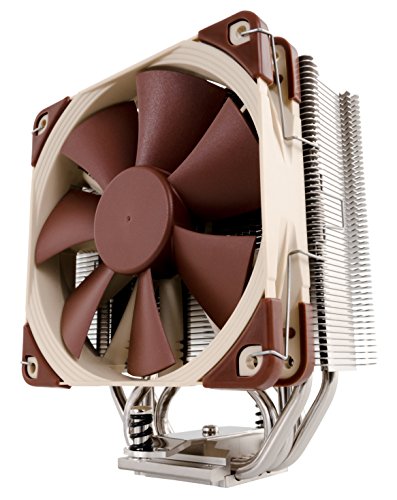
Neither CPU is hard to cool. The stock coolers work but are audible; a modest tower cooler like the Noctua NH-U12S keeps a 24/7 box near-silent and adds meaningful thermal margin.
For storage, a Crucial BX500 1TB SATA SSD is a common choice for VM images and container volumes; it is cheap, quiet, and its DRAM-less design is fine for a home lab that is not doing heavy sustained writes. Pair it with a small NVMe boot drive for the OS.
Perf-per-dollar + perf-per-watt for a 24/7 server
Approximate 2026 street pricing:
| CPU | Street price | Perf-per-dollar rank | Perf-per-watt rank |
|---|---|---|---|
| Ryzen 5 5600G | $110-140 | best | best |
| Ryzen 7 5700X | $170-220 | mid | mid |
If dollars matter most and your workload is modest, the 5600G is the clear winner. If cores matter most and you have workloads that use them, the 5700X's premium is fair.
Verdict matrix
- Pick the 5600G if: this is a first home lab, workload is a handful of lightweight services, you value low cost and low idle power, you want to skip a discrete GPU, or you occasionally transcode media at 1080p.
- Pick the 5700X if: you plan multiple VMs, run many containers, need faster single-thread performance, want more L3 cache, or expect to add a discrete GPU later regardless.
Common pitfalls when picking a home-lab CPU
- Buying the 5700X and then never using the extra cores. A lab that runs three lightweight containers 24/7 does not need eight cores.
- Buying the 5600G and then buying a GPU three months later. If you know a discrete GPU is coming, the 5700X's higher perf and better cache profile suddenly matter.
- Skipping ECC support checks. Neither part guarantees ECC memory support; check your specific board.
- Ignoring cooler compatibility. APU boards sometimes have odd VRM heatsinks; verify the cooler mounts.
When NOT to buy either of these
If you already know you will need many VMs and heavy databases, jump to a more expensive multi-core part rather than pushing an 8-core to its limits 24/7. If your lab is entirely container-based on a modest workload, an older cheap 4-core system may be sufficient and cost less. And if you are exclusively focused on AI inference, a discrete GPU is more important than either CPU here — see the RTX 3060 guide.
Real-world worked example: a 5700X Proxmox host
A representative build: a Ryzen 7 5700X, 32 GB DDR4, a Noctua NH-U12S, and a Crucial BX500 1TB SATA SSD plus a small NVMe boot drive. Running Proxmox, this box comfortably hosts:
- OPNsense firewall VM (2 cores, 4 GB)
- Home Assistant OS (2 cores, 4 GB)
- Nextcloud LXC (2 cores, 4 GB)
- Media server (Jellyfin) LXC (2 cores, 4 GB)
- Small Kubernetes k3s node (4 cores, 8 GB)
- Room for a couple of ephemeral test VMs.
Idle wall draw ~45 W. Under load, ~130 W. Modest.
Real-world worked example: a 5600G first lab
A representative 5600G build: AMD Ryzen 5 5600G, 16 GB DDR4, stock cooler (or the Noctua for silence), the same 1 TB BX500. This handles Pi-hole, a small dashboard, Home Assistant, and a modest Plex library with 1080p transcoding on the Vega iGPU. No discrete GPU needed; no extra PSU capacity needed. Idle wall draw ~32 W.
The 5600G's job in a first lab is to get you into the water without spending a lot. It does that job well.
Bottom line
Two excellent AM4 CPUs, two different priorities. The 5600G is the "cheap, quiet, iGPU-included, everyday-services" pick; the 5700X is the "more cores, more VMs, add-a-GPU-later" pick. Both benefit from a real cooler like the NH-U12S and cheap storage like the BX500. Pick by workload, not by prestige.
Related guides
- Raspberry Pi 4 8GB Starter Home Lab — the lower-tier starting point.
- Crucial BX500 vs Samsung 870 EVO vs WD Blue — SATA storage picks for the same box.
- What Rig Runs an AI Agent Locally? — the AI-focused variant.
Cooling and quiet-run tuning
For a 24/7 always-on box, noise is a real spec. A stock cooler on either the Ryzen 5 5600G or the Ryzen 7 5700X works but is audible under load. The Noctua NH-U12S is a popular quiet-run choice because:
- The 120 mm fan is quiet even at moderate RPM.
- Height clearance fits most mid-tower and even some SFF cases.
- Mounting on AM4 is toolless once the backplate is set.
For an always-on box, pair it with a custom fan curve that biases toward higher fan speeds sooner — you want a slow, steady fan rather than periodic ramps that are more audible.
Motherboard considerations
Both CPUs run on AM4 B550 or X570 boards. Recommended features for a home-lab motherboard:
- 2.5 GbE onboard. Faster than Gigabit for NAS + LAN backup traffic.
- Two M.2 slots. One for boot, one for future expansion or a cache drive.
- Good SATA count. At least 4-6 ports for future SATA expansion.
- BIOS with iGPU control (for the 5600G). You want to be able to disable iGPU output once you install a discrete GPU.
Mid-range B550 boards in the $130-180 range hit all of these features. X570 is unnecessary for a lab.
RAM: how much is enough?
- 16 GB is the practical minimum for a home lab that runs a few services.
- 32 GB gives real headroom for VMs and containers.
- 64 GB is overkill for the 5600G but reasonable for a 5700X-based Proxmox host.
Both CPUs officially support DDR4-3200 in dual-channel; faster kits work but the return diminishes fast for server workloads.
Real-world worked example: a 5600G low-power box
A representative 5600G build:
- AMD Ryzen 5 5600G
- 16 GB DDR4-3200
- Small B550 board with 2.5 GbE
- 250 GB NVMe boot + Crucial BX500 1TB SATA SSD for data
- Stock cooler
- 450 W 80+ Gold PSU
- Small tower case
Total street price around $500-650 in 2026. Runs Pi-hole, Home Assistant OS, a small Nextcloud, and Jellyfin 1080p transcode on the Vega iGPU. Idles at ~32 W. Sits on a shelf, forgotten, doing its job.
Real-world worked example: a 5700X Proxmox host
A representative 5700X build:
- AMD Ryzen 7 5700X
- 32 GB DDR4-3200
- Mid-range B550 board with dual M.2 and 2.5 GbE
- 500 GB NVMe boot + Crucial BX500 1TB SATA SSD for VM storage
- Noctua NH-U12S
- 650 W 80+ Gold PSU
- Mid-tower case
Total around $800-950 in 2026. Runs Proxmox with 4-6 VMs and containers. Idle around $45 W. Under sustained load, ~130 W.
Citations and sources
- AMD — Ryzen 5 5600G product page
- AMD — Ryzen 7 5700X product page
- Phoronix — Linux benchmarking coverage
This piece is editorial synthesis based on publicly available information. No independent first-party benchmarking is reported.