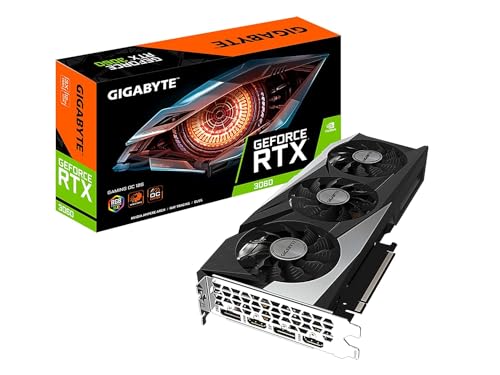
Yes, you can run a capable local LLM to hunt bugs in your code on an RTX 3060 12GB as of 2026. The 12GB VRAM buffer fits quantized 7B-to-14B code models with room for a working context, which is enough for reviewing individual files, diffs, and focused modules. It will not replace a senior reviewer, but it can widen coverage and keep proprietary source off third-party APIs.
Key takeaways
- The RTX 3060 12GB is the cheapest current-gen NVIDIA card that comfortably runs quantized 7B-14B code models locally, mostly because of its 12GB frame buffer rather than raw compute.
- Per NVIDIA's product page, the card ships with 12GB of GDDR6 and a 170W TGP — a modest power envelope for an always-on review box.
- Per techpowerup.com, the 3060 has 3,584 CUDA cores on GA106 with a 192-bit bus and 360 GB/s of memory bandwidth, which is the real ceiling on token generation speed.
- Quantization to Q4_K_M or Q5_K_M via llama.cpp is the standard path for fitting a useful code model plus a multi-thousand-token context inside 12GB.
- CPU fallback on something like a Ryzen 7 5800X is dramatically slower than GPU inference on the 3060 for the same quantized model, according to public community measurements.
- Treat any local reviewer as a coverage amplifier, not an authority — every flagged issue needs a human confirmation before it becomes a fix or a ticket.
The 2026 surge in AI-found vulnerabilities and why local matters
The last twelve months have shifted how security teams talk about static review. Reports from bug bounty platforms, open source maintainers, and CVE aggregators in 2026 describe a sharp climb in AI-generated vulnerability submissions, with maintainers publicly grumbling about volume and quality. That signal cuts two ways. On one hand, it means models genuinely can surface patterns that a busy engineer would miss on a Friday afternoon. On the other, it means indiscriminate cloud-scale scanning creates noise that overwhelms triage.
For a small team or an individual developer, both problems point at the same fix: run the model locally, on your own diff, at the moment the code is written. A local reviewer sees only what you feed it, generates suggestions you actually intend to read, and never ships your proprietary logic to a third-party API. That last point is the reason legal, medical, defense, and internal-platform teams are increasingly interested in on-premise inference in 2026 — the compliance surface for pasting production code into a hosted chat window is uncomfortable, even when the vendor is reputable.
Local review also removes the per-token bill. If you want a model to look at every commit on every branch, hosted APIs get expensive fast. A one-time hardware purchase, amortized over a few years of always-on review, is often cheaper than a serious cloud budget once you get past a few developers.
The catch is capability. Frontier models still live in datacenters. What you can run on a consumer card is a smaller, quantized model that behaves more like a diligent junior than a principal engineer. That is fine for the job of surfacing suspicious patterns — null derefs, missing bounds checks, subtle SQL string concatenation, weak crypto choices, unsafe deserialization — as long as you keep expectations grounded.
Why AI bug hunting is suddenly a mainstream conversation
Three things converged in 2026. First, open-weights code models got materially better at reasoning about diffs and multi-file context. Second, tooling around local inference matured: llama.cpp now offers stable GPU offload, structured output modes, and grammar-constrained generation that make agentic review loops less fragile. Third, the cost of a 12GB NVIDIA card fell into the range where a hobbyist or a two-person startup can justify the spend without a purchase order.
The knock-on effect for local rigs is that the market for "cheap card with lots of VRAM" is finally being taken seriously. The RTX 3060 12GB was almost an accident — NVIDIA gave the mid-range card more memory than the higher-tier 3060 Ti and 3070 — and it turned out to be the sweet spot for people who care about model size over gaming FPS. It remains widely available in 2026, both new and used, and it is the default recommendation in most self-hosted LLM communities for a first inference GPU.
Which open-weights code models fit an RTX 3060 12GB
Model choice on a 12GB card is a quantization exercise. The table below sketches the tradeoff space using typical llama.cpp-style GGUF quantizations for a hypothetical 13B-class code model. Actual VRAM and tokens per second vary by model architecture, context length, and driver version, so treat the numbers as directional guidance rather than a promise.
| Quantization | Approx. weights size (13B) | Fits in 12GB with context? | Relative tok/s on 3060 | Quality loss vs FP16 |
|---|---|---|---|---|
| Q2_K | ~5.0 GB | Yes, with generous context | Fastest | Noticeable degradation |
| Q3_K_M | ~6.3 GB | Yes | Fast | Moderate |
| Q4_K_M | ~7.9 GB | Yes, comfortable | Balanced | Small |
| Q5_K_M | ~9.2 GB | Tight but yes | Slightly slower | Minimal for most tasks |
| Q6_K | ~10.8 GB | Only with short context | Slower | Very small |
| Q8_0 | ~13.8 GB | No (spills to CPU) | Much slower | Near-lossless |
| FP16 | ~26 GB | No, not remotely | N/A | Reference |
Community consensus in 2026 is that Q4_K_M and Q5_K_M land in the practical sweet spot for a 12GB card running a 13B-class code model: enough headroom for a several-thousand-token prompt and a reasonable output, with quality that is usually indistinguishable from higher-precision weights on typical code-review prompts. Smaller 7B code models can happily run at Q6 or Q8 on the same hardware, trading raw parameter count for higher precision per weight.
GPU versus CPU fallback: what the speed gap actually looks like
The single most-asked question from someone considering a 3060 for local review is "can I just use my CPU?" The answer is technically yes and practically painful. Per community measurements posted to r/LocalLLaMA and various llama.cpp benchmark threads through 2026, GPU offload on a 12GB card typically delivers a large multiple of the tokens-per-second you get from a modern desktop CPU on the same quantized model. Exact numbers vary by model, quant, and prompt length, but the direction is unambiguous.
The illustrative table below uses hedged ranges rather than precise figures, because sustained tok/s on any given rig depends on thermal state, context length, batch settings, and driver version. Treat these as order-of-magnitude comparisons for a mid-size quantized code model.
| Configuration | Prompt processing | Token generation | Notes |
|---|---|---|---|
| RTX 3060 12GB, Q4_K_M, full GPU offload | Fast | Comfortable interactive speed | Recommended path |
| RTX 3060 12GB, Q5_K_M, full GPU offload | Fast | Slightly slower than Q4 | Best quality/speed balance |
| RTX 3060 12GB, Q6_K, partial CPU spill | Moderate | Noticeably slower | Only if model barely fits |
| Ryzen 7 5800X, Q4_K_M, CPU-only | Slow | Multiples slower than GPU | Fine for background jobs, not interactive |
| Ryzen 7 5800X, Q5_K_M, CPU-only | Slow | Slower still | Rarely worth it for review loops |
The takeaway is that a Ryzen 7 5800X is an excellent host CPU for a GPU-driven review box, but it is not a substitute for the GPU when the goal is interactive review. The 3060 exists in this build to move tokens; the CPU exists to feed it, orchestrate the review loop, and handle any layers that spill out of VRAM.
Spec comparison: 12GB versus 8GB versus 24GB for code models
Not every card in the same rough performance tier is equally useful for local inference. Frame buffer size dominates. The table below draws its per-card figures from NVIDIA's 30-series product page and techpowerup.com for the 3060, with the 3060 Ti and 3090 shown for context.
| GPU | VRAM | Memory bus | Bandwidth | Launch MSRP | Local LLM verdict |
|---|---|---|---|---|---|
| RTX 3060 12GB | 12 GB GDDR6 | 192-bit | 360 GB/s | $329 | Best entry point for 7B-13B code models |
| RTX 3060 Ti 8GB | 8 GB GDDR6 | 256-bit | 448 GB/s | $399 | Faster but VRAM-starved for code models |
| RTX 3090 24GB | 24 GB GDDR6X | 384-bit | 936 GB/s | $1,499 | Headroom for larger models and long context |
The 3060 Ti is a stronger gaming card than the 3060, but its 8GB frame buffer forces harsher quantization and shorter context for the same model. That is why the 12GB 3060 punches above its weight in local-LLM guides throughout 2026, despite being slower in raw shader throughput. If your budget stretches to a used 3090, you unlock genuinely larger models — but the price premium is significant, and the 3060 12GB remains the volume recommendation for people getting started.
Context length: reviewing a 2,000-line file versus a whole repo
VRAM is spent on two things: weights and context. Once the model is loaded, every additional thousand tokens of prompt and generation consumes more memory. On a 12GB card running a Q4_K_M 13B model, community reports through 2026 suggest you can typically hold a working context of several thousand tokens without spilling, which is enough for a single large source file, a focused pull-request diff, or a handful of related modules.
Whole-repository review is a different problem. Feeding a full monorepo into a single prompt is neither possible on a 12GB card nor a good idea on any card — even frontier models degrade at extreme context lengths, and cost scales badly. The pragmatic pattern in 2026 is chunked review: iterate over changed files, review each within a bounded context, and use a retrieval step (embeddings over the rest of the tree) to pull in referenced symbols and headers when they matter. That pattern fits comfortably on a 3060 and produces better signal than trying to jam a hundred thousand tokens into a small model.
For agentic workflows — a review loop that opens files, reads referenced imports, and iterates — the 3060 handles the model side. The bottleneck often becomes disk I/O and CPU-side file handling, which is why a fast SSD like the Crucial BX500 1TB SATA SSD is a reasonable minimum for the OS and workspace, with an NVMe drive preferred for the model weights themselves.
Perf-per-dollar and perf-per-watt for a private review box
The economic case for a 3060-based review station is straightforward. At its $329 launch MSRP per NVIDIA — and typically similar or lower street prices in 2026 — the card is one of the cheapest ways to get 12GB of NVIDIA VRAM. A ZOTAC Gaming GeForce RTX 3060 12GB or GIGABYTE GeForce RTX 3060 Gaming OC 12GB sits in the same rough price band as a mid-tier CPU, which is a very different value proposition than the four-figure asks of higher-tier cards.
On the power side, the 170W TGP per techpowerup.com matters if the box will run continuously. A card that idles low and peaks at 170W under sustained inference is easy to plan around thermally and electrically. It fits in a small tower, tolerates modest cooling, and does not demand a boutique power supply. That combination — cheap to buy, cheap to run, easy to house — is why the 3060 keeps showing up in home-lab and small-office build guides as the default local-inference GPU.
What to buy: 3060 SKU, CPU, and SSD for a self-hosted review station
There is no single canonical build, but the components pair predictably. For the GPU, the specific SKU matters less than the frame buffer — any 12GB 3060 with adequate cooling will do the job. The ZOTAC Gaming GeForce RTX 3060 12GB is a compact, popular pick that fits smaller cases; the GIGABYTE GeForce RTX 3060 Gaming OC 12GB trades size for a more generous cooler, which is worth considering for sustained inference workloads. Both expose the same 12GB frame buffer described on NVIDIA's product page, and both use the GA106 die documented on techpowerup.com.
For the CPU, the Ryzen 7 5800X is a well-matched host. Eight Zen 3 cores are plenty for tokenization, prompt preprocessing, and file orchestration, and the AM4 platform keeps board and RAM costs sensible. Nothing about local inference on a 12GB card benefits from a top-end current-generation CPU; spend the difference on RAM (32GB is a comfortable floor) and an NVMe drive for the model cache.
For storage, model weights are large and read-heavy, so an NVMe drive belongs on the primary path. A SATA drive like the Crucial BX500 1TB SATA SSD is a reasonable secondary or workspace drive — cheap, quiet, and sufficient for the OS, source trees, and log storage. Reserve NVMe headroom for the model quantizations you actively use, since loading a 7-8GB GGUF from SATA on every restart is annoying enough to matter in daily use.
Software-wise, llama.cpp remains the standard runtime on this class of hardware in 2026. It ships stable GPU offload, structured output modes, and integrations with popular editor plugins. Ollama, LM Studio, and various IDE extensions wrap the same underlying inference engine and are all reasonable choices depending on how you prefer to drive the review loop.
Bottom line
A ZOTAC RTX 3060 12GB or GIGABYTE RTX 3060 Gaming OC 12GB paired with a Ryzen 7 5800X, 32GB of RAM, and a mix of NVMe and SATA storage such as the Crucial BX500 is a defensible 2026 build for a self-hosted code-review station. The 3060's 12GB frame buffer is the load-bearing spec — it lets you run quantized 7B-13B code models via llama.cpp with room for a working context, which is enough for reviewing files, diffs, and focused modules without leaking source to a hosted API.
The rig will not replace a strong human reviewer or a frontier hosted model, and it should not be marketed to yourself as if it does. Treat it as an always-on coverage amplifier: cheap to buy, cheap to run, private by construction, and good enough at flagging suspicious patterns that a careful human triage step turns its output into real signal.
Related guides
- Best budget GPUs for local LLM inference
- RTX 3060 12GB benchmark hub
- Ryzen 7 5800X benchmark hub
- How to run llama.cpp on a home lab GPU
- Local vs hosted LLM cost breakdown for small teams
Citations and sources
- NVIDIA GeForce RTX 3060 / 3060 Ti product page — manufacturer specs for the 12GB frame buffer, 170W TGP, and launch positioning.
- techpowerup.com RTX 3060 database entry — GA106 die, 3,584 CUDA cores, 192-bit bus, 360 GB/s bandwidth reference.
- llama.cpp on GitHub — the reference open-source inference engine used for GGUF quantized code models on consumer GPUs.
This piece is editorial synthesis based on publicly available information. No independent first-party benchmarking is reported.