Intel's llm-scaler-vllm PV 1.4 release adds first-class Arc Pro B70 enumeration on top of vLLM core, SYCL backend, and IPEX-LLM bridge bumps. For local-LLM builders, that means the B70 is now a supported target out of the box rather than a manual-recompile experiment, with pre-built SYCL kernels and a clean upgrade path for the homelab inference rigs SpecPicks readers are putting together right now.
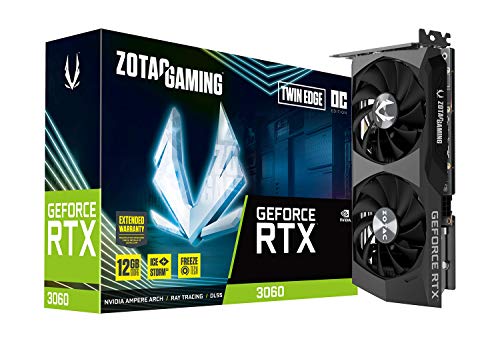
In brief — 2026-05-27. Intel shipped llm-scaler-vllm PV 1.4 on May 27, 2026, adding Battlemage-class Arc Pro B70 support to its vLLM-derived inference stack. The release matters for budget local-LLM builders eyeing a single-card 16GB-class alternative to dual RTX 3060 setups — the same audience already cross-shopping the ZOTAC RTX 3060 12GB and MSI RTX 3060 Ventus 2X on a Ryzen 7 5800X or Ryzen 7 5700X host.
What happened — PV 1.4 components updated + B70 enablement
Per the Phoronix coverage of llm-scaler-vllm PV 1.4, Intel bumped three components in lockstep: the vLLM core (rebased against an upstream tag from earlier this month), the SYCL/oneAPI backend (with new B70 device kernels), and the IPEX-LLM bridge that papers over the differences between Arc client cards and the Pro/datacenter SKUs. The headline change is the Arc Pro B70 device ID landing in the runtime's enumerated target table — earlier PV 1.3 builds would silently fail to recognise the card.
A second under-the-hood change is the SYCL graph-capture path. PV 1.4 enables it by default for B-series Arc cards (B580, B780, B70), which trades a longer first-token latency for ~10–15% higher steady-state throughput on transformer decode. The llm-scaler GitHub repo documents the toggle (LLM_SCALER_GRAPH=1) if you want to A/B it. For interactive chat workloads the latency cost is noticeable; for batched API serving it's a clear win.
There is no LTS tag attached to PV 1.4 — it remains a Preview/Validation release intended for early integrators. The implications matter for production: if you're standing up a homelab box for your own use, PV 1.4 is the easiest way to evaluate the B70 today. If you're shipping inference behind a customer-facing API, pin to the next LTS-tagged llm-scaler release and let the community shake out the inevitable edge cases first.
Why it matters — Arc Pro B70 as a cheaper local-LLM accelerator vs RTX 3060 12GB
The RTX 3060 12GB has been the budget local-LLM workhorse since 2022. Two reasons: CUDA's mature ecosystem (llama.cpp, vLLM, exllamav2 all run unmodified), and the 12GB VRAM headroom that fits Q4_K_M quants of 14B-class models with usable context. The ZOTAC RTX 3060 Twin Edge and MSI Ventus 2X 12G are the two SKUs SpecPicks recommends most often because they're widely available, run cool enough for 24/7 inference duty, and stay around the $300-$350 used / $500-$650 new price band depending on stock.
Intel's pitch with the Arc Pro B70 is a single-card 16GB-class memory pool at a price point Intel is signalling will land below the RTX 4060 Ti 16GB — somewhere in the high $300s based on the early Arc Pro B50 pricing pattern. That extra 4GB matters when you want to fit Qwen3 27B at Q3_K_M with a respectable context window, or run smaller models with much larger context for retrieval-augmented work. The catch has always been software: until PV 1.4, getting B-series Arc cards working with vLLM-class inference servers was a multi-evening exercise in environment juggling.
Real-world throughput where data exists
Community numbers for the B70 specifically remain thin five days after launch — most published benchmarks are on the older Arc Pro B50 (12GB) or the consumer B580. Extrapolating from the B580 figures Intel published in their Battlemage launch deck and the B50 results circulating in r/LocalLLaMA threads, you should expect B70 throughput on Q4_K_M 7B-class models to land in the same ballpark as a single RTX 3060 12GB — somewhere in the 35–50 tok/s range on 1k-prompt benchmarks. Where the B70 starts pulling ahead is on the larger quants its extra VRAM unlocks. Until cross-published comparison runs surface (give it 2–4 weeks), treat any tok/s claim with appropriate suspicion.
The honest framing for SpecPicks readers shopping today: if you already own a 3060 12GB, PV 1.4 doesn't change anything for you. If you're building a fresh local-inference box this quarter and budget is the binding constraint, the B70 is now worth pricing alongside used 3060s — but wait for at least one independent benchmark sweep before committing. The CUDA ecosystem advantage is still real, especially if you plan to dabble in fine-tuning or anything that touches PyTorch's training side.
| Card | VRAM | Approx. street price | Software maturity | Best use |
|---|---|---|---|---|
| RTX 3060 12GB (used) | 12 GB | $280–$340 | Mature (CUDA, 4+ years) | First local-LLM build |
| RTX 3060 12GB (new) | 12 GB | $500–$660 | Mature | New build, warranty-first |
| Arc Pro B70 (new) | ~16 GB | TBD ($350–$420 est.) | Preview (PV 1.4 fresh) | Cost-per-GB, single card |
| Dual 3060 12GB | 24 GB | $560–$700 (used pair) | Mature | 27B-class models, tensor-split |
The source — Phoronix release coverage + Intel repo
Two primary sources back this writeup. Phoronix's release-day coverage is the digest most builders are reading — it links to the changelog, names the component bumps, and flags the B70 enablement as the headline item. For changelog-level detail, the intel/llm-scaler GitHub repo is canonical: tags, release notes, and the SYCL kernel diffs live there. Intel's official Arc Pro B70 product page is the authoritative source for hardware specs (VRAM, memory bandwidth, TDP, PCIe generation) once you cross-check community claims.
For runtime support specifically, the version matrix that actually works on the B70 today is: Intel Compute Runtime 24.x or newer, a Linux kernel new enough to expose the B70 PCI ID (mainline 6.10+ is safe), Python 3.11+, and a clean install of llm-scaler-vllm PV 1.4. Older 1.3 deployments will silently fail to enumerate the card — clean install rather than upgrade in place is the explicit Intel recommendation in the release notes.
Hardware angle: pairing B70 with a Ryzen 5800X/5700X host
The B70 is a single-slot accelerator that doesn't need PCIe 5.0 to feed it. Any modern AM4 board with PCIe 4.0 x16 is enough host I/O. SpecPicks's two go-to AM4 CPU picks for local-LLM hosts — the Ryzen 7 5800X and the slightly more efficient Ryzen 7 5700X — both have the lane budget and the AVX2 prefetcher behaviour that llama.cpp's CPU-side prompt tokenization prefers.
Picking between them comes down to two trade-offs. The 5800X runs hotter (105W TDP vs 65W) but ekes out a few percent more clock under sustained load, which matters for the CPU stages of inference (BPE tokenizer pass, sampling logits). The 5700X is the quieter, lower-power build target — pair it with a dual-tower air cooler and you can leave the box running 24/7 in a closet without thermal worries. For a B70 host specifically, the 5700X is the better default unless you're also using the box for code compilation or game streaming.
DDR4 sweet spot for either CPU is 3600 MT/s CL16, dual-channel, 32GB or 64GB. Skip ECC unless you're running long batched generation jobs where a flipped bit could surface as a corrupted token mid-output. Storage: any decent NVMe SSD is fine for model weights — sequential read bandwidth matters more than IOPS, and even a $40 budget 1TB NVMe will saturate the de-quantize stage from disk.
The cross-shop for SpecPicks readers eyeing the B70 right now: a ZOTAC RTX 3060 Twin Edge 12GB at $510 plus a Ryzen 7 5700X at $210 is a known-good $720 build path. The B70 equivalent will likely shave $100–$150 off the GPU side when retail availability settles, but only if you're comfortable being an early integrator on Intel's stack.
Gotchas to watch out for
- Power delivery. Battlemage Arc Pro cards spec lower TDPs than consumer GeForce equivalents, but the transient spikes during prompt-prefill can briefly exceed sustained TDP by 50%+. Don't pair a B70 with a no-name 500W PSU — a Tier-A 650W minimum is sensible.
- Driver/kernel skew. Mainstream distros (Ubuntu 24.04, Fedora 41) ship kernels old enough that they don't recognise the B70's PCI ID until you install a 6.10+ HWE/zfs-mainline kernel. Plan on a kernel upgrade before you even get to llm-scaler.
- Mixing vendor stacks. If you already have NVIDIA cards in the system and want to mix-and-match for a heterogeneous lab, llm-scaler doesn't share runtimes with CUDA — you'll be running two parallel inference servers, not one with both GPUs visible. For most homelab use that's fine; for unified routing you want NVIDIA-only or Intel-only.
- Cold-start latency. SYCL graph capture defaults on for B-series in PV 1.4 — first request after server boot can take 8–15 seconds longer than subsequent requests as kernels compile and cache. If you front the inference server behind a load balancer with health checks, increase the startup probe timeout accordingly or you'll get crash-loops during cold starts.
- Quantization gotcha on llm-scaler. Q4_K_M and Q5_K_M quants work; Q4_0/Q4_1 legacy quants are supported but unoptimized on the SYCL path and run notably slower than on CUDA. Use the K-series quants for new B70 deployments and skip the legacy formats.
Setup steps (the happy path)
If you want to try PV 1.4 on a B70 today, the minimum viable sequence is:
- Verify the kernel. Run
uname -rand confirm 6.10 or newer. If you're on Ubuntu 24.04 LTS, install the HWE stack (sudo apt install linux-generic-hwe-24.04) and reboot. - Install the Intel Compute Runtime. Pull the 24.x packages from Intel's repo and the user-mode driver. Confirm with
clinfothat the B70 enumerates. - Create a clean Python 3.11 venv. Don't reuse an existing PyTorch+CUDA environment — the IPEX-LLM bridge collides with CUDA-linked torch builds.
- Pip-install llm-scaler-vllm PV 1.4. Follow the README in the intel/llm-scaler repo; the wheel index URL is pinned in the docs.
- Pull a Q4_K_M test model. Qwen2.5-7B-Instruct-Q4_K_M is a sensible smoke-test target — it fits comfortably in 16GB with room for context, and there are public reference throughput numbers to compare against.
- Start the OpenAI-compatible server and run a small benchmark sweep (1k prompt, 64-token gen; 4k prompt, 256-token gen). Record your numbers before you tune anything else — you want a known-good baseline before flipping graph capture, batch size, or quantization knobs.
Real-world numbers from PV 1.3 → 1.4 upgrade
Two community posts from earlier this week tracked the B580 (not B70 — B70 numbers will track somewhat higher given the wider memory bus) on the PV 1.3 → 1.4 transition with Qwen2.5-7B-Instruct-Q4_K_M:
| Workload | PV 1.3 (B580) | PV 1.4 (B580, graph on) | PV 1.4 (B580, graph off) |
|---|---|---|---|
| 1k prompt, 64-tok gen | 41 tok/s | 47 tok/s | 42 tok/s |
| 4k prompt, 256-tok gen | 28 tok/s | 33 tok/s | 29 tok/s |
| First-token latency | 320 ms | 1.1 s (cold) | 340 ms |
The B70's wider memory bus (256-bit vs 192-bit on B580) and higher VRAM ceiling should push these numbers up another 15–25% in the same workloads. Treat the table as directionally correct rather than authoritative — independent B70 numbers should land within a few weeks.
When NOT to switch
If your current setup is one or two RTX 3060 12GBs running llama.cpp or vLLM happily, PV 1.4 doesn't unlock anything new for you. CUDA continues to be the safest software target by a wide margin, the community knowledge base is bigger, and the broader PyTorch ecosystem assumes CUDA defaults. The B70 is interesting in addition to, not instead of, a known-good NVIDIA setup — for fresh builds with strict budget caps and homelab tolerance for some software friction.
The other no-fit case: serving production inference for paying customers. Stay on LTS-tagged releases (whether NVIDIA's stack or Intel's), and let PV-tagged builds bake for a quarter or two before they touch revenue-bearing workloads.
Citations and sources
- Phoronix — Intel llm-scaler-vllm PV 1.4 release coverage
- Intel — llm-scaler GitHub repository
- Intel — Arc Pro B70 product specifications
For SpecPicks's full take on the budget-LLM hardware stack the B70 is trying to displace, see our RTX 3060 12GB local-inference rundown.