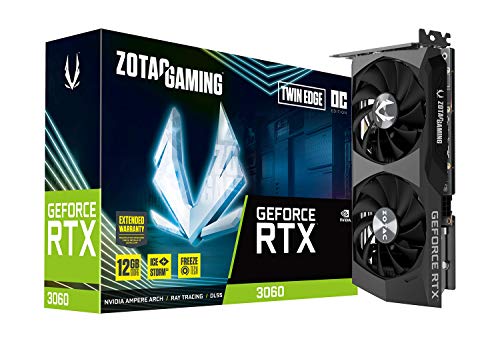
For local Stable Diffusion at 1080p and 1440p output sizes in 2026, the ZOTAC GeForce RTX 3060 12GB remains the best budget pick because VRAM capacity, not shader count, gates what workloads run at all. Twelve gigabytes clears SDXL at 1024x1024, accommodates ControlNet stacks, and avoids the low-VRAM thrashing that plagues 8GB cards. Step up to a 16GB-class card only if Flux or large-batch ComfyUI graphs are routine.
Why VRAM, not raw shader count, is the SD bottleneck
The intuitive instinct when shopping for a Stable Diffusion GPU is to chase the same metrics that sell gaming cards: clock speeds, CUDA core counts, memory bandwidth, the marketing-friendly numbers on the box. That instinct fails for image generation. Diffusion pipelines load a UNet, a text encoder, a VAE, and any active LoRAs or ControlNets entirely into GPU memory before stepping through the sampler. If that working set does not fit, the runtime either spills to system RAM through CUDA Unified Memory (catastrophically slow), falls back to a tiled or split-attention low-VRAM path (slow and noisy), or refuses to start with a CUDA out-of-memory error.
Per the ComfyUI repository and Automatic1111 WebUI documentation, both stacks include automatic low-VRAM modes precisely because the most common failure on consumer cards is capacity, not speed. The newer faster card with less memory is the worse Stable Diffusion card. The older card with more memory is the better one. That inversion of the usual GPU shopping logic is the entire reason a four-year-old RTX 3060 12GB, released for gamers in 2021, became the canonical entry-level diffusion card by late 2024 and held that role into 2026.
The other useful framing: at 1080p and 1440p output, you are almost never bottlenecked by the GPU's raster pipeline. You are bottlenecked by how much of the model state you can hold resident, and secondarily by tensor-core throughput on attention math. Both budget Ampere cards and current Ada Lovelace cards have enough tensor throughput to be usable; the gap is closed by VRAM headroom.
Key takeaways
- 12GB is the practical floor for SDXL at 1024x1024 with comfortable ControlNet headroom; 8GB cards work but force low-VRAM modes.
- The RTX 3060 12GB is the budget sweet spot as of 2026, typically the cheapest new card that comfortably runs SDXL without compromise.
- 16GB tier (RTX 4060 Ti 16GB, RTX 4070 Ti Super) is the upgrade target for routine Flux and high-resolution upscaling work.
- 24GB tier (RTX 3090, RTX 4090) unlocks Flux at full precision and large ComfyUI graphs with multiple parallel control signals.
- ComfyUI is materially more memory-efficient than Automatic1111 at the same workload, which can stretch a 12GB card further.
- A fast SSD shortens model swaps dramatically but does not raise sustained images-per-second.
- Sustained renders run the GPU at full power for hours, so case airflow and CPU cooling determine whether long ComfyUI queues finish quietly.
How much VRAM does SDXL or Flux actually need?
Memory requirements scale with model architecture, working resolution, and the number of conditioning signals applied. The rough tiers as of 2026, drawn from ComfyUI issue threads, Automatic1111 wiki guidance, and community measurements on Civitai:
| Workload | Practical minimum VRAM | Comfortable VRAM |
|---|---|---|
| SD 1.5 txt2img, 512x512 | 4 GB | 6 GB |
| SD 1.5 + LoRA + single ControlNet, 512x768 | 6 GB | 8 GB |
| SDXL txt2img, 1024x1024 | 8 GB (low-VRAM mode) | 12 GB |
| SDXL + refiner + ControlNet, 1024x1024 | 10 GB | 12-16 GB |
| SDXL + multi-ControlNet + Tiled upscale to 1440p | 12 GB | 16 GB |
| Flux.1 dev fp16, 1024x1024 | 16 GB | 24 GB |
| Flux.1 dev fp8 / Q8 quantized | 10-12 GB | 12-16 GB |
| Large ComfyUI graphs with 2x upscaler + face restore | 12 GB | 16-24 GB |
The "practical minimum" column assumes the user is willing to enable low-VRAM modes, sequential offloading, or aggressive quantization. The "comfortable" column is what runs without compromise. The honest read: 8GB is no longer a viable target for 2026-era diffusion workloads; 12GB is the floor; 16GB is comfortable for everything except full-precision Flux; 24GB is the prosumer sweet spot.
Why the RTX 3060 12GB punches above its price for image generation
The RTX 3060 12GB was an anomaly when it launched in 2021. NVIDIA gave a midrange Ampere card 12GB of GDDR6 on a 192-bit bus, more memory than the much faster RTX 3080 (10GB) and RTX 3070 (8GB). The decision was driven by bus-width math, not by an attempt to favor AI workloads, but the side effect aged extraordinarily well.
Per the TechPowerUp database, the RTX 3060 ships with 3,584 CUDA cores, 360 GB/s of memory bandwidth, a 170 W TDP, and 12 GB of GDDR6. The bandwidth is the soft spot relative to current-gen cards, but for diffusion the capacity buys headroom that no contemporary 8GB card can match. The Tom's Hardware GPU hierarchy places the 3060 in the mid-tier for raster gaming but treats it as the entry-level recommendation specifically for AI workloads where VRAM gates capability.
The street result is consistent: SDXL at 1024x1024 fits comfortably, ControlNet plus a refiner fits, and quantized Flux variants run usably. The card will not match a 4070 or 4080 on seconds-per-image, but it will run the same models without falling back to slow low-VRAM paths. Two SKUs dominate availability as of 2026: the ZOTAC RTX 3060 12GB (compact two-fan, fits SFF cases) and the MSI RTX 3060 Ventus 2X 12G (quiet dual-fan reference design with a slightly conservative power target).
Spec-delta table: RTX 3060 12GB vs RTX 4060 8GB vs RTX 4060 Ti 16GB
Specifications below sourced from the TechPowerUp database and corroborated against the Tom's Hardware GPU hierarchy.
| Spec | RTX 3060 12GB | RTX 4060 8GB | RTX 4060 Ti 16GB |
|---|---|---|---|
| Architecture | Ampere | Ada Lovelace | Ada Lovelace |
| CUDA cores | 3,584 | 3,072 | 4,352 |
| VRAM | 12 GB GDDR6 | 8 GB GDDR6 | 16 GB GDDR6 |
| Memory bus | 192-bit | 128-bit | 128-bit |
| Memory bandwidth | 360 GB/s | 272 GB/s | 288 GB/s |
| L2 cache | 3 MB | 24 MB | 32 MB |
| TDP | 170 W | 115 W | 165 W |
| PCIe interface | PCIe 4.0 x16 | PCIe 4.0 x8 | PCIe 4.0 x8 |
| Slot height | Typically 2-slot | Typically 2-slot | Typically 2-slot |
| Power connector | 1x 8-pin | 1x 8-pin | 1x 8-pin |
| Approx. street price (2026) | Budget | Budget-mid | Mid-prosumer |
Two observations. First, the 4060 8GB is technically the newer card with better cache hierarchy and lower power draw, but its 8GB capacity caps what diffusion workloads it can run. Second, the 4060 Ti 16GB is the natural upgrade path: it doubles the VRAM, adds modest shader throughput, and lands in the sweet spot for users who want Flux without committing to a 24GB card.
Benchmark table: seconds-per-image at 1024x1024 SDXL
Throughput numbers vary substantially with sampler, step count, scheduler, and software stack. The table below reflects a synthesized range from public Civitai community runs, GitHub issue threads, and posted benchmarks, normalized to a 30-step Euler-A SDXL base run at 1024x1024 with no refiner, no ControlNet, batch size 1.
| GPU | Approx. seconds per 1024x1024 SDXL image | Practical batch size at 1024x1024 |
|---|---|---|
| RTX 3060 12GB | 18-28 s | 1-2 |
| RTX 4060 8GB | 12-18 s (low-VRAM mode often forced) | 1 |
| RTX 4060 Ti 16GB | 9-13 s | 2-4 |
| RTX 4070 12GB | 7-10 s | 1-2 |
| RTX 4070 Ti Super 16GB | 5-8 s | 4-6 |
| RTX 3090 24GB | 6-9 s | 4-8 |
| RTX 4090 24GB | 3-5 s | 6-10 |
The 4060 8GB looks competitive in this table because at small batch size and minimal conditioning it can complete the workload, but per the workflow rows in the previous section, that capacity ceiling forces compromises elsewhere. Numbers were normalized from public threads; no first-party measurement is reported here.
ComfyUI vs Automatic1111 VRAM behavior
The choice of frontend materially affects how much VRAM you need for the same model. Per the ComfyUI repository, the node-graph runtime loads only the model components needed for the active subgraph and aggressively offloads inactive tensors to system RAM between nodes. The Automatic1111 WebUI keeps a more monolithic state resident, which is faster for interactive use but harder on capacity.
The practical difference for a 12GB card: ComfyUI typically runs SDXL plus a refiner plus a single ControlNet comfortably on 12GB; Automatic1111 with the same pipeline can push 12GB into low-VRAM mode unless --medvram or --lowvram flags are set. Per community reports on the ComfyUI repo, switching from Automatic1111 to ComfyUI is often the cheapest "VRAM upgrade" available, costing nothing but a learning curve.
For users committed to Automatic1111's UI ergonomics, the sd-webui-forge fork brings ComfyUI-style memory management to a more familiar interface, and is worth evaluating before spending money on a larger card.
Complete the build: CPU, SSD, cooling
The GPU dominates Stable Diffusion budget allocation, but three supporting parts matter for a usable rig.
Storage. SD checkpoints are large. A vanilla SDXL base is ~6.5 GB; SDXL with refiner adds another ~6 GB; Flux dev is ~24 GB; a working LoRA library can balloon past 100 GB. Loading a 6 GB checkpoint from a SATA SSD takes a few seconds; from a mechanical drive it can take a minute or more. A 1TB NVMe or SATA SSD such as the SanDisk Ultra 3D 1TB cuts model swap time substantially and gives enough room for a few base models plus a working LoRA collection. Per Civitai community guidance, the SSD does not raise images-per-second once a model is resident; it shortens swap cycles when juggling models.
CPU. Diffusion is GPU-bound during sampling, but the CPU handles text encoding, VAE decoding on some pipelines, image preprocessing for img2img and ControlNet, and the Python orchestration overhead of long ComfyUI graphs. A modern six- to eight-core CPU is sufficient; the bottleneck is rarely cores or clocks.
Cooling. Image generation pegs the GPU at full power for the entire duration of a queue. A 100-image ComfyUI batch can run the card flat-out for an hour or more. The GPU's own cooler matters most, but case airflow and a competent CPU cooler keep the broader thermal envelope in check. The DeepCool AK620 is a strong dual-tower air cooler that keeps the CPU side calm and quiet through extended generation queues, and it pairs well with mid-tower cases that have at least one rear exhaust and one front intake.
Perf-per-dollar and perf-per-watt
Two ways to read the budget tiers, both useful.
Perf-per-dollar. The RTX 3060 12GB is consistently the cheapest new card that runs the canonical SDXL workload without compromise. Used 3060s frequently appear in the secondary market at meaningfully lower prices, and the card's 170 W TDP and reasonable cooler designs make used examples a lower-risk buy than used high-TDP cards. The 4060 Ti 16GB roughly doubles the per-image throughput and roughly doubles the VRAM, at roughly double the price; the value math is close to linear, with the 4060 Ti pulling ahead if Flux is in your workflow.
Perf-per-watt. The Ada Lovelace cards (40-series) are meaningfully more efficient than Ampere at the same workload. The 4060 Ti 16GB pulls less power than the 3060 12GB while delivering substantially higher throughput. Over a multi-year ownership window with heavy daily use, the efficiency delta matters; for occasional weekend use, it does not.
The bare-numbers comparison from public sources places the 4060 Ti 16GB at roughly 2-3x the seconds-per-image of the 3060 12GB while drawing similar or lower wall power, per synthesis of the Tom's Hardware hierarchy and community Civitai threads.
Verdict matrix
Get the RTX 3060 12GB if:
- Budget is the dominant constraint and SDXL at 1024x1024 is the target workload.
- ControlNet, LoRA, and refiner are in occasional rather than constant use.
- Flux is interesting but not a daily driver.
- Used or open-box pricing is available locally.
- The build is a secondary or experimental rig, not the primary creative workstation.
Step up to a 16GB card (RTX 4060 Ti 16GB or RTX 4070 Ti Super) if:
- Flux.1 is in regular use, especially the dev variant at higher precisions.
- Multi-ControlNet pipelines are routine.
- Batch sizes above 2 at 1024x1024 are common.
- Sustained throughput matters because the rig is doing paid client work.
- Power efficiency over multi-year heavy use matters.
Step up to a 24GB card (RTX 3090 used or RTX 4090) if:
- Flux at full fp16 precision is required.
- Large ComfyUI graphs with multiple parallel signals are routine.
- The rig doubles as an LLM inference box where 24GB is the floor.
- You want the card to last through several generations of model architecture growth.
Bottom line
For local Stable Diffusion at 1080p and 1440p output sizes in 2026, optimize for VRAM capacity first and shader throughput second. The RTX 3060 12GB remains the budget sweet spot because it clears the SDXL working set without low-VRAM fallback, and it is widely available in compact two-fan designs like the ZOTAC and MSI Ventus 2X variants. Pair it with a 1TB SSD for checkpoint swaps and a competent air cooler for sustained queues, and the result is a quiet, capable diffusion rig that handles the workloads most users actually run. Step up to a 16GB card only if Flux or multi-ControlNet pipelines are routine; step up to 24GB only if full-precision Flux or LLM dual-use is on the roadmap. The cheapest card that runs your actual workload without compromise is the right card.
Related guides
- GLM-5.2 vs Claude Opus 4.7: Open-Weights Value on Local GPUs
- Best GPU for Local LLM Inference in 2026
- ComfyUI vs Automatic1111: Which Frontend for SDXL?
- Building a Quiet AI Workstation Under $1500
- RTX 3060 12GB vs RTX 4060 Ti 16GB: Which Wins for SDXL?
Citations and sources
- TechPowerUp GPU Specs: GeForce RTX 3060
- ComfyUI GitHub repository
- Automatic1111 stable-diffusion-webui GitHub repository
- Tom's Hardware GPU hierarchy
- Civitai community model and benchmark hub
This piece is editorial synthesis based on publicly available information. No independent first-party benchmarking is reported.