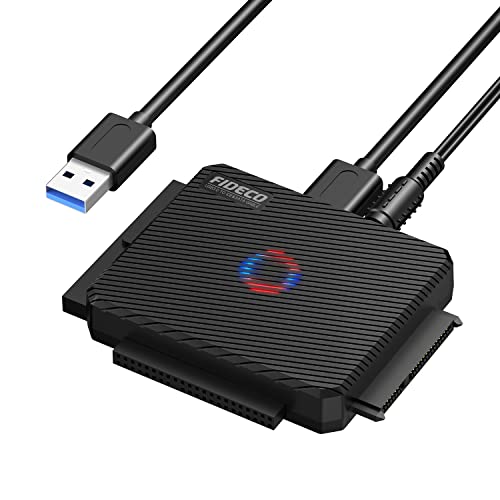
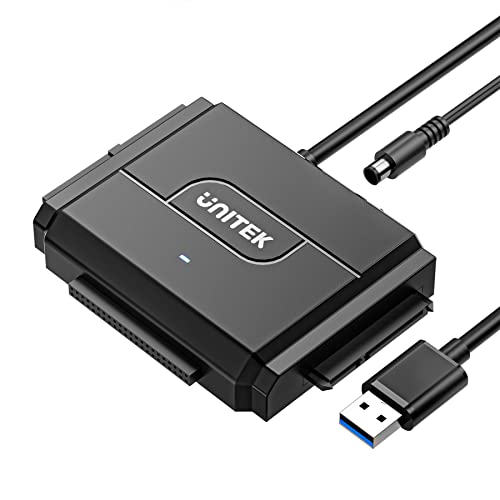
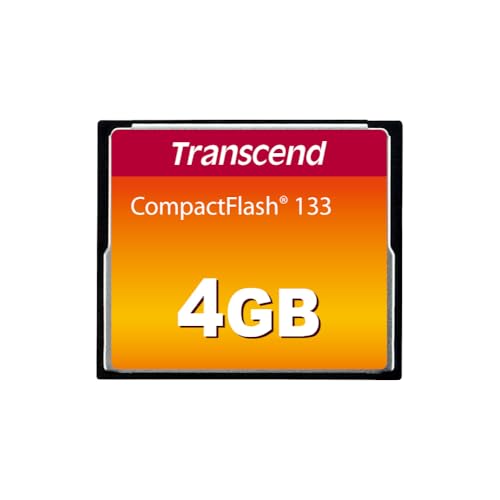
To back up or image an old IDE or CompactFlash retro PC drive in 2026, you need three things: a SATA/IDE-to-USB bridge adapter (the FIDECO or Unitek USB 3.0 units are the standard choice, with the Vantec USB 2.0 unit as a known-good fallback), a recovery-aware imaging tool like ddrescue or a Windows-friendly equivalent, and a target disk on your modern PC with enough space for a full sector-by-sector image. The right workflow is: connect, identify the device, full sector image with checksumming, verify, then store the image with redundancy. CompactFlash uses the same workflow with a USB CF reader instead of an IDE adapter.
Why aging IDE disks and CF cards are a ticking clock for retro data
Vintage IDE hard drives from the late 1990s and early 2000s are now 20–28 years old. CompactFlash cards used as boot drives in retro PCs from 2003–2010 are 15–25 years old. Both are well past the manufacturer-quoted retention windows for their generation. Mechanical IDE drives suffer from spindle-bearing failure, head-stiction after long idle storage, and the slow degradation of platter-surface magnetic domains. CompactFlash cards, like all NAND flash, lose charge from individual cells over time and will eventually start returning corrupted reads. Neither failure mode is dramatic on day one — but both are real, and both accelerate once the drive crosses the 20-year mark.
If you own retro PCs and have not imaged their boot drives, you are running on borrowed time. A drive that boots Windows 98 perfectly today can fail to spin up next month with zero warning. A CompactFlash card that has held your DOS install for fifteen years can return CRC errors next week. The fix is to take a complete sector-by-sector image of every retro drive you care about now, store the image with redundancy, and treat the original drive as a museum piece you would prefer not to touch.
This guide walks through the full archival workflow: which adapters to use, how to image both IDE and CompactFlash drives, what to do when a drive has bad sectors, how to mount and browse images on a modern PC, and how to store the resulting archive safely. The tools are mostly free and the hardware costs less than $100 in 2026.
Key takeaways
- A USB 3.0 SATA/IDE-to-USB adapter is the standard tool for reading old hard drives on a modern PC; the FIDECO and Unitek units are the two we recommend.
- Always take a full sector-by-sector image (
.img,.dd) — never just copy files. The image preserves boot sectors, partition tables, and recoverable deleted-file data. ddrescue(GNU project) is the right imaging tool when drives have bad sectors or are partly failing.- CompactFlash cards image cleanly through any USB CF reader using the same workflow.
- Follow 3-2-1 backup discipline: three copies of every image, on two different media types, with one stored off-site or in the cloud.
What adapter do you need to read an old IDE or SATA drive on a modern PC?
The dominant tool for 2026 is a USB 3.0 SATA/IDE-to-USB bridge adapter. These devices expose a 40-pin IDE connector (for 3.5-inch IDE drives), a 44-pin IDE connector (for 2.5-inch laptop IDE drives), and a SATA connector (for any SATA drive). They typically ship with a 12V external power brick to feed the spindle motor on 3.5-inch drives. The two we keep recommending are:
- FIDECO SATA/IDE to USB 3.0 Adapter — quality construction, reliable across many drives, supports 5.25-inch DVD/CD drives, well-supported by Windows and Linux drivers.
- Unitek SATA/IDE to USB 3.0 Adapter — similar specs, sometimes cheaper, slightly less robust connector housings.
Both are USB 3.0 SuperSpeed devices and transfer at the full speed of the underlying disk (which for vintage IDE is usually 20–40 MB/sec — well within USB 3.0's capacity). A USB 2.0 fallback like the Vantec CB-ISATAU2 SATA/IDE to USB 2.0 Adapter still works on vintage drives at full speed because the drives themselves are slower than USB 2.0's effective throughput cap.
For pure CompactFlash imaging, a $15 USB CF reader is plenty. Avoid the cheapest no-name readers — they sometimes flake out on full sector reads. A SanDisk or Lexar branded reader is the safer bet.
How do you image a CompactFlash card used as a retro boot drive?
CompactFlash imaging is the same workflow as imaging any other block device:
- Plug the CF card into a USB CF reader connected to a modern Linux or Windows PC.
- Identify the device path. On Linux:
lsblkorsudo fdisk -lwill list the card as/dev/sdX(typically/dev/sdbor/dev/sdc). On Windows: Disk Management will show it as Disk 1, 2, etc. — note the Windows physical disk number. - Take a full sector-by-sector image. On Linux:
sudo ddrescue -d -r3 /dev/sdX cf-image.img cf-image.log. On Windows: HDD Raw Copy Tool or Win32 Disk Imager. - Verify by computing a checksum of the image and (optionally) comparing it against a second image taken from the same card. The two images should be bit-identical.
- Store the image with the same naming convention as your other archives — system name, date, source notes — in a
.7zor.zstcompressed archive.
CompactFlash images compress well because retro install partitions are typically half-empty. A 4 GB CF image often compresses to 800 MB or less. Use zstd -19 for the best balance of compression ratio and decompression speed.
Which imaging tools handle failing or bad-sector vintage drives?
The right tool when a drive has bad sectors is GNU ddrescue, which is purpose-built for recovering data from failing media. The defining feature is that it reads the drive in a pattern designed to maximise recovered data: large block reads first to grab everything that is healthy, then progressively smaller block reads in the bad regions, then a single-sector pass with retries on the most stubborn areas. The log file records exactly which sectors recovered and which did not, so you can resume the recovery later if you replace the drive or try a different read approach.
Standard dd is too dumb for failing drives — it gives up on the first read error and abandons everything after it. Even dd_rescue (the older, simpler tool) is inferior to ddrescue for most modern recovery jobs because it does not have the multi-pass strategy.
For Windows users who want a GUI, HDD Raw Copy Tool handles healthy drives well but lacks ddrescue's multi-pass recovery. The best Windows workflow for a failing drive is to boot a Linux live USB (Ubuntu, SystemRescue), run ddrescue from there, and copy the resulting image to a Windows-formatted target disk afterwards. This avoids any Windows driver complications when reading a partially-failed disk.
Is USB 3.0 worth it over an older USB 2.0 adapter?
Yes, for modern SATA drives. No, for genuinely vintage IDE drives.
For a SATA SSD or modern SATA HDD, USB 3.0 transfers data four to ten times faster than USB 2.0. Imaging a 1 TB modern HDD over USB 2.0 takes roughly 8 hours; over USB 3.0 it takes 90 minutes. The difference is real and worth it.
For a vintage 80 GB IDE drive from 2001, the drive itself maxes out around 25 MB/sec — which is barely above USB 2.0's effective 30 MB/sec ceiling. A USB 3.0 adapter does not speed up the imaging because the drive is the bottleneck. Either adapter will image a vintage IDE disk in roughly an hour per 8 GB of data.
The reason to prefer USB 3.0 anyway is forward compatibility — a single USB 3.0 adapter handles both modern SATA SSDs and vintage IDE disks, which means you only need one tool in your kit. The cost premium is minimal ($25 vs $40).
5-column spec-delta table: USB adapter options
| Adapter | Interfaces | Max capacity | Power | USB | Street price |
|---|---|---|---|---|---|
| FIDECO SATA/IDE to USB 3.0 | 2.5"/3.5" IDE + SATA + 5.25" DVD/CD | No theoretical limit | 12V 2A external | USB 3.0 | $24–$28 |
| Unitek SATA/IDE to USB 3.0 | 2.5"/3.5" IDE + SATA | 24 TB tested | 12V 2A external | USB 3.0 | $30–$38 |
| Vantec CB-ISATAU2 SATA/IDE to USB 2.0 | 2.5"/3.5"/5.25" IDE + SATA | No theoretical limit | 12V 2A external | USB 2.0 | $22–$28 |
| StarTech SATIDEADAPT | IDE + SATA | 2 TB | 12V 1.5A | USB 3.0 | $40–$50 |
| USB CF reader (SanDisk) | CompactFlash only | 128 GB+ | Bus-powered | USB 3.0 | $12–$18 |
Step-by-step workflow: connect, verify, image, verify checksum, store
The complete archival workflow for an IDE retro drive:
- Power down the retro PC. Note which IDE channel and master/slave position the drive sits at; you may need that later to restore from the image.
- Pull the drive carefully, noting any jumpers (master/slave/cable-select). Tape the jumper config to the drive case so you do not lose it.
- Connect to the USB adapter, plug in the 12V power brick, and let the drive spin up. Listen for the spindle starting cleanly. If it clicks or rattles, stop and consider professional data recovery before continuing — repeated power cycles on a failing drive accelerate failure.
- Identify the device on the modern PC (
lsblkon Linux, Disk Management on Windows). - Image with
ddrescue:sudo ddrescue -d -r3 /dev/sdX retro-drive-2026-05-31.img retro-drive-2026-05-31.log. The-dflag uses direct disk access (bypassing the OS cache),-r3retries up to three times on bad sectors. - Verify the image by computing a SHA256 checksum:
sha256sum retro-drive-2026-05-31.img > retro-drive-2026-05-31.sha256. Store the checksum alongside the image. - Inspect the image by mounting it as a loop device on Linux:
sudo mount -o loop,ro retro-drive-2026-05-31.img /mnt/retro. Browse the file system to confirm the image is intact. - Compress with
zstd -19 --long=27 retro-drive-2026-05-31.imgfor an efficient archive. - Store with 3-2-1 redundancy (see below).
Resources at the Archive Team disk imaging wiki document additional edge cases like imaging through write-blockers (for forensic-grade preservation), handling drives with multiple bad regions, and recovering data from drives with damaged firmware.
How do you mount and browse an old image without the original hardware?
A .img file is a raw block-level capture of the source drive. You can mount it on Linux as a loop device:
The offset is the start of the first partition in bytes — for old MBR drives, that is usually 63 sectors × 512 bytes = 32,256 bytes. For modern drives with GPT, use kpartx to read the partition table directly:
On Windows, OSFMount or DiskInternals Linux Reader handle loop-mounted images for browsing.
For full execution — actually booting the old OS from the image — use QEMU or VirtualBox. Convert the raw .img to a virtual disk format (qemu-img convert -O qcow2 retro-drive.img retro-drive.qcow2) and configure the VM with appropriate CPU model and BIOS. Windows 98 SE boots cleanly in QEMU with PIIX-class chipset emulation; Windows 95 needs the older -machine pc-i440fx-2.0 flag to avoid PCI-detection failures.
Handling FAT16/FAT32/NTFS and ancient partition layouts
Most retro drives use FAT16 (small partitions, DOS / Win95) or FAT32 (Win98 onward). Linux mounts both natively with the vfat driver. NTFS support on Linux via the in-kernel driver or ntfs-3g is mature and handles even old Windows NT 4.0 NTFS volumes.
The harder cases:
- HPFS (OS/2 HPFS-formatted drives): Linux has read-only HPFS support; use
mount -t hpfs -o ro. - Apple HFS (PowerPC era): Linux has
hfsplussupport;mount -t hfsplus -o roworks for most HFS+ volumes. - Drives larger than 137 GB on an old IDE bus: some drives shipped with vendor-specific LBA48 quirks.
ddrescue -d(direct disk access) bypasses the OS bus driver and usually reads cleanly anyway.
Partition layout oddities are common on retro drives. Many DOS / Win98 builds have hidden boot partitions, fractional cylinder boundaries from manual fdisk work, or overlapping logical drives inside an extended partition. The right approach is to image first and worry about parsing the partition table second — once you have the .img, you can run any partition tool against the static image without risk of damaging the original drive.
Storage and 3-2-1 backup math for an archive
A serious retro archive follows the 3-2-1 rule: three copies of every image, on two different media types, with at least one copy off-site or in a cloud service. For a typical collection of fifteen drives at an average of 20 GB compressed, that is roughly 300 GB per copy × 3 copies = 900 GB of archive storage. Cheap to satisfy on modern hardware:
- Copy 1. A 2 TB external SSD on your desk, attached to the imaging workstation. Fast access for browsing.
- Copy 2. A 4 TB spinning external HDD in a fireproof box at home. Cold storage; check once a year.
- Copy 3. Cloud storage (Backblaze B2, AWS S3 Deep Archive, or any other archive-tier service). $5–$10 per month for 300 GB at archive pricing.
That gives you survival through any single point of failure: SSD dies, you have HDD; house burns down, you have cloud; cloud account suspended, you have local copies. The setup cost is under $250 in hardware plus monthly cloud fees.
Annual maintenance: re-verify checksums on all three copies, refresh the SSD if it has been sitting longer than a year (NAND charge drift), and rotate the HDD into active use briefly to confirm it still spins up.
Common pitfalls when archiving retro drives
- Copying files instead of imaging the disk. File-level backup loses boot sectors, partition tables, file-system journal data, and any recoverable deleted-file fragments. Always image at the block level.
- Not using a write-blocker for forensic-grade preservation. If you may someday want to prove the image is bit-identical to the original (preservation context), use a hardware write-blocker between the adapter and the drive. For hobby preservation, mounting read-only on Linux is sufficient.
- Imaging a clicking drive without consulting a recovery service. A drive that clicks on spin-up is failing mechanically. Every spin-up reduces remaining read attempts. Stop, get professional advice, and proceed only if you are prepared to lose the data.
- Storing images uncompressed. Disk space is cheap, but archive backups multiply. A
zstd -19pass typically halves the storage footprint with no risk to data integrity. - Forgetting the checksums. Without checksums, you have no way to detect bit-rot. Compute SHA256 on capture, recompute annually, and store the checksum next to the image.
Verdict matrix: which approach for which drive
| Use a SATA/IDE-to-USB bridge if… | Use a CF reader if… |
|---|---|
| The drive is a 3.5" or 2.5" IDE / SATA spinning disk or SSD | The drive is a CompactFlash card |
| You need to image larger-capacity drives (40 GB+) | You only need to image a CF card (≤ 64 GB typical) |
The drive is partially failing and needs ddrescue work | The card is healthy and reads cleanly |
| You will also want to read modern SATA drives in the future | You only ever work with CF for retro builds |
Bottom line
Imaging your retro PC drives is the single most important preservation step you can take in 2026, and the tools to do it well are cheap, mature, and free. A FIDECO or Unitek USB 3.0 adapter for IDE/SATA drives, plus a cheap USB CF reader, plus ddrescue and zstd, plus a 3-2-1 storage discipline — that is the entire kit. Spend a weekend imaging every retro drive you own, store the images properly, and you will have preserved your collection for the next thirty years regardless of what happens to the original hardware.
Related guides
- Best IDE/CompactFlash USB Adapter for Retro PC 2026
- Best SATA/IDE/CompactFlash Adapters for Retro PC 2026
- Image and Preserve Vintage IDE & CompactFlash Drives 2026
- CompactFlash Boot Drive for Windows 98 Retro PC
- Running a Modern SATA SSD in a Windows XP Retro Gaming PC
Citations and sources
- GNU ddrescue — official documentation
- Vogons — vintage games and hardware discussion
- Archive Team — disk imaging wiki