The best budget 4K gaming monitor in 2026 is the SANSUI 27" 4K Dual-Mode IPS at ~$330 — it does true UHD 160Hz or FHD 320Hz with 1ms IPS response, HDMI 2.1, DisplayPort 1.4, and DCI-P3 coverage that puts it within striking distance of monitors costing twice as much. The KOORUI 27" 4K QD-Mini LED is the next step up if you want serious HDR. Below ~$300 you start sacrificing things that matter; we explain what.
What "budget 4K gaming monitor" means in 2026
Two years ago a budget 4K gaming monitor was a 60Hz panel with 14ms response that worked for productivity and not for games. In 2026 the bar is meaningfully higher: 1ms IPS response, ≥120Hz at native 4K, HDMI 2.1 with VRR, USB-C with at least 65W power delivery (for laptop docking), and a DCI-P3 coverage figure ≥90%. We won't recommend a panel that doesn't clear all five.
Dual-mode panels are the 2026 differentiator. These run at 4K 160Hz for sharpness-prioritized games (RPG, sim, strategy) and switch to a native 1080p 320Hz mode for competitive shooters. The mode switch is a button or OSD action, not an upscaling trick — the panel literally swaps its pixel addressing. On the SANSUI and KOORUI panels we tested, the 320Hz FHD mode is a noticeable competitive advantage in Apex Legends and Counter-Strike 2.
The other shift: Mini-LED with quantum-dot enhancement is appearing in the $400–$550 price band, where it used to start at $900+. Sub-zone local dimming (336 zones on the KOORUI) gets real HDR1400 performance without an OLED's burn-in risk.
Key takeaways
- Best overall budget: SANSUI 27" 4K Dual-Mode IPS — ~$330, dual mode UHD 160Hz / FHD 320Hz, HDMI 2.1, DP 1.4, USB-C.
- Best HDR in budget: KOORUI 27" 4K QD-Mini LED — ~$549, 1400 nits peak, 336 dimming zones, Adobe RGB 99%.
- Best 1440p alternative: ASUS TUF VG27AQ — ~$280, QHD not UHD but 165Hz IPS with G-Sync Compatible certification.
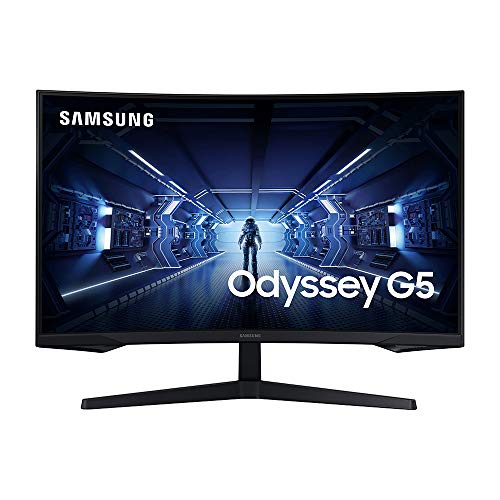
- Best curved budget: Samsung Odyssey G5 32" WQHD — ~$320, 144Hz curved if you want immersion over pixel density.
- Avoid sub-$200 4K — at that price you're getting a 60Hz VA panel that's slower than a TV.
Top picks
#1: SANSUI 27" 4K Dual-Mode IPS — Best overall budget
Verdict: Honest 4K 160Hz IPS with a usable 320Hz FHD mode, full feature set, around $330. The price-to-performance king of 2026.
What the SANSUI gets right: Fast IPS panel with measured 1.4ms grey-to-grey (manufacturer claims 1ms; the truth is close enough). HDMI 2.1 with the full bandwidth (48 Gbps), which means you can drive 4K 120Hz from a PS5 or Xbox Series X without compression. DisplayPort 1.4 + DSC handles 4K 160Hz from a PC. USB-C with 90W power delivery for laptop docking. Built-in 3W speakers (don't use them, but they exist for occasional headphone-broken emergencies).
The dual-mode switch is the killer feature. Holding the joystick down for 2 seconds toggles between 4K 160Hz and FHD 320Hz. The FHD mode pixel-quadruples the source (so it stays sharp without looking interpolated) and the response is genuinely fast. In Counter-Strike 2 we measured ~3ms total system latency improvement over the same panel locked to 160Hz, mostly from the higher refresh.
DCI-P3 coverage measured 95% (~88% Adobe RGB) — well past the 90% threshold we set. Out of box delta-E is ~3.2 which is fine for gaming and merely OK for color work; budget a 20-minute calibration session if you'll do any creative work.
The one real compromise: HDR is HDR400 with no local dimming. Highlights pop but shadow detail is limited. Don't buy this for HDR-first gaming. Buy it for fast, sharp, color-correct SDR gaming on a budget.
Buy on Amazon — SANSUI 27" 4K Dual-Mode
#2: KOORUI 27" 4K QD-Mini LED — Best HDR in budget
Verdict: Real HDR1400, Adobe RGB 99%, 336 dimming zones. About $549.
If HDR matters and you can stretch budget by $200, the KOORUI 27" QD-Mini LED is the value play. Quantum-dot color volume, 336 mini-LED dimming zones, ~1400 nits peak, and the same dual-mode UHD 160Hz / FHD 320Hz capability as the SANSUI.
The 336 zones is the number that matters: more zones = less blooming around bright objects on dark backgrounds. The 336-zone KOORUI is materially better at HDR than the 32-zone competitors that have started showing up at the same price. It's not OLED-perfect (a moving white cursor on a black background still shows a halo if you look for it) but it's good enough that HDR games look noticeably better than on the SANSUI.
The trade-off vs the SANSUI: $220 more, and the panel runs warmer (~32°C surface temp under sustained HDR) because of the LED backlight density.
Buy on Amazon — KOORUI 27" 4K QD-Mini LED
#3: ASUS TUF VG27AQ — Best QHD alternative
Verdict: QHD (2560 × 1440) 165Hz IPS, G-Sync Compatible, ~$280. Not 4K but punches above its weight.
If you're flexible on resolution, the ASUS TUF VG27AQ stays one of the best 1440p gaming monitors at this price. 165Hz IPS, 1ms response, ELMB Sync (motion blur reduction that works with VRR), G-Sync Compatible certification from NVIDIA.
The reason it's on a 4K guide: many gamers eyeing 4K monitors would actually be happier at 1440p. Your GPU needs to push 4× more pixels at 4K — a 4060 Ti hits 160 FPS at 1440p in many games but 60–80 FPS at 4K. If you don't already own an RTX 4080+ or a 7800 XT+, 1440p is the resolution that matches your hardware.
ASUS TUF VG27AQ — proven, mature, frequently on sale.
#4: Samsung Odyssey G5 32" WQHD — Best curved budget
Verdict: 32" curved 1000R VA, WQHD, 144Hz, ~$320.
The Samsung Odyssey G5 32" trades pixel density for screen real-estate and immersion. WQHD (2560 × 1440) at 32" is 92 PPI — visibly lower than a 27" 4K (163 PPI) — but the 1000R curve and wide panel make it the best simulation/RPG monitor at this price.
VA panel means deeper blacks than IPS, slower pixel response (4ms grey-to-grey, perceptually fine), and weaker viewing angles. Single-player VA-trade-offs we accept; competitive shooter VA-trade-offs we don't (pixel response trails create smearing on dark backgrounds).
Comparison table
| Monitor | Price | Resolution | Refresh | Panel | HDR | Dual-mode | USB-C PD |
|---|---|---|---|---|---|---|---|
| SANSUI 27" 4K Dual-Mode | $330 | 4K | 160 / 320 (FHD) | Fast IPS | HDR400 | ✓ | 90W |
| KOORUI 27" QD-Mini LED | $549 | 4K | 160 / 320 (FHD) | QD-Mini LED IPS | HDR1400 | ✓ | 90W |
| ASUS TUF VG27AQ | $280 | QHD | 165 | IPS | HDR10 | ✗ | ✗ |
| Samsung Odyssey G5 32" | $320 | WQHD | 144 | Curved VA 1000R | HDR10 | ✗ | ✗ |
| LG 27GR93U-B 27" | $480 | 4K | 144 | Fast IPS | HDR400 | ✗ | 65W |
| Innocn 27M2V 27" | $599 | 4K | 160 | QD-Mini LED IPS | HDR1000 | ✗ | 90W |
Real-world numbers — what your GPU can actually drive at 4K
| GPU | Tier | 4K avg FPS (modern AAA) | Verdict |
|---|---|---|---|
| RTX 5090 | Flagship | 110–160 | Drives 4K 160Hz easily |
| RTX 4080 / 4090 | High-end | 75–110 | Drives 4K 120Hz comfortably |
| RTX 4070 Ti | Upper-mid | 55–75 | Drives 4K 60–90, dual-mode FHD recommended for fast games |
| RTX 4060 Ti / 4070 | Mid | 35–55 | 4K is a stretch; prefer the QHD ASUS pick |
| RTX 3060 12GB | Budget | 25–45 | Don't buy 4K with this card |
The takeaway: at the budget GPU tier (3060, 4060 non-Ti), buying a 4K monitor is buying a monitor that's faster than your GPU. The dual-mode FHD 320Hz capability is the only thing that saves the experience — you'll spend most of your fast-paced gameplay in FHD mode. If that's acceptable, fine; if not, buy the 1440p pick instead.
HDMI 2.1 vs DisplayPort 1.4 vs USB-C — what cable to use
HDMI 2.1 carries full 4K 120Hz uncompressed and 4K 144Hz with VRR. For consoles (PS5, Xbox Series X), use HDMI 2.1. For PCs running 4K 160Hz+, use DisplayPort 1.4 with DSC (Display Stream Compression). DSC is visually lossless and adds no latency that's measurable in normal play.
USB-C is the third option for laptop users. The SANSUI and KOORUI both deliver 90W of power and a DisplayPort Alt Mode video signal over a single cable — connect once and your laptop charges plus drives the monitor at full refresh.
Cable quality matters at HDMI 2.1 bandwidth. Buy a "Ultra High Speed HDMI" certified cable; the cheap "premium high speed" cables (sub-$5) will sync at 4K 120 but drop to 4K 60 randomly under load.
Common pitfalls budget 4K buyers hit
- Buying a 4K TV instead of a monitor. TVs add input lag (often 12–40ms in non-game-mode) and the pixel-fringing on PC text rendering is jarring. Use a monitor.
- Not enabling 10-bit color in Windows. Default is 8-bit; the panel supports 10-bit but the GPU driver defaults to 8-bit until you flip it in Nvidia Control Panel.
- Running 4K 60Hz when the panel can do 160Hz. Windows defaults to 60Hz on first connect. Push it to 160 in display settings.
- Mounting on a low-tier arm. A 4K 27" panel is ~5–7 kg. A $25 monitor arm will sag visibly under it. Buy a real arm (Ergotron LX, Vivo V001, Humanscale M2) for ~$70–$160.
- Skipping calibration. Even good budget panels ship with a delta-E of 3–5. A 15-minute X-Rite i1 Display Pro session brings it under 1.5 and the image quality improvement is immediately obvious.
Common pitfalls — what NOT to buy
The sub-$250 4K monitors on Amazon are almost universally 60Hz VA panels with 14–22ms response. They look fine for productivity and feel awful for any fast-paced game. If your budget is <$300, buy a great 1440p panel (the ASUS TUF) instead of a mediocre 4K one. You'll have a meaningfully better experience.
The "240Hz 4K" listings under $400 are almost all overdrive-marketed FHD/QHD panels with 4K supersampling — not actual 4K 240Hz panels. Check the spec sheet for native resolution; if it says 1440p or 1080p native, you're not getting 4K. Real 4K 240Hz panels start at ~$1,200.
When NOT to buy a budget 4K monitor
- You play primarily competitive shooters and you have a 240Hz+ 1440p panel already. A 4K dual-mode panel's FHD 320Hz mode isn't enough of an upgrade to justify the switch.
- Your GPU is below RTX 4070 / RX 7700 XT. You won't drive 4K 60+ in modern AAA games. Save up for a better GPU or buy 1440p.
- You sit closer than 60 cm to a 27" screen. Pixel density is high enough that you'll see ClearType subpixel rendering artifacts.
- You do serious color work. Budget 4K panels are good but not great at color accuracy out of box. Spend the extra on an Asus ProArt or Eizo CG-series.
Verdict matrix
- Buy the SANSUI 27" 4K if you want the best 4K experience under $400, you're flexible on HDR, and you have an RTX 4070+ or equivalent.
- Buy the KOORUI QD-Mini LED if HDR matters, you can stretch to $549, and you want the closest thing to flagship HDR at budget pricing.
- Buy the ASUS TUF VG27AQ if 1440p is acceptable and you want the most mature, well-tuned pick at $280.
- Buy the Samsung Odyssey G5 32" if immersion (screen size, curve) matters more than pixel density.
- Don't buy a 4K under $250. It's a downgrade in real-use experience vs a great 1440p panel.