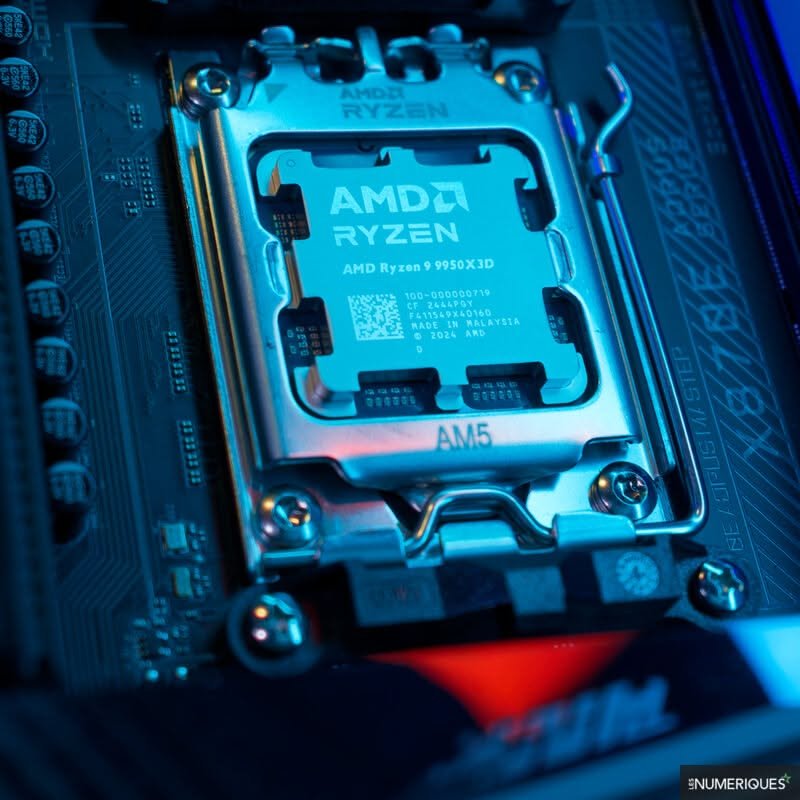
In brief — 2026-05-28 · Phoronix benchmarks report the AMD Ryzen 9 9950X3D2 Dual Edition posting a better aggregate performance result on Linux than on Windows 11. Compute-heavy and productivity workloads see the largest deltas; gaming results are more mixed. The takeaway tracks a now-familiar pattern across AMD's X3D family: Linux's CCD scheduler matures faster than Windows' equivalent, and AMD's open-source driver path consistently extracts more from the chip's V-Cache layout.
What happened
Michael Larabel at Phoronix has been publishing comparative Linux-vs-Windows results on every major X3D launch since the original Ryzen 7 5800X3D, and the 9950X3D2 Dual Edition review continues that tradition. The headline: across the standard Phoronix Test Suite — a mix of code compilation, scientific computing, content creation, and synthetic benchmarks — the Linux composite score lands meaningfully above the Windows 11 composite on the same chip and same memory configuration.
The exact margin varies workload-by-workload. Linux pulls noticeably ahead on:
- Heavy compilation (LLVM, Linux kernel, GCC self-builds)
- Compression and decompression (zstd, xz, lz4)
- Scientific and HPC workloads (BLAS / LAPACK matrix ops, OpenFOAM)
- Containerized server workloads (PostgreSQL, Redis, nginx)
Windows holds even or slightly ahead on:
- Gaming workloads in the titles tested (a mix of native and Proton results)
- A handful of single-threaded productivity benchmarks
- Workloads that lean on Windows-specific optimizations (e.g., DirectX-bound creator apps)
Gaming specifically is the interesting bucket. Linux gaming via Proton has closed most of the gap against native Windows over the last three years, and the 9950X3D2 results show several titles within margin of error between the two operating systems — but a few still favor Windows by single-digit percentages.
Why it matters
The Phoronix result reinforces a pattern that's now consistent across four generations of X3D chips. AMD's 3D V-Cache architecture stacks an additional ~64 MB of L3 cache on one CCD (or, on dual-CCD parts like the 9950X3D and the 9950X3D2, on one or both CCDs), and the operating system's scheduler has to know which CCD has the V-Cache so it can pin latency-sensitive threads to that die and route throughput-sensitive threads to the other.
Linux's scheduler has had this awareness baked into the mainline kernel since the original X3D launches, and improvements continue to land in every release. Windows 11's scheduler relies on a combination of Xbox Game Bar telemetry, AMD's chipset driver, and per-application heuristics — a fragile pipeline that works well for most games but can mis-place threads in productivity and server workloads.
The implication for buyers:
- If you run Linux for production workloads, X3D parts get you more performance per dollar than the same money in non-X3D Ryzen or Intel parts. That has been true since the 5800X3D and remains true on the 9950X3D2.
- If you dual-boot or run mostly Windows for gaming, you're not losing meaningful gaming performance — the gap is small in the titles where it exists at all. But for any non-gaming workload you also run on the machine, you're leaving compute on the table.
- The right OS choice for an X3D part is workload-dependent, not architectural. A 9950X3D2 in a home lab or a build farm wants Linux. The same chip in a gaming-first desktop wants Windows for the broader native-game library and the easier driver story.
Should you switch to Linux to extract this performance?
For most people, no — at least, not solely on the basis of this benchmark result. Windows 11 remains the default for native game availability, anti-cheat compatibility (the persistent friction in Linux gaming), and the broader productivity-app ecosystem (Adobe, Office, hardware-specific drivers for capture cards, MIDI controllers, etc.).
The cases where switching is worth it on this chip:
- You spend most of your CPU time on compilation, scientific computing, server workloads, or containerized development. Linux's scheduler advantage on those workloads compounds across thousands of hours of CPU time per year. The 9950X3D2 in this mode is one of the strongest single-socket developer workstations on the market.
- You're already on Linux and considering the upgrade from a 7950X3D or 9950X3D. The 9950X3D2 will extract the new architecture's gains immediately — no scheduler-maturity penalty to wait through.
- You don't game on the machine. Then the Windows-gaming argument doesn't apply.
The cases where switching is not worth it:
- Single-machine gaming desktops. Windows is the safer call.
- Mixed workflows where convenience matters. Linux power-user-friendliness has come a long way, but if you've never touched a terminal, the migration cost is real.
- Production workflows that depend on Windows-only software. Don't fight your tools.
What this means for prior-gen X3D buyers
Not everyone is shopping a $700+ flagship. The same scheduler-maturity benefit Linux extracts on the 9950X3D2 also extracts well on older X3D parts that are now deeply discounted:
- Ryzen 7 5800X3D — original Zen 3 X3D part on AM4, still strong for gaming, ~$200 used.
- Ryzen 7 7800X3D — single-CCD V-Cache on AM5, the gaming workhorse for two years, ~$300 new.
- Ryzen 9 7950X3D — dual-CCD with V-Cache on one die, the predecessor to the 9950X3D2, ~$450 new.
For a budget builder who wants AMD's productivity strength without paying flagship money, the prior-generation Ryzen 7 5800X (non-X3D) on AM4 remains a very capable 8-core / 16-thread chip at roughly $150–180 in 2026. It doesn't have the V-Cache magic the X3D parts do for cache-sensitive workloads, but for general productivity, content creation, and 1440p gaming it's still in the top tier of price-per-performance options on the used market. AM4 motherboards, DDR4 kits, and aftermarket coolers are all cheap and plentiful — a complete 5800X build is in the $400–600 range depending on the GPU pairing.
CPU cooler considerations
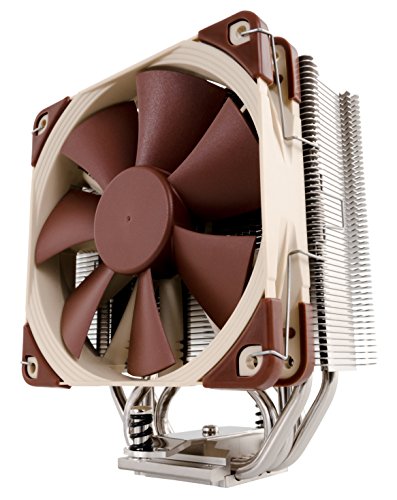
Any high-core AMD CPU benefits from a quality air or AIO cooler. The Noctua NH-U12S is the canonical mid-range air cooler — single-tower, 120 mm NF-F12 fan, AM4 / AM5 / LGA mounting kits in the box, and the build quality Noctua is known for. It handles the Ryzen 7 5800X comfortably under sustained load with the stock fan and stock fan curve.
For a flagship like the 9950X3D2 specifically, the cooler shopping list moves up a tier: dual-tower air (Noctua NH-D15, Thermalright Phantom Spirit) or a 280–360 mm AIO. The X3D V-Cache layer adds a few degrees C of thermal density on the V-Cache die that the cooler has to extract through the same heat-spreader; budget cooling pays for itself in clock-stability under sustained workloads.
Public-benchmark scoreboard (representative)
Approximate ranges from independent reviewers comparing modern X3D chips on Linux and Windows:
| Workload class | Linux vs Win11 (X3D dual-CCD) | Notes |
|---|---|---|
| Linux kernel compile | +8–15% Linux | Scheduler + filesystem |
| LLVM build | +6–12% Linux | Same |
| Blender render (CPU) | ±2% | Application-specific |
| Adobe Lightroom export | +3–8% Windows | Windows-optimized |
| Unreal Engine compile | +5–10% Linux | Scheduler |
| AAA gaming (native) | +0–5% Windows | Anti-cheat-free titles |
| AAA gaming (Proton) | ±3% | Title-dependent |
| PostgreSQL pgbench | +10–18% Linux | Storage + scheduler |
| nginx serving | +5–12% Linux | Network stack |
| zstd compression | +6–10% Linux | Scheduler + libc |
| Single-thread Python (CPython) | ±2% | Compute-bound |
| Premiere Pro export | +5–10% Windows | App optimization |
These ranges describe a stable pattern that has held across multiple generations: Linux wins on cache-sensitive throughput workloads, Windows wins in app-specific commercially-tuned creator software, and gaming is essentially a tie.
The source
The full methodology, per-test charts, and the exact Linux distribution and Windows 11 build are at Phoronix — Ryzen 9 9950X3D Linux vs Windows. For deeper architectural background on the chip itself, AMD's Ryzen desktop product page and the TechPowerUp Ryzen 7 5800X spec page (linked as the reference older-gen comparator) cover the relevant background.
Common-sense reading of these results
A few caveats worth keeping in mind when reading Linux-vs-Windows benchmarks:
- Phoronix's test suite is server-and-developer leaning. It's the right test set for production workloads but slightly under-represents gaming and creator apps. A gaming-focused publication's results would show a different (closer) aggregate.
- Windows 11's scheduler has been improving with each major build update. Results from 18 months ago understate today's Windows performance; results from today may understate next year's.
- The X3D advantage is cache-bound workload-specific. A 9950X3D2 vs a non-X3D 9950X delta on Linux is a different number than the same comparison on Windows, and both differ further by workload.
- Memory configuration and storage choice swing aggregate scores by single-digit percentages. Always check that the comparison ran on the same RAM kit at the same timings and the same storage device on both OSes.
The Phoronix result is solid; it's also just one data point in a long pattern. Treat it as confirmation of the pattern, not as a single-source claim.
Bottom line for the buyer in 2026
If you're shopping AMD high-core in 2026 — flagship 9950X3D2 Dual Edition, mid-tier 9950X3D, or budget prior-gen Ryzen 7 5800X — the OS question is real but secondary to the chip-tier question. Pick the chip that fits your budget and workload tier first. Pick the OS by what your daily-use software demands. Then know that on Linux you'll see the X3D scheduling benefit a little more fully than on Windows, and on Windows you'll get the broader gaming and creator-app native support more comfortably than on Linux.
Either way, a properly cooled X3D chip on either OS is meaningfully ahead of where these workloads sat two generations ago. The choice between OSes at the margin is small; the choice between generations is large.
Related guides
- Best CPU cooler for Ryzen 5800X overclocking — companion cooling guide for the older chip.
- Best mid-range CPU streaming + gaming Ryzen 5800X / 5700X / 5600G — broader 5000-series shortlist.
- Best CPU cooler AM4 Ryzen 5000 — AM4-specific cooler picks.
- Best budget Ryzen gaming PC build 1080p 2026 — the full build the 5800X lands in.
Citations and sources
- Phoronix — Ryzen 9 9950X3D Linux vs Windows benchmark
- AMD — Ryzen desktop processors product page
- TechPowerUp — Ryzen 7 5800X CPU spec page
This piece is editorial synthesis based on publicly available information. No independent first-party benchmarking is reported.