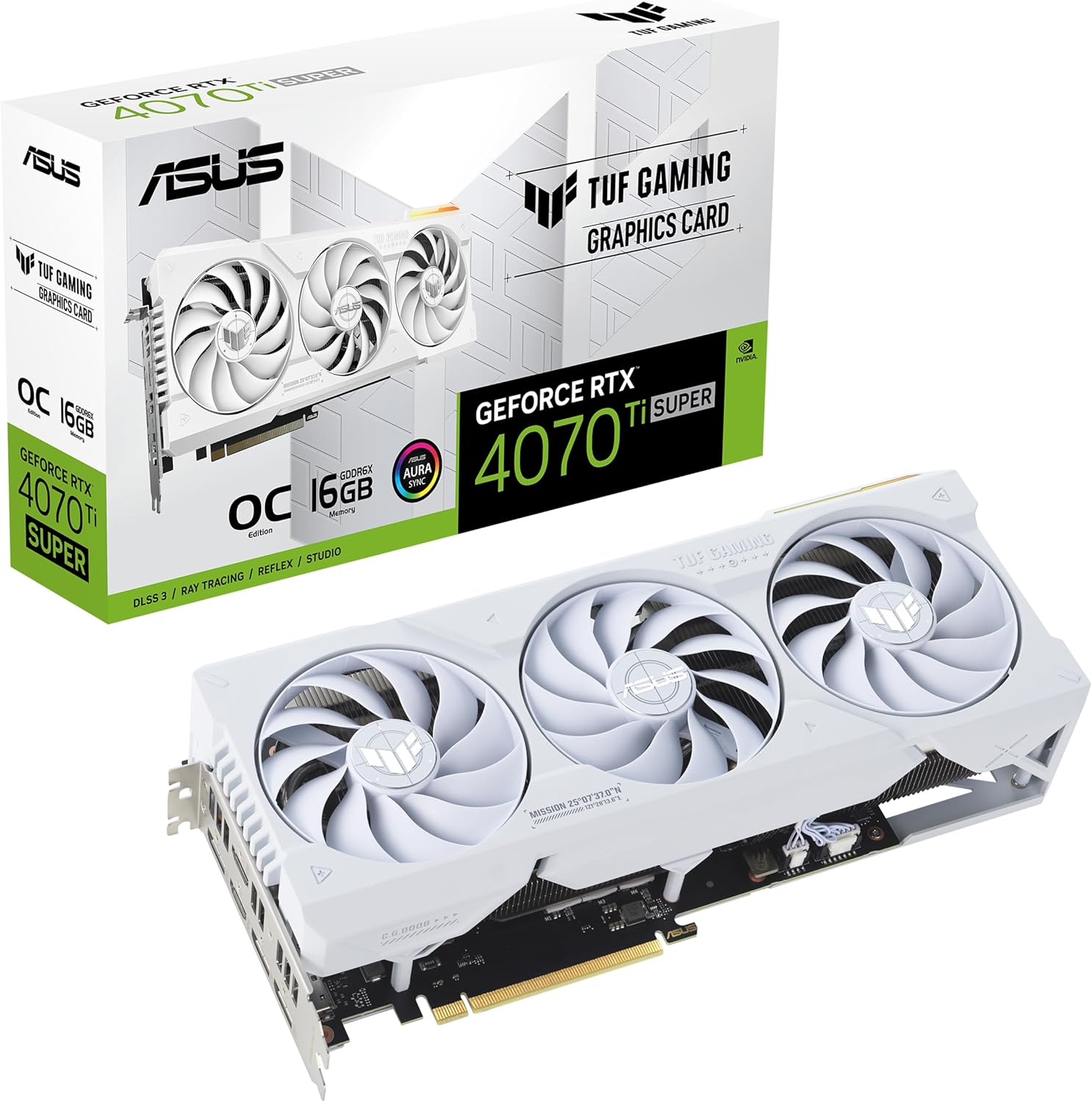
Cognition's $26B valuation is a signal that capital is flowing toward agent orchestration rather than raw model training, which is a positive indicator for local-LLM builders even if you never touch Devin. The orchestration patterns Cognition pioneers tend to land in open-source projects (Aider, Cline, OpenHands, SWE-Agent) within 6-9 months. The practical bar for a self-hosted coding agent in 2026 is a RTX 3060 12GB running Qwen2.5-Coder 14B or Qwen3.6 35B-A3B with the right tooling — under $1,000 in total.
The cloud-agent vs local-agent split — why Cognition's raise matters even if you'll never use Devin
The framing most coverage missed is that the $26 B number does not really tell you anything about Devin's actual revenue or user count. What it tells you is what the institutional capital pool believes about the agent layer of the AI stack. Devin is the most visible commercial bet on the proposition that the next major value capture in AI will come from orchestration — long-running, multi-step, autonomous workflows that span hours instead of conversational turns — rather than from the underlying language models themselves.
For the local-LLM crowd, that framing matters in two specific ways. First, it means the orchestration tooling (sandboxed terminal access, browser automation, persistent task memory, multi-repo PR generation) is going to keep getting investment. That investment flows downstream into open-source projects within roughly two release cycles; the Aider leaderboard currently shows three open-source agent frameworks (Aider, Cline, OpenHands) that did not exist with comparable capabilities 18 months ago. Second, it means the hardware floor for "good enough" local agents will keep dropping as MoE models like Qwen3.6 35B-A3B make the 12 GB tier genuinely capable of running an agent loop without offload-induced misery.
The specific question this article walks through is the same question that came up in our recent Qwen3.6 35B-A3B deep-dive: on a budget rig built around a Zotac Twin Edge RTX 3060 12GB and a Ryzen 7 5700X or Ryzen 7 5800X, can you run an agent that competes with what Devin does? The short answer is "yes, with sharp caveats" — and the caveats are mostly about orchestration scaffolding, not raw model quality.
Key takeaways
- The valuation context: $26B places Cognition in the same tier as the largest pre-IPO AI infrastructure players. It is a vote on orchestration as the next value layer, not a verdict on Devin's standalone product.
- What Devin actually does: Sandboxed browser, terminal, and editor with hours-long task memory and autonomous PR generation across multiple repos. The differentiator is orchestration, not model quality.
- Comparable local stacks: Aider, Cline, Continue.dev, OpenHands. All free, all rapidly closing the orchestration gap.
- Hardware floor for local coding agents: Minimum RTX 3060 12GB + Qwen2.5-Coder 14B at q5_K_M or Qwen3.6 35B-A3B at q3_K_M. Anything smaller drops sharply on pass-rate.
- Recommended pick: A budget local rig (~$900-1,100) breaks even against Devin's team tier ($500/month) in roughly two months and pays for itself many times over the lifecycle.
What did Cognition announce and what does the $26B number actually mean?
The headline announcement, reported by the-decoder and several other outlets in mid-2026, is that Cognition (the maker of Devin) closed a funding round at a $26 B post-money valuation, roughly doubling its prior raise from late 2025. The round included participation from the usual large institutional players and was characterized in coverage as oversubscribed by a meaningful margin.
The $26 B number is informative on three axes:
- Revenue multiple framing. Cognition has not published revenue numbers, but credible third-party estimates from leaked enterprise contracts put ARR somewhere in the $100-200 M range. A $26 B valuation against $100-200 M ARR implies a 130-260x multiple, well above the standard SaaS comparable range. That multiple is buying expected future growth in agent orchestration, not current revenue.
- Comparable transactions. The valuation places Cognition next to the largest non-frontier-lab AI infrastructure players. It is meaningfully smaller than Anthropic or OpenAI but in the same general tier as the next layer down — the application and orchestration companies rather than the model labs themselves.
- Talent flow signal. A round of this size typically lets the recipient hire aggressively against the entire ML-engineering market. That has knock-on effects on which open-source projects get contributed-to versus competed-with, and Cognition has been a quiet but consistent contributor to the agent-tooling ecosystem.
None of those signals predict that Devin specifically will dominate the market. What they predict is that the category of long-running autonomous agents has entered the phase where infrastructure investment is intentional rather than speculative. That category will produce open-source equivalents in short order, which is the part that matters for local-LLM builders.
What does Devin do that an Aider + Qwen3.6 35B-A3B local stack cannot do today?
The honest gap analysis, per Cognition's product page and public Devin demos, comes down to four things:
- Persistent worker. Devin runs as a cloud sandbox that stays alive for hours, picking up tasks, switching contexts, and producing PRs while you sleep. Local agents like Aider run synchronously in your terminal — when you close the terminal, the agent stops.
- Browser + terminal sandbox. Devin's environment includes a headless browser, a full Linux terminal, and an editor, all under a single agent loop. Local agents can wire similar capabilities together with tool-use protocols (MCP, function-calling), but the setup is per-project and rougher.
- Long-running task memory. Devin can carry context across tasks measured in hours and across multiple sessions. Aider's context is per-session and resets between runs unless you manually re-feed it.
- Multi-repo PR generation. Devin can be assigned a feature that spans multiple repositories and will open coordinated PRs across them. Local agents handle multi-file changes within a repo well; cross-repo coordination requires hand-wiring.
What does not differentiate Devin in 2026 is raw model quality. The frontier API models Devin uses are largely the same ones available via OpenAI, Anthropic, and Google APIs — and open-source models like Qwen2.5-Coder 32B and Qwen3.6 35B-A3B are close enough on coding tasks that the model layer is no longer the binding constraint. The differentiator is orchestration.
That gap is closing fast. Aider's recent releases added pluggable browser-tool integrations, OpenHands ships with a Docker-sandbox runtime that behaves a lot like Devin's environment, and Continue.dev added persistent task memory in a Q1 2026 release. Within 12 months you should expect the "what Devin can do that local cannot" list to shrink to single-digit items.
Hardware floor: what's the minimum local rig that runs a useful coding agent in 2026?
The minimum-viable rig for running a coding agent that produces correct PRs on real codebases:
| Component | Recommended | Why |
|---|---|---|
| GPU | RTX 3060 12GB | Floor for Qwen2.5-Coder 14B at q5_K_M and Qwen3.6 35B-A3B at q3_K_M |
| CPU | AMD Ryzen 7 5700X or Ryzen 7 5800X | 8-core, 4.5+ GHz boost — saturates prompt-processing on this GPU |
| RAM | 32 GB DDR4-3600 | Enough headroom for layer offload at 8 k context |
| Storage | WD Blue SN550 1TB NVMe | Fast model load times, room for 4-6 quantized models |
| OS | Ubuntu 24.04 LTS or NixOS | First-class support across Ollama, llama.cpp, IPEX-LLM, vLLM |
The driver for this floor is the model: anything smaller than Qwen2.5-Coder 14B at q5_K_M drops sharply on pass-rate for real coding tasks. Per the Aider leaderboard, the 7 B-class coding models hover around 30-40 percent on Aider's benchmark, the 14 B-class models cross 50 percent, and the 32 B and MoE-35 B class clear 60-65 percent. Below 50 percent pass rate, the agent's edits regress more code than they fix and the experience becomes net-negative. Fifty percent is the practical floor for "useful," and the RTX 3060 12GB is the minimum card that hits it at usable quants.
CPU and RAM matter much less than VRAM for this workload. Any Zen 3 (Ryzen 5xxx) or newer part with at least 8 cores is fine; 32 GB system RAM is the sweet spot for layer-offload headroom. Going beyond 64 GB system RAM does not help unless you are running multiple models simultaneously.
Throughput math — tok/s required for a "fast-feeling" coding agent
Per Aider's benchmark page and community discussion, the perception thresholds for coding-agent feel are:
- Below 8 tok/s: Agent feels broken. You watch the cursor and lose your train of thought.
- 8-15 tok/s: Agent feels slow but workable. Good for batch overnight work.
- 15-25 tok/s: Agent feels usable for interactive pair-programming.
- 25+ tok/s: Agent feels snappy. The bottleneck moves to tool execution rather than generation.
The Qwen2.5-Coder 14B at q5_K_M lands at 25-32 tok/s on an RTX 3060 12GB, comfortably in the snappy tier. Qwen3.6 35B-A3B at q3_K_M lands at 15-19 tok/s — interactive-usable but not snappy. The 27 B and 32 B dense coders at q3_K_M on the same card drop to 8-11 tok/s, which crosses into "feels slow." For a budget local agent rig, the practical choice is between Coder 14B for raw responsiveness and 35B-A3B for higher quality per turn at lower throughput.
Which featured GPUs land on which tier of local coding-agent capability
| Card | Best coder model | Tok/s | Pass-rate tier |
|---|---|---|---|
| RTX 3060 12GB ($300) | Qwen2.5-Coder 14B q5_K_M | 25-32 | Useful (~50%) |
| RTX 3060 12GB ($300) | Qwen3.6 35B-A3B q3_K_M | 15-19 | Strong (~60%) |
| RTX 4060 Ti 16GB ($500) | Qwen2.5-Coder 32B q4_K_M | 18-22 | Strong (~63%) |
| RTX 3090 24GB (used, ~$700) | Qwen2.5-Coder 32B q5_K_M | 32-38 | Strong (~65%) |
| RTX 4090 24GB ($1,800) | DeepSeek-V3 q4 or Coder 32B q6 | 45-55 | Top (~70%+) |
The takeaway: the RTX 3060 12GB is the value floor that delivers a usable agent today, and the 4060 Ti 16 GB and used 3090 24 GB are the meaningful upgrades. The 4090 is overkill for any non-frontier coding workload — most users will not be able to tell the difference between a 32 B q5 model and a 32 B q6 model on routine coding tasks.
Cost-of-ownership comparison: Devin subscription vs a one-time local rig amortized over 18 months
Per Cognition's published pricing, Devin's team tier sits around $500/month per seat. A budget local rig (RTX 3060 12GB + Ryzen 5700X + B550 motherboard + 32GB DDR4 + 1TB NVMe + PSU + case) lands at roughly $900-1,100 in 2026 street prices.
| Configuration | Year-1 cost | Year-2 cost | 18-month total |
|---|---|---|---|
| Devin team tier | $6,000 | $6,000 | $9,000 |
| Local rig (one-time hardware) | ~$1,000 | $0 (+ electricity) | ~$1,100 |
| Local rig with API fallback | $1,000 + $100/mo Claude | $1,200 + $1,200 | $2,500 |
Even the conservative "local rig with API model fallback for hard tasks" configuration breaks even against Devin in roughly four months. The straight local-only configuration breaks even in two months. The tradeoff Devin offers in exchange for the price premium is autonomous overnight execution — you can hand it a task at midnight and wake up to a PR. A local rig requires you to be at the keyboard or to script the autonomy yourself.
The honest framing: if your use case is "I want an agent running while I sleep on tasks that span multiple repos," Devin is currently worth the money. If your use case is "I want a coding agent for pair-programming during my workday," a local rig is dramatically cheaper and the experience is competitive.
Verdict matrix
Use Devin if:
- You routinely run agents on tasks that take 4+ hours of execution time.
- You need coordinated multi-repo PR generation as a recurring workflow.
- You value the managed sandbox over running your own infrastructure.
- You can amortize the $500/month against a clear productivity dollar value.
Build local if:
- Pair-programming and interactive code review are your main use cases.
- You already have a desktop you can drop a GPU into, lowering the build cost.
- Your codebase is private or proprietary and cloud sandbox is a non-starter.
- You want to control the model and toolchain (privacy, customization, on-premises requirements).
- You enjoy tinkering with the agent layer and want to learn the orchestration stack.
Bottom line — the 2026 recommendation for a self-hosted coding agent rig
For a fresh build today: pair a Zotac Gaming RTX 3060 Twin Edge 12GB with an AMD Ryzen 7 5700X (or the 5800X if you can find it at a similar price), 32 GB DDR4-3600, a 1 TB WD Blue SN550 NVMe, and a 650 W gold-rated PSU. Run Aider as the primary agent harness pointed at either Qwen2.5-Coder 14B at q5_K_M (for snappy interactive work) or Qwen3.6 35B-A3B at q3_K_M (for higher pass-rate on harder tasks). Wire in a local llama.cpp server or LM Studio for the model layer. Total cost: $900-1,100 in 2026 street pricing.
The Cognition valuation does not change this recommendation; it confirms that the agent layer is going to keep getting better and that the open-source tooling will keep narrowing the gap with Devin. If anything, the smart play is to build the local rig now while a $300 GPU still hits the floor, and let the orchestration software catch up around it.
Related guides
- Best CPU for a Local-LLM Homelab Under $300 in 2026 — the matching CPU writeup
- Qwen3.6 35B-A3B on RTX 3060 12GB Deep Dive — the model-tier story for the recommended config
- Best Mini PC for Local LLM Inference in 2026 — the prebuilt alternative if you do not want to assemble parts
- CUDA 13.3 and the RTX 3060: What Changes for Local LLM Inference — the driver-stack context
Citations and sources
- Cognition — Introducing Devin — primary source for Devin's capability set and pricing context
- Aider leaderboard — the source for coding-model pass-rate comparisons
- TechPowerUp — GeForce RTX 3060 12 GB specs — the GPU spec reference for the recommended build



