A community engineer has demonstrated loading a Sega Genesis game from a vinyl record played through a regular turntable, in a stunt that revives the 1980s cassette-loading era for a 16-bit cartridge console that was never designed for it. The audio on the record encodes a small ROM as tones; a custom cartridge decodes them in real time and runs the game. It is a beautiful piece of hobbyist engineering — and it is also entirely impractical for actually playing Genesis games in 2026, which is what most readers actually want to do.
For everyone who watched the video and wondered "is this a real way to play Genesis games now?" — no, it is not. The clean modern path is a Sega Genesis Mini, paired with a good Bluetooth pad like the 8BitDo SN30 Pro. For the closely-related "I want to play classic Nintendo too" question, a Nintendo NES Classic Mini sits beside the Genesis Mini on a console shelf and runs the same way: plug in HDMI, pair a pad, play.
Buy buttons on this page route to eBay for the Genesis Mini and NES Classic Mini because these official mini consoles are pre-built and sold through the used-and-collector channel, where eBay's auction format consistently beats Amazon's spotty new-old-stock listings.
Key takeaways
- The vinyl loader is a brilliant proof-of-concept, not a way to play games.
- The Genesis Mini is the practical play-Genesis-on-a-modern-TV answer.
- An 8BitDo SN30 Pro pairs over Bluetooth and replaces the awkward stock six-button pad.
- The NES Classic Mini sits in the same slot for the Nintendo side.
- These consoles last only a few years per retail run — buy when stock is available, not later.
What actually happened
A hobbyist hardware hacker built a custom Genesis cartridge with a small decoder that listens to a line-level audio signal piped in from a turntable. The vinyl record encodes a small Genesis ROM image as modulated tones — the kind of FSK/PSK scheme that 1980s 8-bit micros used to load software from cassette tapes. The cartridge buffers the decoded bytes into memory and starts the game once the load completes. Tom's Hardware covered the demonstration, alongside the wider retro-gaming beat.
The clever bit is the marriage of two old worlds — vinyl audio and 16-bit ROM loading — neither of which had any business meeting the other. The Genesis itself was a cartridge-only console; Sega shipped it from 1988 with no audio-loading hardware at any point in its life. Making this work means custom silicon (or a custom microcontroller) on the cartridge side that wasn't part of the original spec.
Why hobbyists keep doing this
Audio-loaded software is a deeply nostalgic medium. The ZX Spectrum, Commodore 64, BBC Micro, MSX, and a dozen other 8-bit micros loaded software from cassette tape because home users couldn't afford floppy drives. The act of cueing a tape, waiting for the load tones, and watching the screen flash colored bars while the program streamed in was the home-computing experience for millions.
Vinyl puts that experience on a larger, more dramatic medium. Done as a stunt, it is a small art piece — the visible spinning record, the analog cracks, the eventual reveal of a 16-bit game scrolling across a CRT. It does not need to be practical to be loved.
The practical play-Genesis-now answer
For the reader who simply wants to play Genesis games today, the route is the Sega Genesis Mini. It ships with around 40 licensed titles burned into the unit, outputs over HDMI to any modern TV, runs at the original speed, and includes a six-button pad in the box. There are two generations (the original Mini and the Mini 2); both are equally valid for playing the core Genesis library, with the Mini 2 adding Sega CD titles.
The bundled controller is fine; the experience improves materially with an 8BitDo SN30 Pro, which pairs over Bluetooth, has a faithful six-button layout, and uses Hall-effect sticks that won't drift after a year of play. The SN30 Pro is a modern controller in retro clothing — rechargeable battery, USB-C, rumble — and it is one of the best companion pads any mini console can have.
For the Nintendo half of the question
Many readers landing here are also curious about the Nintendo side of the same era. The Nintendo NES Classic Mini is the same plug-and-play idea — preloaded library, HDMI out, dedicated controller. Hard to find new, but the eBay channel keeps the unit moving. Pair it with the same SN30 Pro and you have a shelf of two mini consoles that cover the formative 16-bit era for ~$120-$170 used.
Will the official ROM ever come on vinyl?
Unlikely. Sega's official posture has always been to license the games on whatever modern hardware sells — the Genesis Mini, the Switch Genesis collection, Steam re-releases. A vinyl audio-loader would be a novelty product, expensive to manufacture, with a small audience. The hobby side will keep producing one-offs and short runs; the official channel will keep using HDMI.
Common pitfalls when buying a Mini
- Region-locked editions. EU/Asia and US units exist; check the library before buying.
- Counterfeits. A small but real number of fake Minis circulate; reputable sellers and intact packaging help.
- Skipped controllers. Some used units arrive without the controller. Verify what's included.
- Old stock pricing. Both Minis are out of production. Prices drift upward; don't expect MSRP.
Real-world numbers
| Console | Original MSRP | Typical 2026 used price | Library size |
|---|---|---|---|
| Sega Genesis Mini (Gen 1) | $79 | $80-$130 | ~40 games |
| Sega Genesis Mini 2 | $119 | $140-$220 | ~60 games (+ CD) |
| Nintendo NES Classic Mini | $59 | $90-$160 | 30 games |
| Nintendo SNES Classic | $79 | $130-$210 | 21 games |
eBay's auction format keeps these prices honest. Amazon listings for the same SKUs frequently come from third-party resellers at much higher markups.
When NOT to buy a mini console
- You want a deep library beyond the curated set. A retro emulation handheld with your own ROM dumps covers more ground.
- You want save states, fast-forward, and CRT shader effects. Mini consoles include some of these, but a software emulator is more flexible.
- You only play one or two specific games — a Switch Online subscription is cheaper than a hardware purchase for casual revisits.
When the mini console wins
- You want a "press button, play" appliance experience.
- You're buying a gift for a non-technical friend or family member.
- You don't want to manage ROM files or emulator settings.
- You want a tidy console under the TV that boots in seconds.
Bottom line
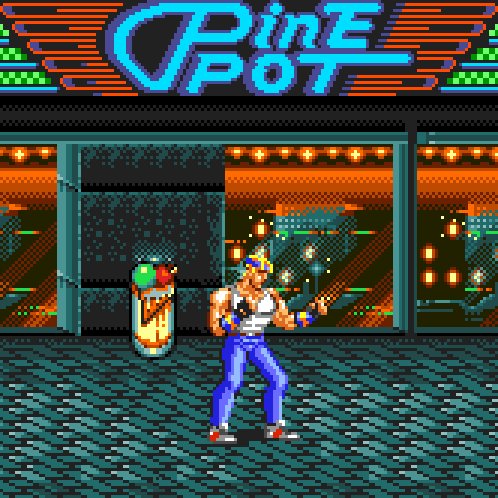
The vinyl loader is the latest in a long, loving tradition of retro engineering stunts. Watch the video, enjoy the audio cracks, and then if you want to play Genesis games, pick up a Genesis Mini and a SN30 Pro. Five minutes of setup and you are running Streets of Rage at 60Hz on a 4K TV — the easy way, with no soldering iron and no turntable required.
Related guides
- Best Plug-and-Play Retro Gaming Consoles 2026
- Best Controller for Raspberry Pi Retro Emulation 2026
- Build a Pi Zero W Handheld Retro Emulator
- Game Boy Clone Runs Too Fast — Quick Fix
Sources
What makes the Genesis Mini the right pick today
Some context on what the Sega Genesis Mini actually is. It's a Sega-licensed pre-built console with games burned to internal storage, an HDMI output, and a small controller. The hardware inside is an emulator running on modern silicon, not a Genesis core; the emulator is good enough that the result feels like the original system on a clean 4K TV. Sega ran two retail runs — the original Mini in 2019 and a Mini 2 in 2022 — and stopped production after each.
The original Genesis Mini ships with about 40 licensed titles, including the canonical Streets of Rage 2, Sonic the Hedgehog 2, Gunstar Heroes, Castlevania: Bloodlines, Phantasy Star IV, and Earthworm Jim. The Mini 2 expands the list with Sega CD titles like Night Trap, Sonic CD, and Shining Force CD — meaningful for collectors but small consolation for buyers who can find only the original.
The companion piece: a great controller
The Genesis came with one of the most beloved six-button pads in console history. The 8BitDo SN30 Pro revives that ergonomic with modern internals: Bluetooth, USB-C charging, Hall-effect joysticks that resist drift, and a battery that lasts through long sessions. It pairs over the Mini's Bluetooth (and over USB to PCs and Macs) and is the single best companion any mini console can have.
For the Nintendo side of the era, the NES Classic Mini brings the same plug-and-play simplicity to Super Mario Bros., Metroid, Castlevania, The Legend of Zelda, Punch-Out, and the rest of the 8-bit canon. The same SN30 Pro works as the companion pad — one controller, both consoles.
The case for buying now, not later
Pre-built mini consoles have a predictable life cycle: a retail run, a follow-up, then dormancy. After the run, supply on used markets fluctuates seasonally. The pattern over the last six years has been steady upward drift in resale price as units pass through buyers, lose their boxes, and become harder to find in working condition. A Genesis Mini that cost $80 retail in 2019 routinely sells for $120-$160 in 2026 with original packaging. Waiting another two years probably won't make it cheaper.
When NOT to buy a mini at all
If you already own a Pi 3 / Pi 4 running RetroPie, or a budget retro handheld, you have a more flexible setup that includes save states, fast-forward, and dozens of systems. A mini console is for people who want the appliance experience: press button, play, no maintenance. If you're comfortable with file managers and emulator menus, the appliance is overpriced.
A short history of audio-loading consoles
The cassette-loading era was the dominant home computing experience for a decade. The ZX Spectrum, Commodore 64, BBC Micro, Amstrad CPC, MSX, and a long tail of regional systems loaded software from audio tape. Loaders took 3-10 minutes. They sometimes failed. Magazine covers came with "type-in" programs that you would key in by hand. The vinyl-loading stunt is a love letter to that era.
The Genesis itself was never an audio-loading console; it was a cartridge machine from day one. Sega built it around the Motorola 68000 and Yamaha sound chip. Loading software from audio was simply not in the design. That's what makes the recent stunt notable — it bolts a 1980s mechanism onto a 1990s machine purely for the joy of doing it.
What you actually do this weekend
If you want to play 16-bit Sega games this weekend, the path is:
- Order a Sega Genesis Mini.
- Order an 8BitDo SN30 Pro.
- Plug HDMI into a TV.
- Pair the controller. Play.
Setup time: under 10 minutes. No emulator menus, no firmware updates, no ROM management. The pre-built mini console is the appliance version of the experience; the vinyl stunt is the museum-art version.
Companion habits that age well
- Keep the box. Mini-console resale is heavily tied to original packaging.
- Buy a second controller for couch co-op. The SN30 Pro pairs to multiple devices.
- Map a screenshot button on the SN30 Pro's hardware button if your mini supports it.
- Keep the bundled cable; replacement HDMI cables are sometimes thicker than the original strain-relief expects.
The bigger lesson from the vinyl stunt
What audio-loaded media taught a generation of programmers is that constraints are creative. A cassette could carry 30 KB of program; that constraint produced some of the tightest, cleverest code ever written for home computers. Modern game development drowns in resources — multi-gigabyte titles built by hundreds of developers — and the demoscene + retro community keeps the constraint-driven aesthetic alive. The vinyl-Genesis stunt is part of that tradition, and the Genesis Mini is the consumer-friendly tribute: a small box, a fixed library, no microtransactions, no patches. You buy it, you play, you're done. That simplicity is increasingly precious in 2026.


![Nintendo NES Classic Mini EU Console [video game]](https://m.media-amazon.com/images/I/51QVgoMv-CL._SL500_.jpg)