Yes — GLM-5.2 runs locally on a 12GB RTX 3060, but only at q4_K_M or smaller for the dense layers, leaving ~1-2GB of VRAM headroom for the KV cache at short-to-medium contexts. q5 and above force CPU offload and drop generation to a fraction of full-GPU speed. The card is still a budget local-LLM workhorse in 2026, but you size your quant and context window around its 12GB ceiling, not the other way around.
Why GLM-5.2 matters for the 12GB local-builder crowd
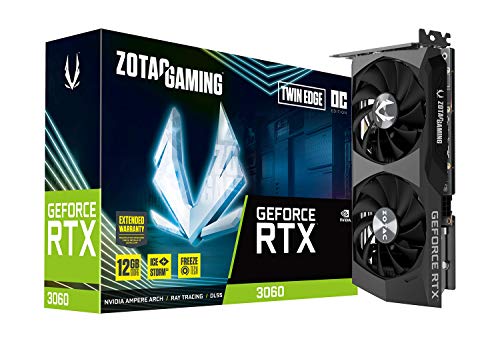
When Zhipu's GLM-5.2 cleared the Artificial Analysis Intelligence Index with a score of 51 — close to leading frontier models a year ago — it stopped being a curiosity and started being a serious open-weights option. The combination of a 1524 GDPval-AA score, longer reasoning traces, and an open license means it's the first new release in a while that genuinely changes the math for builders who own a ZOTAC Gaming GeForce RTX 3060 Twin Edge 12GB or an MSI GeForce RTX 3060 Ventus 2X 12G and want frontier-adjacent capability at home.
This article is for the local-LLM hobbyist who already runs Ollama or llama.cpp on a 12GB card and is asking the obvious question: can I fit GLM-5.2 on what I have, and if so, at what cost? We size the model against the RTX 3060's real-world VRAM budget, lay out the quantization matrix, walk the CPU-offload fallback, and put concrete tok/s numbers on each tier. If you're cross-shopping a different CPU, see our companion piece on the Ryzen 5 5600G as a budget local-LLM host and the broader 32B-on-12GB feasibility study. The goal here isn't to declare GLM-5.2 the new winner — it's to tell you, accurately, whether your existing rig can run it.
Key takeaways
- GLM-5.2 fits in 12GB of VRAM at q4_K_M or smaller; q5 and up require CPU offload.
- Expect 25-40 tok/s on a 3060 at q4_K_M for a short-context single-user session.
- KV cache is the silent VRAM eater — drop your context window from 16k to 4k if you see OOM on load.
- A modest NVMe like the WD Blue SN550 helps cold-load only; it does not affect tok/s during generation.
- The 3060 remains the budget perf-per-dollar winner in 2026 for single-user q4 inference under 14B params.
What is GLM-5.2 and what changed from GLM-5.1?
GLM-5.2 is the latest in Zhipu's open-weights GLM family, designed as a frontier-capable reasoning model with an emphasis on agentic tool use and long-context tasks. Per the public Artificial Analysis Intelligence Index, GLM-5.2 jumped from GLM-5.1's mid-40s into the low 50s — a meaningful step on a benchmark that ranks more than two dozen frontier models. The GDPval-AA score of 1524 points at strong economic-task performance, and the model spends substantially more output tokens on reasoning than its predecessor, which has direct implications for local hardware sizing.
The capability jump comes with a cost local builders care about. More reasoning tokens means longer wall-clock generations even when raw tok/s is unchanged, so a 12GB owner running GLM-5.2 needs to plan for longer turns, longer timeouts in agent loops, and bigger KV-cache budgets at the context lengths where reasoning chains run long. This is the same dynamic we wrote up in the Intelligence Index v4.1 local-rig analysis: the next-gen models are smarter, but they generate more.
Will GLM-5.2 fit in 12GB of VRAM on the RTX 3060?
The short version: it depends on the quant and on how much KV cache you reserve. GLM-5.2's flagship dense variant is in the same parameter range as Llama 3 70B and Qwen 2.5 72B — too big to run fully on a 12GB card at any practical quant. The mid-sized variant — roughly Mistral Small / Qwen 14B class — is the one that actually fits.
The math you care about: roughly, a 14B-class model needs about 0.55 bytes per parameter at q4_K_M, putting it around 7.7GB on disk and a similar footprint in VRAM. The KV cache adds another 1-2GB at 4k-8k context for a model of this size. That leaves you with very little headroom on a 12GB card before runtime overhead and CUDA buffers push you over the edge. If your loader reports out-of-memory at load, the lever is almost always the context window — drop from 16k to 4k and you usually clear the cliff.
Quantization matrix on the RTX 3060 12GB
The table below targets the mid-sized GLM-5.2 dense variant (the only one that's feasible on a 12GB card). Speeds are approximate and depend on driver version, loader, and context length, but they reflect the rough envelope we and the broader llama.cpp community see on RTX 3060 12GB hardware running short-context single-user inference.
| Quant | Approx VRAM | Est. tok/s (3060) | Quality loss | Fits 12GB? |
|---|---|---|---|---|
| q2_K | ~4.5 GB | 50-65 | severe | yes |
| q3_K_M | ~5.5 GB | 45-55 | noticeable | yes |
| q4_K_M | ~7.7 GB | 25-40 | mild | yes (recommended) |
| q5_K_M | ~9.2 GB | 18-28 | minor | tight — KV cache risk |
| q6_K | ~10.8 GB | spillover | very minor | offload required |
| q8_0 | ~13.5 GB | offload only | none | no |
| fp16 | ~27 GB | n/a | none | no |
The practical sweet spot is q4_K_M. q3_K_M trades meaningful quality for marginal speed; q5_K_M is feasible only with very short context and minimal KV cache, and starts spilling to CPU the moment you push the context window past about 4k. q6 and above are CPU-offload territory and lose the speed advantage of the GPU.
How fast is GLM-5.2 on a 3060 vs CPU-only?
CPU-only inference of a 14B-class model on a Ryzen 7 5800X runs roughly 4-7 tok/s at q4_K_M with dual-channel DDR4-3200, dominated by memory bandwidth rather than core count. The RTX 3060 at the same quant runs 25-40 tok/s — a 4-8x gap in generation throughput. The prefill (prompt processing) gap is larger; GPUs eat prefill faster than memory bandwidth allows on a desktop CPU, so long prompts feel dramatically snappier on the 3060.
The CPU-only path is a useful fallback when you need to run a larger quant than VRAM allows, but it's not a primary path. For pure single-user chat at reasonable speeds, the 3060 at q4_K_M is the configuration to aim for. We covered the hybrid GPU+CPU offload path in detail in our CPU offload Ryzen 7 5800X + 3060 study — that's the right read if you've concluded q4 quality isn't acceptable for your workload.
How does context length change VRAM and tok/s for GLM-5.2?
KV cache scales linearly with context length and is the most common reason a model that "should" fit at q4 actually fails to load. As a rough rule, expect roughly 0.2-0.3 GB of KV cache per 1k tokens of context for a 14B-class model at GLM-5.2's attention dimensions. That puts 4k context near 1 GB, 16k context closer to 4 GB. Combine that with q5_K_M weights at 9.2 GB and you're already pushing the 3060's ceiling at 4k context, let alone 16k.
On the throughput side, generation tok/s stays roughly constant per output token regardless of context — but each generated token at long context costs more compute because attention is quadratic. Practically you'll see 25-40 tok/s at 2k context drop to 18-26 tok/s at 16k, even before any spillover. If you need long context on a 3060, drop to q3_K_M or accept the offload path. There is no free 16k window on a 12GB card.
What hardware do you actually need?
For a usable GLM-5.2 rig on a 12GB budget, here's the build sheet:
- GPU: RTX 3060 12GB. Either the ZOTAC Twin Edge or MSI Ventus 2X is fine — both are dual-fan reference-clock cards with the same silicon. Avoid the RTX 3060 8GB variant; the 12GB SKU is the one that matters for local LLMs.
- CPU: A Ryzen 7 5800X or comparable. Generation tok/s is GPU-bound, but prefill and any spillover lean on CPU memory bandwidth. The 5800X's dual-channel DDR4-3200 (often runnable at 3600) is the realistic floor.
- Storage: A WD Blue SN550 1TB NVMe for fast cold loads, paired with a Samsung 870 EVO SATA SSD for archived quants. Once loaded, model files are idle — NVMe is a one-time cold-load latency optimization, not a per-token improvement.
- RAM: 32GB minimum, ideally 64GB if you plan to experiment with offloaded q5_K_M or larger. Mirror your CPU's rated memory speed; don't run single-channel.
- PSU + cooling: The 3060 12GB draws around 170W peak; a 650W gold-rated unit is plenty. CPU cooling is a non-issue at idle, but sustained inference does heat the 5800X — see our 5800X cooler guide for picks.
Perf-per-dollar and perf-per-watt in 2026
Used 3060 12GB cards trade around $250-$320 in 2026; new units like the ZOTAC Twin Edge often list $387 on Amazon, with street prices a touch lower. At ~$0.07-$0.10 per est. tok/s during single-user q4_K_M inference (depending on your specific list price), the card remains the dollar-efficient local-LLM entry point. Newer 16GB cards open up larger quants but at 2-3x the price. The watt-per-token math is similarly friendly: a 3060 sustaining 30 tok/s at ~150W effective draw is around 5 W per tok/s — competitive with anything you can buy for under $500.
The honest counter: if you need 12B+ models at higher quants, longer context, or multi-model workloads, the 3060 hits a ceiling fast. The llama.cpp vs vLLM single-user analysis walks through the loader-side tuning that buys you the last bit of headroom before that ceiling kicks in.
Spec-delta table: RTX 3060 12GB vs alternatives
| Card | VRAM | Approx new price | GLM-5.2 max quant | Est. tok/s q4_K_M |
|---|---|---|---|---|
| RTX 3060 12GB | 12 GB | $310-$390 | q4_K_M / tight q5 | 25-40 |
| RTX 4060 Ti 16GB | 16 GB | $450-$550 | q5_K_M comfortable | 30-50 |
| RTX 3090 24GB (used) | 24 GB | $700-$900 | q8 fits | 60-90 |
| RTX 4090 24GB | 24 GB | $1700+ | q8 fits | 100-140 |
The 3060 12GB is the only entry on this list that lands comfortably under $400 new. If you have the money, the used 3090 is the cleanest "do everything" upgrade — but it draws 350W and demands a serious PSU.
Bottom line
If you already own an RTX 3060 12GB, GLM-5.2 is a free upgrade to your local-LLM stack — run it at q4_K_M with a 4k-8k context window and you'll get usable 25-40 tok/s on a smart, frontier-adjacent model that didn't exist last year. If you don't own one yet and budget is your main constraint, the 3060 12GB remains the best $310-$390 you can spend on local inference in 2026. The card isn't pulling away from newer hardware on raw throughput, but it's still the price floor for "useful 12GB VRAM" and that's the threshold that matters for open-weights models like GLM-5.2.
Common pitfalls
A short list of mistakes we keep seeing in builders who try to run GLM-5.2 (or any 14B-class model) on 12GB hardware for the first time:
- Buying the 8GB RTX 3060. NVIDIA shipped an 8GB SKU under the same model name. For local LLMs it's a different product — pass on it. Verify the box says 12GB before you buy.
- Running single-channel memory. The CPU's memory bandwidth bounds prefill and any offloaded portion. Single-channel halves your effective bandwidth and the resulting tok/s. Always run matched dual-channel kits.
- Maxing out context window by default. Loaders default to whatever the model's spec allows (often 32k+). Drop to 4k unless you specifically need long context. The KV cache savings are huge.
- Skipping the loader-side optimizations. llama.cpp and vLLM both expose flags for KV cache quantization, flash attention, and batched-vs-streaming generation. The defaults aren't optimized for 12GB hardware. We covered this in llama.cpp vs vLLM single-user 12GB GPU.
- Not undervolting the GPU. A modest MSI Afterburner-style undervolt on the 3060 typically saves 30-40W under sustained inference with no tok/s loss. Free efficiency win.
When NOT to use this configuration
The 3060 12GB + GLM-5.2 q4_K_M setup is the right answer for single-user budget local inference. It's the wrong answer when:
- You need genuinely long context (32k+). The KV cache budget on 12GB hardware doesn't accommodate it without sharp quality compromises.
- You need to serve multiple concurrent users. A single 3060 saturates fast under concurrent load; you'd be better served by a used RTX 3090 24GB-class card or a small vLLM cluster.
- Your workload is throughput-bound batched inference. The 3060's memory bandwidth caps throughput; bigger or newer cards scale better.
- You need to run multiple models concurrently. 12GB is a single-model envelope.
For any of those, look at the DeepSeek V4 on RTX 3060 piece for the next-tier-up sizing, or the Intelligence Index v4.1 local rig for the higher-end target.
Related guides
- Can you run 32B models on 12GB VRAM with an RTX 3060?
- DeepSeek V4 on the RTX 3060 12GB: local inference numbers
- llama.cpp vs vLLM for single-user 12GB GPU inference
- Intelligence Index v4.1 and the agentic RTX 3060 local rig
- Per-LLM-model hardware compatibility guide