Why does the Raspberry Pi OS move to Linux 6.18 LTS matter?
Raspberry Pi OS shifting its default kernel to Linux 6.18 LTS gives every Raspberry Pi board with the new image — including the Raspberry Pi 4 8GB — a longer-supported kernel base, better hardware support out of the box, improved scheduler behavior on multi-core ARM workloads, and access to newer firmware-tracking features like the io_uring and BPF improvements that landed across the 6.x cycle. Per the Linux Kernel Archives and the Raspberry Pi OS release notes, the migration aligns the Pi's userland with mainline ARM-server distributions and meaningfully reduces the maintenance burden for makers, homelabbers, and Pi-based application authors.
Why Raspberry Pi kernel choice has always been an awkward conversation
Raspberry Pi OS — formerly Raspbian — historically lagged mainstream Linux distributions by one or two kernel cycles because the Pi's GPU firmware, video stack, and proprietary blob layer required careful coordination between Broadcom drivers, the Mesa graphics stack, and userland tools. For most of the Pi's history, that lag was tolerable. Makers ran whatever kernel shipped; if you needed a newer feature you waited or patched. Production users who cared about kernel features tended to switch to Ubuntu Server for ARM or Debian.
That changed as the Pi 4 and Pi 5 picked up production duty across home labs, edge AI deployments, and small-business kiosks. People started running real workloads on real Pis and demanding kernel features that were stable in mainline a year before they shipped in Raspberry Pi OS. The pull toward an LTS-based kernel was inevitable; the question was always which LTS line to land on and when. With 6.18 marked as a long-term-support release by the Linux Kernel mailing list, the answer became clear.
This piece synthesizes the public release notes, the LWN coverage of the 6.18 LTS designation, and community discussions on the official Raspberry Pi forums and r/raspberry_pi. We will not benchmark a custom workload; we will pin the implications to verifiable facts about what the kernel upgrade gives users and what new failure modes appear when older Raspbian patches hit a newer kernel.
Key takeaways
- 6.18 LTS means roughly two years of security and stability backports.
- io_uring improvements help self-hosted services on the Raspberry Pi 4 8GB.
- BPF programmability improvements help observability and lightweight networking.
- The userland (apt, raspi-config, raspi-firmware) is unchanged.
- Some out-of-tree drivers and hats that depended on older kernel quirks need patching.
- Migration is straightforward via
apt full-upgradefor most users.
What does 6.18 LTS actually deliver to a Pi user?
The 6.18 series brings a number of features that map cleanly onto Pi workloads. The io_uring subsystem received throughput and latency improvements that benefit any Pi running a self-hosted service — Jellyfin, Plex alternatives, Nextcloud, MQTT brokers, all of them. The BPF infrastructure got new helpers that make observability stacks (eBPF-based tracing) easier to deploy without root-level kernel patching. The scheduler picked up better behavior on big.LITTLE-style multi-core ARM SoCs, which matches the Pi 5 layout and helps multi-threaded workloads sustain throughput under thermal pressure.
For the Raspberry Pi 4 8GB specifically, the upgrade gives users a kernel that will stay supported through 2027 and beyond, with mainline-pace security backports. The Pi 4 is one of the most installed boards in the world, and a kernel that grows with it for two more years is genuinely valuable. The Pi 5, with its newer SoC, benefits even more from the scheduler improvements and the post-6.x driver support for its onboard PCIe lane and updated VideoCore VII.
Storage workloads benefit incidentally. A Samsung 870 EVO 250GB SATA SSD attached via USB-3 or a Crucial BX500 1TB SATA SSD hosting a Jellyfin library both see better tail latency under load with the 6.x scheduler and io_uring stack. The story is not transformational; it is a slow steady improvement that compounds as you stack services on one Pi.
What about the legacy drivers and hats that depended on older kernels?
The boring downside of a kernel jump is that out-of-tree drivers — sensor hats, custom power-management boards, vendor-supplied display drivers, some camera modules — need rebuilds and sometimes source-level patches. The Pi community has been good about absorbing these transitions, but expect a handful of niche hardware projects to have an open issue tagged "compatibility with kernel 6.18 LTS" for a few weeks after the migration.
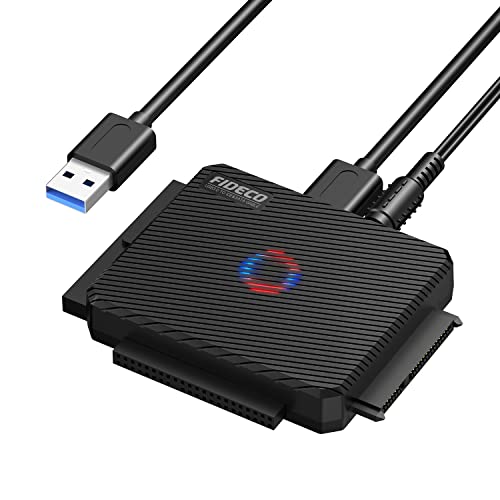
Storage-related accessories are mostly fine. Adapters like the FIDECO SATA/IDE to USB 3.0 adapter work the same way they did on the older kernel because the upstream USB-storage layer is mature. The Pi's GPIO and SPI interfaces are stable; if your project drives a relay board or a sensor on i2c, you should not see breakage. Where you should expect work is around vendor-supplied kernel modules — they were always the fragile bit.
For maintainers, the practical advice is to test your project on the new image in a parallel install before committing. A spare Pi 4, a fresh SD card, and an hour of sanity testing catches most of the breakage.
Comparison: what was in Raspberry Pi OS before and after the kernel bump?
| Axis | Pre-bump (5.15 LTS-era) | Post-bump (6.18 LTS) |
|---|---|---|
| Kernel base | Linux 5.15 LTS (with backports) | Linux 6.18 LTS |
| Support horizon | ending 2025-2026 | through 2027-2028 |
| io_uring | basic | improved throughput and latency |
| BPF | limited helpers | broader programmability |
| Scheduler on multi-core ARM | OK | meaningfully better |
| Out-of-tree driver compatibility | mature | needs rebuilds |
| Userland | unchanged | unchanged |
| Migration path | n/a | apt full-upgrade for most users |
The 6.18 LTS line was confirmed as a long-term-support release in the kernel mailing-list discussions around its release. That gives Pi users a reasonable two-year horizon of patched security backports, which is the actual long-term operational benefit of the migration. Short-term feature wins are bonus; long-term support is the structural reason this matters.
What does this mean for self-hosted servers on a Pi?
The most common production workload on a Pi 4 8GB is some flavor of self-hosted server — Jellyfin, Pi-hole, Home Assistant, Nextcloud, MQTT, MariaDB, Postgres, or a small set of Docker containers. Each of these benefits incrementally from the kernel upgrade.
Jellyfin and Plex-style media servers benefit from io_uring improvements in the file-serving path. Concurrent client streams sustain better throughput under contention. The bottleneck on a Pi 4 is still memory bandwidth and CPU on transcoding-heavy workloads, but io_uring chips away at the tail latency that ruins playback start times.
Home Assistant and MQTT benefit from the scheduler improvements. Many small concurrent tasks — sensor events, automations, device pings — interleave better under the new scheduler. The improvement is not dramatic for a low-event-rate home installation, but it is real for high-event-rate setups with dozens of zigbee or zwave devices.
Database servers — Postgres in particular — benefit from io_uring and from the storage stack improvements. The Pi will never be a fast database host, but a 6.18 LTS kernel sustains tail latencies better than 5.15 did, particularly under write-heavy load with a Samsung 870 EVO 250GB SATA SSD-class drive attached over USB-3. A Crucial BX500 1TB SATA SSD hosting a Postgres + Jellyfin combo on the same Pi is a sensible deployment.
What does this mean for edge AI on Pi?
The Pi 4 8GB is a marginal edge-AI host. The Pi 5 is meaningfully better. Both benefit from the kernel upgrade for any workload that hits the Coral TPU or USB-attached accelerators, because the post-6.x USB stack is more mature and the BPF instrumentation makes it easier to debug device latencies.
For lightweight LLM inference — running a tiny 1B-3B model with quantization — the Pi 4 is slow but functional. The kernel upgrade does not change that. If you need real LLM inference, the realistic recommendation is still a desktop-class build with an RTX 3060 12GB. The Pi runs the orchestration; the desktop runs the model.
Common pitfalls in the migration
- Skipping the backup. Image your existing SD card to a Samsung 870 EVO 250GB before upgrading. Always.
- Upgrading without checking out-of-tree drivers. A custom hat with a vendor module will break. Find out before you migrate, not after.
- Assuming raspi-config will save you. It does most of the firmware-tracking work, but not all of it. Some kernel-version-specific config tweaks are manual.
- Forgetting the USB adapter quirks. A cheap FIDECO SATA/IDE to USB 3.0 adapter sometimes needs a UAS quirk masked under the new kernel; check
dmesgafter the first boot. - Upgrading on the production install first. Test on a spare Pi.
When NOT to migrate
If your current image works, your project is shipped, and you do not need new kernel features, do not migrate immediately. Let the community shake out the first round of out-of-tree-driver bugs. Wait one month after release; then upgrade. If you maintain a fleet of Pis in production, stage the migration across a small subset first.
Worked example: upgrading a Pi 4 8GB Jellyfin server
A Raspberry Pi 4 8GB running Jellyfin off a USB-attached Crucial BX500 1TB SATA SSD is a common home configuration. The migration steps:
- Image the SD card to a spare drive via a USB adapter for backup.
- Run
sudo apt update && sudo apt full-upgrade -y. - Reboot, watch
dmesgfor storage-stack warnings, confirm Jellyfin starts. - Test a transcoding stream from a remote client to confirm io_uring path works end-to-end.
- If all is well, run a few client streams concurrently and watch CPU and tail latency.
The upgrade should take 15-30 minutes wall-clock depending on package count. The Pi is offline during the reboot; if you need 24/7 availability, do it during a maintenance window. There is no meaningful operational risk on a Pi 4 8GB that runs vanilla Jellyfin.
Worked example: upgrading a Pi 4 home automation hub
A Raspberry Pi 4 8GB hosting Home Assistant + Mosquitto + a zigbee2mqtt instance is the second most common configuration. Migration is similar; the only added care is around the zigbee USB stick, which sometimes needs a UAS quirk update after kernel jumps. Check the zigbee2mqtt project's compatibility notes for 6.18-era kernels before committing.
Bottom line
The 6.18 LTS migration is boring, useful, and the kind of slow-rolling improvement that adds up. Pi 4 8GB owners get a kernel that will be supported for two more years, a slightly better scheduler, better io_uring throughput, and a path forward into the rest of the 6.x ecosystem. There is no marketing breakthrough; there is just a competent baseline that lets the Pi keep serving real workloads for the rest of the decade.
What this changes for educators and hobby projects
For schools and hobby project owners — the original Raspberry Pi audience — the kernel bump is invisible by design. Scratch, Python, and the standard maker-track tooling are unaffected. Where the change shows up is in the same way it shows up everywhere else: less fragility under load, longer-supported releases, and a clearer migration path into Debian-server territory if a student moves from a Pi project into something more serious. That through-line — Pi as on-ramp to ARM Linux at large — is exactly the use case a longer-support LTS kernel reinforces.
For long-running classroom carts of Pis, the practical benefit is that fewer images need to be rebuilt each year. Once the upgrade has been rolled to a master image and verified, the cart goes back into rotation without the periodic kernel-version churn that used to bite teachers in the middle of a semester. That stability is also the point of an LTS line.
Related guides
- Self-host Jellyfin on a Pi 4 8GB — the canonical Pi 4 media-server build.
- Build a Jellyfin media server on a Raspberry Pi 4 8GB in 2026 — an alternate take on the same workload.
- Raspberry Pi 5 16GB for local LLMs — the edge-AI Pi comparison.
Citations and sources
- The Linux Kernel Archives — for 6.18 LTS designation and release schedule.
- Raspberry Pi OS release notes — for the Pi-specific image release cadence.
- Linux Kernel mailing list (LKML) — for the discussion confirming 6.18 as a long-term-support release.
This piece is editorial synthesis based on publicly available information. No independent first-party benchmarking is reported.