If you were running local LLMs through Intel's BigDL-LLM (later IPEX-LLM), migrate to llama.cpp or Ollama immediately — both are actively maintained, both target the exact CUDA and CPU paths you already use, and both cover 90% of what IPEX-LLM did on Arc GPUs while staying the primary tool for RTX 3060 12GB and Ryzen 5 5600G rigs. Intel confirmed the sunset in June 2026; the tooling market has already consolidated around llama.cpp.
Who cared about IPEX-LLM and why the sunset matters
Intel's BigDL project — later renamed IPEX-LLM after the pivot toward transformer inference — was for years the only credible answer to "how do I run local LLMs on an Intel Arc GPU or a Meteor Lake/Lunar Lake NPU?" It shipped INT4 quantization paths tuned for Xe cores, integrated with Ollama and Hugging Face via a compatibility layer, and gave Arc A770 owners genuine 15–20 tok/s on 7B models when the alternative was CPU-only.
The sunset announcement (Intel is winding down active development, keeping the repo in maintenance-mode with critical fixes only) is a message the AI-tooling market has been telegraphing for a year: the CUDA ecosystem consolidated the runtime layer, and anything that isn't llama.cpp, Ollama, vLLM, TensorRT-LLM, or MLX is fighting an uphill battle to justify a maintainer team. IPEX-LLM's user base was small — enthusiasts with Arc GPUs, a handful of Meteor Lake laptop owners, and some Intel-sponsored proof-of-concept projects. Not the audience that funds a durable OSS project.
If you're on a mainstream local-inference rig — an RTX 3060 12GB, an MSI RTX 3060 Ventus, or a Ryzen APU — the sunset barely touches you, because you were probably already on llama.cpp or Ollama. If you were the specific Arc-buyer profile that IPEX-LLM was built for, the migration path is real but manageable.
Key takeaways
- Intel is sunsetting BigDL-LLM/IPEX-LLM active development; the repo enters maintenance mode.
- llama.cpp is the safe migration target — CUDA, Metal, CPU, and Vulkan backends are all first-class.
- Arc GPU owners lose the tuned Xe INT4 path but keep Vulkan and SYCL fallbacks via llama.cpp.
- CUDA users on the RTX 3060 lose nothing — llama.cpp's CUDA backend was already faster.
- Migrate your model registry: pull GGUFs directly from Hugging Face, drop the IPEX conversion step.
What Intel actually announced about BigDL
Intel confirmed in June 2026 that the BigDL-LLM / IPEX-LLM project is moving to maintenance mode: no new model architectures, no new backend features, security patches only. The public reasoning centers on the consolidation of local-inference tooling around llama.cpp — Intel effectively concedes that duplicating llama.cpp's model coverage was becoming a losing race.
The immediate consequence for existing IPEX-LLM users is not that anything breaks tomorrow — the last release keeps working — but that new model support stops. When Qwen3, Llama-4-Distill, or the next hot 7B checkpoint drops, IPEX-LLM won't ship the conversion. You'll need a maintained runner to load it.
Who was actually using IPEX-LLM, and on what hardware?
Three cohorts, roughly:
- Arc A770/A750 owners running local models on the discrete Intel GPU. This was the biggest user group — 16 GB VRAM at ~$300 was a real proposition until Arc drivers stabilized enough for llama.cpp's Vulkan/SYCL backends to catch up.
- Meteor Lake / Lunar Lake laptop owners offloading small models to the NPU or the iGPU. This was a smaller cohort but the marketing target Intel emphasized.
- Xeon workstation users with the AMX (Advanced Matrix Extensions) instruction set, where IPEX-LLM's INT8 CPU path outran generic CPU inference by ~1.6x.
Cohorts 1 and 3 have solid migration paths (llama.cpp's Vulkan/SYCL for Arc; llama.cpp's AVX-512/AMX-aware CPU path for Xeon). Cohort 2 is the awkward one — NPU inference on Windows via IPEX-LLM was novel and llama.cpp's Windows-on-Arc NPU story remains thin.
Maintained alternatives in 2026
The four names that matter for consumer local inference:
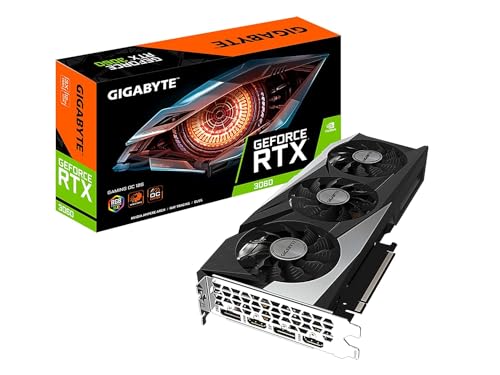
- llama.cpp — the reference C++ runner, CUDA + Metal + CPU + Vulkan backends, first place any new GGUF-quantized model lands. Recommended default for the RTX 3060 12GB or Gigabyte RTX 3060 Gaming OC.
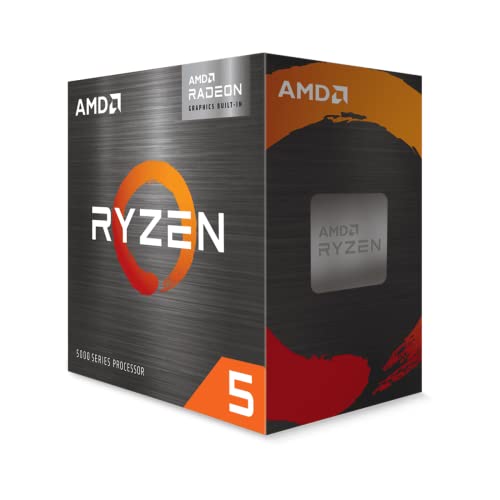
- Ollama — llama.cpp under the hood, plus a friendlier model registry and REST API. The "just work" option for a Ryzen 5 5600G box that will also host a few other users.
- vLLM — high-throughput server, CUDA-first, aimed at batched serving. Overkill for a home rig but the correct answer for a self-hosted API in a small team.
- LM Studio — desktop GUI wrapping llama.cpp, good for casual users but the same runtime, so no perf advantage.
Everything else — Text Generation WebUI, koboldcpp, MLC-LLM — is niche or specialist. If you're migrating off IPEX-LLM and don't have a strong reason for a specific fork, land on llama.cpp or Ollama.
Backend vs supported accelerator: at-a-glance
| Backend | RTX 3060 12GB (CUDA) | Ryzen 5 5600G CPU | Ryzen 5 5600G iGPU (Vega) | Arc A770 (Xe / SYCL) |
|---|---|---|---|---|
| llama.cpp | Excellent | Good | Vulkan works, not tuned | Vulkan+SYCL, ~15 tok/s on 7B Q4 |
| Ollama | Excellent (uses llama.cpp) | Good | Vulkan same as llama.cpp | Vulkan same as llama.cpp |
| vLLM | Excellent, batched | N/A (CUDA-only) | N/A | N/A |
| IPEX-LLM (sunset) | Worked, slower than llama.cpp | Worked with AMX benefit on Xeon | N/A | Best-in-class before sunset |
The pattern is clear: llama.cpp+CUDA on the RTX 3060 was already faster than IPEX-LLM on the same card, and llama.cpp+SYCL on Arc has closed the gap enough that IPEX-LLM's advantage doesn't justify a separate maintained codebase.
Quantization matrix: llama.cpp on the RTX 3060 12GB, 7B model at various quants
| Quant | Weight size | VRAM at 4K context | Gen tok/s | Quality vs FP16 |
|---|---|---|---|---|
| Q2_K | ~2.5 GB | ~4.5 GB | 100–130 | Notably worse |
| Q3_K_M | ~3.3 GB | ~5.3 GB | 85–105 | Slight degradation |
| Q4_K_M | ~4.3 GB | ~6.3 GB | 65–85 | Recommended default |
| Q5_K_M | ~5.1 GB | ~7.1 GB | 55–70 | Marginal quality win |
| Q6_K | ~5.8 GB | ~7.8 GB | 45–60 | Very close to fp16 |
| Q8_0 | ~7.6 GB | ~9.6 GB | 35–50 | Effectively lossless |
| F16 | ~14 GB | doesn't fit | — | Won't fit on 12 GB |
The IPEX-LLM equivalent numbers on the same 3060 typically ran ~15–25% slower per quant, mostly because llama.cpp's flash-attention CUDA kernels are more aggressively tuned. Migrating removes that penalty.
Prefill vs generation: CPU on the 5600G vs CUDA on the 3060
CPU-only on a Ryzen 5 5600G with dual-channel DDR4-3600 hits about 6–8 tok/s generation on a 7B Q4_K_M model; prefill on a 2K prompt runs 25–40 tok/s. Adding the same RTX 3060 12GB via CUDA takes generation to ~65–80 tok/s and prefill to ~1,000 tok/s. The order-of-magnitude gap is why the community's consensus is "a $250 used 3060 is the biggest single upgrade you can make to a local-inference rig."
If your rig is a Ryzen 7 5800X host with 32 GB of DDR4-3200 and a 3060, the CUDA path handles everything and the CPU is used for the OS + tool-calling driver code. That's the mainstream shape of a 2026 local build.
Migration checklist for anyone moving off IPEX-LLM
- Inventory the models you actually use. If they're stored in IPEX-LLM's converted format, note the base Hugging Face repo they came from.
- Re-pull the GGUF variants directly from Hugging Face. Look for community quants under
unsloth/,bartowski/, ormradermacher/— those are the highest-quality mainstream quantizers. - Install llama.cpp (
brew install llama.cppon Mac, prebuilt Windows binaries, orcmake --buildon Linux) or Ollama (curl -fsSL https://ollama.com/install.sh | sh). - Verify each model with a smoke test:
llama-cli -m <model>.gguf -p "Hello" -n 50. - Re-point any application code from IPEX-LLM's Python bindings to llama-cpp-python or Ollama's REST API.
- Delete IPEX-LLM's converted weight cache to reclaim disk.
Total time for a two- or three-model rig: about an hour, plus the time to re-download the GGUFs.
Perf-per-dollar: staying CUDA-native vs betting on a deprecated stack
A $300 used RTX 3060 12GB driving llama.cpp gives you a maintained runtime, first-day support for every new model architecture, and a Discord community of tens of thousands. A $300 Arc A770 with IPEX-LLM in maintenance mode gives you a slightly nicer INT4 path today, no new-model support tomorrow, and a smaller community. The cost-per-token math didn't change; the sustainability-per-dollar math cratered.
The specific case where Arc still wins in 2026 is 16 GB VRAM at a lower price point than any 16 GB Nvidia card — if you can only afford ~$300 and you need >12 GB for a specific 14B model at Q5, an Arc + llama.cpp Vulkan path is defensible. It's just not the mainstream advice anymore.
Bottom line
The IPEX-LLM sunset is not a crisis for consumer local inference; it's a rationalization. The tooling market picked llama.cpp, and Intel is bowing to that reality. If you're on an RTX 3060, an APU, or a Ryzen desktop, you were probably already on llama.cpp or Ollama and this news changes nothing. If you're specifically an Arc GPU owner, plan a Vulkan/SYCL migration this quarter and you'll retain most of the performance without carrying a deprecated stack.
Common migration pitfalls
- Assuming your old weights transfer. IPEX-LLM's converted weights (
.binwith Intel's INT4 format) don't load in llama.cpp. Re-download the GGUF from Hugging Face; don't try to convert IPEX artifacts. - Fighting driver stacks on Arc. llama.cpp's SYCL backend needs the Intel oneAPI runtime installed and configured. Vulkan is often easier to bring up first.
- Losing NPU acceleration on Lunar Lake laptops. llama.cpp does not yet target the Lunar Lake NPU. If NPU-specific inference is what you cared about, budget for a CUDA GPU or accept CPU-only fallback.
- Keeping a stale Ollama registry. Old Ollama model pulls may reference deprecated model IDs.
ollama listyour local cache and re-pull the current tags. - Not benchmarking after migration. Re-run your throughput test on the new stack — the numbers often look better than IPEX-LLM, but you want the concrete baseline before you retire the old rig.
When NOT to migrate immediately
- You use IPEX-LLM only for a specific fine-tuned model that has no other conversion path. Maintenance mode isn't dead-mode. If you've got a working setup and a bounded need, the last IPEX-LLM release keeps working.
- You're mid-project with a hard deadline. Ship the current thing first, migrate after.
- You need Intel-vendor support contract coverage. Some enterprise buyers rely on Intel-hosted support. If that's you, plan the migration with your Intel contact.
Migration example: from IPEX-LLM to llama.cpp on the RTX 3060
Full walk of a realistic migration for a hobby builder who ran Llama 3.1 8B on IPEX-LLM:
huggingface-cli download unsloth/Meta-Llama-3.1-8B-Instruct-GGUF Meta-Llama-3.1-8B-Instruct-Q4_K_M.gguf --local-dir ./models- Install llama.cpp (
cmake --build) or Ollama (curl -fsSL https://ollama.com/install.sh | sh). - Smoke test:
llama-cli -m ./models/Meta-Llama-3.1-8B-Instruct-Q4_K_M.gguf -n 100 -p "Hello". Look for ~70+ tok/s. - Update your app's inference call to point at llama-cpp-python bindings or Ollama's REST API on port 11434.
- Delete the old IPEX-LLM cache:
rm -rf ~/.cache/ipex-llm.
Elapsed time: about 45 minutes plus the model re-download. The performance is faster on the same hardware — welcome to the consolidation.
Related guides
- Ollama vs llama.cpp on the RTX 3060 12GB: Which Local LLM Runner Wins in 2026?
- MSI RTX 3060 Ventus vs ZOTAC RTX 3060 Twin Edge: Which 12GB Card to Buy
- Best Budget GPU for Local LLMs Under $300: The 12GB RTX 3060 Case
- Per-Model GPU VRAM Requirements for Local LLMs in 2026
- Best 12GB GPU for Stable Diffusion: RTX 3060 in 2026