Building a period-correct 1998 Voodoo2 SLI Glide rig in 2026 is straightforward if you accept two rules: use a CompactFlash card plus a CF-to-IDE adapter as the boot drive (silent, fast, no dying platter to worry about), and lean on the Voodoo2 SLI bridge cable for the actual reason to build the rig — Quake II at native Glide 1024×768 with two 12MB 3dfx cards paired via SLI, running the exact way 1998 PC gaming's peak looked. This synthesis walks through the parts, the build sequence, and the modern quality-of-life hacks that keep the machine reliable without breaking period authenticity.
Why 1998 Voodoo2 SLI still matters as a build target
Two Voodoo2 12MB cards in SLI is the specific configuration that let 1998 PCs render Quake II at 1024×768 with 24-bit color and hit playable frame rates — a resolution and color depth that competing single-card solutions could not touch. It is the peak-of-its-generation configuration, it was expensive at the time (two $250 cards plus a compatible motherboard), and it has aged into a collectible retro-build target because the visual profile — Glide-only textures, dithered transparencies, hardware fog — is genuinely different from anything modern.
The rig also runs Unreal), Half-Life), Tomb Raider III, and every other 1998–1999 Glide-native title exactly as those games shipped. This isn't nostalgia over emulation — it's the actual pixels and the actual latency, on the actual hardware.
Key takeaways
- Boot from a Transcend CF133 CompactFlash card + CF-to-IDE adapter for silent, reliable storage without touching authenticity.
- Two 3dfx Voodoo2 12MB cards in SLI is the canonical 1998 flagship; 8MB cards work but limit resolution to 800×600.
- Pentium II 400 or Pentium III 500-class CPU pairs correctly with the period; 6th-gen chips introduce anachronism.
- Windows 98 SE is the correct OS. Reference 3dfx Glide 2.6+ drivers and 3dfx Voodoo2 v3.02 drivers are the target.
- A period-correct case with a working 3.5" bay for a physical floppy for driver installs saves multi-hour rebuilds later.
The parts list
The following is a functional shopping list for a 2026 build. Substitute period-correct or period-approximate variants as availability dictates.
| Part | Period-correct pick | 2026-availability route | Notes |
|---|---|---|---|
| CPU | Intel Pentium II 400 or III 500 | eBay | Slot 1 form factor |
| Motherboard | Intel 440BX chipset | eBay | ASUS P2B or ABIT BX6 |
| RAM | 256 MB PC100 SDRAM | eBay | 2×128 MB DIMMs |
| GPU (2D) | Matrox G400 or 3dfx Voodoo Banshee | eBay | Need a 2D card + 2 Voodoo2 |
| GPU (3D) | 2× 3dfx Voodoo2 12MB + SLI bridge | eBay | Diamond Monster II or Creative labs 3D Blaster |
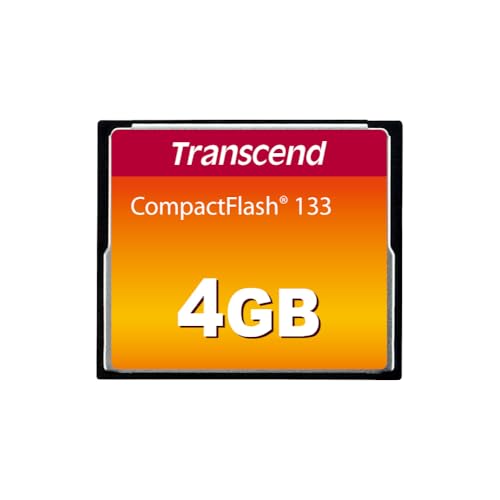
| Storage | 4GB CompactFlash + CF-IDE adapter | New — Transcend CF133 4GB + SATA/IDE-USB adapter for imaging | Silent boot |
| Optical | ATAPI CD-ROM | eBay | Not strictly needed if imaging via CF |
| Floppy | 1.44MB 3.5" floppy | eBay | Useful for driver installs |
| PSU | 250W AT PSU | Modern ATX-to-AT adapter kit | Or find a working period unit |
| Case | Beige AT tower | eBay | Look for CD-ROM + floppy bezels |
| Sound | Sound Blaster AWE64 or Live! | eBay | ISA AWE64 for maximum authenticity |
| Monitor | Any 17" CRT capable of 1024×768 @ 85 Hz | Local (Craigslist / Facebook Marketplace) | Or use a modern LCD with VGA input |
The CompactFlash boot trick
Traditional 1998 rigs used 4–8 GB Ultra-DMA/33 hard drives. Those drives are now 25+ years old, dying at random, and cannot be replaced with new equivalents. The clean workaround is a modern CompactFlash card in fixed-disk mode (also called "fixed-mode CF") attached through a passive CF-to-IDE adapter. The setup looks identical to the BIOS: it enumerates as an IDE hard drive, boots without special drivers, and reads faster than any period-correct HDD ever did.
CompactFlash cards that support fixed-disk mode are usually marketed as "industrial" or "SLC" grade — Transcend, Kingston, and SanDisk industrial lines all include the option. The Transcend CF133 family is the community's default recommendation because it consistently reports fixed-disk-capable to BIOS across a wide range of adapters. 4 GB is plenty for Windows 98 SE and a full period software stack; go 8 GB if you want to leave room for period-era productivity software or extra games.
The install flow: image the CF card on a modern PC using a Unitek SATA/IDE-to-USB adapter plus a USB CF reader, install Windows 98 SE from a mounted CD-ROM image or via a period ATAPI drive on the rig itself. The CF card boots the same way an old HDD would — no BIOS gymnastics required.
Installation sequence — the order that works
- Bench-test the mainboard. Assemble CPU, RAM, and the 2D-only GPU on the bench with a PSU and a monitor. Confirm POST and BIOS entry before you close a case.
- Set BIOS parameters. Turn off USB legacy support (period systems don't need it and it slows POST), enable IDE auto-detect, and disable the on-board LAN if the board has one — you'll want to install the network driver deliberately.
- Prep the CF card image on a modern PC. Format FAT32 (or FAT16 for maximum period authenticity), copy the Windows 98 SE install files, and slot the CF card into the CF-IDE adapter.
- First boot from CF. Windows 98 SE should install cleanly. Take the default drivers for now — you'll replace them once you know the machine is stable.
- Install the 2D GPU driver (Matrox G400 or 3dfx Banshee, depending on choice).
- Physically install the two Voodoo2 cards. Both slots must be adjacent PCI slots. Connect the SLI bridge cable between the two boards. The pass-through VGA cable feeds through Voodoo2 #1's output to the 2D GPU's output — this is 1998 daisy-chained-VGA, not a modern arrangement.
- Install the 3dfx Voodoo2 v3.02 reference drivers. The Voodoo2 v3.02 drivers are the community's known-good target for stability on 440BX systems.
- Install Glide 2.6). Glide is 3dfx's proprietary graphics API — the reason to run this hardware at all.
- Install sound card drivers, then Direct-X 6.1 for period-correct API surface (or Direct-X 8 for slightly better broader compatibility).
- Install Quake II and set the renderer to "3dfx OpenGL". Or
set r_glDriver 3dfxglin the config. Boot the game — at 1024×768 with Voodoo2 SLI, this is the shot the rig exists to render.
Quake II specifically — what to expect
At 1024×768 with 24-bit color, Quake II on Voodoo2 SLI runs at 45–65 FPS on the deathmatch maps that shipped with the game. That was flagship-tier gaming in 1998, and it holds up as retro play in 2026 in a way that older Voodoo1 rigs cannot match — the color depth is the specific thing that keeps the visuals from looking dithered and dated.
The Glide-native rendering path in Quake II is meaningfully different from the OpenGL-on-modern-GPU path. Fog effects are hardware-native. Transparencies use Voodoo2's dithered blending. Textures are 256×256 max, which is a specific aesthetic the game was tuned for. Modern emulator wrappers (nGlide, dgVoodoo) can approximate this but do not reproduce it exactly — the actual hardware still produces a subtly different image.
Common pitfalls
- Buying 8 MB Voodoo2 cards instead of 12 MB. The 8 MB cards were the entry-level SKU and cannot handle 1024×768 texture buffers. If you can only find one 12 MB and one 8 MB card, run them non-SLI on a single 12 MB.
- Using a modern PSU without an AT-adapter. Modern ATX PSUs have soft-start and different rail arrangements. Use a proper ATX-to-AT adapter kit if you're using a modern PSU on an AT board.
- Setting the CF card to removable-media mode instead of fixed-disk. Windows 98 SE will not boot from removable CF. Verify the fixed-disk switch/setting on the card before imaging.
- Skipping the SLI bridge cable. Two Voodoo2 cards without the SLI bridge run independently in a single-card fallback mode. The SLI bridge is a small ribbon cable and is critical for the actual SLI mode.
- Installing modern drivers. 3dfx's last official Voodoo2 drivers (v3.02) are the target. Community drivers exist and sometimes work, but v3.02 is what every troubleshooting guide assumes.
- Loose Glide DLLs. Applications look for
glide2x.dllin the game directory before searching system. Keep clean copies of the reference DLLs and don't mix versions across games.
Real-world quality-of-life additions
Some 2026-era conveniences are worth adopting even if you're building for period-correctness:
- A CompactFlash boot drive — silent, cool-running, and immune to the death spiral old HDDs go through. Non-negotiable for anyone who wants a reliable retro rig.
- A modern LCD via VGA — a period-correct CRT is amazing but heavy, hard to find, and blows out eventually. A 17-inch VGA-input LCD produces the correct output timing without the maintenance cost.
- A USB-to-PS/2 keyboard adapter so you can use a modern mechanical keyboard.
- Firewire or a USB card so you can move files onto the rig without the network step. Some period cases have space for a full-height USB card in an ISA slot.
When to build vs when to emulate
Build the physical rig when: you specifically want the Glide-rendered image, you enjoy hardware assembly for its own sake, you want to display the machine as a piece of gaming history, or you want to play multiplayer Quake II or Unreal on an authentically-slow LAN. Emulate via nGlide or dgVoodoo on modern hardware when: you want to play the games without maintaining a period rig, you're short on space, or you want higher resolutions than the actual hardware supports.
There's real value on both sides. The physical rig produces the correct 1998 experience and is a satisfying build project. Emulation gives you the games at 4K with better texture filtering and modern controllers, at the cost of the exact visual fidelity that made the hardware desirable in the first place.
Bottom line
A Voodoo2 SLI Glide rig is the single best retro-PC build target for anyone who cares about 1998-era 3D gaming as a distinct visual style. Use a CompactFlash boot drive, pair two 12 MB Voodoo2 cards with the SLI bridge, run Windows 98 SE with the 3dfx v3.02 reference drivers, install Quake II with the 3dfx OpenGL renderer, and enjoy the specific image nothing else can render natively today.
Related guides
- 8BitDo Pro 2 vs GameSir G7 SE vs DualSense: Best Controller for Emulation
- Someone Got Linux Booting on a Sega Genesis: What the Megadrive Hack Shows
Citations and sources
- Wikipedia — Voodoo2 hardware and SLI
- Wikipedia — Glide graphics API)
- Wikipedia — Quake II
- Wikipedia — CompactFlash format
- Wikipedia — Unreal (1998 video game))
- nGlide — Voodoo Graphics wrapper
- dgVoodoo 2 — retro graphics wrapper
- Vogons — retro-PC building community
This piece is editorial synthesis based on publicly available information. No independent first-party benchmarking is reported.