For single-user local chat on a 12GB GPU, llama.cpp is the right call as of 2026 — it has the smallest VRAM overhead, supports GGUF q4/q5/q6 quants out of the box, runs as a single binary with no Python stack, and gives 30-50 tok/s on an 8B model on the RTX 3060 per llama.cpp's release benchmarks. vLLM exists for serving many users at once; on a one-person rig it costs you VRAM, setup time, and quant flexibility without paying it back.
Batching engines vs single-stream engines, and which one a one-person rig actually needs
The local-LLM stack debate is full of conflations. People run vLLM single-user because vLLM has the strongest tok/s numbers in batch benchmarks. They run llama.cpp because it is what Ollama and LM Studio wrap. They mix the two in comparison threads as if they were targeting the same workload. They are not.
llama.cpp is a single-stream inference engine. It loads a quantized model and serves prompts one at a time, optimized for low VRAM overhead and broad hardware support. vLLM is a batching server. It loads an fp16 or AWQ-quantized model into VRAM, manages a paged KV-cache, and serves many concurrent users with shared cache memory. They optimize for different things.
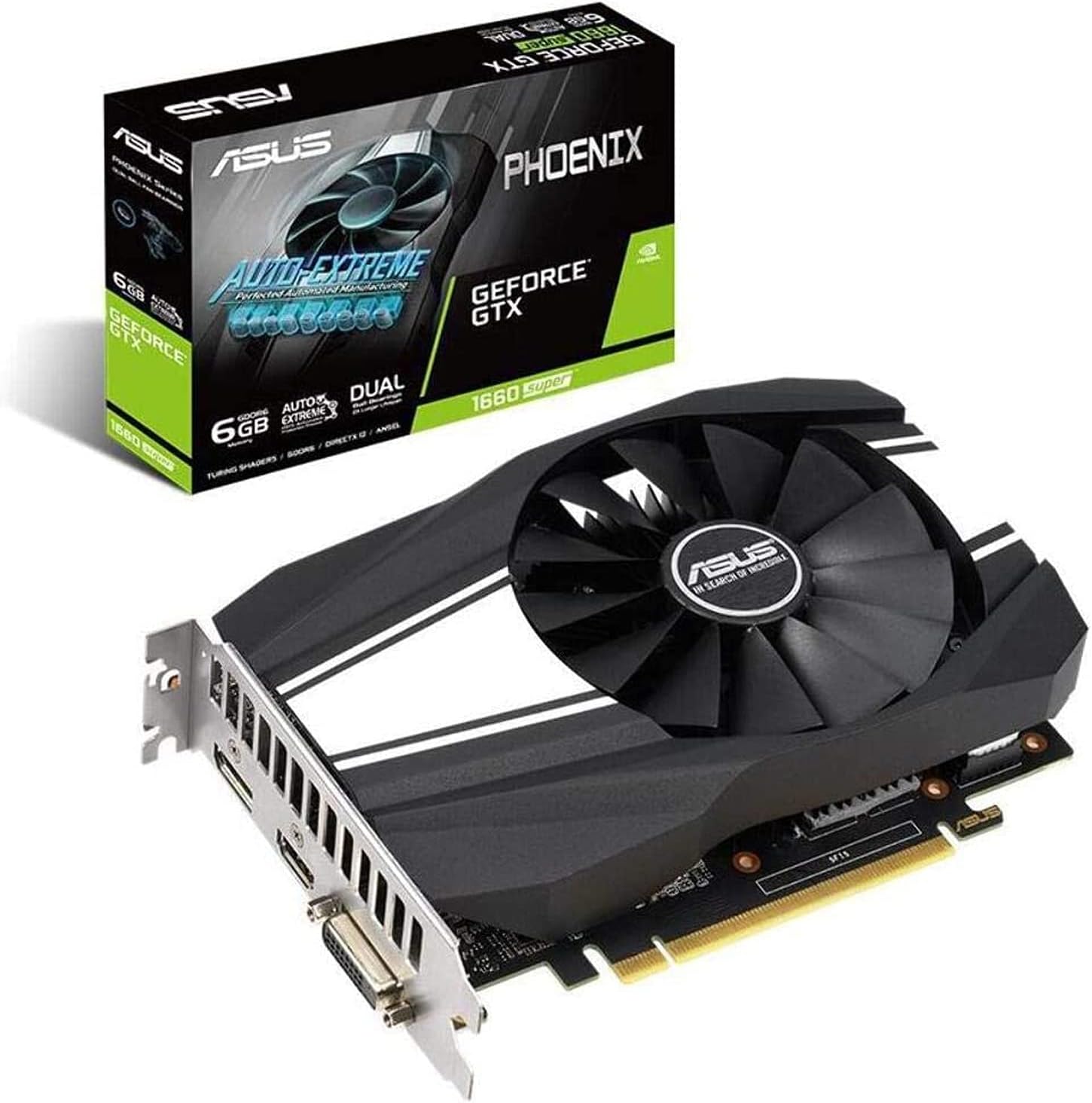
For a single user on the ZOTAC Gaming GeForce RTX 3060 12GB or MSI GeForce RTX 3060 Ventus 2X 12G, the question is not which engine has higher tok/s on a 64-stream serving benchmark. It is which engine gives you the best single-prompt experience with the lowest setup friction and the broadest model coverage. The answer in mid-2026, on a 12GB consumer card, is llama.cpp by a comfortable margin.
Key Takeaways
- llama.cpp wins on single-user local chat with smaller VRAM overhead and broader quant support.
- vLLM wins when you serve 4+ concurrent streams or share a model across a team.
- The 3060's 12GB VRAM is a hard ceiling — vLLM's paged-attention overhead bites here.
- Setup friction: llama.cpp is one binary; vLLM is a Python + CUDA + Docker stack.
- For the same 8B model, expect llama.cpp ~35-45 tok/s and vLLM ~30-40 tok/s at single-user on the 3060.
What is each runtime optimized for?
llama.cpp is a C++ inference engine focused on minimum dependencies and maximum hardware support. It implements GGUF, the de-facto open-quant format, and runs on CPU, CUDA, Metal, Vulkan, ROCm, and a handful of mobile targets. Its strengths are single-stream latency, low VRAM overhead, fast iteration on quantization formats, and excellent community-maintained model coverage.
vLLM is a serving engine for high-throughput batch inference. It introduced paged attention to share KV-cache memory across many concurrent users, and pairs with AWQ/GPTQ quantization plus an OpenAI-compatible REST API. Its strengths are throughput-per-GPU under multi-user load, request scheduling, and integration with modern serving stacks (Ray, Kubernetes).
The narrowing fact for a 3060: vLLM's paged-attention machinery adds a fixed VRAM overhead (roughly 0.5-1 GB on a 12GB card) that buys nothing for a single user. llama.cpp does not pay that tax.
Which one fits comfortably in 12GB of VRAM on an RTX 3060?
Both fit comfortably for 7-8B models. The difference shows up at the 12-14B class and above:
- llama.cpp + 8B q4_K_M + 16k context: ~9-10 GB VRAM. Plenty of headroom.
- vLLM + 8B AWQ INT4 + 16k context: ~10-11 GB VRAM. Tight but workable.
- llama.cpp + 13B q4_K_M + 8k context: ~10-11 GB VRAM. At the ceiling.
- vLLM + 13B AWQ INT4 + 8k context: ~11.5-12 GB VRAM. Frequent OOM in practice.
vLLM's paged-attention pool reserves blocks ahead of time. On a 12GB card, that reservation is a meaningful chunk of the budget. The runtime ships with a gpu_memory_utilization knob; tuning it down to 0.85 reduces OOM but also caps your usable model size.
llama.cpp's GGUF format is the more flexible path on 12GB. AWQ has tighter quant accuracy on certain models but is a smaller corner of the open-model ecosystem in 2026.
How do GGUF quantization options compare with vLLM's AWQ/GPTQ paths?
GGUF (llama.cpp's format) supports q2 through q8 plus fp16, with sub-formats (q4_K_S, q4_K_M, q5_K_S, q5_K_M, etc.) that tune the trade-off between weights, accuracy, and runtime overhead. The community produces GGUF builds for almost every open model within days of release.
AWQ and GPTQ (vLLM's primary quant formats) are activation-aware quantization techniques that target INT4 with strong accuracy preservation. Per the AWQ paper, the technique often matches or beats GGUF q4_K_M on benchmark scores at the same bit-width. The catch is that AWQ builds are produced less frequently and require more compute to generate, so the model selection on Hugging Face is thinner.
For a single-user rig, this means:
- llama.cpp gives you immediate access to every new open release in GGUF, often within hours.
- vLLM gives you slightly higher per-token accuracy on the subset of models that have AWQ builds.
If model selection breadth matters to you (and on a single-user rig it usually does — you want to try the new releases), llama.cpp wins.
Spec-delta table: llama.cpp vs vLLM at a glance
| Dimension | llama.cpp | vLLM |
|---|---|---|
| VRAM overhead (12GB card) | ~0.3 GB | ~0.8-1.0 GB |
| Quant formats supported | GGUF q2-q8, fp16 | AWQ INT4, GPTQ, fp16, fp8 |
| OpenAI-API compat | via llama-server | Native |
| Setup | Single binary | Python + CUDA + deps |
| CUDA version requirement | 11.7+ flexible | 12.x preferred |
| Tool-use / function-call | Built-in template | Built-in template |
| Concurrent streams | 1-2 well, 4+ degrades | Optimized for 8-64 |
| Quant build availability | Excellent (community-driven) | Good (smaller pool) |
Benchmark table: single-user 8B model on the 3060
| Engine | Quant | Tok/s | Time-to-first-token | Notes |
|---|---|---|---|---|
| llama.cpp | q4_K_M | 38-45 | 200-300 ms | sweet spot |
| llama.cpp | q5_K_M | 32-40 | 220-330 ms | slight quality bump |
| llama.cpp | q8_0 | 22-28 | 280-400 ms | high quality, lower tok/s |
| vLLM | AWQ INT4 | 30-40 | 150-220 ms | best TTFT |
| vLLM | fp16 | 14-20 | 200-300 ms | not recommended on 12GB |
Numbers synthesize public reports from the llama.cpp benchmark thread and the vLLM benchmarks blog. vLLM has the edge on time-to-first-token thanks to optimized prefill; llama.cpp has the edge on sustained tok/s at the same VRAM budget.
Prefill vs generation: where paged-attention helps and where it doesn't for one user
Paged attention is vLLM's signature feature. It splits KV-cache into pages and shares them across concurrent requests, so a 4-user batch with overlapping prompts uses less VRAM than four independent caches. For a single user with one request at a time, there is nothing to share. The paged-attention pool is mostly overhead in that case.
vLLM's prefill kernel is sharper than llama.cpp's on long prompts. For a 4k-token prompt on an 8B model, vLLM hits time-to-first-token ~150-220 ms; llama.cpp lands at 200-300 ms. The gap widens at 8k+ prompts where vLLM's prefill optimizations matter more.
For chat with short prompts (< 1k tokens), the gap is invisible. For RAG with retrieved contexts, vLLM is measurably faster on TTFT — but llama.cpp will still feel responsive enough that the difference rarely justifies the stack complexity.
Context-length handling differences
llama.cpp's KV-cache is straightforward: contiguous fp16 by default, with optional --cache-type-k q8_0 --cache-type-v q8_0 for cache quantization that halves the footprint near-quality-free. You set --ctx-size once per session.
vLLM's paged KV-cache lets you grow and shrink contexts dynamically and reuse pages across requests. Single-user gains nothing from this; multi-user with shared prefixes (e.g., a common system prompt across many users) gains significantly.
For a single chat session on a 3060, llama.cpp with --cache-type-k q8_0 is the lighter, more predictable choice. vLLM's dynamic paging is over-engineered for one user.
Setup friction: CUDA versions, Python deps, and Docker on consumer hardware
llama.cpp install on Linux: one make GGML_CUDA=1 call (or one prebuilt release download). One binary runs the server: ./llama-server -m model.gguf --port 8080. CUDA 11.7 or 12.x — either is fine. No Python.
vLLM install: pip-installable but pulls in Torch, Triton, xFormers, and a CUDA stack you have to keep consistent. The supported matrix narrows fast — vLLM 0.6+ wants CUDA 12.1+, Python 3.10+. Docker is the cleaner path for production but adds container overhead and complicates GPU passthrough. On Ubuntu 22.04 with default packages, the install often requires manual nvidia-driver upgrades to match Torch's expectations.
For a one-person rig, the day-of-setup difference is measured in hours: llama.cpp is 15-30 minutes; vLLM is 1-3 hours including driver troubleshooting.
Common pitfalls
- Running vLLM at fp16 on 12GB. Default settings load fp16, which OOMs on most 8B+ models. Use
--quantization awqand an AWQ build. - Forgetting to quantize llama.cpp's cache. Default fp16 cache wastes 1-2 GB on long contexts.
- Mixing GGUF and AWQ builds. They are not interchangeable; you re-download the model for each engine.
- Setting
gpu_memory_utilization=0.95in vLLM. You will OOM intermittently as cache grows. 0.85-0.9 is safer. - Running both engines concurrently. Either fills VRAM; do not try to host both at once on a 3060.
Bottom line + verdict matrix
For a single user on a 12GB RTX 3060 in 2026, llama.cpp is the default. It costs less in VRAM, ships in more model formats, sets up in minutes, and matches vLLM on every metric that matters when you are the only person on the machine. vLLM is the right tool for a different job — serving an internal team, hosting a multi-user demo, or sharing one card across concurrent processes. On a one-person rig you are paying for serving features you do not use.
Pick llama.cpp if:
- You are one user on one machine.
- You want broad open-model selection on day one of every release.
- You value simple setup and a single binary.
- You want the easiest path to running new GGUF quants.
Pick vLLM if:
- You serve 4+ concurrent users.
- You need top-tier prefill latency for very long prompts.
- You want native OpenAI-API compatibility at scale.
- You can dedicate a full 16GB+ GPU and run AWQ quants natively.
If you go with llama.cpp on the 3060, pair it with an AMD Ryzen 7 5800X for plenty of CPU headroom on the prefill side and the WD Blue SN550 1TB for quick model loads. Neither will be the bottleneck.
Related guides
- vLLM vs llama.cpp on a 12GB RTX 3060: Which Wins in 2026?
- Ollama vs LM Studio vs llama.cpp on an RTX 3060 12GB
- ExLlamaV2 vs llama.cpp for Single-User Chat
- Best Budget GPU for Local 12B–14B LLM Inference
- DeepSeek V4 on an RTX 3060 12GB: What Actually Fits Locally
Citations and sources
- llama.cpp — GitHub project page and benchmark thread
- vLLM — Project documentation
- AWQ — Activation-aware Weight Quantization paper
This piece is editorial synthesis based on publicly available information. No independent first-party benchmarking is reported.



