Can a modern USB Sound BlasterX G6 serve a retro gaming PC, and when do you still need a period card?
Yes — for a Windows XP or Windows 2000-era retro build, the Creative Sound BlasterX G6 is an excellent slot-free way to add clean modern audio without sacrificing a precious PCI slot. No — for DOS, Windows 95/98 OPL FM synthesis, or hardware-accelerated EAX/A3D effects in their original form, you still need a real ISA or early PCI card. The G6 is a great modern bridge for retro-era systems; it is not a vintage compatibility layer.
The Sound Blaster legacy, the slot problem, and where the G6 fits
For roughly a decade, "Sound Blaster" was synonymous with PC audio. The original ISA cards (1989–1994) established the AdLib-compatible OPL FM synthesis baseline; the Sound Blaster 16 (1992) became the de facto DOS gaming target; the AWE32 and AWE64 added wavetable synthesis; the Live! and Audigy lines on PCI carried the brand into Windows 9x and XP with EAX, hardware mixing, and Creative ALchemy. Period-correct DOS and early Windows gaming audio means that hardware, with the original OPL chips, the wavetable EMU8000, and the hardware EAX engines doing the work that today's CPUs would brute-force in software.
Modern retro builds run into two hard problems. First, ISA slots are basically extinct on motherboards newer than 2003-2005 — if your retro build uses anything from a Pentium 4 / Athlon XP onward, you have PCI at best and probably PCI-Express. Second, period PCI sound cards in good condition are increasingly expensive and brittle on the secondhand market, and even when you find one, drivers + OS-specific quirks (Live! card hum on certain chipsets, Audigy capacitor leakage) can turn a build into a multi-week project.
The Sound BlasterX G6 is the modern answer. Per Creative's Sound BlasterX G6 product page, it's an external USB DAC + headphone amp with a hi-res 130dB / 32-bit / 384kHz DAC, an Xamp discrete headphone amp, Dolby Digital and DTS decoding, and 7.1 virtual surround over headphones — features that comfortably exceed any period card on raw audio quality. It connects over USB or optical Toslink, takes zero PCI slots, and works as a standard USB Audio Class device on Windows XP and later. It is the right output device for an XP-era build that's slot-starved or for a Win98 SE machine where you want clean modern audio out of the analog jacks. What it does not do is reproduce period FM synthesis or hardware-mixed EAX.
Key takeaways
- G6 = best modern audio for XP-era retro builds without sacrificing a PCI slot. USB-Audio means zero card juggling.
- G6 does NOT emulate AdLib OPL, Sound Blaster 16 hardware, or EAX hardware acceleration. It's a clean DAC, not a vintage compatibility layer.
- For DOS or early Win9x period correctness, you still want a real ISA or early PCI card hunted on eBay.
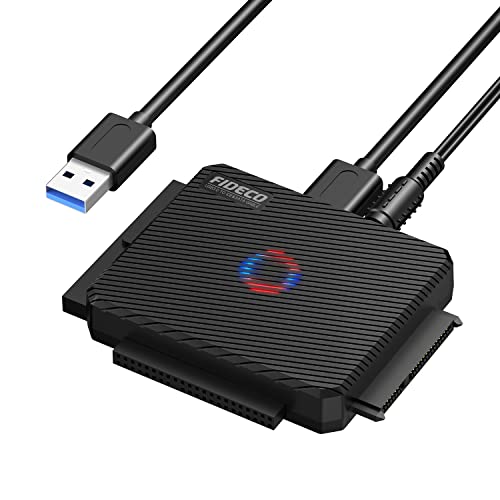
- Storage transfer pairs well — when you're prepping a vintage drive image to live alongside the G6, an IDE-to-USB adapter like the Vantec CB-ISATAU2 SATA/IDE to USB 2.0 or the FIDECO SATA/IDE to USB 3.0 is the fastest workflow.
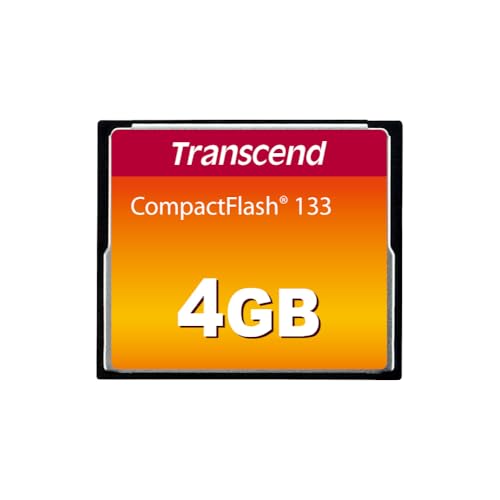
- CompactFlash boot drives like the Transcend CF133 4GB give you a quiet, fast, period-plausible system drive for Win98/2000 builds.
Why the Sound Blaster name dominated DOS and Win9x gaming audio
Three things made Sound Blaster the de facto standard. First, the original Sound Blaster (1989) was the first card under $250 to combine FM synthesis, sampled audio playback, and a microphone input — DOS game developers wrote for it because it was the cheapest broadly-installed option. Second, Sound Blaster 16 (1992) added 16-bit CD-quality sampling and became the assumed baseline for early '90s DOS gaming; "SB16 compatible" appeared on the back of every game box. Third, the AWE32 (1994) and AWE64 introduced the EMU8000 wavetable synth, dramatically improving General MIDI playback for FM-based scores. By the late '90s, Sound Blaster Live! and Audigy carried the brand into Windows 9x/XP gaming with hardware-accelerated 3D positional audio (EAX) that A3D, Aureal, and a handful of competitors briefly rivaled before fading.
What this means for a 2026 retro build: a period-correct Win98 gaming machine has at minimum an SB16-compatible card for DOS games launched from a real-mode boot, and ideally an SB Live! / Audigy for EAX-supporting Windows 9x titles like Half-Life, Thief, Unreal Tournament, System Shock 2, and SiN. The G6 does not replace either; it complements them.
When do you need a real ISA card vs the G6?
Use a real ISA card when:
- You're running DOS games in real mode (boot to DOS, no Windows) — the G6 won't be detected
- You need authentic AdLib / OPL2 / OPL3 FM synthesis — only ISA cards with the actual Yamaha chips reproduce this correctly
- The game expects Sound Blaster 16 hardware-level I/O (port 220h, IRQ 5, DMA 1/5) — the G6 is a USB-class device, no SB hardware emulation
- You want hardware General MIDI via the Wavetable header — EMU8000-based AWE cards do this in dedicated silicon
Use the G6 when:
- The system is Windows XP / 2000 (good USB-Audio support) or Win98 SE with verified USB-Audio drivers
- You don't have a free PCI slot, or you've reserved your slots for a 3dfx Voodoo, a network card, or storage
- You're playing post-2000 games where Windows 9x/XP's WDM audio stack handles everything in software anyway
- You want clean modern output to headphones (the Xamp discrete amp is genuinely good — better than any period card)
- You're recording or capturing audio from the retro PC and want a quiet, modern signal path
The split usually settles itself by era. Pre-1996 / DOS-first: hunt a period card. 2000+ / XP-first: G6 is fine and often better. Win98 / late-'90s sits in the gray zone where the question is what specific games you care about.
Spec-delta: Sound BlasterX G6 vs a period AWE/Live!-class card
| Spec | Sound BlasterX G6 (modern USB) | SB Live! / Audigy (period PCI) | SB AWE32/64 (period ISA) |
|---|---|---|---|
| Interface | USB Audio Class | PCI 2.x | ISA 16-bit |
| OS support | Win98 SE+ via USB-Audio | Win95–XP native, Vista+ ALchemy | DOS, Win3.x, Win9x |
| DAC | 130 dB SNR, 32-bit/384 kHz | ~100 dB SNR, 16-bit/48 kHz | ~95 dB SNR, 16-bit/44.1 kHz |
| Headphone amp | Xamp discrete, 600Ω capable | basic line-out only | basic line-out only |
| Native EAX hardware | none | ✅ EAX 1/2/3/4/5 hardware | n/a |
| AdLib / OPL3 FM | software via emulators only | software (DOS emu mode) | ✅ true OPL3 |
| Wavetable MIDI | none (use external GM/GS) | basic SoundFont (Live!) | ✅ EMU8000 hardware |
| Hardware mixing | n/a | ✅ up to 32 voices | ✅ wavetable mixing |
| EAX support in modern Win | software (Creative ALchemy) | software (Creative ALchemy) | not applicable |
| Optical / S/PDIF | Toslink in/out | varies by card | none |
| Mic / line-in | Yes, with Scout/Sidetone | Yes, varies | Yes |
| 7.1 virtual surround over headphones | ✅ Dolby Digital + DTS | ✅ CMSS-3D / EAX HD | n/a |
| Street price 2026 | $130–160 new on Amazon, eBay used $70–110 | Audigy 2 ZS used $40–80 | AWE32/64 used $80–200 |
The G6 wins on raw audio fidelity by a wide margin. The period cards win on hardware-correct era reproduction.
How does the G6 connect to a Win98/XP-era rig?
Three connection paths:
- USB-A on the retro PC. Most XP-era boards and any Win98 SE box with USB 1.1/2.0 ports work. Plug the G6 into a powered USB port; it should enumerate as a generic USB Audio Class device. Drivers from Creative's support page (download on a modern PC and transfer) unlock the Sound Blaster Connect software for surround, equalizer, and Scout Mode features. On bare Win98 SE, you may need the USB-Audio driver from a Win98 SE Service Pack-equivalent update.
- Optical S/PDIF in/out. If your retro motherboard has S/PDIF passthrough (some XP-era boards do), you can route digital audio from the board's onboard codec to the G6 for the analog conversion. Useful if you want the period audio stack to remain "in the case" but the final DAC stage to be modern.
- Headphone-out only. Even with no drivers installed at all, the G6 works as a USB Audio Class device on Win2000/XP, giving you basic stereo output for testing. This is a useful diagnostic mode when you're booting a freshly-imaged drive.
Driver caveats: Win98 First Edition predates real USB-Audio support; you'll need Win98 SE at minimum. Win2000 SP4 and WinXP SP3 have mature USB-Audio that works out of the box. WinME — works but is WinME; bring a backup.
Setup walkthrough on a slot-starved XP-era build
A common scenario: you've built a Pentium 4 / Athlon XP retro rig, slotted in a 3dfx Voodoo 5 (or modern Radeon 9550), filled one PCI slot with a 100Mbit NIC, dedicated another to an IDE-to-SATA adapter for a CompactFlash boot drive, and you have zero free PCI slots left for a sound card. The G6 plugs in:
- Connect the G6 to a powered USB 2.0 port on the rear I/O.
- Boot Windows XP. The system detects "USB Audio Device" and installs the default driver.
- (Optional) Install Creative's Sound Blaster Connect for surround controls, mic Sidetone, and the SBX Studio Pro effects.
- Set the G6 as the default playback device.
- For period DOS games in DOS-box (or via VDMS), audio still goes through the WDM stack, so the G6 outputs cleanly.
- For period-accurate DOS audio (real-mode boot), you'd still want a Sound Blaster-compatible card — the G6 is not detected outside Windows.
When prepping the disk image for that retro build, the IDE-to-USB workflow saves hours. Vantec CB-ISATAU2 (USB 2.0) and FIDECO SATA/IDE to USB 3.0 (faster, supports 2.5/3.5" IDE + SATA + DVD/CD) let you image a vintage drive on a modern PC, edit it, and write it back without removing it from the retro chassis every time.
Compatibility notes: which retro titles benefit, which need real hardware
| Era / genre | G6 enough? | Need real card? |
|---|---|---|
| DOS games (real mode) | ❌ | ✅ SB16 / AWE compatible |
| Win9x with WinMM audio (most '98–'99 titles) | ✅ usually | nice-to-have for EAX |
| Win9x/XP EAX-accelerated games (HL1, Thief II, System Shock 2, Unreal Tournament) | EAX = software only via ALchemy | ✅ SB Live!/Audigy for hardware EAX |
| Win XP DirectSound 3D titles (2002+) | ✅ G6 is fine | optional |
| Modern emulators (DOSBox, ScummVM) on retro Windows | ✅ G6 fine | n/a |
| Sound effects testing / clean recording | ✅ G6 is best in class | n/a |
| Authentic OPL3 FM synthesis | ❌ | ✅ ISA card with OPL3 |
| General MIDI for DOS adventure games | software (e.g. Munt) | hardware (MT-32 / SC-55) is best |
Per the AnandTech early-PCI sound card era review
AnandTech's coverage of the Live! / Audigy transition documents the shift from hardware-accelerated DirectSound3D and EAX to software-mixed audio that began with Vista's WDM rework — the moment when period cards stopped being "best available" and became "compatibility hardware." The G6, as a modern USB-Audio output device, is essentially the descendant of that transition: it's a great DAC and amp without pretending to be vintage silicon. For deep dives into specific period cards and their compatibility quirks, the Vogons forum's general hardware section is the canonical community reference.
Perf-and-cost reality: G6 as a do-it-all bridge
For a new-build XP-era retro PC that you want to actually use in 2026 with minimal eBay roulette:
| Component | Modern path (G6) | Period path (ISA/PCI hunt) |
|---|---|---|
| Sound card | G6 new, $130–160 | AWE32 used $80–200, Live! used $40–80, Audigy 2 ZS used $50–100 |
| PCI slot consumed | 0 | 1 |
| Driver pain | Low (USB-Audio class) | High (legacy installer, board-specific quirks) |
| Audio quality | Excellent (130 dB SNR) | Good but lower than G6 |
| Period correctness | Poor (modern external box) | Excellent |
| DOS real-mode compatibility | None | Full on ISA |
| EAX hardware acceleration | None (software via ALchemy) | Yes on Live!/Audigy |
| Resale (if you change build) | High | High but volatile |
If your goal is a working, great-sounding XP machine you'll actually game on, the G6 is the easy win. If your goal is a museum-grade Win9x build for period-correct gaming, the eBay hunt is part of the fun.
Verdict matrix
| Use the G6 if… | Hunt a period card if… |
|---|---|
| Your retro PC is XP-era or Win98 SE+ | You're running DOS in real mode |
| You're out of PCI slots | You want authentic OPL3 FM synthesis |
| You want clean modern headphone audio | You want hardware EAX in Win9x titles |
| You're building for daily-driver retro use | You're building a museum-grade period rig |
| You'll prep drives via Vantec USB 2.0 adapter or FIDECO USB 3.0 adapter | You'll boot from a CF card like the Transcend CF133 and run period drivers untouched |
Bottom line
The Sound BlasterX G6 is the right answer when your retro build is XP-era or you've run out of PCI slots and you just want great audio without weeks of vintage-card hunting. It's not period-correct — it has no OPL3 synth, no hardware EAX, no DOS real-mode compatibility — but it has the best audio quality of anything you'll put in a 1998–2005 chassis in 2026. Pair it with a Transcend CF133 4GB CompactFlash as a quiet system drive, use a Vantec CB-ISATAU2 USB 2.0 adapter or a FIDECO SATA/IDE to USB 3.0 adapter to shuttle disk images between your modern PC and the retro rig, and you've got a working build with modern audio fidelity. For strict DOS / Win98 period accuracy, keep an ISA AWE32 or PCI Live! on the side and switch when the title demands it.
Related guides
- Sound Blaster G6 Retro Build: Modern vs AWE32 2026
- Sound Blaster G6 WinXP Retro Build 2026
- Sound BlasterX G6 Retro Windows Gaming PC 2026
- Sound BlasterX G6 DOS/Win98 SBEMU Real-Mode Audio 2026
- Boot Windows 98 from CompactFlash on a Retro PC 2026
Citations and sources
- Creative — Sound BlasterX G6 product page
- AnandTech — early-PCI sound card era coverage
- Vogons — Marvin's Marvellous Mechanical Museum (general hardware forum)
This piece is editorial synthesis based on publicly available information. No independent first-party benchmarking is reported.