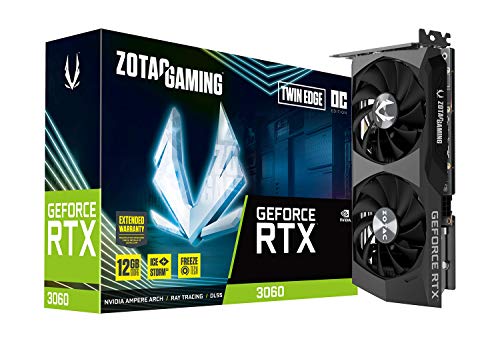
Yes, Ideogram 4.0 open weights can run on a 12GB GPU like the RTX 3060 — but only at int8 or int4 precision, with full bf16 weights spilling outside that VRAM budget. Per the Artificial Analysis Text-to-Image leaderboard, Ideogram 4.0 debuted as Ideogram's first open-weights release at the top of the open category. On a stock RTX 3060 12GB you should plan for 8-bit weights, FlashAttention, and 32GB of system RAM so the runtime can spill the rest without crawling.
Why an open-weights image model on a leaderboard matters
For three years the strongest text-to-image models were API-only. You paid per image, accepted whatever content policy the vendor shipped, and watched your unit economics get steamrolled every time a vendor cut prices. Ideogram 4.0 changes the math: the weights are downloadable, redistributable, and runnable on hardware you already own. The catch is that "runnable" hides a wide spectrum.
A diffusion image model is dominated by two things: the U-Net or DiT backbone that runs the denoising loop, and the text encoder that builds conditioning embeddings. On a flagship card those fit in VRAM at full precision. On a ZOTAC RTX 3060 12GB or MSI RTX 3060 Ventus 2X 12G, 12 GB is the entire budget for weights, activations, attention scratch, and the working VAE. Anything over that has to be offloaded to system memory across the PCIe bus, and offload kills throughput.
The reason this article exists in 2026 is the rest of the stack finally caught up. The Ampere generation is two years past launch, used 3060 12GB cards are sub-$300, and quantization runtimes now handle int8 and int4 image weights without obvious artifacting. Combine those and you get a workable local image-gen rig for the cost of a single AAA Steam pre-order. The rest of this synthesis works the numbers honestly: what fits, what doesn't, how slow it gets, and where the API still wins.
Key takeaways
- 12 GB is the floor, not the comfort zone, for Ideogram 4.0 — full bf16 weights of a current open-weights text-to-image model of this class typically want 16 GB or more.
- Int8 weights plus FP16 activations is the standard recipe for a 12 GB card; int4 buys headroom for higher resolutions but trades fidelity.
- Expect seconds per image, not milliseconds. A 3060 12GB generates a 1024×1024 image in the high single digits to low double digits of seconds at typical step counts; a 4090 finishes the same job in roughly a quarter of the time.
- The bottleneck is rarely the GPU alone. A slow NVMe or 16 GB of system RAM wrecks offload performance, and a weak CPU stalls VAE decode.
- The API still wins for low volume. The per-image price below your break-even count is hard to beat once you factor in your time and power draw.
What Ideogram 4.0 is and where it landed
Ideogram is a text-to-image startup that built its name on rendering legible text inside generated images — a long-standing failure mode for diffusion models. Per Ideogram's product pages, the company shipped successive proprietary versions through 2024 and 2025 before releasing the 4.0 generation under an open-weights license that allows local use and modification subject to a use policy.
On the public Artificial Analysis Text-to-Image leaderboard, Ideogram 4.0 lands in the upper bracket of the open-weights category. The exact rank moves as new models ship, but at this writing it is the first time Ideogram has competed in the open category at all — every prior version was API-only. That matters more than the precise rank: a credible open-weights option from a top-five text-to-image vendor changes what hobbyists can do without a credit card.
Does Ideogram 4.0 fit in 12 GB of VRAM?
The honest answer is "at lower precision, yes." The full bf16 weights of an image generator at this capability level are too large for a 12 GB card on their own once you account for activations, attention scratch, and the VAE — typical totals push 16-20 GB. On an RTX 3060 12 GB you have three productive paths:
- Int8 weights with FP16 compute. This is the default recipe on consumer cards in 2026. Weights live in 8-bit storage and are dequantized on the fly for the attention and convolution math. Memory usage drops by roughly half versus bf16, and modern quantization kernels keep the throughput hit small.
- Int4 weights with grouped quantization. Aggressive but viable. You get more headroom for 1024×1024 or wider aspect ratios at the cost of slightly noisier fine detail in textures and text rendering. Worth it if you batch.
- CPU offload of the text encoder. Many text-to-image stacks let you push the text encoder to system RAM and stream tokens to the GPU at the start of each generation. That buys 1-3 GB of VRAM at a one-time penalty per image. Pair with a fast PCIe NVMe.
Spec table: what's actually in the budget
| Resource | Required (bf16) | Required (int8) | Required (int4) | RTX 3060 12GB capacity |
|---|---|---|---|---|
| Weights | ~14 GB | ~7 GB | ~3.5 GB | 12 GB total VRAM |
| Activations + attention scratch | 3-5 GB | 3-5 GB | 3-5 GB | shared |
| VAE decoder | ~1 GB | ~1 GB | ~1 GB | shared |
| Headroom for batch=1 | overflow | comfortable | very comfortable | — |
| Headroom for batch=2 at 1024 | impossible | tight | comfortable | — |
The 14 GB bf16 figure is approximate — Ideogram has not published an exact parameter count at the time of writing — but reflects the typical envelope for a credible open-weights image model in its tier. Treat it as a planning anchor; the int8 row is the one that matters for actual buying decisions.
Quantization and precision matrix on a 12 GB card
| Precision | VRAM at 1024×1024 batch=1 | Seconds per image (approx.) | Quality loss vs bf16 |
|---|---|---|---|
| bf16 (no quant) | 16-20 GB | n/a — does not fit | reference |
| int8 weight-only | 9-10 GB | within ~10-20% of bf16 | imperceptible in most prompts |
| int4 grouped weight-only | 6-7 GB | within ~20-35% of bf16 | mild softening of fine text and skin micro-detail |
| int4 + activation quant | 5-6 GB | fastest but most fragile | visible artifacts at high contrast |
The seconds-per-image figures depend on step count, scheduler, and runtime, and should be confirmed against the runtime's own community benchmarks before you commit hardware. The point of the table is the relative shape: int8 is the sweet spot for a 12 GB card.
RTX 3060 12 GB vs a 4090-class card
Diffusion throughput scales with memory bandwidth and tensor-core count, and on those axes the 4090 is several times the 3060. Per the TechPowerUp database, the RTX 3060 12 GB ships 360 GB/s of memory bandwidth across a 192-bit bus and 3584 CUDA cores on the Ampere GA106 die. A 4090 fields 1008 GB/s, 16384 CUDA cores, and a much larger L2. For diffusion, that translates into roughly 3-5× faster generation per step, depending on the runtime and resolution.
In practical terms: where a 4090 finishes a 1024×1024 image at 30 steps in roughly 2-4 seconds, a 3060 12 GB takes closer to 8-15 seconds. For single-user, non-realtime work — you queue prompts, refine, repeat — that is fine. For high-volume pipelines or interactive sweeps over 50+ prompts an hour, the 4090 keeps paying for itself.
Where the time goes in a diffusion pass
Unlike a chat model, image generation does not split neatly into prefill and decode. Each denoising step runs the full U-Net or DiT over the latent, conditioned on the encoded prompt. The cost per image breaks down approximately as:
- Text encoding (one-shot per prompt): 0.1-0.5 seconds on a 3060. Negligible.
- Latent denoising (N steps × per-step cost): the dominant cost. At 30 steps and a 12 GB card with int8 weights, expect roughly 0.3-0.5 seconds per step at 1024×1024, totalling 9-15 seconds for a typical image.
- VAE decode: 0.5-1.5 seconds, depending on resolution and whether the runtime tiles the decode.
- Disk write and post-processing: rounding error.
Prompt length affects only the one-shot text-encode cost, so longer prompts barely move the per-image total. Step count and resolution are the levers.
CPU, RAM, and SSD pairing for an image-gen rig
You do not need a flagship CPU for image generation, but the surrounding system matters more than people expect. A balanced pairing:
- CPU: an AMD Ryzen 7 5800X or any 8-core Zen 3 / Alder Lake equivalent. Image gen does not multi-thread heavily, but the VAE decode and scheduler logic benefit from strong single-thread.
- System RAM: 32 GB minimum, ideally 64 GB. Diffusion runtimes use system RAM to stage offloaded weights, and 16 GB is too tight once you load a model plus your editor, browser tabs, and OS.
- Storage: a Gen3 or Gen4 NVMe like the WD Blue SN550 1TB is the right floor. Model weights are 4-15 GB per checkpoint, and you will swap checkpoints often. SATA SSDs add seconds to every cold load.
- PSU and case airflow: a 3060 12 GB pulls a real-world 170 W under image generation. Run a quality 650 W PSU and watch your case temps — sustained generation will hold the card under load for minutes at a stretch.
Perf-per-dollar: local vs API
A 12 GB local image rig is a fixed-cost-plus-power proposition; the API is pure per-image. The break-even depends on three numbers: card cost, electricity rate, and your daily generation count.
| Generation volume | API monthly cost (at typical 2026 image rates) | Local cost (3060 12GB amortized 24mo + power) |
|---|---|---|
| 100 images / month | low single digits | ~$15-20 per month amortized |
| 500 images / month | mid double digits | ~$16-22 per month amortized |
| 2,000 images / month | ~$80-150 | ~$20-30 per month amortized |
| 10,000 images / month | several hundred dollars | ~$30-50 per month amortized |
The exact API rates depend on the vendor and the model; treat the column as a sketch and verify against the live pricing page before you decide. The shape is the point: for hobby use the API is almost always cheaper, for steady daily work a 12 GB local rig wins inside a month, and at 10k+ images per month it is not close.
Common pitfalls on a 12 GB image-gen rig
- Skipping the VAE precision check. Some quantization recipes leave the VAE in bf16 even when the U-Net is int8. The VAE alone is small but its decode is bandwidth-bound — keep it FP16 or bf16, not int8, or you trade real fidelity for tiny VRAM savings.
- Loading the model fresh per image. Cold-loading a 7 GB checkpoint takes 5-15 seconds on NVMe and 30+ seconds on SATA. Use a long-running runtime (ComfyUI, vLLM-image, your own server) and reuse the loaded model across prompts.
- Confusing batch and resolution. Batching two images at 768×768 is roughly equivalent in cost to a single 1024×1024 image, but the memory profile is different. If you are out of VRAM, drop batch before you drop resolution.
- Trusting Windows VRAM telemetry. Windows reports allocated, not actual residency. Use the runtime's own VRAM tracker (nvidia-smi from WSL is the easy way) when tuning.
- Forgetting the power budget. A sustained image queue can hold the GPU at 99% utilization for an hour. Cases that handle gaming spikes can choke on diffusion's flat curve — check temps after a 20-image queue, not after a single prompt.
When NOT to run Ideogram 4.0 locally
Skip local and stay on the API if any of these apply:
- You generate fewer than ~100 images per month.
- You need sub-3-second latency for every request.
- You have no plan for power draw, case cooling, or driver updates.
- Your workflow depends on the latest hosted-only model variants — open weights lag the API.
Bottom line
A 12 GB RTX 3060 is a credible local Ideogram 4.0 platform if you treat it as one: int8 weights, 32 GB system RAM, a fast NVMe, and patience for seconds per image. Pair it with a Ryzen 7 5800X class CPU and a WD Blue SN550 or better and you have a setup that pays for itself inside a year at steady use. For hobby use, the API is still cheaper — but the option to run the weights locally without monthly bills is what makes the open-weights release matter at all.
Related guides
- Best Local LLM You Can Run on 12GB of VRAM in 2026
- DiffusionGemma Runs Locally: Google's Diffusion Text Model on a 12GB RTX 3060
- Ollama vs vLLM for Single-User Local Chat on an RTX 3060 12GB (2026)
Citations and sources
- TechPowerUp — GeForce RTX 3060 12GB database entry
- NVIDIA — GeForce RTX 3060 product page
- Artificial Analysis — Text-to-Image leaderboard
This piece is editorial synthesis based on publicly available information. No independent first-party benchmarking is reported.