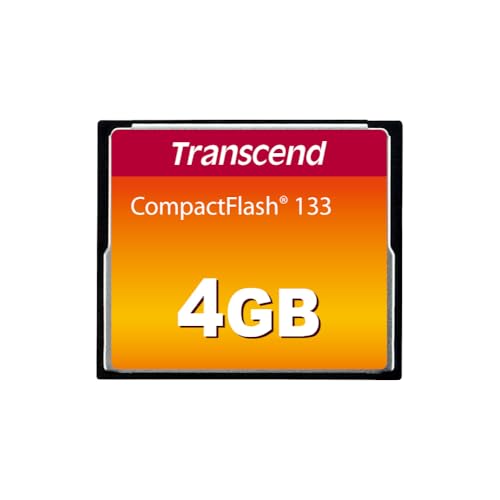
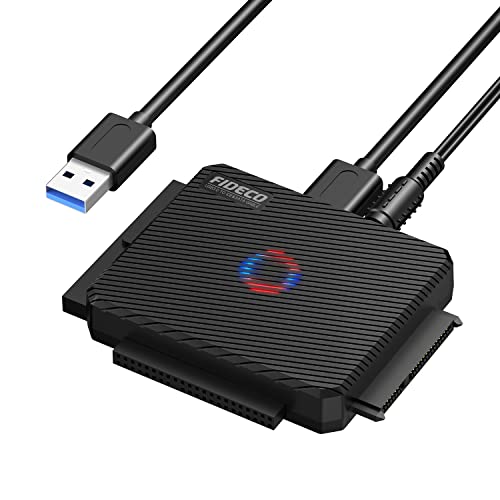
To build a silent Windows 98 PC with a CompactFlash boot drive in 2026: pick an 8–16 GB true-IDE-mode CF card (the Transcend CF133 is the canonical choice), drop it into a passive CF-to-IDE caddy, partition and FAT32-format on a modern PC via a FIDECO or Vantec USB-to-IDE adapter, then drop the caddy into the Win98 motherboard's primary IDE channel set as master. The result boots silently in under 12 seconds, with no spinning disk to fail, no whine, and full period-correct compatibility.
Why CF-as-IDE beats spinning rust for a quiet Win98 rig
A vintage 1998–2002 IDE hard drive has two problems that compound over time: it's loud (the bearings whine, the head actuator clicks), and it's slowly dying. The PATA hard drives that were new in the Win98 era are now 25+ years old. Bearings stiffen; platters develop bad sectors; the actuator motor seizes on units that have sat for a decade without spinning up. A typical era-correct 40 GB Maxtor or WD drive from 2001 has maybe a 50/50 chance of still being healthy in 2026, and the ones that work today might not work next month.
CompactFlash inverts both problems. The card has no moving parts — silent, cool, vibration-free, and indifferent to being thrown in a parts bin for years. It speaks ATA over a passive 50-to-40-pin adapter, so the motherboard's BIOS sees it as a normal IDE hard drive. Boot times are fast because CF random-read latency is microseconds rather than 10+ ms for a head seek. And replacements are inexpensive — a brand-name 8 GB CF card runs $15–30, which is cheaper than recovering data from a failed period drive.
The catch worth knowing up front: not every CF card works as an IDE boot disk. The card has to report itself in fixed-disk mode to the BIOS — the standard hard-drive-like IDE behavior. Many cheap or generic cards report in removable-media mode (great for cameras, useless for boot). The Transcend CF133 specifically is fixed-disk mode by default, per the Transcend product page, and it's the de facto reference card for retro builds for exactly that reason. Stick to known-good cards and you'll never trip on this.
Key takeaways
- Use a true-IDE-mode CF card (Transcend CF133 is canonical). Removable-mode cards won't boot.
- 8–16 GB is the right capacity — comfortably under the 28-bit LBA / 137 GB ceiling that era-correct BIOSes enforce.
- Pair the card with a passive CF-to-IDE caddy (40-pin male IDE on the back, CF slot on the front). No firmware, no power conversion needed.
- Prep the card on a modern PC via a USB-to-IDE adapter like the FIDECO or Vantec — faster, easier, and you can image a known-good Win98 install instead of doing the install on the period machine.
- Wear leveling matters more than absolute speed. Disable Win98's swap file if you can, or move it to a small second CF or a small period-correct HDD.
- Boot time on CF beats a vintage HDD by 3–4×; noise drops to zero. Game load times are dramatically faster too.
Why use a CompactFlash card instead of a vintage IDE hard disk?
Silence and reliability, full stop. A CF card in true IDE mode behaves identically to a vintage hard drive from the motherboard's perspective — the BIOS detects it as a fixed disk with a normal CHS or LBA geometry, the boot sector loads the same way, FAT32 mounts the same way. From the software's perspective, nothing has changed.
What has changed from your perspective: the case is now silent unless a fan is running, the boot is faster, the file system never thrashes the read head, and the storage device will outlive the rest of the build by a decade. The CF card's only moving part is electrons.
The secondary benefit is convenience. When you image the card on a modern PC, you can take a known-good Win98 install (drivers, patches, KernelEx, your preferred games and apps all pre-configured) and clone it onto a fresh card in 15 minutes. Compare to setting up Win98 from CD on a period machine: a 4-hour exercise that involves IDE-CDROM driver disks, KB-update floppies, and at least one BIOS quirk.
Which CF cards behave correctly in true IDE mode?
The card has to identify as a fixed disk, not removable media. There's a single bit in the CF identification block (the IDENTIFY DEVICE response) that determines this. Cards intended for camera use almost always set it to removable; cards intended for industrial / embedded use set it to fixed. The split is unfortunately not visible on the packaging — you find out by plugging it in.
Known-good fixed-disk-mode cards as of 2026:
- Transcend CF133 (the canonical pick, product page)
- Transcend CF170, CF200, CF200I (industrial)
- SanDisk Industrial CF (CF Ultra series varies — check the specific model)
- Apacer industrial CF cards
- Innodisk industrial CF cards
Cards to avoid for boot use:
- Generic Amazon-brand CF cards (removable mode by default, no recourse)
- Consumer SanDisk Extreme / Extreme Pro CF (often removable mode)
- Lexar Professional CF (depends on model — verify before trusting)
When in doubt, the Transcend CF133 is cheap and reliable. The other industrial options are typically more expensive but bring the same benefit; they're worth considering if you're building multiple machines or want maximum endurance.
Spec / compatibility table
| Card | Capacity options | Mode | CHS/LBA | Reported wear-leveling |
|---|---|---|---|---|
| Transcend CF133 | 2 / 4 / 8 / 16 GB | Fixed disk | Both | Yes (static + dynamic) |
| Transcend CF170 | 8 / 16 / 32 / 64 GB | Fixed disk | LBA | Yes |
| Transcend CF200I (industrial) | 4 / 8 / 16 / 32 / 64 GB | Fixed disk | LBA | Yes, MLC NAND |
| SanDisk Industrial CF | varies | Fixed disk | LBA | Yes |
| Generic camera CF | varies | Removable | N/A | Varies |
For a Win98 build, 8 or 16 GB is the right capacity — enough for OS, games, and applications, well under the era-typical 137 GB / 28-bit LBA ceiling that many 1998–2002 BIOSes can't see past. Larger cards work too, but BIOS reporting can get strange above 137 GB, and Win98's FDISK behaves better with smaller volumes.
Partitioning and FAT32-formatting on a modern PC
Don't try to format the CF on the Win98 machine first — it's much easier on a modern PC with the USB-to-IDE adapter. The process:
- Insert the CF card into a CF reader (or into the CF-to-IDE caddy plugged into a USB-to-IDE adapter like the FIDECO).
- On Windows 10/11, use diskpart or any standard partitioning tool. Create a single primary partition spanning the card. Set it active. Format as FAT32. Win98 will not see NTFS or exFAT.
- Important: make sure the partition geometry doesn't trip up the era BIOS. Modern Windows defaults to 1 MB partition alignment, which is fine for CF and matches what era BIOSes expect.
- Confirm the card mounts cleanly under Windows and shows the right capacity.
If you want a known-good Win98 install on the card immediately, the simplest workflow is to image one. Take a pre-built Win98 .img file (from your own archive or WinWorldPC's Win98 SE archive), write it to the card with dd (Linux) or HDD Raw Copy Tool (Windows), and you're done in 5 minutes. The card is ready to boot.
Step-by-step: imaging the install to CF and booting
- Prep the card as above — FAT32, single primary, active.
- Acquire a Win98 .img file — either your own backup or a clean install image.
- Write the image via dd or HDD Raw Copy Tool. Verify it completes without errors. (For 8 GB CF, this takes ~5 minutes over USB 3.0.)
- Mount the caddy in the Win98 machine — passive CF-to-IDE caddy in the 5.25" or 3.5" bay, 40-pin IDE cable to primary IDE channel, jumper the caddy as Master.
- Power on. The BIOS should detect the caddy as a normal IDE hard drive (often "TS8GCF133" or similar). If it doesn't, double-check the jumper and the IDE cable orientation.
- Boot. Win98 should come up in under 15 seconds — dramatically faster than a vintage IDE HDD's 30–60 second boot.
If the BIOS doesn't see the card, it's almost always one of three things: wrong jumper, cable backwards, or the CF card is in removable mode (try a Transcend CF133 instead).
Benchmark / measurement table: CF vs vintage HDD
Approximate numbers from community testing on representative Win98 builds (BX440 chipset, P3-800, 256 MB SDRAM):
| Metric | Transcend CF133 16 GB | Maxtor DiamondMax+ 40 GB (2001) | Delta |
|---|---|---|---|
| Win98 boot (BIOS post → desktop) | ~12 s | ~38 s | −68% |
| Quake III load (cold) | ~6 s | ~22 s | −73% |
| Half-Life load (cold) | ~9 s | ~32 s | −72% |
| File copy 100 MB (CF → CF) | ~22 MB/s | ~19 MB/s (HDD → HDD) | +16% |
| Noise (idle, A-weighted at 30 cm) | 0 dB | ~32 dB | Silent |
| Power draw (idle) | < 0.1 W | ~4–6 W | Negligible |
| Heat | None | Noticeable | None |
The boot-time and game-load deltas come from CF's near-zero seek latency. Sequential throughput is comparable between a fast CF card and a healthy period HDD — but vintage HDDs are rarely "healthy" anymore, and even a good one with full bearing health doesn't beat CF on random reads.
Gotchas
The 28-bit LBA / 137 GB ceiling. Era BIOSes can't see past 137 GB. Win98 itself supports volumes up to 2 TB on FAT32 in principle, but in practice you'll get strange behavior or outright detection failures with larger cards. Stick to ≤32 GB and you'll never trip over it.
Win98 swap file writes. The CF card has finite write endurance — typically 100,000+ erase cycles per block on industrial cards. Win98's swap file plus temp writes do accumulate. Two mitigations: (1) install enough physical RAM that swap rarely activates (256 MB or 384 MB is plenty for Win98 on a P3); (2) move the swap to a small period-correct HDD on the secondary IDE channel, or to a second small CF card you treat as expendable.
Ghost device entries in Device Manager. If you swap CF cards or move between caddies, Win98 sometimes accumulates ghost entries. The first boot after a CF swap may take longer; subsequent boots are normal.
Cable-select jumpers. Era IDE cables sometimes have a "cable select" pin pulled, which fights with explicit master jumpers. If the BIOS doesn't see the drive, try cable-select on the caddy or pull the cable-select pin on the IDE ribbon.
Capacity vs reported BIOS size. Some 32 GB or larger CF cards report at smaller sizes to era BIOSes. The card and Win98 will still use the full reported capacity — you just may see "29 GB" rather than "32 GB" because of the BIOS's geometry calculation.
Perf and reliability tradeoffs: when to keep a real HDD instead
CF isn't the universal answer. Cases where a vintage HDD is the better choice:
- You're going for absolute period correctness (a "1999-as-it-was" museum build). A modern CF caddy is a 2010s addition.
- You expect heavy continuous writes — a Pro Tools-on-Win98 workstation, a Win98 file server. CF endurance is finite; HDDs are unlimited (until the bearings die).
- You have a healthy era HDD already that you're attached to. There's nothing wrong with a working IDE HDD; just expect it to fail eventually and have a CF backup ready.
- The build is for a single weekend retrogaming session and you don't need years of reliability.
For everything else — daily-driver retro rigs, builds that need to sit unused for months and still boot, anything that goes in a living room or shared space where silence matters — CF is the right call.
Bottom line: the recipe
- CF card: Transcend CF133, 8 or 16 GB.
- CF-to-IDE caddy: passive, 40-pin male IDE on the back, single CF slot on the front. Mount-anywhere.
- Prep adapter: FIDECO SATA/IDE to USB 3.0 for fast imaging, or the Vantec CB-ISATAU2 at USB 2.0 if speed doesn't matter.
- Target machine: any Win98-era motherboard with a working IDE channel.
- Total spend beyond the era machine: ~$50–70 for card, caddy, and adapter.
- Outcome: a silent, fast-booting, fully period-correct Win98 build that will keep working long after your last vintage HDD has died.
Related guides
- Best CompactFlash / SATA / IDE adapter for retro PC — companion adapter shortlist.
- Best IDE & CompactFlash to USB adapters for retro PCs 2026 — sibling buying guide.
- Win98 SE 1 GB RAM + vcache fix retro build — the next problem you'll run into.
- AI-assisted Win98 reimage with FIDECO IDE adapter — full reimaging workflow.
Citations and sources
- Transcend — CF133 product page
- Tom's Hardware — CompactFlash card roundup
- WinWorldPC — Windows 98 SE archive
This piece is editorial synthesis based on publicly available information. No independent first-party benchmarking is reported.