Direct answer. To build a silent CompactFlash boot drive for a Win98 or XP retro PC in 2026, pair an industrial-grade CF card that defaults to TrueIDE fixed-disk mode with a quality passive CF-to-IDE adapter, image the OS from a modern PC over a USB-IDE bridge, and verify the BIOS supports LBA and the capacity you picked. The fail points are the fixed-vs-removable bit on Win98, the 8 GB/137 GB capacity ceilings, and BIOS UDMA/block-mode mismatches — handle those three and the drive boots silently every time.
Why a CF boot disk transforms a vintage build
The single loudest, hottest, most failure-prone part in most surviving 1998-2003 PCs is the original 5400 RPM IDE hard drive. Bearings whine, heads click, the platter motor cycles every few seconds, and after twenty-plus years the lubricants in those drives have migrated, oxidized, or dried entirely. A working "period correct" drive today is a ticking clock, and even a perfectly healthy one fills a quiet office with a low hum that defeats the entire reason people keep these machines around: to revisit a specific era of software without the modern world's distractions.
CompactFlash solves all of that in one swap. CF is, by design, electrically compatible with the PATA/IDE interface — the standard was authored by SanDisk in 1994 specifically so the card could present itself as an ATA device to a host with no glue logic beyond a passive pin adapter, as the CompactFlash specification overview on Wikipedia documents. That means a $5 passive board, a $30 industrial CF card, and a screwdriver replace a clattering 40 GB Maxtor with a part that has no moving pieces, draws under half a watt under load, runs at room temperature, and shrugs off the kind of bumps that would have killed a parallel-port-era IDE drive. Builders on the Vogons forum have been quietly doing this swap since the late 2000s, and the consensus there is unambiguous: for any retro rig that boots Windows 98, ME, 2000, or XP, CF is the default storage choice once you understand the handful of gotchas this guide covers.
The trade-off worth naming up front: random access on a decent CF card crushes any period mechanical drive, but sequential throughput is capped by both the card's published speed rating and the IDE channel's UDMA mode, so don't expect modern SATA-SSD numbers. For Win98 and XP workloads — boot, launch a game, load a save — the latency improvement is what you feel, not the bandwidth.
Key takeaways
- TrueIDE mode is mandatory. CF can present itself as either a memory-mapped PC Card device or an IDE device; only the IDE persona boots a PC. Quality industrial CF defaults to TrueIDE when 5 V power is applied through a passive adapter.
- The fixed-vs-removable bit is the #1 Win98 installer failure. Cards that report "removable media" cause Windows to refuse a normal install on the partition.
- BIOS capacity ceilings are real. Sub-1999 boards often top out at 8 GB; pre-2002 boards typically top out at 137 GB (28-bit LBA); some 1996-era boards have a 504 MB or 2 GB ceiling. Check before you buy a card.
- Image from a modern PC over a USB-IDE adapter. Faster, more repeatable, and lets you keep a known-good golden image on a NAS.
- Set BIOS UDMA mode and 32-bit block transfer for the channel; leave LBA enabled.
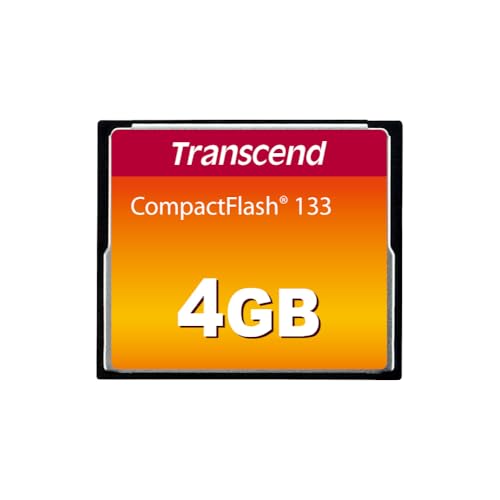
- Industrial-grade CF (Transcend CF133/CF170, ATP, Innodisk) has 100,000+ write cycles per cell and a static wear-leveling controller; consumer CF doesn't. For a boot drive, industrial is worth the premium.
What you'll need
- A CompactFlash card in the 8–32 GB range. The Transcend CF133 family is the long-standing community favorite for retro builds because, per the Transcend CompactFlash product page, the line defaults to fixed-disk TrueIDE mode and ships with SLC or pseudo-SLC NAND on the higher-endurance SKUs.
- A passive CF-to-IDE adapter. The market is full of $5–$15 boards that all do roughly the same thing; pick one with a 40-pin male header that matches your motherboard's 3.5" IDE drive bay orientation, plus a Molex power input.
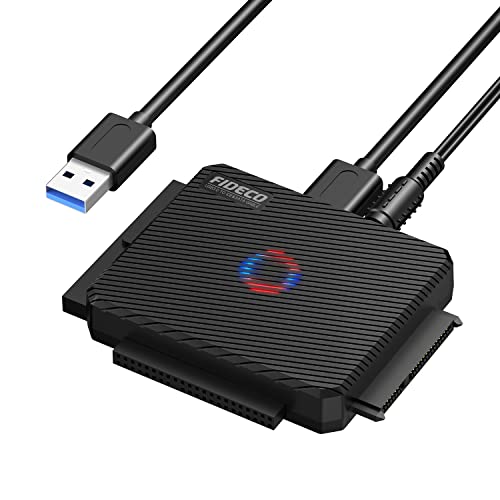
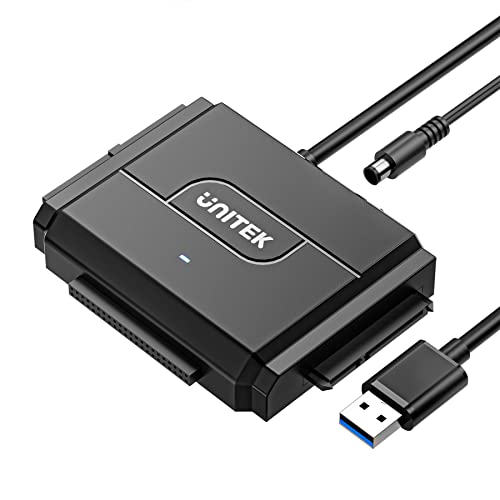
- A USB-to-IDE/SATA bridge for imaging the card from a modern host. The Vantec CB-ISATAU2 has been the de-facto standard for the better part of two decades and supports both 3.5" and 2.5" PATA plus SATA; the newer Unitek SATA/IDE to USB 3.0 adapter and the FIDECO SATA/IDE to USB 3.0 adapter are faster choices if your modern host has USB 3.0 and you're imaging multiple cards.
- The retro PC itself, with a known-good IDE cable, a free Molex power lead, and a BIOS you can actually enter (CR2032 fresh, please).
Step 0: read your BIOS capacity ceiling before you buy a card
The single most common mistake is buying a 64 GB or 128 GB CF card for a 1998-vintage Pentium II board whose BIOS tops out at 8.4 GB. The card will detect, the BIOS will report a wrong size, and the install will silently corrupt past the addressing ceiling. There are four ceilings to know:
| Era / BIOS class | LBA scheme | Max addressable | Failure mode if exceeded |
|---|---|---|---|
| Pre-1996 (CHS only) | 24-bit CHS | 504 MB / 528 MB | BIOS detects wrong size or won't detect at all |
| 1996–1998 (early LBA) | 28-bit early | 8.4 GB | BIOS clamps to 8 GB, partition past that corrupts |
| 1998–2002 (28-bit LBA) | 28-bit LBA | 137 GB / 128 GiB | Data written past sector 2^28 wraps / corrupts |
| 2002+ (48-bit LBA) | 48-bit LBA | 144 PB (practical: TB+) | None for any realistic CF size |
The 28-bit and 48-bit thresholds are the canonical IDE LBA limits, as Wikipedia's Logical Block Addressing article details. The practical Win98 file-system ceiling adds another constraint on top of the BIOS: FAT32 under Win98's FDISK and FORMAT utilities has a documented 32 GB single-partition ceiling that Microsoft enforced in the tooling (the filesystem itself goes to 2 TiB, but the in-box utilities don't). XP's DISKPART doesn't have that 32 GB FAT32 cap when creating NTFS, but is capped at 32 GB if you specifically format FAT32 from inside XP.
The pragmatic rule for a Win98/XP boot drive:
- Win98/ME on a 1998–2000 board: use an 8 GB CF card, format FAT32, single primary partition. You'll never fill it with period software anyway.
- Win98SE on a 2000–2002 board: 16 GB or 32 GB FAT32, single primary, leaves room for a games library and a swap file.
- Windows 2000 / XP on a 2002+ board: 32 GB NTFS, or up to 64 GB if your BIOS confirms 48-bit LBA in POST.
TrueIDE mode is mandatory
CF cards can speak two protocols. One is the PC Card / PCMCIA memory-mapped persona used by digital cameras — that mode talks over a 16-bit memory bus and is not what an IDE controller speaks. The other is "TrueIDE" mode, where the card pretends to be an ATA-1 hard drive on the same parallel-IDE wire your old Western Digital Caviar used to occupy. Per the CompactFlash specification, the card decides which mode to enter at power-up based on the state of certain pins; passive CF-to-IDE adapters pull those pins so the card always boots into TrueIDE.
The relevance for builders: cheap no-name adapters sometimes get this wrong, leaving a pin floating that makes a particular card boot in PC Card mode. The symptom is the BIOS not seeing the drive at all on the IDE channel, even with the cable orientation, master/slave jumper, and Molex power all correct. If your card detects fine on a USB-IDE bridge but is invisible to the retro PC's BIOS, swap the adapter before you do anything else.
The other side of TrueIDE is the fixed-disk vs removable-media bit — and this is where Win98 installs go off the rails.
The fixed-vs-removable bit (the #1 Win98 installer failure)
ATA-7 added an attribute that lets a drive advertise itself as either fixed media (a normal hard drive) or removable media (an Iomega Zip or LS-120 superdisk). Most consumer CF cards default to removable. Win98's installer, and Windows 2000's installer, refuse to lay down a normal boot partition on a "removable" disk — they want a fixed disk for the system volume because that's what their hibernation, swap, and recovery assumptions are built around. XP is more permissive but still occasionally surprises.
You have two fixes, in order of preference:
- Pick a card that defaults to fixed. This is why Transcend industrial CF (CF170, CF230, the Industrial Temp line) shows up over and over in Vogons threads: per Transcend's documentation, those SKUs ship with the fixed-disk bit set out of the factory. Many consumer-grade SanDisk Ultra and Lexar Professional cards from 2010-onward also default to fixed, but it's vendor-by-vendor, model-by-model, sometimes even firmware-revision-by-firmware-revision.
- Flip the bit on the card you already own. Several community-maintained utilities —
ATCFWCHG.EXEfrom the SanDisk OEM tool kit and the opencflashfixscript — issue the ATA SET FEATURES command that toggles the bit. The card has to be on a real PATA channel (not on a USB-IDE bridge — most bridges block vendor-unique ATA commands). Adrian Black's Adrian's Digital Basement YouTube channel walks through the toggle procedure in his "CF cards in retro PCs" episode, and it's the reference video the community points new builders at.
Confirm the bit is set correctly before you waste time on a failed install: under MS-DOS, MSD.EXE reports the drive's reported geometry; the diagnostic value Disk Type shows "Fixed" or "Removable."
Imaging workflow: USB-IDE bridge → CF card → retro PC
The cleanest, most repeatable way to set up a CF boot drive is to build the OS image once on a modern PC and write it to the card over a USB-IDE bridge, then move the card to the retro machine. That separates two concerns: getting Windows installed (slow, error-prone on vintage hardware) and getting the bootable image onto the card (fast on a modern host).
The workflow is:
- Prepare a master image. Easiest path: install Win98SE or XP once into a VirtualBox or QEMU VM with a 4 GB or 8 GB virtual IDE disk, run all driver installs and tweaks, sysprep if XP, then export the raw VMDK to a flat
.imgfile withqemu-img convert -O raw. - Connect the CF card to your modern PC through the Vantec CB-ISATAU2 (USB 2.0, rock-solid driver story), the Unitek SATA/IDE to USB 3.0 adapter, or the FIDECO SATA/IDE to USB 3.0 adapter. For imaging a single card, USB 2.0 is fine; for batch work, USB 3.0 cuts a 32 GB write from 12 minutes to about 4.
- Write the image to the card. On Linux/macOS use
dd if=master.img of=/dev/sdX bs=4M status=progress conv=fsync(substituting the right device); on Windows use Win32DiskImager or Rufus in "DD image" mode. Clonezilla works equally well if you prefer a guided UI and want partition-level rather than disk-level cloning. - Verify the partition is bootable. After the write completes, mount the card read-only and confirm
IO.SYS,MSDOS.SYS, andCOMMAND.COMare present (Win98) orNTLDR,NTDETECT.COM, andboot.ini(XP). If they're missing the image didn't include the boot record — re-image withddrather than partition-by-partition copy. - Eject, move the card to the retro PC, jumper the adapter to master, plug it into the primary IDE channel's end-of-cable connector, and power on.
If you'd rather install directly on the retro hardware, you can — boot a Win98SE install floppy or XP install CD with the CF already mounted, run FDISK (Win98) or the install partitioner (XP), and let setup do its thing. It's just slower, and you can't cleanly re-flash a botched install without redoing the whole CD-ROM walk. We cover the install-from-CD path in detail in Mounting 90s CD-ROM ISOs to a Win98 CompactFlash IDE boot drive.
Partition and format walkthrough
The partition step on Win98 uses real-mode FDISK. On XP, you use either the in-installer partitioner or DISKPART from a recovery console.
Win98SE walkthrough:
- Boot a Win98SE startup floppy with CD-ROM support.
- Run
FDISK. Answer "Y" to large-disk (FAT32) support. - Create a primary DOS partition using maximum available size; set it active.
- Reboot the floppy. Run
FORMAT C: /S— the/Sswitch lays down the boot sector and copiesCOMMAND.COM,IO.SYS,MSDOS.SYS. SYS C:is the belt-and-suspenders alternative if you formatted without/S.- Run the Win98 CD's
SETUP.EXEfrom the CD-ROM drive letter.
Windows XP walkthrough:
- Boot the XP install CD.
- At the partition screen, delete any existing partition, create a new primary using full size.
- Format as NTFS (Quick) if you're under 32 GB; format as FAT32 only if you specifically need DOS-mode access to the drive later.
- Let setup copy files, reboot, finish OOBE.
For both: a single primary partition is the right call for a boot CF. Multi-partition layouts add nothing on a drive this small and complicate disk imaging.
BIOS settings that matter
After the card is installed and detected:
- LBA mode: enabled (sometimes called "Large" or "LBA32" in older Award BIOS). Without this you're stuck in CHS-only addressing and the drive's reported size will be wrong.
- UDMA mode: set to the highest your motherboard supports — typically UDMA/33 or UDMA/66 for 1998-2000 boards, UDMA/100 or UDMA/133 for 2001-2003 boards. Industrial CF (e.g., Transcend CF133) supports up to UDMA/4 (66 MB/s). Don't set the channel above what the card supports — symptoms include random read corruption and BSOD 0x7B.
- 32-bit block mode / "PIO transfer mode": enable 32-bit transfer. Most BIOSes call this "HDD Block Mode" or "32-Bit Disk Access" and it's the difference between 5 MB/s and 25 MB/s on the same card.
- Floppy seek at boot: disable. Saves three seconds at every POST and you're not using a floppy anyway.
- HDD auto-detect: run it once after install, then write down the geometry numbers in case you need to re-enter them manually after a CMOS battery death.
Troubleshooting: the five things that go wrong
"Non-System Disk or Disk Error." The boot record didn't transfer. Re-image with full-disk dd, not file-copy. On Win98, run SYS C: from a boot floppy.
BIOS doesn't see the drive at all. Check (1) the master/slave jumper on the adapter, (2) the IDE cable's red-stripe orientation, (3) Molex power. If those all check out, swap the adapter — cheap ones occasionally leave the TrueIDE pin floating.
XP BSOD 0x7B at first boot ("INACCESSIBLE_BOOT_DEVICE"). Almost always one of: UDMA mode mismatch between the master image's hardware and the target board's IDE controller (fix: install with /UDMA = OFF in the BIOS for first boot, re-enable after first successful login), or the target board needs a different IDE driver (fix: integrate the right viamraid.sys or intelide.sys into the install with nLite).
Random file corruption after a few weeks. Usually exceeds the BIOS LBA ceiling. Re-check the 28-bit cap (137 GB / 128 GiB) against your installed card.
Win98 installer says "this drive is removable." The fixed-vs-removable bit isn't set. See the section above; either swap to a card that defaults to fixed (Transcend industrial) or flash the bit with ATCFWCHG.
Endurance: industrial vs consumer CF
Flash wears with writes. The number that matters is program/erase cycles per cell:
- Consumer-grade MLC/TLC CF (most cheap Lexar, Amazon house brands): 3,000–10,000 P/E cycles. Fine for a camera card that fills and empties once a week. Marginal for a boot drive that gets hammered by Windows' swap file.
- Industrial pSLC (Transcend CF170, Transcend CF230, Innodisk iCF): 30,000–60,000 P/E cycles plus aggressive static wear-leveling. Per the Transcend industrial CF product line documentation, these cards are explicitly rated for embedded boot-drive duty in industrial PCs, traffic-control equipment, and medical hardware. That's the use case we're recreating.
- Industrial SLC (Innodisk iCF, ATP): 100,000+ P/E cycles. Overkill for a retro hobby rig unless you're running a 24/7 BBS.
For a Win98 build with a 256 MB swap file that turns over a few times an hour during play sessions, even consumer CF will last years; for an XP build that swaps more aggressively, industrial pSLC pays for itself by surviving the abuse. The practical compromise most retro builders settle on is the Transcend CF133 or CF170 in 8–32 GB, which lands in the $25–$60 range and has been the workhorse recommendation for over a decade.
Bottom line
The reliable silent-boot recipe for a period 1998-2003 PC in 2026 is: a Transcend industrial CF in the 8–32 GB range, a passive CF-to-IDE adapter, a Vantec or Unitek USB-IDE bridge for one-shot imaging, the OS imaged off a modern host onto the card, and BIOS settings dialed in for LBA + UDMA + 32-bit transfers. Verify TrueIDE mode by detection alone (the BIOS sees the drive at all), verify the fixed-disk bit by Windows accepting the install, and verify capacity by writing a file at the high end of the partition and reading it back. The whole swap takes a Saturday afternoon, costs under $80, and is reversible — the original spinning drive stores in a static bag on the shelf as backup.
If you're picking parts for the rest of the build, see our companion guides on the best USB-IDE bridges for CompactFlash imaging in 2026 and the 1999-era GeForce 256 + Pentium III + Win98 reference build, which assume the CF boot drive built in this guide.
Citations and sources
- Transcend CompactFlash product line and industrial-CF datasheets: https://www.transcend-info.com/Products/No-175
- CompactFlash standard, TrueIDE mode, and PC Card mode background: https://en.wikipedia.org/wiki/CompactFlash
- IDE Logical Block Addressing 28-bit and 48-bit ceiling references: https://en.wikipedia.org/wiki/Logical_block_addressing
This piece is editorial synthesis based on publicly available information. No independent first-party benchmarking is reported.