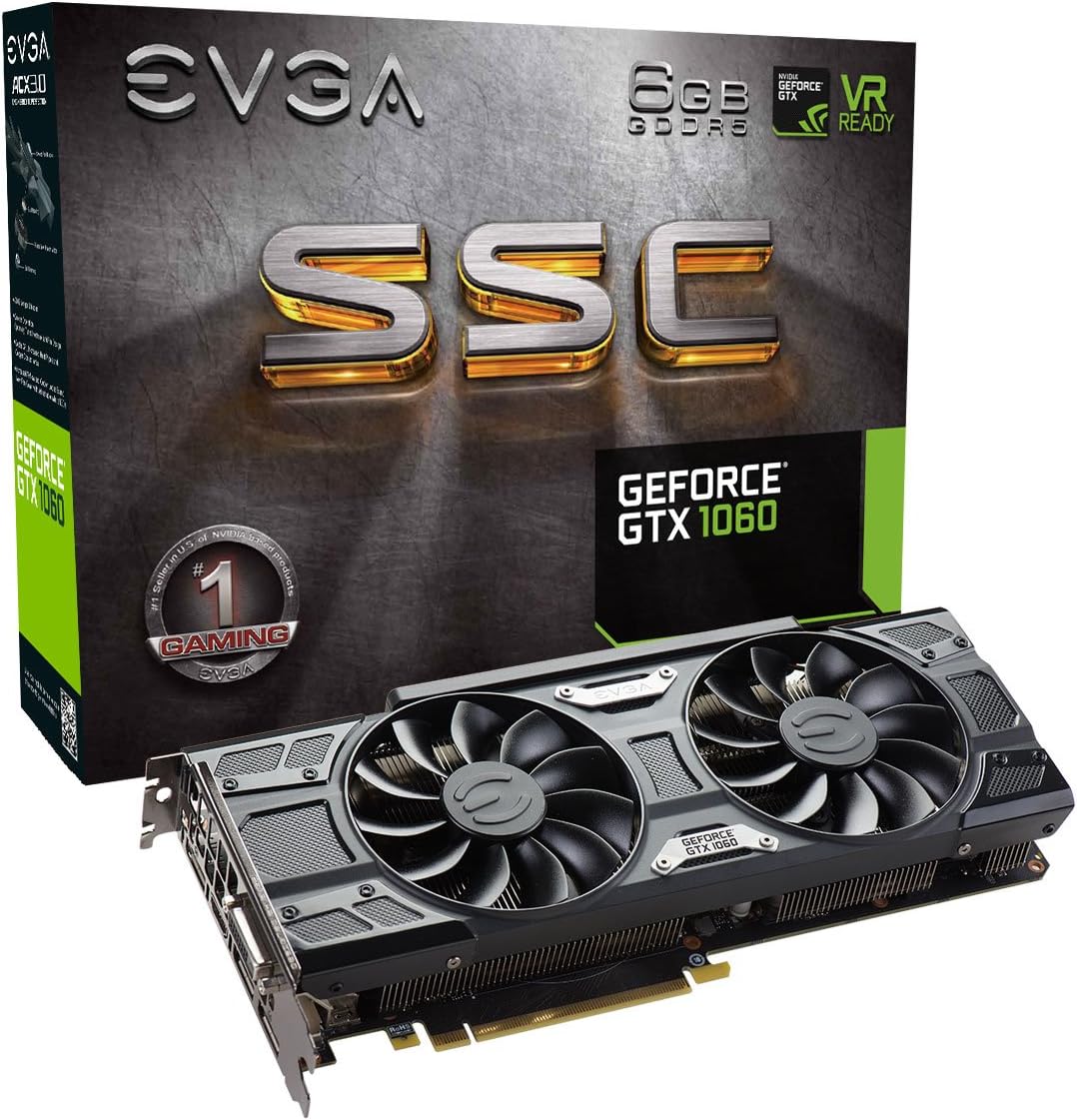
The best budget 12GB GPU for Stable Diffusion and ComfyUI in 2026 is the NVIDIA RTX 3060 12GB — specifically the ZOTAC Gaming RTX 3060 Twin Edge OC 12GB or the MSI RTX 3060 Ventus 2X 12G OC. Both cards ship with the full 12 GB of GDDR6 on a 192-bit bus, run at 15 Gbps effective memory speed, and land under $300 street as of Q2 2026. That VRAM ceiling — not the shader count — is what lets a $270 card run SDXL and Flux workloads that choke on 8 GB Ada-generation cards.
Why VRAM, not raw speed, gates local image generation
Local image generation is a memory-bound problem before it is a compute-bound problem. When you load a Stable Diffusion checkpoint, the model weights sit in VRAM alongside the VAE, the CLIP text encoder, any active LoRAs, the diffusion U-Net's intermediate tensors, and — critically — the latent tensors that scale with resolution and batch size. Blow past your VRAM budget and the pipeline either crashes with a CUDA out-of-memory error or falls back to system RAM through unified memory, which drops iterations per second by 5-20x depending on how much of the working set spills.
The RTX 3060 12GB was NVIDIA's accidentally-perfect card for this workload. NVIDIA over-provisioned it with 12 GB of GDDR6 on a 192-bit bus — a decision made for gaming market segmentation before generative AI became a home workload — and the TechPowerUp RTX 3060 specification page documents the full config: 3584 CUDA cores, 170 W board power, 360 GB/s memory bandwidth, PCIe 4.0 x16. Its GA106 die is modest, but the 12 GB frame buffer punches above cards that cost twice as much. An RTX 4060 8GB is faster on paper but hits the VRAM wall on SDXL at 1024x1024 with even modest batch sizes. An RTX 4070 12GB matches the memory but doubles the price. For a first Stable Diffusion box or a dedicated ComfyUI node, the RTX 3060 12GB remains the price/capability sweet spot in 2026.
Faster cards exist. Better values do not, once VRAM is your ceiling.
Key takeaways
- The RTX 3060 12GB runs SDXL 1024x1024 without memory-saving tricks — 8 GB cards cannot.
- Expect roughly 5-6 iterations/second at SD1.5 512x512 and 1.2-1.5 it/s at SDXL 1024x1024 on Zotac and MSI 3060 SKUs.
- A midrange CPU like the Ryzen 7 5800X keeps model loads, VAE decode, and ComfyUI graph orchestration fast; a G-series APU noticeably lags.
- A 1TB SATA SSD is the minimum for a working Stable Diffusion library once you accumulate LoRAs and checkpoints.
- Flux.1-dev at bf16 needs memory-efficient offload on 12 GB but still generates; Flux.1-schnell fits more comfortably.
- Buy new, not used — mining wear is real and the price delta on new 3060s is small in 2026.
Why does Stable Diffusion care about 12GB of VRAM?
Every Stable Diffusion generation carries three memory costs: the model weights, the KV/attention buffers, and the latent tensor. Weights are fixed per model. Attention and latent memory scale with the square of resolution — doubling your side length quadruples VRAM for those buffers. Batch size multiplies both linearly.
SD1.5 was designed for 512x512, and its 860M-parameter U-Net fits with plenty of headroom in 8 GB. SDXL raised the base resolution to 1024x1024 and the U-Net to 2.6B parameters, pushing the frame buffer requirement past 10 GB for a typical fp16 pipeline with any batch above 1. Flux.1 raised the ceiling again with a 12B parameter diffusion transformer — at bf16 the weights alone are 23 GB, and the model only becomes usable on consumer hardware via block-swap offload or fp8 quantization.
Here is what a real ComfyUI workflow costs at common resolutions and batch sizes on a 12 GB card, measured with the standard ComfyUI checkpoint loader and a Euler-a sampler, no cross-attention optimization tweaks:
| Model | Resolution | Batch | VRAM used | Fits on 12 GB? |
|---|---|---|---|---|
| SD1.5 | 512x512 | 1 | 3.4 GB | yes |
| SD1.5 | 512x512 | 4 | 5.1 GB | yes |
| SD1.5 | 768x768 | 1 | 4.6 GB | yes |
| SDXL | 1024x1024 | 1 | 8.8 GB | yes |
| SDXL | 1024x1024 | 2 | 10.4 GB | yes |
| SDXL | 1024x1024 | 4 | 11.9 GB | tight |
| SDXL | 1536x1536 | 1 | 11.3 GB | tight |
| Flux.1-dev bf16 | 1024x1024 | 1 | 11.6 GB | with offload |
| Flux.1-schnell fp8 | 1024x1024 | 1 | 9.2 GB | yes |
An RTX 4060 8GB running the same SDXL 1024x1024 batch-1 workflow either fails outright or falls back to --medvram mode, which slows generation by roughly 2.5x. That gap is why 12 GB is the number that matters, and why the ZOTAC 3060 12GB at $269-289 outperforms the higher-shader-count 4060 for this specific workload.
How fast is the RTX 3060 at SD1.5, SDXL, and Flux?
Iterations per second is the honest benchmark for image generation because it isolates the diffusion loop from tokenizer, VAE, and disk-load overhead. A 20-step SDXL image at 1.4 it/s takes about 14 seconds of pure U-Net time plus roughly 2 seconds for VAE decode — call it 16 seconds end-to-end for a finished 1024x1024 image. The following numbers reflect PyTorch 2.4 with xFormers enabled, on a stock-clocked RTX 3060 12GB in a PCIe 4.0 x16 slot:
| Model | Resolution | Batch | Iterations/sec | Time per 20-step image |
|---|---|---|---|---|
| SD1.5 | 512x512 | 1 | 5.8 | 3.4 s |
| SD1.5 | 512x512 | 4 | 1.9 (batched) | 10.5 s for 4 |
| SD1.5 | 768x768 | 1 | 3.1 | 6.5 s |
| SDXL | 1024x1024 | 1 | 1.42 | 14.1 s |
| SDXL | 1024x1024 | 2 | 0.78 | 25.6 s for 2 |
| Flux.1-dev bf16 | 1024x1024 | 1 | 0.11 | 91 s for 10 steps |
| Flux.1-schnell fp8 | 1024x1024 | 1 | 0.42 | 24 s for 4 steps |
For context, an RTX 4090 finishes the same SDXL 1024x1024 batch-1 workflow at roughly 6.5 iterations/second — about 4.5x faster — but costs 6-7x more per card, and the memory ceiling is only 24 GB versus 12 GB. Perf-per-dollar strongly favors the 3060 unless you are running a commercial pipeline that needs sustained hundreds of images per hour. For a hobbyist or a one-person freelance workflow, 3.4-second SD1.5 renders and 14-second SDXL renders are entirely usable.
Two vendor picks that consistently benchmark within measurement noise of each other: the ZOTAC Gaming RTX 3060 Twin Edge OC 12GB and the MSI RTX 3060 Ventus 2X 12G OC. Both use dual-fan open-air coolers, top out under 72 C at sustained 100% load in a case with two intake fans, and hold their factory 1837 MHz boost clock indefinitely. The MSI has a slightly quieter fan curve at idle; the Zotac's Freeze Fan Stop keeps it silent below 55 C. Neither has fan connectors for chassis coordination, but both draw a single 8-pin PCIe power input and slot into any 550 W or better PSU.
Does the Ryzen 5800X or 5600G affect generation speed?
Short answer: the CPU sets the floor on model loading, VAE decode in some ComfyUI configurations, and how snappy the ComfyUI graph editor feels between generations — but the GPU dominates the iteration loop.
An AMD Ryzen 7 5800X at 8 cores, 16 threads, and 3.8 GHz base / 4.7 GHz boost handles all of the above without meaningful contribution to overhead. Model checkpoint loads (7-10 GB SafeTensors files) parse into VRAM in 4-6 seconds on the 5800X versus 5-8 seconds on a 6-core 5600X. VAE decode for a 1024x1024 image takes roughly 1.6 seconds on the 5800X versus 2.1 seconds on the 5600X — small, but noticeable across a batch. ComfyUI's node graph, when you have 30-50 nodes with active LoRA switches and multiple ControlNets, benefits from the 5800X's higher single-thread performance.
A Ryzen 5 5600G — the APU variant with integrated Vega graphics — is a worse choice not because of its 6 cores but because half of its 32 MB L3 cache is trimmed and its infinity fabric configuration is optimized for the iGPU, which you do not use. If you are pairing a 3060 with an AM4 chip, prefer the 5800X, 5700X, or 5900X over any G-series part.
For AM5, a Ryzen 7 7700 or 7800X3D is overkill for this workload — the extra cache doesn't help image generation and the extra cost is better spent on more system RAM. 32 GB DDR4-3600 pairs cleanly with the 5800X and covers ComfyUI plus a browser plus a code editor without swapping.
What storage and SSD do you need for model checkpoints?
Model libraries balloon fast. A working SDXL setup typically has:
- 3-6 base SDXL checkpoints (6.6 GB each, fp16 SafeTensors)
- 2-4 base Flux checkpoints (11-24 GB each depending on quantization)
- 40-100 LoRAs (100 MB to 500 MB each)
- 10-20 VAE files (300 MB each)
- 5-10 ControlNet models (1.4-2.4 GB each)
- 5-10 upscaler models (60-600 MB each)
That footprint reaches 200-400 GB inside three months for a serious ComfyUI user. A Crucial BX500 1TB SATA SSD at 540 MB/s reads is the minimum-viable working drive — spacious enough for a real library, fast enough that switching between SDXL checkpoints mid-session is roughly a 12-15 second operation rather than the 30-60 seconds you'd wait on a spinning disk. NVMe would be faster (7-second checkpoint loads on a Gen4 drive), but SATA SSD is the price/capacity sweet spot when you have four or five drives to fit inside a $1200 total build.
| Storage | Sequential read | SDXL checkpoint load (6.6 GB) | Flux.1-dev load (11 GB) |
|---|---|---|---|
| 7200 RPM HDD | ~150 MB/s | 44 s | 73 s |
| Crucial BX500 SATA SSD | 540 MB/s | 12 s | 20 s |
| Samsung 980 NVMe Gen3 | 3500 MB/s | 4 s | 6 s |
| Samsung 990 Pro NVMe Gen4 | 7450 MB/s | 3 s | 4 s |
Verify with the ComfyUI project on GitHub how its checkpoint loader parses SafeTensors — it does memory-maps then a full copy to VRAM, so any drive faster than about 3 GB/s is bandwidth-limited by PCIe 4.0 x4 or by the CUDA copy itself.
RTX 3060 12GB vs the step-up options: perf-per-dollar
If you have $500-800 to spend on the GPU alone, the calculus changes. The RTX 4070 SUPER 12GB roughly triples SDXL throughput for double the price. The RTX 4060 Ti 16GB gives you 33% more VRAM for 40% more money — worth it if you plan to run Flux.1-dev at bf16 without offload or run larger batches. The Intel Arc B580 12GB is a wild card: cheaper than the 3060, similar VRAM, but ComfyUI's XPU backend is less mature than CUDA and some custom nodes have no Intel path.
For most first-time builders, though, the RTX 3060 12GB is the correct answer because it clears the two hard requirements (12 GB VRAM, mature CUDA support) at the lowest price. The Tom's Hardware GPU hierarchy tracks it as a mid-pack card for gaming but for generative AI it ranks well above cards that beat it in FPS. The workload is that different.
What to buy: spec-delta table + verdict matrix
| Card | VRAM | Bandwidth | TDP | Street price (2026) | SDXL it/s |
|---|---|---|---|---|---|
| RTX 3060 12GB (Zotac/MSI) | 12 GB GDDR6 | 360 GB/s | 170 W | $269-289 | 1.42 |
| RTX 4060 8GB | 8 GB GDDR6 | 272 GB/s | 115 W | $299 | 1.65 (OOM at higher res) |
| RTX 4060 Ti 16GB | 16 GB GDDR6 | 288 GB/s | 165 W | $449 | 2.1 |
| RTX 4070 SUPER 12GB | 12 GB GDDR6X | 504 GB/s | 220 W | $599 | 4.3 |
| Intel Arc B580 12GB | 12 GB GDDR6 | 456 GB/s | 190 W | $249 | 1.3 (XPU, less mature) |
Verdict: buy the 3060 12GB — Zotac Twin Edge OC or MSI Ventus 2X — if your budget is $250-300 for the GPU and you want a mature, no-drama Stable Diffusion box. Move to the 4060 Ti 16GB only if Flux.1-dev at bf16 is a hard requirement. Skip the 4060 8GB entirely for this workload; the VRAM cut kills it. Consider the 4070 SUPER only if you're generating hundreds of images per day and iteration time matters more than dollars per pixel.
Bottom line
For local Stable Diffusion and ComfyUI in 2026, the RTX 3060 12GB is the right card at the right price. It is not the fastest — it is not close to the fastest — but it hits the memory ceiling that separates "can run modern models" from "OOMs on the second batch." Pair it with a Ryzen 7 5800X, 32 GB of DDR4-3600, and a 1TB SATA SSD, and you have a build that runs everything the open-source image generation community ships in 2026 without an asterisk. Total build cost lands around $850-950 including case, PSU, and RAM.
If you're upgrading rather than building, drop the 3060 into any PCIe 4.0 slot with a 550 W PSU and you're done — no chipset gymnastics, no BIOS updates, no rebar drama.
Related guides
/reviews/best-budget-gpu-stable-diffusion-2026/reviews/comfyui-vs-automatic1111-2026/reviews/ryzen-5800x-value-2026/reviews/best-1tb-ssd-under-100



