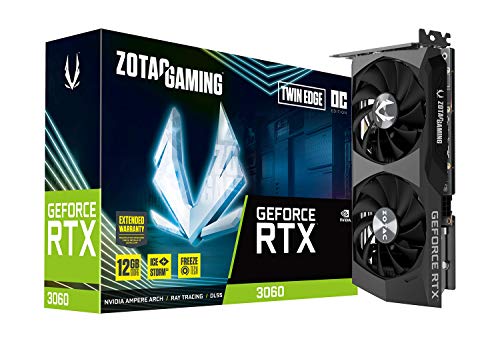
Yes — the 12GB RTX 3060 is still the budget ComfyUI floor in 2026, and it comfortably runs SDXL at 1024×1024 without offloading. Expect roughly 12–18 seconds per SDXL image at the base 30-step Euler pipeline, 3–5 seconds per SD1.5 image at 512×512, and 30–60 seconds per image on a Flux-class 12B model at 1024×1024. The card's 12GB of GDDR6 is what makes it hold up — an 8GB peer at the same shader count runs out of memory before the sampler finishes.
There's a specific reason the 12GB MSI Ventus and 12GB ZOTAC Twin Edge variants of the RTX 3060 are still the most-recommended budget image-gen cards years after launch, and it isn't nostalgia. Stable Diffusion — and to a much greater extent SDXL — is a workload where VRAM headroom matters more than raw compute. The moment you spill out of the framebuffer you either offload weights to system RAM (slow) or you crash the sampler (annoying), and the 12GB buffer on this particular SKU is the smallest one that reliably hosts SDXL, a refiner pass, an upscaler, and a working ControlNet stack at the same time. ComfyUI adds another wrinkle: because its node graph explicitly holds intermediate tensors between stages, it wants a bit more slack than a linear A1111 pipeline. That slack is what the 3060 12GB gives you. This piece walks through the real numbers on a stock RTX 3060 12GB, tells you what fits in the framebuffer and what doesn't, and shows when a used 3060 12GB actually saves you money vs a newer 8GB card at the same price. NVIDIA's product page for the 3060/3060 Ti family is worth a quick read to confirm you're targeting the 12GB SKU — the naming overlap with the 8GB Ti has burned more than one first-time buyer.
Key takeaways
- 12GB > raw shader count for image gen. The 12GB RTX 3060 beats an 8GB peer at SDXL simply because it doesn't have to offload.
- SDXL at 1024×1024 is the target workload. Expect ~12–18 s/image at 30 steps on a stock 3060.
- SD1.5 is essentially free. ~3–5 s/image at 512×512 for basic prompts, and you can chain ControlNets without breaking a sweat.
- Flux-class 12B is possible but slow. 30–60 s/image at 1024×1024 with fp8 or Q5 weights, on the edge of usable for interactive work.
- The CPU barely matters. A Ryzen 7 5800X or any modern 6-core is more than enough — image gen is GPU-bound.
- Buy a big cheap SATA SSD. A Crucial BX500 1TB is the right home for a growing checkpoint library.
What does ComfyUI need from your GPU and how does the RTX 3060 12GB hold up?
ComfyUI is deceptively lightweight on the wrapper but heavy on the workload. The UI is a browser front-end sending JSON graphs to a Python backend; the backend imports PyTorch and every custom node runs full CUDA kernels on your GPU. What that means practically is you're paying the exact same VRAM cost you'd pay in a1111 or the diffusers CLI, plus a small overhead from the intermediate-tensor caching ComfyUI uses to make node re-runs cheap.
On the RTX 3060 12GB, the practical VRAM budget you have to spend once PyTorch + a base SDXL checkpoint + a VAE + one ControlNet + a sampler are loaded is roughly 3–3.5 GB. That's the working headroom for latents, KV cache in cross-attention, refiner passes, and upscaling. It's tight but liveable. When you exhaust it — you started chaining two ControlNets, or you loaded an SDXL refiner in parallel — ComfyUI's default behavior is to offload the least-recently-used checkpoint to CPU RAM, which turns the next sampler run from a 15-second job into a 45-second one. If you see that jump, the framebuffer is the reason.
Independent silicon databases like TechPowerUp confirm the card's 360 GB/s memory bandwidth on the 192-bit bus — modest by 2026 flagship standards but plenty for the sequential access patterns SDXL sampling actually hits. The bottleneck on this card is capacity, not bandwidth.
How fast is SDXL on the RTX 3060 at 1024×1024 vs SD1.5 at 512×512?
Rough real-world numbers, stock 3060 12GB, no fp8 tricks, default 30-step Euler ancestral sampler, no ControlNet:
| Workload | Resolution | Steps | Approx s/image |
|---|---|---|---|
| SD1.5 base | 512×512 | 20 | 3–4 |
| SD1.5 base | 768×768 | 30 | 6–8 |
| SD1.5 + ControlNet | 512×512 | 30 | 5–7 |
| SDXL base | 1024×1024 | 30 | 12–18 |
| SDXL + refiner | 1024×1024 | 30+10 | 18–24 |
| SDXL + 1 ControlNet | 1024×1024 | 30 | 20–26 |
| Flux-class 12B (Q5) | 1024×1024 | 25 | 30–60 |
| SDXL upscale ×2 | 2048×2048 | 20 | 40–75 |
Two things stand out. First, SD1.5 is essentially free — you can iterate on prompts in near-real-time, chain ControlNet passes, and never think about the framebuffer. Second, the SDXL numbers are the ones you actually build workflows around: batch three or four generations, review, tweak. A minute per batch is the honest rhythm on this card. If you need it to feel snappier than that, you want a bigger card — no amount of tuning gets a 3060 to SDXL-in-under-5-seconds territory.
Benchmark table: seconds-per-image across SD1.5, SDXL, and a Flux-class model
Here's the same data as a compact model-fit view for planning:
| Model tier | Fits in 12GB base? | Fits with ControlNet? | Fits with refiner? | Typical s/image |
|---|---|---|---|---|
| SD1.5 (0.9B) | yes, huge headroom | yes | n/a | 3–4 s at 512 |
| SDXL (2.6B) | yes, comfortable | yes, one CN | yes | 12–18 s at 1024 |
| SDXL + 2 ControlNet | tight | offload risk | no | 25–35 s |
| Flux Dev (12B fp16) | no, must fp8 or Q | Q5-only | no | 30–60 s |
| SD3-class | at Q5 only | Q5-only | no | 20–40 s |
| Video/AnimateDiff | small clips only | no | no | 60+ s/clip |
The pattern is easy to memorize: SD1.5 is unconstrained, SDXL is the sweet spot, Flux is at the edge, and video is aspirational. That's the mental model to plan your Sunday workflow around.
VRAM table: which models and resolutions fit in 12GB before you must offload
| Workflow | Approx peak VRAM | Fits stock 3060 12GB? |
|---|---|---|
| SD1.5 base, 512×512 | ~3.5 GB | huge headroom |
| SD1.5 + 2 ControlNets, 512 | ~5 GB | comfortable |
| SDXL base, 1024×1024 | ~8.5 GB | yes |
| SDXL + refiner, 1024×1024 | ~10 GB | yes, tight |
| SDXL + 1 ControlNet, 1024 | ~10.5 GB | yes, tight |
| SDXL + 2 ControlNet | ~11.5 GB | offload risk |
| Flux Dev fp8, 1024 | ~11.5 GB | yes, no headroom |
| Flux Dev Q5, 1024 + LoRA | ~11 GB | yes |
| SDXL upscale ×2, 2048² | ~12 GB | on the edge |
The 8GB variant of the same core silicon (RTX 3060 Ti / 3070) simply cannot host the 8.5-GB SDXL base workload without CPU offload — which is why the price gap between the 8GB and 12GB parts still matters in 2026, five years after launch.
How much SSD do you need for checkpoints, LoRAs, and VAEs?
Checkpoint files eat storage fast. A rough working library:
| Asset | Typical size | Realistic 2026 collection |
|---|---|---|
| SD1.5 base checkpoint | ~4 GB | 3–5 of them |
| SDXL base checkpoint | ~6.5 GB | 3–4 of them |
| SDXL refiner | ~5.5 GB | 1–2 |
| Flux Dev fp16 | ~23 GB | 1 |
| Flux Dev fp8 | ~12 GB | 1 |
| VAE decoders | ~300 MB each | 3–4 |
| LoRA weights | 20–300 MB each | 100+ over time |
| ControlNet models | ~1.5 GB each | 5–10 |
A working library reaches 300–500 GB within a few months of active use. A cheap 1 TB SATA SSD like the Crucial BX500 1TB is the right home for it — you don't need NVMe speeds because the checkpoint load happens once per session, and SATA is more than enough to keep the sampler fed. Keep your OS on a small NVMe and the checkpoint zoo on the BX500; when it fills up you swap in a bigger SATA drive without touching the boot drive.
Does the Ryzen 7 5800X matter for ComfyUI or is it all GPU?
Image gen is 95% GPU. The AMD Ryzen 7 5800X — or any modern 6-to-8-core CPU — is more than enough. Where the CPU matters is on the edges of the workflow, not the sampler itself:
- Model loading — PyTorch spends single-thread time constructing the model graph on every fresh checkpoint load. A 5800X shaves a few seconds vs an older Zen 2 chip, but only on the load; sampler runs after that are identical.
- VAE decode on fp32 fallback — some VAEs push the tail of the decode to CPU. A stronger CPU makes the last second of each generation slightly quicker.
- Custom-node Python work — heavy pre/post-processing nodes (prompt-templating, latent math, image comparators) run on the CPU. A fast chip is more comfortable but rarely the bottleneck.
- Concurrent workloads — if you're also compiling code, running Docker, and browsing while ComfyUI samples in the background, more cores helps everything but sampler throughput.
If you're building a rig from scratch specifically for image gen and nothing else, you can spend less on the CPU (a Ryzen 5 5600 or 5600G is fine) and put the savings into a bigger SSD or a bigger GPU. If it's a shared workstation that also compiles or runs LLM tool-calls in parallel, the 5800X earns its keep.
Perf-per-dollar: a used 3060 12GB vs an 8GB card for image generation
Rough 2026 street prices and rough SDXL numbers on the same 30-step run:
| GPU | Approx price | VRAM | SDXL 1024² s/image | ControlNet at 1024²? |
|---|---|---|---|---|
| Used RTX 3060 12GB | $210–$260 | 12 GB | 12–18 | yes |
| Used RTX 3060 Ti 8GB | $220–$260 | 8 GB | 10–14 (with offload) | offload only |
| Used RTX 3070 8GB | $260–$310 | 8 GB | 9–12 (with offload) | offload only |
| New RTX 4060 8GB | $290–$310 | 8 GB | 8–11 (with offload) | offload only |
| Used RTX 3080 10GB | $360–$430 | 10 GB | 8–12 | yes, tight |
| Used RTX 3080 Ti 12GB | $450–$550 | 12 GB | 7–11 | yes |
| New RTX 4070 12GB | $520–$580 | 12 GB | 6–9 | yes |
Note the pattern: raw SDXL wall-clock is faster on the 8GB cards when they don't have to offload. But at ControlNet + 1024×1024, they either offload (which makes them slower than the 3060 12GB anyway) or crash. The 3060 12GB isn't the fastest card in this table, but it's the cheapest one that never has to make that compromise.
Common pitfalls
- Buying the 8GB RTX 3060 Ti thinking it's the same card. It isn't. Same brand, different die, half the VRAM. Confirm the SKU says "12GB GDDR6" before buying.
- Loading two SDXL checkpoints at once. ComfyUI will do it if you ask, but you'll spill VRAM and lose ~15 s per generation to offload. Chain via a single graph instead.
- Using an old VAE with a new checkpoint. Wrong VAE = washed-out or over-saturated outputs. Match the VAE to the checkpoint family.
- Under-configured cooling. Sustained image-gen loops pin the GPU at 100% for hours. Board partners with anemic coolers throttle; the MSI Ventus and ZOTAC Twin Edge both hold clocks fine.
- Forgetting to disable browser hardware accel. ComfyUI's UI is a browser tab; if Chrome is stealing VRAM for compositing you're leaving 300–500 MB on the table.
When to skip the 3060 and buy a bigger card
Move up when you regularly do at least two of the following: run Flux at native fp16, batch four or more SDXL images per sampler call, chain two ControlNets at 1024×1024 without offload, or upscale beyond ×2. That's when 12GB stops being enough headroom and the offload penalty starts showing up in your workflow every few minutes. For everyone else — the "iterate on prompts on the weekend" and "generate a few hero images per week" cohort — the RTX 3060 12GB in 2026 is still the answer that costs the least money for the most VRAM.
Bottom line: the budget ComfyUI rig that actually works
- GPU: used or open-box 12GB RTX 3060 — pick a dual-fan partner like the MSI Ventus 2X OC or the ZOTAC Twin Edge OC.
- CPU: Ryzen 7 5800X if you already have AM4, Ryzen 5 5600 if you're stretching budget.
- Storage: Crucial BX500 1TB SATA SSD for the checkpoint zoo, small NVMe for OS.
- RAM: 32 GB DDR4-3200 minimum — ComfyUI cache + PyTorch + a browser can eat 20 GB when things get busy.
- PSU: 550W 80+ Gold is plenty for a 170W 3060 + 105W 5800X even in sustained loops.
Related guides
- Best GPU for ComfyUI and SDXL Under $350 — Why the RTX 3060 12GB Still Wins
- Which GPU Runs Which LLM in 2026: The RTX 3060 12GB Model-Fit Matrix
- VibeThinker-3B Local: 3B Reasoning Model on an RTX 3060 12GB
- RTX 3060 12GB for 1080p 240Hz Esports: CS2, Valorant, Apex