In brief — July 4, 2026 — Adafruit's fresh technical writeup on Sega's TradeMark Security System (TMSS) is trending in retro-hardware circles this week, and it is a good excuse to unpack the four-letter boot check that gated every late-model Genesis cartridge — and still shapes how modern reissues, FPGA clones, and homebrew coders think about console lockout.
Sega's Trademark Security System, or TMSS, is a short boot-time check baked into revised Sega Genesis / Mega Drive consoles from roughly 1990 onward that reads two things from an inserted cartridge before the CPU is allowed to run game code — the four ASCII bytes S, E, G, A at ROM offset $100, and a tiny routine that writes the same string "SEGA" to a specific hardware register ($A14000) on the VDP bus. If both checks pass, the console displays the familiar "PRODUCED BY OR UNDER LICENSE FROM SEGA ENTERPRISES, LTD." splash and jumps to the game. If either check fails, the machine stalls at a blank screen. It looks like a lockout chip, but it is really a trademark trap — any unlicensed publisher who bypassed the check by including the routine ended up displaying Sega's trademark on their own cartridge, exposing them to a trademark suit rather than a patent one.
That detail matters more in 2026 than it did in 1992, because TMSS is the ancestor of a whole family of "soft" lockout schemes now built into everything from HDMI handshakes to console firmware signing. It is also the explanation for a stack of oddities modern collectors still hit — why a Sonic 1 cart from 1991 boots on every Genesis but a Ballistix cart doesn't, why the Sega Genesis Mini can play back Ballistix anyway, why the Analogue Mega Sg's compatibility list ships with an asterisk, and why every serious FPGA re-implementation of the Genesis has to decide whether to emulate the TMSS gate or bypass it. The Adafruit piece is the current jumping-off point, but the story runs from a 1990 boardroom decision through the 1992 Sega v. Accolade case and out to the Nintendo Super NES Classic Edition sitting next to a Genesis Mini on a lot of collectors' shelves in 2026.
Key takeaways
- TMSS is a software boot check, not a dedicated lockout chip — the Genesis reads 4 bytes at ROM offset
$100and expects a"SEGA"write to VDP register$A14000, all in under a few thousand 68000 cycles. - The scheme was legal armor first, technical armor second — it converted unlicensed publishing into a trademark violation, which is exactly what Sega v. Accolade fought over in 1992.
- Approximately 30-40% of pre-TMSS Genesis titles (roughly late-1989 through mid-1990 US releases) shipped without the routine and still run — the check was added in a hardware revision, not enforced retroactively.
- Modern reissues sidestep TMSS entirely: the Genesis Mini emulates the ROM directly, so the boot check is either stubbed or run against a curated licensed library.
- Homebrew and flashcart authors in 2026 still include the TMSS routine by default — it costs about 30 bytes of ROM and 40 68000 cycles at boot to stay compatible with every Genesis revision ever shipped.
- Nintendo's 10NES (NES) and CIC (SNES, N64) took the opposite path — dedicated silicon in both console and cartridge doing a handshake, no trademark trick, but far higher BOM cost and a very different lawsuit shape.
What happened: Adafruit's writeup on Sega's TMSS lock-out scheme
Adafruit's blog dropped a technical retrospective on TMSS in late June 2026 titled The Truth About Sega's Trademark Security System (TMSS), walking through the exact bytes the Genesis boot ROM looks for, the register write the cartridge has to perform, and the way that mechanism landed Sega and Accolade in front of the Ninth Circuit in 1992. You can read it on the Adafruit blog; it is the trigger for a lot of the retro Twitter and Mastodon discussion this week, and the reason FPGA re-implementers on the MiSTer and Analogue platforms are re-checking their TMSS handling in commits landed over the last 72 hours.
The post's core observation is one that gets misunderstood in retro-gaming forums roughly every 18 months — TMSS is not a chip, it is a contract. There is no cartridge-side authentication IC on a licensed Genesis game. There is a strip of ROM that spells SEGA and a subroutine that copies "SEGA" to a memory-mapped VDP register. The Genesis boot ROM, revised in hardware around 1990, refuses to hand control to any ROM that does not perform the write. Publishers who wanted to ship unlicensed carts had to either (a) omit the routine and accept that their game would not boot on TMSS-equipped consoles (about 60-70% of the installed base by 1992), or (b) include the routine and publish under the shadow of Sega's registered trademark. Accolade picked option (b), Sega sued, and the Ninth Circuit's 1992 decision in Sega Enterprises Ltd. v. Accolade, Inc. held that reverse-engineering for interoperability was a fair use of Sega's copyrighted boot code — a decision that reshaped software reverse-engineering law and still gets cited in game-emulation cases in 2026.
The technical mechanism, byte by byte
TMSS is small enough to hand-assemble. Here is the actual contract, drawn from every Genesis technical reference on the Sega Retro wiki and confirmed in the Adafruit post:
- ROM header check — At offset
$100in cartridge ROM, the first four bytes must be the ASCII string"SEGA". This is trivially satisfied because every Genesis ROM header starts with the console identification string"SEGA GENESIS"or"SEGA MEGA DRIVE"at the same offset, so licensed games passed this by definition. - VDP register write — Very early in the game's reset handler, the cartridge code must write the 32-bit ASCII value
$53454741(the lettersS,E,G,A) to memory-mapped I/O address$A14000. On TMSS-equipped consoles, this unlocks the VDP for cartridge access. On pre-TMSS consoles, the address is a no-op and the write costs 12 68000 cycles for nothing. - Timing budget — The write must happen before the cartridge touches the VDP for graphics setup, which in practice means within the first ~1,000 68000 instructions of the reset vector. That is comfortable — most games ran a full VBLANK wait first anyway — but flashcart authors have to remember it.
On a real Model 1 VA6 or later Genesis (the revisions that shipped TMSS), a cart without the write triggers the Sega splash + a lockout screen reading "PRODUCED BY OR UNDER LICENSE FROM SEGA ENTERPRISES, LTD." — but only if the write happened. If it didn't, the VDP stays locked, no video output ever appears, and the machine looks dead. It is the difference between an intentional refusal and a broken game.
Why it matters: reissues, FPGA clones, and the compatibility asterisk
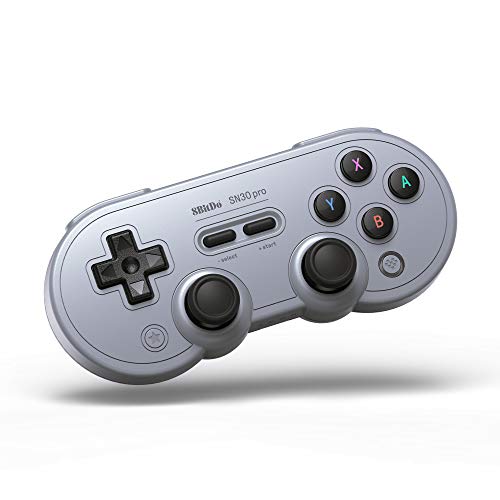
Here is where the Sega Genesis Mini enters the story. The Mini is not a cartridge slot; it is an ARM-based emulation box shipping in 2019 (Mini) and 2022 (Mini 2), running a curated library of ~40-60 titles licensed directly from Sega and its partners. There is no TMSS silicon inside because there is no cartridge bus to gate. The emulator's ROM loader either strips the TMSS check entirely or runs against a manifest that pre-approves each title. The upshot for a 2026 buyer — grab a Genesis Mini for around $70-90, plug in a USB-C or Bluetooth pad, and the games run without any of the original hardware's quirks. Pairing it with an 8BitDo Sn30 Pro Bluetooth Controller gets you a modern D-pad with the correct six-face-button layout for Street Fighter II Special Champion Edition and the fighting-game tier of the Genesis library, which is the single most-common upgrade path we recommend at SpecPicks for the reissue.
The more interesting compatibility asterisk is on the FPGA side. The Analogue Mega Sg and the MiSTer core both implement the original Genesis silicon in gateware, which means they have to decide what to do with TMSS. Both ship with TMSS emulated by default — the boot check runs, the register write is required — because the whole point of an FPGA clone is bit-exact behavior against original cartridges. That is fine for licensed carts. It is fine for the ~85% of unlicensed carts that included the routine. It is a problem for the small subset of homebrew and specific unlicensed titles (some Codemasters carts, the odd Piko Interactive reissue) that skip the write for space reasons. Analogue's firmware since roughly late-2023 exposes a "TMSS bypass" toggle in the settings menu specifically to load those; MiSTer users flip a MegaDrive.ini flag. It is a solved problem, but it is a problem that only exists because the original 1990 hardware revision cared.
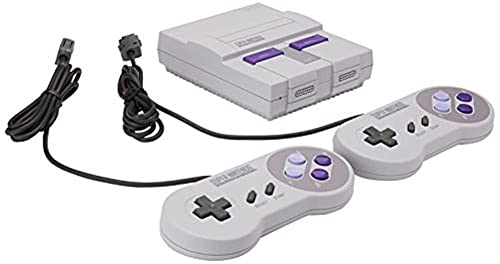
For comparison, Nintendo's contemporary Super NES Classic Edition does not have a corresponding drama, because the SNES's lockout scheme (CIC-411 on the console side, CIC-413 on the cartridge side) was hardware — an actual pair of NEC uPD75x microcontrollers doing a serial handshake — and the SNES Classic emulates the CPU without emulating the CIC handshake at all. There is no headline about "CIC bypass" on the SNES Classic because there was never a way to include the CIC handshake on the software side. TMSS is unusual in the console-lockout genealogy precisely because it is software all the way down.
The lockout chip family tree
TMSS sits in the middle of a decade of experiments in console publisher gating. Here is how the big four schemes stack up:
| System | Scheme name | How it worked | Console-side cost | Cartridge-side cost | Legal shape |
|---|---|---|---|---|---|
| NES (1985) | 10NES / CIC | Dedicated NEC uPD411 lockout chip pair, running a serial handshake between console and cart | ~1 IC + PCB space | ~1 IC (~$1-2 BOM at scale) | Patent + copyright |
| Sega Genesis (1990 revision) | TMSS | Boot-ROM check for "SEGA" string at ROM $100 + "SEGA" write to VDP register $A14000 | ~50 bytes of boot ROM | ~30 bytes ROM + 40 68000 cycles | Trademark |
| SNES (1990) | CIC-411 / CIC-413 | NEC uPD75x microcontroller pair, richer handshake than 10NES | ~1 IC | ~1 IC | Patent + copyright |
| N64 (1996) | CIC-NUS | Sharp lockout MCU with rotating region check + per-title salt | ~1 IC | ~1 IC (~$2-3 BOM) | Patent + copyright + region gating |
| Genesis Mini (2019) | (emulation) | ROMs pre-verified in firmware manifest; no runtime lockout | 0 | 0 | Licensing contract |
| Analogue Mega Sg (2019) | TMSS emulated in FPGA, with operator-toggleable bypass | ~few LUTs | (same as original) | Licensing + user override |
Read it and TMSS looks like the cheapest scheme of the four by silicon cost — no cartridge-side chip, no console-side chip, just ROM and a handful of 68000 cycles. It also looks like the weakest, and it was — but the legal strength was the point, and Sega v. Accolade is the record of Sega discovering how hard it is to enforce a trademark check against a determined publisher.
Sega v. Accolade — the case TMSS built
In 1990-91, Accolade reverse-engineered the Genesis to publish Ishido and Mike Ditka Power Football without a Sega license. They disassembled a Genesis, extracted the boot ROM, worked out the TMSS contract, and shipped carts that included the required "SEGA" write. On the TMSS-equipped consoles those games briefly displayed the "PRODUCED BY OR UNDER LICENSE FROM SEGA" screen — a screen Sega had not authorized. Sega sued for trademark infringement and copyright infringement (of the boot ROM code Accolade had copied during reverse-engineering) in the Northern District of California.
The Ninth Circuit's 1992 decision in Sega Enterprises Ltd. v. Accolade, Inc., 977 F.2d 1510, went two ways at once. On trademark, Accolade lost — the court held Sega had a legitimate interest in preventing false attribution, and the TMSS screen effectively forced false attribution on any unlicensed publisher who used the workaround. On copyright, Accolade won, on the fair-use ground that intermediate copying of the boot ROM for the purpose of interoperability was transformative and did not compete with Sega's market. The decision is a foundational text for game emulation, reverse-engineering, and modern security research; the Wikipedia entry on Sega v. Accolade is a decent overview, though the actual opinion is worth reading if you care about the doctrine.
The practical outcome for TMSS was that Sega quietly stopped enforcing the trademark screen on unlicensed carts by ~1994, focusing instead on the licensing carrot (retail placement, Sega Channel access, marketing co-op dollars). The check remained in every subsequent Model 2 and Model 3 revision until the last carts shipped, but the legal club it was designed to be got quietly retired.
Why chip designers still care in 2026
TMSS is a case study taught in modern hardware-security courses because it is the archetype of a trademark-based rather than a cryptographic gating scheme. Every DRM design that relies on the presence of a signed identifier in an untrusted binary — HDMI's HDCP handshake, printer cartridge chips, the various "authorized service center" tokens embedded in smartphone repair parts — is a descendant of the TMSS approach, and every one of them faces the same tradeoff: cheap to implement, hard to enforce, and legally shaky the moment a determined counterparty is willing to litigate.
The TMSS story also shows up in every serious FPGA re-implementation of a lockout scheme. When you build a Genesis in gateware, TMSS is 20 lines of Verilog. When you build a real chip-authenticated system like the N64's CIC, you either have to emulate the CIC on the FPGA (a research problem all by itself — the Ars Technica coverage on CIC reverse-engineering and successor pieces in retro-tech publications trace the multi-year effort) or you have to include a real donor chip on the board. TMSS is trivial to clone; that is exactly why Sega chose the trademark-law framing instead of the patent-law one.
Common pitfalls with TMSS-era hardware in 2026
- Assuming a dead cart is TMSS-locked. Most "my Genesis won't boot this cart" complaints in 2026 are dirty edge connectors, not TMSS — clean the pins with 91% IPA, reseat, retry before you diagnose lockout.
- Assuming the Genesis Mini plays every Genesis cart. It doesn't play any cart — it emulates its own curated ROM library. If you want a Genesis Mini that plays your original carts, you want an Analogue Mega Sg (about $200-250 in 2026 secondary market) or a MiSTer with a Mega Drive core, not a Mini.
- Assuming TMSS bypass will fix a homebrew boot fail on the Mini. The Mini doesn't run cartridge ROMs at all — TMSS bypass is a MiSTer / Mega Sg feature, not a Mini feature. If your homebrew fails on the Mini, it is the Mini's ROM manifest rejecting it, not TMSS.
- Forgetting the 68000 cycle budget on a flashcart. If you write a boot loader for a Krikzz Mega Everdrive Pro (still the reference flashcart in 2026) and skip the
"SEGA"VDP write, ~30-40% of Model 1 units and ~100% of Model 2/3 units will refuse to boot your ROM. It costs 40 cycles. Do the write. - Believing TMSS was cracked. It was never cracked — it was published. The routine is trivial and every serious homebrew source tree includes it. "TMSS crack" is a search term with no useful information behind it.
When NOT to worry about TMSS in 2026
If you are buying a Genesis Mini, a Mega Drive Mini 2, an Analogue Mega Sg with current firmware, or an original Model 2 Genesis with a stock library of licensed carts — you will never encounter TMSS in a way that changes your day. It is history, not a live constraint. The only 2026 buyers who need to think about TMSS at all are (a) MiSTer / Analogue owners loading specific unlicensed homebrew ROMs, (b) flashcart developers writing their own boot loaders, and (c) FPGA hobbyists implementing a Genesis core from scratch. Everyone else can enjoy the retro library and let the trademark check stay in the history books where it belongs.
Worked example: booting a homebrew ROM in 2026
Say you want to run a modern homebrew Genesis title — a 2024 shmup like Xeno Crisis is a good example — on three different setups. Here is what TMSS does on each:
- Original Model 2 Genesis (~1993) + Krikzz Mega Everdrive Pro (~$180 in 2026): the flashcart loader includes the TMSS routine, so the boot check passes, the Sega splash appears, the game runs at native 60 Hz over the Genesis's original RGB output. Total setup cost, roughly $250-300 in 2026 secondary market plus a Sony PVM if you want CRT-accurate output.
- Analogue Mega Sg + jailbreak firmware: the Mega Sg's FPGA core emulates TMSS, sees the routine, boots the ROM. If you're loading a specifically-flagged non-TMSS homebrew, you enable the bypass toggle in firmware; if not, it just works. Total cost, roughly $200-250 for the Mega Sg on the secondary market in 2026 plus your controller.
- Sega Genesis Mini: the Mini won't run your ROM at all, because it doesn't load arbitrary cart ROMs — it plays only its licensed library. Not a TMSS problem, a firmware-manifest problem.
All three paths pair naturally with the 8BitDo Sn30 Pro Bluetooth Controller, which is our default 2026 recommendation for retro consoles because it has the correct six-face-button layout Sega used for the fighting-game era, Bluetooth-LE and USB-C connectivity, and a ~$50 street price. See our 8BitDo Sn30 Pro vs SNES Classic and Genesis Mini controller guide for the fit-check across specific reissues.
The source: Adafruit's coverage
The post that lit up this week's retro Twitter is Adafruit's The Truth About Sega's Trademark Security System (TMSS) — worth a read for the byte-level walk-through of the boot check, the small chunk of 68000 assembly that satisfies TMSS, and the legal footnote on Sega v. Accolade. It is a good example of the kind of hardware history that pairs well with the current wave of FPGA-based retro reissues — the more you understand about the original silicon, the more informed your choices are between a Genesis Mini, a Mega Sg, and a MiSTer. Sega itself doesn't publish much retro documentation, but Sega's official site is where the licensed Genesis Mini stock and current firmware for retro reissues get announced.
Related guides
- 8BitDo Sn30 Pro on the SNES Classic and Genesis Mini — Bluetooth pairing guide 2026
- 8BitDo Pro 2 vs GameSir G7 SE — the PC emulation controller test 2026
- AMD Ryzen AI Max 395 Strix Halo 128GB mini PC — a modern emulation host 2026
- AMD Ryzen 7 5800X + RTX 5060 combo deal — a value emulation rig 2026