Yes — with caveats. A 3dfx Voodoo5 5500 PCI will POST and initialize on a modern ASUS P8Z77-V Pro, but only in the board's second PCI slot, and only as a detected device: there is no working display driver on Windows 10 or 11. The practical use is novelty and period-correct dual-boot experiments, not a daily-driver GPU. This synthesis breaks down exactly what works, why the slot matters, and what platform you should actually target for retro-card builds.
A viral post and a bigger question
A thread on r/retropc lit up the retro community this week: someone got a 3dfx Voodoo5 5500 PCI to boot on an ASUS P8Z77-V Pro — an Ivy Bridge-era board from 2012 — but only in the second PCI slot. It is a small, weird victory, and it surfaces a question a lot of builders ask: how far forward can you drag a legacy PCI graphics card before the modern platform refuses to cooperate?
The Voodoo5 5500 is a fitting test case. It is one of the most beloved cards of the late 1990s — dual VSA-100 chips, T-buffer effects, and Glide-native performance that defined an era. The PCI variant is rarer than the AGP one and was aimed at people without an AGP slot, which makes it the natural candidate for a "will it run in a modern board" experiment, since modern boards abandoned AGP two decades ago but kept PCI alive far longer.
The honest answer involves three layers: physical and electrical compatibility (will it fit and POST?), firmware behavior (will the BIOS enumerate it and hand off the display?), and driver support (will the OS actually paint pixels through it?). The Voodoo5 clears the first, mostly clears the second on the right slot, and fails the third on any modern OS. Understanding why each layer behaves the way it does is what turns a fun curiosity into useful knowledge for your own retro builds. Everything below is editorial synthesis of public sources and community reports — no first-party testing is claimed.
Key takeaways
- It works in the second PCI slot only on the P8Z77-V Pro — the first slot's bridge enumeration does not hand off cleanly to the Voodoo5's option ROM.
- Expect BIOS quirks: longer POST, occasional need to disable fast boot and CSM tweaks so the legacy option ROM loads.
- No driver path on Windows 10/11 — the card is detected as a PCI device but produces no display output.
- Workaround OSes: dual-boot Windows XP or 98SE for native drivers, or run Linux with the community mesa-glide drivers.
Per the r/retropc thread: what worked, what didn't
Per the original community report, dropping the Voodoo5 5500 PCI into the P8Z77-V Pro's first PCI slot produced no display handoff — the system would POST on the integrated or primary GPU but the Voodoo5 never came alive. Moving the same card to the second PCI slot changed everything: the card initialized, its option ROM loaded, and the board completed POST recognizing it.
What did not work, regardless of slot: getting a usable display under a modern OS. On a Windows 10/11 install the card shows up in device enumeration but there is no driver to drive it, so no output. The community consensus that emerged in the thread mirrors decades of late-PCI experience — the card is electrically and physically fine in a modern board, but the software stack of the era it was built for is what you actually need to use it.
Why the second PCI slot only? Bus routing on Z77
Per ASUS's P8Z77-V Pro documentation, the board does not have native PCI lanes from the Z77 chipset — Intel dropped conventional PCI from the platform controller hub by this generation. Instead, the PCI slots hang off an ASMedia ASM1083 PCIe-to-PCI bridge. That bridge re-enumerates legacy PCI devices, and it does not present them identically on every downstream slot.
The Voodoo5's option ROM and BIOS handshake were written in 2000 for real PCI buses with specific enumeration behavior. The first slot's path through the bridge re-orders or re-times that handshake in a way the card's ancient firmware does not expect, so the display hand-off fails. The second slot's downstream path happens to present the device in a way the Voodoo5's ROM tolerates. This is not unique to the P8Z77-V Pro — it is a recurring pattern across late-PCI boards from the 2010-2014 era, where a PCIe-to-PCI bridge stands between a modern chipset and a legacy card. The lesson generalizes: when a retro PCI card misbehaves on a modern board, try every PCI slot before concluding the card is dead.
Spec table: Voodoo5 5500 PCI vs its world
| Card | Year | Memory | Bus | Standout feature |
|---|---|---|---|---|
| Voodoo5 5500 PCI | 2000 | 64 MB SGRAM (2x VSA-100) | PCI | T-buffer FSAA, Glide |
| Voodoo5 5500 AGP | 2000 | 64 MB SGRAM (2x VSA-100) | AGP 4x | Same silicon, AGP host |
| Voodoo3 3000 | 1999 | 16 MB SGRAM | AGP/PCI | Glide, high clocks |
| GeForce 2 GTS | 2000 | 32 MB SDR/DDR | AGP 4x | Hardware T&L |
| Radeon DDR | 2000 | 32-64 MB DDR | AGP 4x | DDR memory, T&L |
Per 3dfx's product archive and contemporary coverage, the PCI and AGP versions of the 5500 share identical silicon — dual VSA-100 chips and 64MB of SGRAM. The PCI variant shipped in much smaller numbers and targeted Mac users and AGP-less PCs. The performance difference between the two buses is minor for this card, because the bottleneck of the era was the GPU itself, not bus bandwidth.
Driver and OS support matrix
| OS | Voodoo5 support | Notes |
|---|---|---|
| Windows 98 / Me | Full (official) | Best Glide compatibility |
| Windows 2000 | Full (official) | Stable NT-based option |
| Windows XP | Full (official + SFFT) | Last well-supported Windows |
| Modern Linux | Community (mesa-glide) | Open-source path, limited |
| Windows 10 / 11 | None | Detected, no display output |
3dfx never shipped drivers past the Win98/Me/2K/XP era, and the community SFFT (Skyline/Falcon Fox) drivers stopped at XP-era kernels. On a Windows 10 or 11 host the card is a dead end for display. Your real options are a period-correct dual-boot — Windows XP for stability, Windows 98SE for full Glide compatibility — or a Linux distribution with the community mesa-glide drivers, which is the most "modern" way to get pixels out of the card.
What does it actually run?
Per AnandTech's original 2000 review, the Voodoo5 5500 used 4-frame SLI across its two VSA-100 chips and roughly matched the GeForce 2 GTS at 1024×768 in Quake 3 Arena — in the neighborhood of 60-75 fps — while pulling ahead in Glide-native titles like Unreal and Unreal Tournament 99. It traded blows with the Radeon DDR depending on the game. Its signature feature was T-buffer effects: hardware full-scene anti-aliasing and motion blur that NVIDIA did not match until the GeForce 3 in 2001.
In a period-correct system, that translates to a beautiful Glide experience in late-90s/early-2000s titles at 1024×768 with FSAA enabled — exactly the look the card was famous for. In a modern dual-boot scenario, those numbers are achievable under Win98SE/XP; under Linux mesa-glide they are lower and less consistent. The card is not fast by any modern measure, but for the games it was built for it remains a genuinely pleasant way to play.
Building a "modern retro" rig around it
If you want to actually use a Voodoo5 in a hybrid build, the work is in storage and imaging, not the GPU. Vintage IDE drives are slow, failure-prone, and a pain to provision. The practical workflow is to image and provision drives on a modern PC, then move them to the retro system:
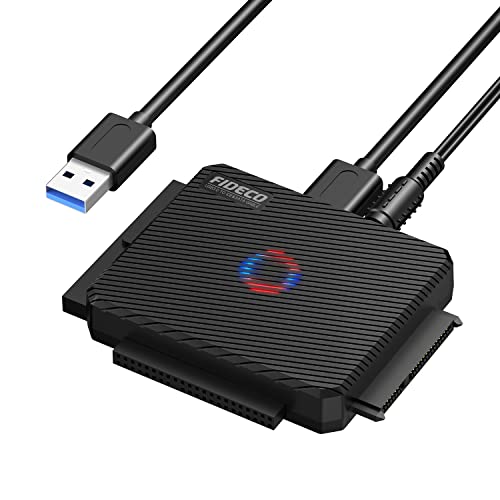
- A USB-to-IDE/SATA adapter like the FIDECO SATA/IDE to USB 3.0 adapter lets you read and write period drives from a modern machine — clone a Win98SE image, edit INF files, or pull data off a dying IDE disk. A simpler Vantec USB 2.0 IDE/SATA adapter does the same job for occasional use.
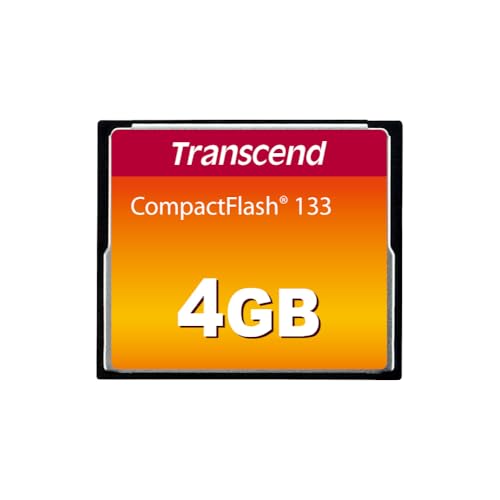
- A CompactFlash card behind an IDE adapter makes a silent, instant-boot "hard drive" for a Win98 build — see our CompactFlash as a Win98 hard drive guide for the full walkthrough.
- For the modern host that does the imaging and dual-boots a current OS, a plain SATA SSD like the Crucial BX500 is all you need; details in best SSDs for retro-PC IDE/SATA builds.
On the audio side, the period-correct companion to a Voodoo5 is a Sound Blaster Audigy 2 ZS or similar — the EAX and hardware mixing of that era complete the late-90s/early-2000s experience that integrated modern audio cannot replicate.
When NOT to bother
The modern-board Voodoo5 experiment is a fun novelty, but skip it if your goal is a usable retro gaming machine. The Z77/Ivy Bridge era is one step too modern for clean legacy-card compatibility, and you will fight the PCIe-to-PCI bridge, fast boot, and CSM settings for a result you cannot drive under a modern OS anyway. If you want to game, build on the right platform instead (below). The modern-board route is for the curiosity of seeing a 2000-era card light up on 2012 silicon — valuable as a learning exercise, not as a daily driver.
BIOS settings that make or break it
If you do attempt the modern-board route, the firmware configuration is where most attempts fail. The settings that matter on a P8Z77-V Pro and similar late-PCI boards:
- Disable Fast Boot. Fast boot skips the slow legacy option-ROM enumeration the Voodoo5 depends on; with it on, the card is never initialized.
- Set CSM (Compatibility Support Module) to enabled / legacy. A pure UEFI boot path will not load a 2000-era VGA option ROM. You need the legacy/CSM path so the card's ROM runs.
- Set the primary display to the slot the Voodoo5 is in if the BIOS exposes the option — otherwise the integrated or PCIe GPU grabs the handoff.
- Disable Secure Boot, which is incompatible with unsigned legacy option ROMs.
Even with all of this correct, the Voodoo5 only completes the handoff in the second PCI slot, per the community report — the ASMedia bridge's first-slot enumeration defeats the card's expectations regardless of firmware tuning. Budget an evening of trial and error; this is fiddly by nature.
The right platform for retro-card builds
Per retro-PC community consensus on forums like Vogons, the LGA775 era (ASUS P5Q Deluxe, GIGABYTE EP45-UD3R) is the sweet spot for retro-card builds. Those boards still offer proper PCI slots (and AGP-via-bridge on some), run Windows XP natively, and accept Core 2 Quad CPUs that brute-force any 2000-2010 game. The Z77/Ivy Bridge platform — as the Voodoo5 thread demonstrates — is too modern for clean compatibility. If you want a machine you will actually game on, target LGA775; if you want the novelty of a Voodoo5 on a 2012 board, the P8Z77-V Pro will give you that, in the second PCI slot, on a period OS.
Bottom line
A Voodoo5 5500 PCI on an ASUS P8Z77-V Pro is a real, repeatable feat — second PCI slot, period-correct OS, and a tolerance for BIOS fiddling. It is a wonderful curiosity and a useful lesson in why PCIe-to-PCI bridges break legacy enumeration. But for a retro rig you will use, build on the LGA775 era instead, and spend your effort on storage imaging and period audio rather than wrestling a modern chipset. The Voodoo5's Glide magic is best enjoyed where it was born.
Related guides
- Voodoo5 5500 AGP install, Glide, and FSAA on Win98SE
- Voodoo3 3500 vs Voodoo5 5500 retro build
- CompactFlash as a Win98 hard drive: IDE adapter guide
- Period-correct 2001 Pentium III + Audigy build
Citations and sources
- AnandTech — 3dfx Voodoo5 5500 review (2000)
- ASUS P8Z77-V Pro product page
- Vogons — vintage hardware forum
This piece is editorial synthesis based on publicly available information. No independent first-party benchmarking is reported.