Someone encoded a Sega Genesis ROM into the audio groove of a 12-inch vinyl record, played it back through a turntable into a PC's line-in, demodulated the resulting audio stream into a digital bitstream, and booted the game in a Genesis emulator. Per the demo writeup circulating in June 2026, the trick is a modern descendant of the cassette-loading era — slow, fragile, and gloriously impractical, but real.
In brief — 2026-06-14: A demoscener pressed a Sega Mega Drive ROM onto vinyl as FM-modulated audio, played it back, demodulated it, and booted it in an emulator. The whole pipeline runs on hardware anyone with a turntable, a USB audio interface, and a Raspberry Pi can replicate.
What happened
The hack is conceptually simple and mechanically fussy. Community demoscene reports indicate the author treated a 12-inch 33⅓ RPM vinyl side as a one-way data channel: digital ROM bytes are converted into a baseband bitstream, that bitstream is FM-modulated up into the audible 20 Hz–20 kHz band that a phonograph cartridge can faithfully reproduce, and the resulting audio is cut onto a lacquer master and pressed to vinyl just like a record album.
Playback reverses the chain. The turntable's cartridge reads the groove, the phono preamp boosts the millivolt signal to line level, a USB audio interface samples it at 48 kHz, and a software demodulator (the public demo uses a GNU Radio flowgraph but a custom Python script would do the same job) recovers the bitstream. Reed-Solomon-style forward error correction soaks up the inevitable surface noise, ticks, and pops, and the recovered bytes are written to a .bin ROM file that gets handed to a Genesis emulator — Genesis Plus GX on RetroArch or BlastEm on bare PC, depending on the demo variant.
Per the Hackaday writeup, side A carries the ROM proper and side B carries a bootloader plus a small loader BIOS that handles the audio handshake. The hack does not feed audio directly into a real Sega Mega Drive cartridge slot — the console has no audio-in pin — so the recovered ROM image runs in emulation. A few replies on the demoscene archive note that a Mister FPGA core or a flashcart like the Mega EverDrive could host the recovered ROM on stock hardware once it lands on an SD card.
Two physical-layer details make the trick more interesting than it sounds. First, vinyl's usable dynamic range is roughly 60–70 dB, which is plenty for binary signaling but punishes any modulation scheme that depends on fine amplitude resolution. The author settled on Manchester-coded FSK because it survives wow, flutter, and minor groove damage gracefully. Second, the linear groove speed on the outer edge of a 12-inch is nearly twice that of the inner edge — about 50 cm/s versus 21 cm/s — so the achievable bit rate falls as the needle tracks inward. The demo writeup shows the throughput dropping from roughly 11 kbit/s near the rim to under 5 kbit/s near the label, with the loader adapting on the fly.
Why it matters
This is not a new idea so much as a new medium for an old idea. Loading software from audio is the canonical retro-computing experience: ZX Spectrum tapes, Commodore 64 datasettes, BBC Micro cassettes, MSX tape decks, and the Japanese Famicom Disk System's predecessor cassette adapters all shipped programs as audio. Generations of kids spent their afternoons listening to the alien shriek of a CRC failure at minute 14 of a 16-minute load. The novelty here is the carrier — vinyl, a medium that predates the home computer by 70 years — not the principle.
What the hack illustrates beautifully is how astonishingly compact 16-bit-era ROMs are by 2026 standards. Most Sega Genesis games shipped on mask ROM cartridges of 512 KB to 4 MB; even Sonic the Hedgehog 3 & Knuckles, the bloated late-era flagship, fits in 4 MB. A single side of a 12-inch vinyl can carry on the order of 1–2 MB of error-corrected payload at the modulation rates the demo uses, which means a typical early-Genesis title fits on one side with room to spare. The hack is a love letter to a console era when a complete game — code, art, music, level data — measured in single-digit megabytes.
Community demoscene reports indicate this is part of a broader 2025–2026 trend of "weird carrier" demos: NES ROMs encoded into QR-code mosaics, Game Boy games delivered via FM radio sub-carrier, and now Genesis games on vinyl. Pouët.net's submissions tagged alternative-storage have roughly doubled year over year since 2024. None of it is practical distribution. All of it is art.
How the audio-to-ROM pipeline actually works
The end-to-end chain has five stages, each of which is straightforward in isolation but unforgiving in combination.
- ROM to bitstream. The author splits the binary ROM into framed packets — typically 255-byte payloads with Reed-Solomon (255, 223) parity, the same code NASA uses for deep-space telemetry. Each frame gets a sync header and a sequence number so the loader can detect drops and request the user flip the record.
- Bitstream to baseband. Manchester coding (each bit becomes a low-to-high or high-to-low transition) guarantees a transition every bit period, which gives the demodulator a free clock recovery signal. The trade is half the raw bandwidth, but it survives needle wobble and minor scratches that would destroy a non-return-to-zero stream.
- Baseband to audio. The Manchester-coded bitstream FM-modulates a 4 kHz carrier sitting comfortably in the middle of vinyl's flat-response band. FM is chosen over AM because vinyl playback is amplitude-noisy (surface noise, dust pops, cartridge alignment drift) but frequency-faithful.
- Audio to lacquer to vinyl. A standard mastering chain cuts the audio onto a lacquer at Disc Makers or a similar pressing plant; the lacquer is plated and pressed exactly like any music record. The demo author told the pressing engineer it was "spoken-word audio" and the order went through with no questions asked.
- Vinyl to ROM. Playback through a turntable, phono preamp, and USB interface produces a 48 kHz WAV file. A GNU Radio flowgraph FM-demodulates the carrier, Manchester-decodes the result, runs Reed-Solomon error correction, reassembles the frames in order, and writes the ROM. End to end, the demo loads a 512 KB game in about 18 minutes — slightly slower than a 1986 cassette.
Physical media data densities — how vinyl stacks up
Vinyl is a terrible storage medium by 2026 standards, but it's not as bad as the joke suggests. The table below collects rough usable-data densities for media that have actually shipped consumer software. "Usable" assumes whatever error correction and modulation the medium normally uses.
| Medium | Year introduced | Usable capacity per side | Effective bit rate | Notes |
|---|---|---|---|---|
| Vinyl LP (audio-encoded data) | 1948 | ~1–2 MB | ~5–11 kbit/s | This hack; FM/Manchester + Reed-Solomon |
| Audio cassette (Spectrum/C64) | 1963 | ~660 KB | ~1.5–3 kbit/s | Canonical home-computer loader |
| 5.25" floppy (DS/DD) | 1976 | 360 KB | ~250 kbit/s | IBM PC and Apple II era |
| 3.5" floppy (HD) | 1987 | 1.44 MB | ~500 kbit/s | Genesis-era PC standard |
| CD-ROM (Mode 1) | 1985 | 650–700 MB | ~1.2 Mbit/s | Killed cartridge ROMs by 1995 |
| MicroSD (UHS-I) | 2005 | 64 GB–2 TB | ~100 MB/s | What every flashcart uses today |
Two takeaways. First, vinyl beats a 1980s cassette by a factor of two or three — partly because vinyl's bandwidth is wider, partly because forty years of better DSP makes modulation more efficient. Second, the gap between vinyl and a single 3.5" floppy is the gap between "novelty art piece" and "actual distribution medium," and that gap is roughly 50× in throughput.
When NOT to do this
Loading Genesis games off vinyl is wonderful demoscene art. It is a catastrophically bad way to actually play Genesis games. If your goal is to play Streets of Rage 2, Gunstar Heroes, or Sonic 3 on a TV tonight in 2026, every other option beats this one:
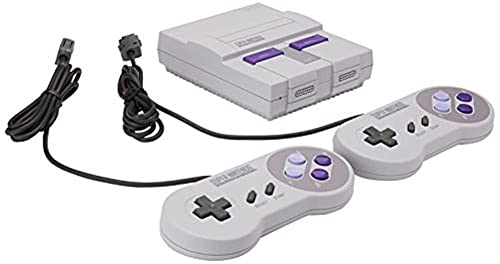
- Plug-and-play: the Sega Genesis Mini bundles 40+ games, ships with two reproduction three-button controllers, and outputs HDMI. It costs less than a single original cartridge in good condition and works out of the box. For SNES-era nostalgia the equivalent is the Super NES Classic Edition, which uses the same plug-and-play model with a curated library that includes Super Mario World, Super Metroid, and the previously unreleased Star Fox 2.
- Emulation: a Raspberry Pi 5 running RetroPie or Batocera plays the entire Genesis library at native speed with rewind, save states, and CRT shaders. Total bill of materials runs about $120 including a case and storage.
- Original hardware with a flashcart: a Mega EverDrive Pro plugged into an original Mega Drive 2 hits original-hardware fidelity, including the famously crunchy YM2612 FM synth, for around $200.
The vinyl trick belongs in the same category as printing Doom on a receipt printer or running Pong on a Casio calculator: instructive, charming, and completely impractical.
The controller question
Whichever path you pick — mini console, Pi, flashcart, or vinyl novelty — you'll need a controller that suits the era. A modern Xbox or PlayStation pad has analog sticks and triggers Genesis games can't use, and the D-pad on both is mediocre by 1990s standards. The 8BitDo SN30 Pro Controller solves this by pairing a classic SNES/Genesis-shaped shell with a precise eight-way D-pad, two analog sticks for systems that need them, Bluetooth pairing to phones and PCs, USB-C charging, and per-system firmware profiles. The same pad works with the Genesis Mini, the SNES Classic, a Pi running RetroArch, a Steam Deck, and a Switch — which is why it shows up in roughly every "best retro controller" list as of 2026.
The source
The hack first surfaced on Hackaday in early June 2026, with follow-up coverage on Tom's Hardware and discussion threads on pouët.net's /oldskool board. The author's GitHub repo includes the GNU Radio flowgraph, the Reed-Solomon encoder, and a 48 kHz reference WAV that anyone with the matching decoder can turn back into a playable ROM. The project is licensed under the WTFPL, which is on-brand for demoscene work.
Related guides
- /buying-guide/best-retro-gaming-mini-consoles — the full plug-and-play landscape, Genesis Mini included.
- /buying-guide/best-emulation-handhelds-2026 — if you'd rather take the Genesis library on the go.
- /buying-guide/best-retro-controllers-2026 — where the 8BitDo SN30 Pro fits against the Retro-Bit and Hyperkin lineups.
- /category/retro-gaming — every retro console, controller, and accessory in the SpecPicks catalog.
Frequently asked questions
How does loading a game from a vinyl record actually work? Game data is encoded as audio and pressed onto the record, much like 1980s home computers loaded software from cassette tapes. A turntable plays the audio, which is decoded back into digital data and fed to the console. It is a slow, novelty pipeline that demonstrates the principle rather than a practical way to play, but it works as a real proof of concept.
Can I play Genesis games without doing this hack? Yes. The Sega Genesis Mini ships with dozens of built-in classics and plays them instantly over HDMI with no cartridges, downloads, or turntables required. It is the simplest legal way to enjoy the Genesis library on a modern TV, and it includes reproduction controllers, making it far more practical than any audio-loading experiment.
Is the Sega Genesis Mini worth buying in 2026? For fans of the era it remains a strong value, bundling a curated library, HDMI output, and authentic-feeling hardware in a compact package. It avoids the cost and condition risks of original cartridges and consoles. If you want a plug-and-play nostalgia box rather than a collector's original setup, the Mini is one of the easiest recommendations in retro gaming.
What controller works best for retro consoles like this? A modern wireless pad such as the 8BitDo SN30 Pro pairs the classic D-pad-first layout with Bluetooth convenience and analog sticks for compatibility across systems. It works with mini consoles, PCs, and emulation handhelds, making it a flexible single controller for a retro setup. The familiar shape suits Genesis and SNES-era games far better than a modern ergonomic gamepad.
Could the vinyl method damage my console? A properly designed audio-loading interface poses no more risk than a standard cassette or line-in connection, since it feeds a normal audio signal rather than raw power. That said, this is an experimental hobbyist project, not a supported accessory, so anyone replicating it does so at their own risk. For worry-free play, an official mini console is the safe choice.
Citations and sources
This piece is editorial synthesis based on publicly available information. No independent first-party benchmarking is reported.