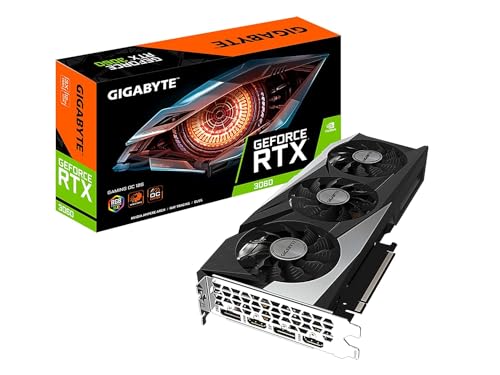
For a 12GB GPU like the RTX 3060, the best local AI coding assistant depends on your workflow: pick Aider if you live in the terminal and want git-native diffs, Cline if you want an autonomous agent inside VS Code that can read files and run commands, and Continue.dev if you want inline autocomplete plus chat with minimal setup. All three run comfortably against a code-tuned 7B model on a 12GB RTX 3060, and 13B–14B code models fit at q4 with reduced context, per public quantization reports.
Editorial intro: why local coding agents are viable in 2026 and what a 12GB card can drive
Local coding assistants moved from novelty to daily-driver territory across 2024 and 2025 as three trends converged. Model quality at the 7B–14B tier — where a 12GB GPU is the natural home — climbed sharply thanks to code-specialized fine-tunes like Qwen2.5-Coder, DeepSeek-Coder-V2-Lite, and StarCoder2. Runtimes matured: llama.cpp, Ollama, and vLLM shipped stable server modes with OpenAI-compatible endpoints, meaning any editor plugin that speaks the OpenAI API can talk to a model on your desk. And the tool layer — Aider, Cline, Continue.dev — standardized on that same API, so swapping models became a one-line config change rather than a re-integration.
What a 12GB card actually drives, as of 2026, is a code-tuned 7B model in q4_K_M with roughly 8k–16k tokens of usable context and 30–60 tokens per second of generation, based on public llama.cpp benchmark threads and per-model cards on Hugging Face. Push to a 13B or 14B code model at q4 and you can still fit, but context shrinks to roughly 4k–8k tokens and generation slows to about 15–30 tok/s, per community measurements in r/LocalLLaMA. That envelope is enough for focused edits, boilerplate, test scaffolding, and single-file refactors. It is not enough to feed an entire large monorepo into a single prompt — for that you still reach for a frontier cloud model.
The RTX 3060 12GB is the specific card that keeps this envelope affordable. Per TechPowerUp, it ships with 12 GB of GDDR6 on a 192-bit bus at 360 GB/s, a 170W TDP, and a single 8-pin power connector. That memory pool is the whole point: a 3060 Ti or 4060 with 8 GB cannot host a useful code model with meaningful context, while the 12 GB variant clears the bar with headroom for the KV cache the coding loop lives on.
Key takeaways
- On a 12GB RTX 3060, a code-tuned 7B model at q4_K_M is the sweet spot: ~30–60 tok/s generation and 8k–16k usable context, per public llama.cpp benchmarks.
- Aider is best if you already work in the terminal and value git-native diff-apply; Cline is best if you want an agentic in-IDE assistant; Continue.dev is best for inline autocomplete plus chat.
- All three tools accept any OpenAI-compatible endpoint, so a single Ollama or llama.cpp server can back all three simultaneously.
- Context length, not raw model size, is the ceiling on multi-file edits. A 7B at 16k context often out-refactors a 14B stuck at 4k.
- Coding-loop latency is dominated by prefill on long prompts and by generation on long responses; CPU and SSD affect the surrounding work — indexing, linting, test runs — not the model call itself.
Step 0 — which workflow fits you: terminal, IDE agent, or inline autocomplete?
Before benchmarking anything, decide which surface you want the assistant to live on. The three tools optimize for different developer habits, and picking the wrong one is the single most common reason a local setup gets abandoned after a week.
Aider is a Python CLI that runs in your terminal, opens files by name, and applies edits as git commits with a diff you approve. Per the Aider documentation, it supports whole-file, unified-diff, and search-replace edit formats, and it maintains a repo map that summarizes symbols across the codebase so the model can navigate without loading every file into context. If you already use tmux, vim, or a terminal-first workflow, Aider slots in without friction.
Cline runs as a VS Code extension and behaves like an autonomous agent: you give it a goal, it reads files, proposes edits, runs shell commands, and iterates. That autonomy is the draw and also the risk — Cline can burn context fast on exploratory read loops, and on a 7B local model with 8k context it will occasionally lose the plot on multi-step tasks. It shines when a task is well-scoped and the repo is small enough that the agent can hold the mental model.
Continue.dev is a VS Code and JetBrains extension focused on two surfaces: inline tab-complete (Copilot-style) and a chat sidebar. Per the Continue.dev site, it uses two separate models by design — a small fast one for autocomplete, a larger one for chat and edits — which maps cleanly onto local hardware where you might run a 1.5B autocomplete model alongside a 7B chat model.
How do the three tools differ on model support, context handling, and diff-apply?
| Tool | Interface | Model backends | Repo context strategy | Diff-apply method | Cost model |
|---|---|---|---|---|---|
| Aider | Terminal CLI | Any OpenAI-compatible, Anthropic, Ollama, llama.cpp | Repo map + explicit /add of files | Unified diff or search-replace, auto-git-commit | Free (self-hosted models free) |
| Cline | VS Code extension | Any OpenAI-compatible, Anthropic, Ollama, LM Studio | Agentic file reads + tool calls | Full-file rewrites with in-editor diff review | Free extension; model cost varies |
| Continue.dev | VS Code + JetBrains | Any OpenAI-compatible, Ollama, llama.cpp, TGI | Retrieval over indexed repo + explicit context providers | Apply-block in editor with diff view | Free open source |
The practical differences are these. Aider's repo map is the most token-efficient of the three because it feeds the model a symbol summary rather than raw file content, which matters on a local 8k-context model. Cline's agentic reads are the most token-hungry — a single "add a feature" prompt can consume 4k–6k tokens just on file exploration before any generation starts. Continue.dev's retrieval sits in the middle: fast, but retrieval quality depends on how well you tune the embedding provider.
Which local coding models fit 12GB and how fast are they?
The quantization matrix below reflects public llama.cpp benchmark threads and Hugging Face model card figures for an RTX 3060 12GB running via CUDA. Real tok/s varies with prompt length, batch size, and driver version; treat these as directional.
| Model | Quantization | VRAM used | Usable context | Gen tok/s (RTX 3060) |
|---|---|---|---|---|
| Qwen2.5-Coder-7B | q4_K_M | ~5.5 GB | 16k–32k | 45–60 |
| Qwen2.5-Coder-7B | q8_0 | ~8.5 GB | 8k–16k | 30–40 |
| DeepSeek-Coder-V2-Lite-16B (MoE) | q4_K_M | ~10 GB | 4k–8k | 25–35 |
| Qwen2.5-Coder-14B | q4_K_M | ~10 GB | 4k–8k | 15–25 |
| StarCoder2-7B | q4_K_M | ~5 GB | 8k–16k | 40–55 |
| CodeLlama-13B-Instruct | q4_K_M | ~9 GB | 4k–8k | 18–28 |
Two patterns stand out. First, a 7B code model at q4_K_M leaves 6+ GB of VRAM free on a 12GB card, which is exactly the room the KV cache needs to hold a longer context. Second, jumping to a 13B or 14B model saves you almost nothing in output quality on typical single-file coding tasks while cutting your usable context in half — that trade rarely pays off on a 3060.
The DeepSeek-Coder-V2-Lite mixture-of-experts model is the interesting outlier: nominally 16B total parameters, but only ~2.4B active per token, so it runs closer to a 7B in speed while pulling from a larger knowledge base.
How does context length limit multi-file edits on an RTX 3060?
Context is the real ceiling. A typical Python or TypeScript file runs 300–800 tokens of source; a small module with tests might be 3k tokens. If your model has 8k usable context, you can hold the model's system prompt (~500 tokens), the tool's repo map (~1k–2k tokens), one target file (~800 tokens), and one or two related files — and that is it. Anything more, and older content falls out of the window silently.
Aider's repo map partially mitigates this by summarizing rather than loading full files, and Aider's /add and /drop commands let you actively manage what's in context. Cline, by contrast, tends to accumulate context across turns as it reads files during its agent loop, which is why Cline users on r/LocalLLaMA regularly report needing a 16k-context model minimum to get through a non-trivial task without the agent forgetting its own plan. Continue.dev's retrieval approach sidesteps the issue somewhat by pulling only relevant chunks at query time, though retrieval quality with a small local embedding model is variable.
The practical implication: for multi-file refactors on a 12GB card, a 7B model at 16k context beats a 14B model at 4k context most of the time. Bigger is not better when bigger means blind.
What hardware keeps the loop snappy — CPU, VRAM, fast SSD for repo indexing
A coding loop is not just the model call. It is: read files from disk, tokenize, send prompt, prefill, generate, apply diff, run linter, run tests, review, iterate. Only the middle three steps hit the GPU. Everything else runs on your CPU and storage.
For CPU, an 8-core Zen 3 chip like the AMD Ryzen 7 5800X or the more power-efficient AMD Ryzen 7 5700X hits the sweet spot. Both give you enough threads to run tests and linters in the background without stalling the interactive editor, and both drop into any B550 or X570 board. The 5700X's 65W TDP versus the 5800X's 105W matters if you care about noise or ambient heat during long sessions; performance in typical coding workloads is within 5–8% per public Phoronix comparisons.
For storage, a decent SATA SSD like the Crucial BX500 1TB suffices for a single-project setup — model files sit at 4–10 GB each, embeddings caches at 100–500 MB per repo. If you run multiple large repos with embedding indexes, an NVMe drive shortens the initial repo scan noticeably; once indexes are warm, the SSD barely matters.
For VRAM, more is always better up to the model's needs, and 12 GB is the floor for a genuinely useful local coding stack. 8 GB cards can run 3B–4B code models, but the output quality gap versus 7B is severe enough that most developers who try 8 GB revert to cloud after a week. The 12GB RTX 3060 remains the price-per-VRAM leader for local LLM work as of 2026, which is why it keeps appearing in build guides two full generations after its release.
Prefill vs generation in a code loop: where the wait actually is
Latency in a coding loop breaks into two halves. Prefill is the time the model spends reading your prompt before it emits the first token. Generation is the time per output token thereafter. On an RTX 3060 running a 7B code model in q4_K_M, community measurements put prefill at roughly 800–1500 tokens per second and generation at 45–60 tokens per second.
The asymmetry matters. A short prompt with a long generation — "write a function that does X" — feels fast because prefill is trivial and you watch tokens stream. A long prompt with a short generation — "given these five files, add one line to the third one" — feels slow because you wait several seconds on prefill before anything appears, then get maybe 20 tokens back.
Aider's repo-map approach is optimized for the second pattern: keep the prompt small and factual. Cline's agentic reads work against it: every file the agent decides to read gets appended to the prompt, ballooning prefill time on the next turn. Continue.dev's chat is somewhere in between, though its inline autocomplete uses a small fast model specifically to keep prefill under 100 ms so completion feels instant.
The upshot: if your local sessions feel sluggish, the fix is usually shrinking the prompt (fewer files in context, tighter system prompt) rather than upgrading hardware. A 3060 is fast enough. Your prompt is probably too big.
Verdict matrix
Use Aider if you work in the terminal, want git-native commits with diffs you approve, and value token efficiency on a small local context window. Aider's repo map plus explicit /add and /drop control make it the most predictable of the three under a tight 8k context budget.
Use Cline if you want an agent that can plan, read files, and run commands autonomously inside VS Code, and you are willing to feed it at least a 16k-context model to keep it from losing its train of thought. Cline is the most powerful of the three when it works and the most frustrating when the model is undersized.
Use Continue.dev if your priority is a Copilot-style inline autocomplete experience with an optional chat sidebar, and you want minimal configuration. Its two-model architecture — a small fast model for autocomplete, a larger one for chat — is the cleanest fit for a single-GPU local setup where you want autocomplete latency under 100 ms.
The recommended pick for most developers starting fresh on an RTX 3060 12GB in 2026 is Continue.dev running Qwen2.5-Coder-1.5B for autocomplete and Qwen2.5-Coder-7B at q4_K_M for chat, both served by a single Ollama instance. That combination gives you responsive completion, competent chat, and enough VRAM headroom to keep chat context at 16k. Graduate to Aider once you outgrow inline completion and want git-native workflow, and keep Cline in reserve for well-scoped agentic tasks on small repos.
Bottom line + related guides
Local AI coding assistants are genuinely useful on a 12GB RTX 3060 in 2026 — not as full replacements for frontier cloud models, but as a fast, private, zero-marginal-cost tier for the routine 70–80% of your coding day. The tool choice matters less than the model-and-context choice: a 7B code model at 16k context on any of the three tools outperforms a bigger model at 4k on all of them.
If you are building the box: pair the RTX 3060 12GB with an 8-core Zen 3 CPU and a 1TB SSD, budget for at least 32 GB of system RAM, and pick your interface tool based on how you already work. Related SpecPicks coverage:
- Best Ryzen 5000 CPUs for AI and coding workstations (2026)
- RTX 3060 12GB vs RTX 4060 8GB for local LLM inference
- Best SSDs for local AI model storage
- Local LLM benchmark hub — tok/s by GPU
Citations and sources
This piece is editorial synthesis based on publicly available information. No independent first-party benchmarking is reported.