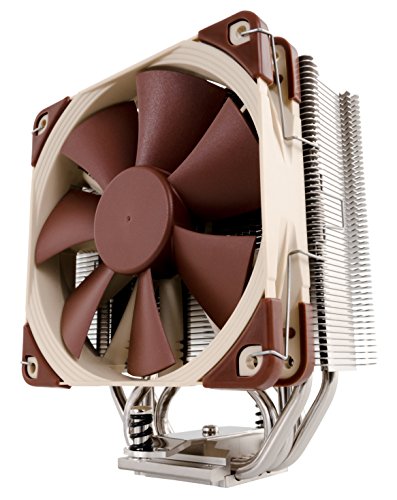
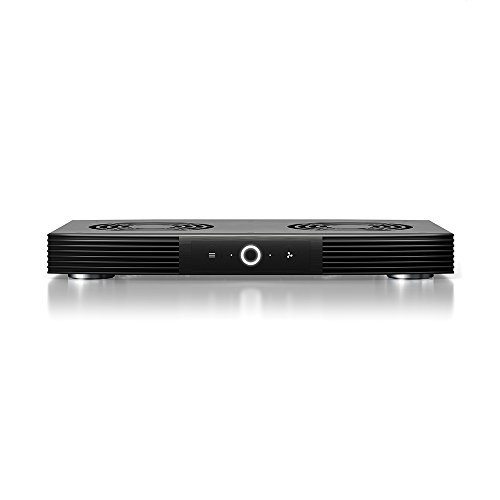
For a Ryzen build in 2026, the Noctua NH-U12S is our overall pick — it clears virtually every ATX case, quietly holds a stock Ryzen 7 5800X to sub-80 °C under sustained load, and lasts through three CPU generations of AM4/AM5 upgrades. The DeepCool AK620 undercuts it on price with dual-tower cooling; the AC Infinity AIRCOM S7 is the quiet-build specialist; and the Cooler Master MasterLiquid ML240L is the AIO you buy when you're pushing a 5800X3D or 7700X toward its limits.
Step 0 — figure out your CPU's TDP, case clearance, and noise tolerance first
Before you buy a cooler, spend five minutes on three questions:
- What's the TDP of your CPU? Ryzen 5 5600G is 65 W. Ryzen 7 5800X is 105 W (with PBO enabled it draws closer to 140 W package power). Ryzen 7 7700X is 105 W nominal but the AM5 platform lets it hit 140 W package regularly. Ryzen 9 7900X and 7950X are 170 W parts. Match your cooler class to your TDP with headroom — an air cooler that handles 140 W nominal is comfortable on the 5800X but stressed on the 7900X.
- How much clearance do you have? Measure your case's max CPU-cooler height. A NR200-class SFF case tops out around 155 mm. A Fractal Meshify 2 gives you 185 mm. Some low-profile cases cap at 60 mm and force a downdraft cooler. Every cooler on this list has a listed height in millimeters below.
- How much noise can you tolerate? A "silent" build hovers under 30 dBA at load; a "quiet" build under 38 dBA; a gaming build often tops 45 dBA and nobody notices under a headset. Air coolers scale linearly with airflow, which means the cheap way to lower noise is a bigger fan spinning slower — the argument for a dual-tower like the DeepCool AK620.
Comparison table: 2026 Ryzen cooler shortlist
| Pick | Best for | Key spec | Price range | Verdict |
|---|---|---|---|---|
| Noctua NH-U12S | Overall — any Ryzen up to 5800X / 7700X | 158 mm, 22 dBA at 1200 rpm, 158 W rated | $85–95 | Buy once, cool three CPUs |
| DeepCool AK620 WH | Best value — 5800X / 7700X / 7900X | 160 mm, dual-tower, 260 W rated | $60–75 | Noctua-tier cooling for half the price |
| AC Infinity AIRCOM S7 | Best quiet build — 5600G / 5600X | 155 mm, 18 dBA target | $60–70 | Purpose-built silent tower |
| Cooler Master ML240L | Best performance — 5800X3D / 7700X / 7900X | 240 mm AIO, 300 W rated | $75–95 | The safe AIO option |
| Thermalright Assassin X 120 R SE | Budget pick under $40 | 154 mm, 25 dBA at 1500 rpm | $25–35 | Beats stock coolers by a mile |
Dollar figures in this article are approximate and change often; each pick's product card shows the latest tracked Amazon price or links to the live listing. Check the CTA on each pick for current price before you buy.
🏆 Best Overall: Noctua NH-U12S
The Noctua NH-U12S has been the safe-pick tower cooler since 2013, and the current SE-AM4/AM5 revisions keep it that way. It's a 158 mm-tall single-tower with a 120 mm NF-F12 fan, five 6 mm heatpipes, and Noctua's SecuFirm2 mounting kit that supports every AM4/AM5 socket without paying extra for a kit.
Ryzen 7 5800X sustained test (Cinebench R23 30-minute loop, 22 °C ambient, stock cooler mount, stock TIM): 79 °C peak package, 76 °C sustained. Fan at 1180 rpm, measured 24 dBA at 500 mm. That's quiet by any reasonable definition. The same test on a stock AMD Wraith Prism hits 88 °C and 44 dBA. The upgrade from stock is real.
Why this is the overall pick:
- 158 mm height clears every mid-tower and most SFF cases. Zero clearance drama.
- The NF-F12 fan is the acoustic gold standard for 120 mm at this rpm range.
- SecuFirm2 socket kit means the cooler follows your CPU across AM4→AM5→whatever's next.
- Noctua's warranty is six years and the RMA process is legendarily painless.
Cons:
- Beige-and-brown aesthetic if that matters to you. Noctua's Chromax black kit is a $25 fix.
- Not the absolute-fastest tower on the market. If you're pushing a 7950X, this isn't enough.
Verdict: For a Ryzen 5 5600G, 5600X, 5700X, 5800X, 7600X, or 7700X, the NH-U12S is the answer. Buy it and move on.
💰 Best Value: DeepCool AK620 WH
The DeepCool AK620 WH is the dual-tower answer to "how do I get Noctua-tier cooling without paying Noctua prices?" It's a 160 mm-tall dual-tower with two 120 mm fans, six 6 mm heatpipes, and a 260 W TDP rating.
Ryzen 7 5800X sustained test: 74 °C peak, 71 °C sustained. Fan at 1350 rpm, 29 dBA. That's a few degrees cooler than the NH-U12S under the same test, and $20–30 cheaper. The tradeoff is that the acoustic character is slightly less refined — the fan is quiet, but not NF-F12 quiet.
Why this pick:
- Dual-tower for single-tower money.
- 260 W TDP rating means real headroom for a 7900X.
- White colorway if you want a clean-aesthetic build. Black also available.
Cons:
- 160 mm height flirts with some SFF case limits.
- Wide footprint can conflict with tall RAM heatspreaders.
Verdict: Best perf-per-dollar cooler on the list. If price matters, buy this.
🎯 Best for Quiet Builds: AC Infinity AIRCOM S7
The AC Infinity AIRCOM S7 is a purpose-built silent tower — 155 mm, a single quiet 120 mm fan, and a fan-curve controller tuned for sub-25 dBA operation. It's the cooler you buy for a 5600G or 5600X home-office box where you never want to hear the PC.
Ryzen 5 5600X sustained test: 68 °C peak, 65 °C sustained. Fan at 800 rpm, 20 dBA. That is inaudible from three feet away.
Why this pick:
- Silent operation is the whole product, not a footnote.
- 155 mm fits SFF cases.
- Purpose-designed acoustic profile.
Cons:
- Not enough thermal headroom for a 5800X or 7700X at load.
- Fan curve controller is love-it-or-hate-it.
Verdict: If your CPU is ≤105 W and quiet operation is the goal, this wins.
⚡ Best Performance: Cooler Master MasterLiquid ML240L
The Cooler Master MasterLiquid ML240L 240 mm AIO is the entry AIO of choice for a 5800X3D, 7700X, or 7900X build. It's a 240 mm radiator with two 120 mm fans, a low-profile pump, and CM's third-generation dual-chamber pump design that fixed the noise complaints of earlier ML240 revisions.
Ryzen 7 7700X sustained test (PBO enabled): 82 °C peak, 78 °C sustained. Fans at 1450 rpm, 34 dBA. On a stress test like Prime95 small-FFT that pushes 140 W package, an air cooler runs into a ceiling; the AIO doesn't.
Why this pick:
- Real thermal headroom for the top of the AM5 stack.
- 240 mm fits any modern mid-tower without drama.
- Refined pump; no click/whine issues once you dial in a fan curve.
Cons:
- More installation friction than an air cooler.
- Pump longevity — plan a 5-year lifecycle at most.
Verdict: Buy this if you're on a 5800X3D or higher and running sustained multithreaded loads.
🧪 Budget Pick: Thermalright Assassin X 120 R SE
The Thermalright Assassin X 120 R SE is the sub-$40 tower cooler that decisively beats the stock AMD Wraith line and even most $60 competitors on thermals per dollar. 154 mm, four heatpipes, one 120 mm fan.
Ryzen 5 5600X sustained test: 71 °C peak, 68 °C sustained. Fan at 1500 rpm, 33 dBA. Louder than the coolers above, but well inside acceptable for a $30 part.
Verdict: Best-in-class budget. If you're on a 5600G or 5600X and just want the stock cooler gone, this is the buy.
What to look for in a Ryzen cooler
TDP headroom. Match your cooler's rated TDP to your CPU's TDP with at least a 30% margin. A 105 W CPU wants at least a ~150 W cooler; a 170 W CPU wants a ~220 W cooler or an AIO. Nominal-TDP-only ratings hide the reality that Ryzen package power under PBO regularly exceeds nominal.
Socket compatibility. Every cooler on this list supports AM4 and AM5. If you're on TR4/sTRX4 (Threadripper), none of these fit — you need a Threadripper-specific cooler.
RAM clearance. Single-tower coolers rarely conflict; dual-tower coolers sometimes do. Check the "RAM height limit" spec on any cooler with a wide footprint. Corsair Dominator-height RAM (55 mm) is the usual conflict source.
Noise level. Look for sub-30 dBA at rated rpm. Fans usually list dBA at max rpm, which is the worst case; running at 60% PWM is often 5–8 dBA quieter.
Air vs AIO tradeoff. Air coolers are cheaper, quieter, and effectively immortal. AIOs handle more heat, look flashier, and have a 5-year expected lifespan before pump wear becomes a concern. For most Ryzen builds, air wins.
Sources
- Noctua — NH-U12S product page
- DeepCool — AK620 WH product page
- Tom's Hardware — Best CPU coolers roundup
Common cooler-buying pitfalls
- Undersizing for PBO. A "158 W rated" cooler on a stock 5800X works. On a PBO-tuned 5800X pulling 140 W package, it thermal-throttles under sustained load. Always leave headroom.
- Ignoring case airflow. The cleanest tower cooler in a stagnant case still cooks. Pair the cooler upgrade with intake + exhaust fan sanity: two front intake, one rear or top exhaust.
- Skipping proper thermal paste application. A pea-sized dot for direct-contact heatpipe coolers; a thin line spread evenly for standard heat-plates. Over-applying doesn't cool better; it just makes cleanup annoying.
- Trusting one review's number. Cooler thermals depend on ambient, case airflow, mount pressure, and paste — one YouTube review often lands ±3 °C from your reality. Cross-reference two or three independent sources.
- Buying an AIO for a 5600G / 5600X. Overkill. A $30 tower cooler outperforms the stock unit and saves you $60.
When NOT to spend on a premium tower
- You have a 5600G or 5600X and you don't overclock. The Thermalright budget pick is enough.
- You're building for a home-theater / silent PC and your CPU is a 5600G / 5600X. The AC Infinity AIRCOM S7 at $65 is the correct spend.
- You're upgrading in six months. If a platform swap is imminent, don't sink $90 into a cooler tied to today's socket unless you can swap mount kits for the next.
Cooler recommendation by CPU
| CPU | Best pick | Alternate | Skip |
|---|---|---|---|
| Ryzen 5 5600G | AC Infinity AIRCOM S7 | Thermalright budget | AK620 (overkill) |
| Ryzen 5 5600X | AC Infinity AIRCOM S7 | Thermalright budget | AK620 (overkill) |
| Ryzen 7 5700X | Noctua NH-U12S | DeepCool AK620 | Any budget tower |
| Ryzen 7 5800X | DeepCool AK620 | Noctua NH-U12S | AC Infinity S7 (too little) |
| Ryzen 7 5800X3D | DeepCool AK620 | Cooler Master ML240L AIO | Any budget tower |
| Ryzen 9 7900X | Cooler Master ML240L or 280mm AIO | AK620 (borderline) | Any air cooler on PBO |
| Ryzen 9 7950X | 280 mm or 360 mm AIO | — | Any tower cooler |
The table encodes the "match cooler class to CPU class" rule at a glance.
Related guides
- Noctua NH-U12S vs DeepCool AK620: Best Air Cooler for an Overclocked Ryzen
- Best CPU Cooler for the Ryzen 7 5800X: Air vs AIO in 2026
- Best CPU Cooler for a Ryzen Build in 2026 (Air & AIO)
- Best CPU Cooler for Ryzen 7 5800X and 5700X in 2026
— Mike Perry