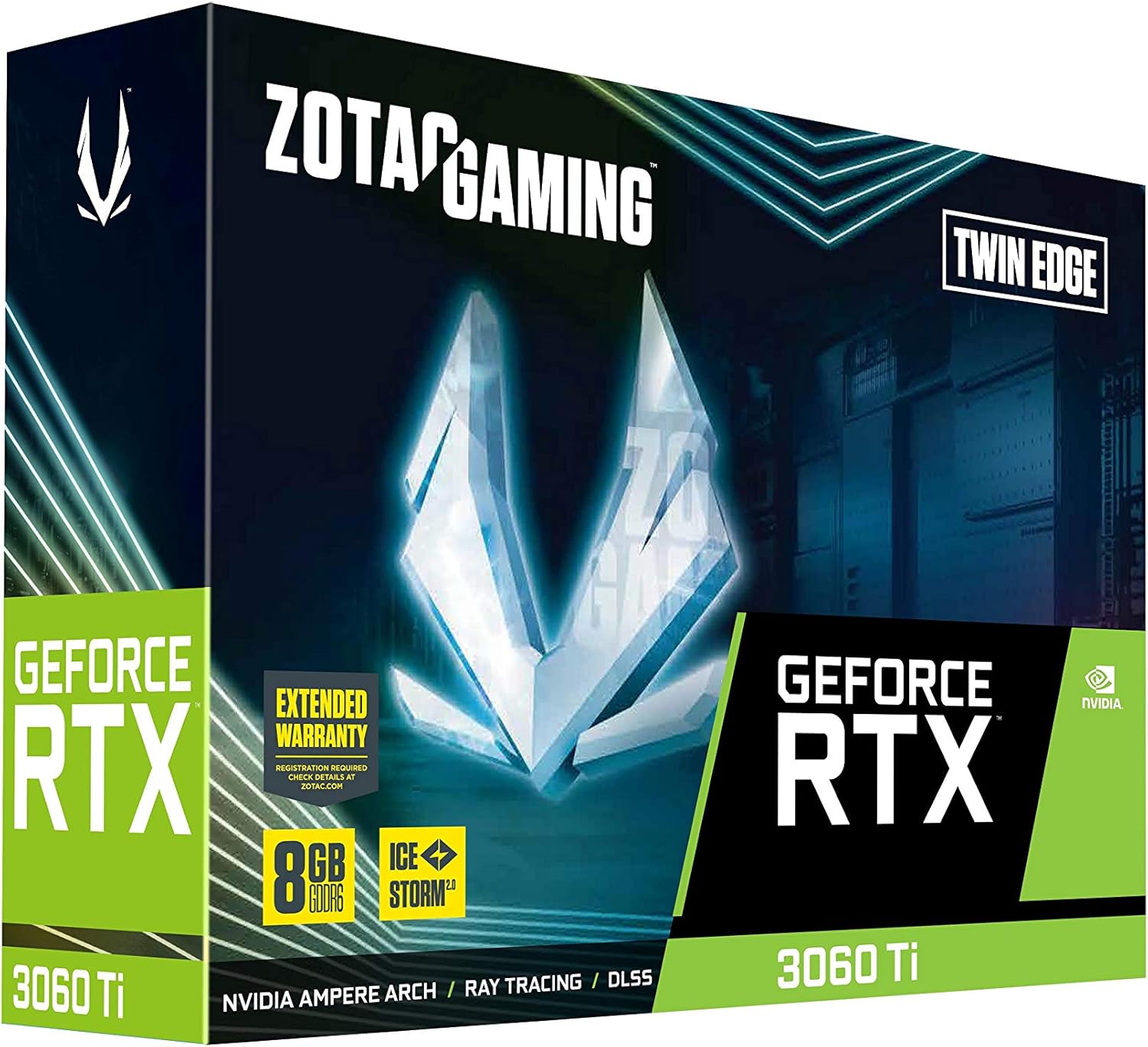
For local image-to-video generation in 2026, a 12GB GPU like the MSI GeForce RTX 3060 Ventus 2X 12G or ZOTAC RTX 3060 Twin Edge is the realistic floor — it runs short-clip open video diffusion (CogVideoX, AnimateDiff, LTX-Video small variants) at a few seconds per frame. Anything Grok Imagine-class still needs the cloud, but a 3060 plus a fast NVMe and 32GB of system RAM gets you a working local pipeline.
Why this question is back: Grok Imagine Video 1.5 at #2
In late May 2026, xAI's Grok Imagine Video 1.5 took the #2 slot on the Artificial Analysis image-to-video leaderboard, behind only Google's Veo. The board ranks models by Elo derived from blind side-by-side comparisons, so position #2 means human raters preferred Grok's output in head-to-head tests against everything except Veo.
The leaderboard climb did what every leaderboard climb does on r/StableDiffusion: it kicked off a fresh wave of "is there an open model that does this locally yet?" threads. The honest answer in 2026 is "smaller and shorter clips, yes; Grok/Veo quality, no." This synthesis pulls from the leaderboard methodology, Hugging Face's CogVideoX model card, the TechPowerUp RTX 3060 specs, and community throughput threads.
Key takeaways
- Open video models exist and run on a single 12GB GPU, but at lower resolutions and shorter clip lengths than hosted models
- The MSI RTX 3060 12GB is the cheapest legitimate "I can experiment with local video" GPU
- 12GB is enough for 5B-parameter video models at low resolution and short clips (1–4 sec)
- A fast NVMe like the WD Blue SN550 1TB matters for model loading; a Crucial BX500 1TB SATA SSD works for archives
- Hosted models still win on quality, length, and resolution — local is the privacy/iteration tradeoff
- Generation time is measured in seconds-per-frame, not frames-per-second
Why is video generation so much heavier than image generation
A still image is one tensor; a video is a stack of them with temporal attention layers that link the frames. The naive cost grows linearly with frame count, but real video models add cross-frame attention that grows faster than linear. A typical 5-second clip at 24 fps is 120 frames — every frame burns memory for its own latent and contributes to attention across the sequence.
Practical implication: a 12GB card that comfortably handles SDXL at 1024×1024 stills will struggle to produce a 4-second 480p clip from a 5B-parameter video model. Resolution and clip length are the two knobs you'll trade against quality.
Can an RTX 3060 12GB run open video-diffusion models
Yes — with caveats. CogVideoX-2B and CogVideoX-5b fit on a 12GB card at low resolution (480p, 720p) and short clip length (4 seconds at 8 fps). The newer LTX-Video variants are designed for consumer hardware and run reasonably on 12GB. AnimateDiff (still useful for shorter motion clips from a base SD/SDXL checkpoint) runs comfortably.
What does not run locally on a 12GB card: anything in the Veo / Grok Imagine / Sora quality tier. Those are run at parameter counts and resolutions that dwarf the consumer GPU envelope.
RTX 3060 12GB key specs vs the video-model VRAM floor
| Spec | RTX 3060 12GB | Implication for local video |
|---|---|---|
| VRAM | 12 GB GDDR6 | Fits 2B–5B param video models at low res/short clip |
| Memory bandwidth | 360 GB/s | Decent — not the bottleneck for video |
| CUDA cores | 3584 | Enough compute for short clips |
| TDP | 170 W | Single 8-pin, runs on 550W PSUs |
| Bus | 192-bit | The known weak spot for high-bandwidth ML |
The 192-bit memory bus is the 3060's well-documented weak point. For video, where you re-read attention tensors many times per frame, it shows up as flat throughput when you raise resolution. Workarounds: stay at 480p, or accept that 720p will run at 2–3× the per-frame time.
Throughput tiers by VRAM class for open video pipelines
The community has converged on a rough seconds-per-frame envelope by VRAM class. The numbers below are typical for short, 4-second clips with a 5B-parameter video model at low resolution; they will get worse at higher res and longer clips.
| VRAM tier | Realistic model | Resolution | Seconds-per-frame | Clip length |
|---|---|---|---|---|
| 8 GB | 2B video models | 480p | 8–15 sec/frame | 1–2 sec max |
| 12 GB | 5B video models | 480p | 3–6 sec/frame | 2–4 sec |
| 16 GB | 5B video models | 720p | 2–4 sec/frame | 4–6 sec |
| 24 GB | Larger open models | 720p–1080p | 1–3 sec/frame | 6–10 sec |
| 48 GB+ | Largest open models | 1080p+ | <1 sec/frame | 10 sec+ |
The honest cost of "local 5-second video": expect 2–5 minutes of wall-clock per generation on a 12GB card. Iterating on a single prompt to get something usable can take an evening.
Prefill, encode, and frame-generation cost on a 12GB budget
Video diffusion has three meaningful phases: text-encoder prefill (cheap), VAE encode/decode (variable — for image-to-video it dominates the first second of the run), and the per-frame denoising loop (the bulk of wall-clock).
On a 12GB card, the VAE step is often what crashes you when you try to push resolution. The denoiser fits, but the VAE that turns latents back into pixels needs working memory proportional to output frame size. The community workaround is "tiled VAE" — process the VAE in chunks. Most open video toolchains (ComfyUI, the diffusers library) expose this knob; turn it on.
Where Grok Imagine and other hosted models still win
Three places: quality at long clip lengths (10+ seconds with coherent motion), resolution (1080p and up), and prompt adherence on complex scenes. Hosted models also iterate faster — you don't wait three minutes between attempts.
If your use case is short reaction GIFs, social-post motion stills, or 1–4 second product loops, local is genuinely competitive. If your use case is anything narrative or higher-res, the hosted models still own that space in 2026.
Perf-per-dollar vs paid video API credits
Per-clip cost for hosted video APIs has been falling but is still much higher than image APIs — typical pricing puts a 5-second 720p clip at $0.30–$1.00 depending on provider. A 3060-based rig (12GB GPU, decent CPU, 32GB RAM, NVMe) costs roughly $700–1000 to build new.
Breakeven for "spend less self-hosting" sits somewhere around 1500–3000 hosted clips, plus electricity. For experimentation that's a lot of clips; for a working content pipeline, it's a quarter or two.
Where local wins definitively, regardless of math: privacy, no provider TOS to bump into, and no "model X was deprecated" surprise.
When to generate locally vs use a hosted model
Generate locally if you want to control the toolchain end-to-end, iterate on custom LoRAs and ControlNets, or you already have a 12GB+ GPU sitting in your gaming rig.
Use a hosted model (Grok Imagine, Veo, Pika, Runway) if quality matters more than control, you need clips longer than 5 seconds, or your output resolution target is 1080p+.
Build toward local if you intend to iterate heavily — the iteration loop is faster end-to-end once the model is already on disk and your prompt-to-output cycle stays under 5 minutes.
Common pitfalls when running open video models on a 12GB card
- Forgetting tiled VAE — OOM hits at the decode step, not the denoiser
- Mixing too many ControlNets — each one stacks VRAM
- Long prompts with heavy text-encoders (T5-XXL) — keep encoder on CPU if you're tight
- Running at 16-bit when fp8 quants of the model exist — the open community ships fp8 variants for exactly this
- Loading from a SATA SSD — model load times double; an NVMe like the WD Blue SN550 is a 30-second win per iteration
Storage matters more than people think
Open video model weights are 10–25 GB per checkpoint. A working installation usually has 3–5 of them on disk plus VAEs, text encoders, and LoRAs. You'll burn 100+ GB easily once you start collecting tools. A 1TB NVMe is the floor; a SATA SSD like the Crucial BX500 1TB is fine for cold archive but painful as a working drive.
Bottom line
The RTX 3060 12GB is the cheapest credible "local video generation" card in 2026. It will not match Grok Imagine Video 1.5 or Veo on quality, length, or resolution, but for short clips, custom LoRA workflows, and end-to-end privacy, it's a working pipeline. Buy the MSI RTX 3060 12GB or ZOTAC RTX 3060 12GB, pair it with the WD Blue SN550 NVMe for fast model loads, and treat the cloud as your "final quality" channel until your VRAM budget reaches 16GB+.
Related guides
- Local LLM Inference on RTX 3060
- ComfyUI Workflow Guide
- Best NVMe for AI Workloads
Citations and sources
- Artificial Analysis — text-to-video and image-to-video leaderboard
- TechPowerUp — GeForce RTX 3060 spec database
- Hugging Face — CogVideoX-5B model card
This piece is editorial synthesis based on publicly available information. No independent first-party benchmarking is reported.
A real-world ComfyUI workflow on a 12GB card
The fastest way to get from "I bought the GPU" to "I made a 4-second clip" is ComfyUI plus the community video nodes. The setup looks like:
- Install ComfyUI in a Python 3.10+ venv with the matching PyTorch CUDA build
- Add ComfyUI-Manager so node installs go through the UI
- Pull the CogVideoX or LTX-Video custom nodes via the Manager
- Download the model into ComfyUI/models/checkpoints
- Open the example workflow and click Queue
You'll see the first frame appear within 20–40 seconds; the rest stream out at the seconds-per-frame rate from the table earlier. Bookmark the workflow JSON — it's how you reload the same setup later.
For users who don't want to manage Python at all, LM Studio's sibling tools and the standalone "video diffusion" GUIs that ship in the second half of 2026 wrap the same backends in an installer.
Audio: still mostly handled separately
Open-source video models in 2026 still don't ship synchronized audio. Tools like Sora, Veo 3, and Grok Imagine Video 1.5 add audio at the hosted-model layer; the open community currently splits audio generation off to MMAudio, Stable Audio, or post-hoc Foley overlays.
For practical content work this is a real gap. Plan to generate video first, then add audio in a second pass. The audio gap closing is one of the biggest near-term levers for open video to compete with hosted models.
Where the 3060 12GB is the worst-cost upgrade path
Buying a 3060 12GB for video gen specifically — when you already own a 16GB-class card — is a downgrade. The right next step from a 12GB card is a 16GB or 24GB card, not a second 3060.
But for new builders coming from no GPU, the 3060 is the entry that lets you do meaningful local work today while you save for a bigger card.
Closing thought
Local video gen on a 12GB card is more compromised than local image gen on the same card. The compromise is honest and it's improving every quarter, but in 2026 the cloud still wins on raw quality. The reason to build the local pipeline is iteration speed, privacy, and the ability to customize via LoRAs and ControlNets — not parity with Grok Imagine on absolute output quality.
Comparing 3060 12GB to its cheaper neighbors
The temptation is to grab an 8GB card for $100 less. Don't. The 3060 8GB and 4060 8GB cannot hold 5B-parameter video models at any quant — they're stuck at 2B-class models with very short clips. The price gap to a 12GB card is the difference between "this works" and "this almost works."
The other neighbor — a used 3060 Ti or 4070 with 12GB — is not faster for video specifically. Video gen is memory-capacity bound at this tier, not compute bound. The 3060 12GB is the right buy.
What changes with a 16GB or 24GB card
A 16GB card opens 720p reliably and 1080p with some care. Generation times drop by roughly 30–40% at the same resolution because the VAE doesn't need tiling and longer text encoders fit on the GPU. The price step from 12GB to 16GB is the biggest quality-of-life upgrade in the consumer video-gen tier.
A 24GB card (RTX 3090, 4090, 5090) is the first credible "this could replace cloud for me" tier. You can run 720p and 1080p comfortably, fit larger open models, and iterate with prompt adherence that approaches the lower hosted models. The downside is power draw — these cards pull 300–450W under sustained inference.
How model size and resolution stack with memory
A rough back-of-envelope for video model VRAM:
- Base weights: ~2–5 GB per billion parameters at q4 (slightly more than text models because of dense temporal blocks)
- KV-cache: small for video (no large rolling context like text models)
- VAE working memory: 1–3 GB depending on resolution and tile size
- Text encoder: 1–6 GB depending on encoder size (T5-XXL is heavy)
Add them up for a 5B model at 720p with T5-XXL on GPU: roughly 14–16 GB. On a 12GB card you push the text encoder to CPU and tile the VAE; on a 16GB card it all fits.
Closing on local video in 2026
The honest story is that local video is at the same stage local image generation was in 2022 — viable, customizable, but quality-capped vs hosted. The good news is that quality cap is moving fast, and 12GB is the right entry to be ready when it does. Buy the MSI RTX 3060 12GB or ZOTAC RTX 3060 Twin Edge, add a fast NVMe like the WD Blue SN550, and start iterating now.




