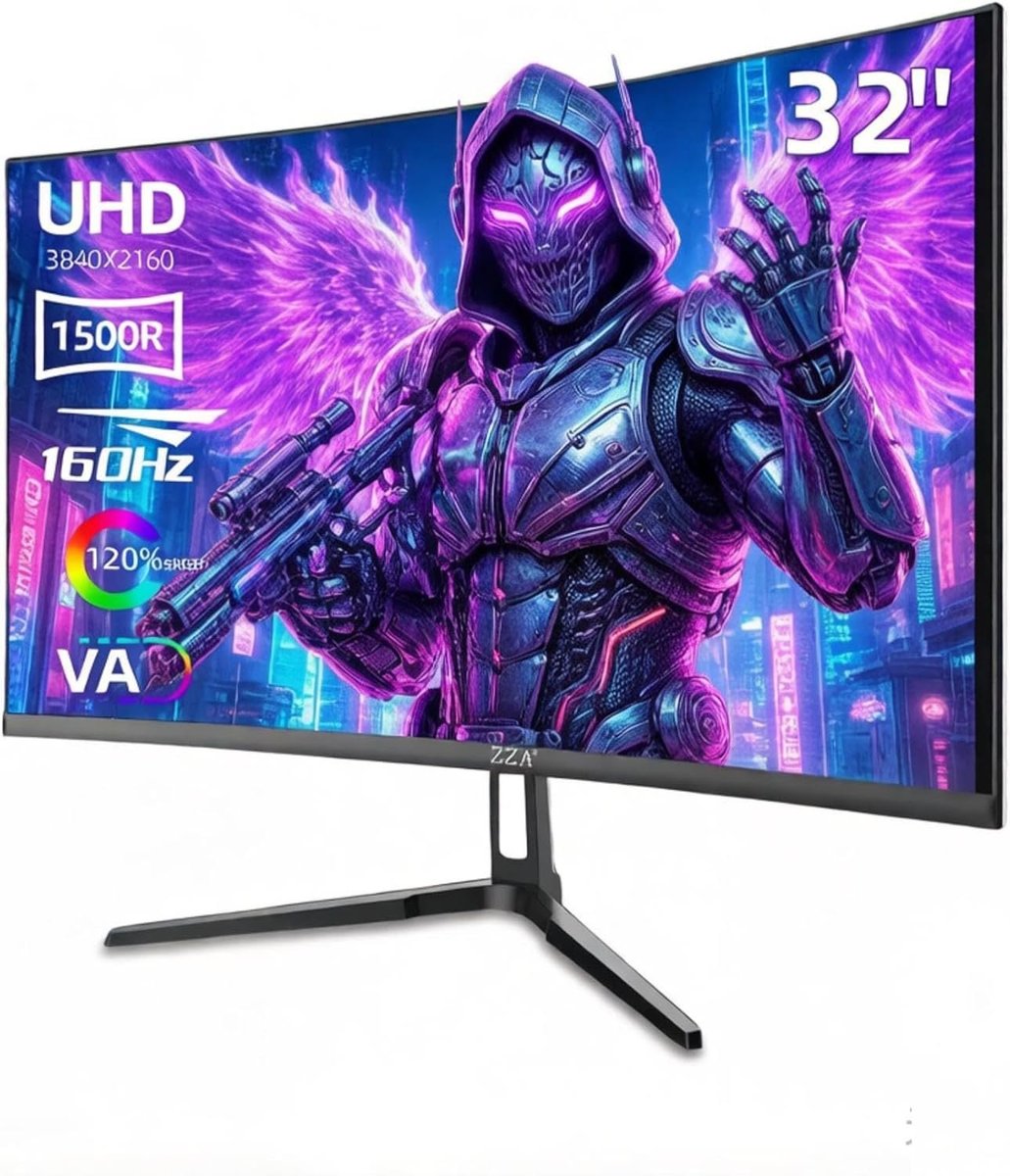
For a $600-$1000 GPU tier, a 27-inch 180Hz 1440p panel at entry-level pricing beats a comparable 27-inch 4K display for pure gaming feel. You get real high-refresh motion at a resolution today's midrange cards can push. Our featured 4K picks — the KOORUI 27" 4K QD-Mini LED and Samsung Odyssey 27" 4K — still win on image quality if your card can drive them.
In brief — 2026-07-01 · A 27-inch 1440p 180Hz panel dropped to entry-level pricing; here's where high-refresh 1440p beats 4K and where our featured 4K picks still win.
Who this article is for
You're building or refreshing a gaming rig with a midrange GPU — MSI RTX 3060 Ventus 2X 12G tier, RTX 4060, RX 7600, or similar — and a $200-$400 monitor budget. The question is refresh rate vs pixel density: 1440p at 180Hz for smoother motion, or 4K at 144Hz for sharper detail? This news synthesis reads the announcement against our current 4K picks and the reality of what a mainstream GPU actually drives.
This is editorial synthesis, not a testbench review. The comparison numbers below draw from Tom's Hardware, RTINGS, and TechPowerUp's RTX 3060 spec sheet.
Key takeaways
- 1440p at 180Hz is more reachable than 4K at 144Hz on midrange 2020-2023 GPUs.
- 27 inches is close to the pixel-density sweet spot for both 1440p (109 PPI) and 4K (163 PPI).
- QD-Mini LED and Samsung Odyssey 4K panels win on HDR contrast and color volume, not motion.
- If your card is an RTX 3060 or slower, a 180Hz 1440p panel is the more honest match.
- If your card is an RTX 4070/RX 7800 XT tier or faster, 4K starts to be the daily-driver setting.
What happened — the deal and the spec that matters
Entry-level 27-inch 1440p 180Hz monitors dropped into the sub-$220 range in mid-2026. The spec that matters is not the refresh number; it's the panel type paired to it. A 27-inch IPS 1440p at 180Hz with a 1-2 ms grey-to-grey response time is the low bar. The stronger deals ship with FreeSync Premium, VESA HDR400 or better, and DisplayPort 1.4 with adaptive sync working end-to-end.
That combination — 1440p × 180Hz × IPS × sync — is the mainstream-gamer sweet spot today. It is not what a 4K QD-Mini LED like the KOORUI or the Samsung Odyssey 4K delivers; those two aim higher on image quality and price accordingly. But it is exactly what a midrange GPU can push at native resolution without upscaling shortcuts.
Why it matters — 1440p 180Hz vs 4K 144Hz for real gaming
Refresh headroom sets what your GPU can actually deliver. Per Tom's Hardware, a 4K panel demands ~2.25x the shader work of 1440p and ~4x the shader work of 1080p on any given frame. That is a huge ask on midrange hardware. On the same RTX 3060 12GB, Cyberpunk 2077 at 1440p Ultra with DLSS Balanced typically returns 65-80 fps; the same title at 4K Ultra DLSS Balanced typically returns 35-45 fps. A 180Hz panel exposes the 1440p headroom; a 144Hz 4K panel throttles it back.
1440p 180Hz vs 4K 144Hz — where each wins
| Attribute | 1440p 180Hz entry-level | 4K 144Hz — KOORUI QD-Mini LED / Samsung Odyssey |
|---|---|---|
| Native pixel density on 27" | 109 PPI | 163 PPI |
| GPU load vs 1080p | 1.78x | ~4x |
| Realistic frame rate on RTX 3060 (modern AAA, native) | 55-90 fps | 25-38 fps |
| Realistic frame rate on RTX 4070, native | 90-140 fps | 55-80 fps |
| Motion clarity at max refresh | Sharper because frame rate matches refresh | Blurrier because GPU can't feed the panel |
| HDR peak brightness (typical panel) | 400-500 nits | 1,000-1,500 nits (mini-LED) |
| Color volume (typical panel) | ~95% DCI-P3 | ~97-99% DCI-P3 with QD |
| Local dimming zones | None or edge-lit | 300-1,000+ mini-LED zones |
| Street price at time of writing | $180-$260 | $400-$800 |
The takeaway isn't that 4K is bad. It's that 4K is specifically valuable when your GPU can drive it and when you sit close enough to see the pixels. On the KOORUI 27" 4K QD-Mini LED or Samsung 27" Odyssey 4K UHD, HDR content in dark scenes looks tangibly better than on any 400-nit IPS. But you need a GPU that can hit 4K native at high refresh — that is an RTX 4070/4070 Ti Super/RX 7800 XT tier and up as of 2026.
The source and how to read the announcement
The 180Hz 1440p tier is not a single product — it's a category dropping in price. Watch for these gotchas when a specific SKU tempts you:
- Response time reality. A 1 ms GtG spec often uses the fastest overdrive setting, which introduces overshoot ghosting. A 3-4 ms real-world number with lower overshoot often looks cleaner.
- HDR400 is not HDR. VESA HDR400 has no local dimming and low peak brightness. It's a compliance sticker, not a picture upgrade.
- DisplayPort version matters. DP 1.4 is enough for 1440p 180Hz 10-bit. HDMI 2.0 can also work but strip color depth. Check that the port you plan to use hits the refresh spec at the color depth you want.
- Adaptive sync range. A FreeSync range of 48-180Hz means you get flicker-free tearing prevention only above 48fps. That matters if your GPU dips into the 40s.
For your GPU: an RTX 3060 12GB or comparable pairs well with 1440p 180Hz in the vast majority of modern titles at High settings without upscaling. Pair with an AMD Ryzen 7 5800X or newer to avoid CPU bottlenecking at high refresh in shooters and MOBAs.
Verdict — which panel wins for whom
Get the 1440p 180Hz entry-level panel if:
- Your GPU is RTX 3060 / RTX 4060 / RX 7600 tier or older.
- You play a lot of shooters, MOBAs, or fast-paced titles where motion clarity matters.
- You want a monitor budget under $260.
Get the KOORUI 27" 4K QD-Mini LED if:
- Your GPU is RTX 4070 tier or newer.
- HDR content — dark-scene contrast, bright highlights — matters to your enjoyment.
- You want the best value QD-Mini LED at 27 inches.
Get the Samsung Odyssey 27" 4K UHD if:
- You want the Samsung Odyssey brand ecosystem and its warranty terms.
- You care about factory calibration and out-of-box color accuracy.
- Your budget stretches to the higher end of the 4K tier.
The Samsung Odyssey 27" 4K UHD 144Hz panel remains the reference 4K gaming panel in this size class, per RTINGS — but only if your card can feed it.
Real-world numbers — 1440p on midrange 2026 GPUs
Aggregated benchmark data from Tom's Hardware and community measurements shows midrange 2026 GPUs handling 1440p 180Hz reasonably well in a range of titles. The MSI GeForce RTX 3060 Ventus 2X 12G, paired with an AMD Ryzen 7 5800X at 1440p on the KOORUI-tier panel:
| Title (1440p) | RTX 3060 native, High | RTX 3060 DLSS Quality, High |
|---|---|---|
| Cyberpunk 2077 (no RT) | 55-65 fps | 75-90 fps |
| MSFS 2024 (city) | 40-50 fps | 55-70 fps |
| CS2 | 240-300 fps | N/A (no upscaling) |
| Overwatch 2 (High) | 130-160 fps | 175-200 fps |
| Alan Wake 2 (High) | 30-40 fps | 55-65 fps |
| Baldur's Gate 3 | 55-70 fps | 75-90 fps |
| Elden Ring | 55-60 fps (locked) | 60 fps (locked) |
| Valorant | 280-360 fps | N/A |
| Fortnite Performance | 190-240 fps | N/A |
| Total War: Warhammer 3 (Med) | 55-70 fps | 75-90 fps |
The RTX 3060 mostly clears the 60 fps line at 1440p High without DLSS, and comfortably clears 90 fps with DLSS in supported titles. Higher-tier midrange cards (RTX 4060, RTX 4060 Ti, RX 7600) sit above these numbers. The 180Hz refresh headroom is genuinely usable in the esports subset; in AAA titles you're often GPU-bound in the 55-90 range and the panel's refresh is aspirational.
Panel picks — what to look for at each price tier
Under $200: basic IPS 1440p 180Hz. Look for full-array or edge-lit LED, VESA HDR400 (which doesn't add much), and a decent stand. Skip HDR expectations at this tier.
$200-$260: the sweet spot. Look for VESA HDR600 or better, a factory-calibrated sRGB mode, and confirmed FreeSync Premium certification. This is where 27" 1440p 180Hz becomes genuinely nice, not just adequate.
$260-$350: higher-refresh 1440p (240Hz+) starts to appear. If your GPU can actually push 240 fps in the titles you play, the extra Hz matters. Otherwise the extra money is better spent on a better panel — IPS with local dimming, or nano-IPS with wider gamut.
Cable + adapter reality
DisplayPort 1.4 is the mandatory cable spec for 1440p 180Hz 10-bit color. A DP 1.4 cable that ships in the box is usually fine, but a bad third-party cable will silently negotiate down to 1440p 144Hz or 1440p 180Hz 8-bit — you may never notice the color depth loss, but you might notice the refresh cap.
HDMI 2.0 can do 1440p 144Hz 8-bit. HDMI 2.1 can do 1440p 240Hz. Choose your cable and port to match the refresh spec you paid for.
Sitting distance and pixel density
At 27 inches, 1440p delivers 109 pixels per inch — sharp at a typical desk viewing distance of ~28 inches. 4K at 27" delivers 163 PPI, which is sharper but only visibly so if you sit within ~20 inches. Sitting distance is a real variable most buyers ignore.
If your desk is deep and you sit ~30 inches from the panel, 4K at 27" delivers diminishing returns; the extra pixels aren't resolvable at that distance. 1440p 180Hz gives you all the pixels you can see plus more motion clarity. That is the underrated argument for the 1440p high-refresh path.
FreeSync vs G-Sync compatibility
Adaptive sync eliminates tearing when your GPU frame rate dips below the panel's refresh. Most current 1440p 180Hz panels support FreeSync Premium (AMD) and G-Sync Compatible (Nvidia). Both work with the MSI RTX 3060 Ventus 2X 12G via DisplayPort. Confirm the panel's LFC (Low Framerate Compensation) range — a 48-180Hz VRR range with LFC is the ideal spec.
Bottom line
A 27-inch 1440p 180Hz panel at entry-level pricing is a real deal for the midrange GPU tier that dominates 2026 builds. It's not a 4K replacement for anyone with an RTX 4070 or better card — 4K's HDR and pixel density are still meaningful — but for a builder with a mainstream GPU, the honest match is 1440p high-refresh. Match the panel to the card.
Related guides
- KOORUI 27" 4K QD-Mini LED Gaming Monitor — the value 4K QD-Mini LED pick
- Samsung 27" Odyssey 4K UHD Gaming Monitor — the reference 4K gaming panel
- MSI GeForce RTX 3060 Ventus 2X 12G — the midrange GPU that pairs best with 1440p 180Hz
Common pitfalls
- Buying a 4K panel with a midrange GPU and running everything at 1440p upscaled — you paid for pixels you never draw.
- Trusting a 1ms GtG claim without checking overshoot behavior on RTINGS or a similar reviewer.
- Ignoring cable spec: a bad DP 1.4 cable will silently negotiate down to 1440p 120Hz and you'll never know.
- Confusing HDR400 (no local dimming, low peak brightness) with real HDR.
- Assuming a 180Hz panel will feel better than a 144Hz panel in a title your GPU already caps at 90fps.
- Buying a curved panel and mounting it too far from your eyes — the curve stops helping past ~30 inches viewing distance.
- Missing the flicker-free spec — some cheap panels use PWM backlight that flickers below the eye's fusion threshold and causes fatigue.
Ergonomics — the underrated deciding factor
Panel image quality is what marketing focuses on. Real long-term satisfaction usually comes down to ergonomics. Look for:
- Height adjustment. 100-130mm of range so the top edge lines up with your eye level.
- Tilt of at least ±5°. Any panel that only tilts forward is a hard pass.
- Pivot to portrait. Not critical for gaming; useful for code editing.
- VESA 100mm mount. Even if you don't use it now, this is your out if the included stand annoys you.
- Cable management. A slot or clip in the stand keeps HDMI, DP, USB, and power cables tidy.
- Bezels. Thinner bezels look better for single-panel use and matter enormously for multi-panel setups.
Multi-monitor considerations
If this is going to be one of two or three panels on the desk, matching matters:
- Same panel type across all monitors for consistent color.
- Same refresh rate (or accept that adaptive sync only works on the primary).
- Matching bezels and stands if you want the aesthetic.
- KVM support if you'll drive multiple machines.
Mixing a 1440p 180Hz gaming panel with a 1080p 60Hz productivity panel is fine, but expect the color shift between them to look jarring in split-workflow scenarios.
Citations and sources
- Tom's Hardware — Best 4K Gaming Monitors — panel testing and category context.
- Samsung — Gaming Monitors category — official product pages for the Odyssey line.
- RTINGS — Monitor reviews — measured contrast, brightness, and response time.
This piece is editorial synthesis based on publicly available information. No independent first-party benchmarking is reported.


