For a budget gaming build in 2026, buy the Ryzen 5 5600G if you don't own a discrete GPU yet — its Vega 7 iGPU will hold you over for esports and older titles until you add a used RTX 3060 12GB. Buy the Ryzen 7 5700X if you already have a modern discrete GPU — two extra cores, higher boost, and no iGPU to pay for. The 5600G is the "PC now, GPU later" chip; the 5700X is the "eight-core AM4 with headroom" chip.
The two AM4-value buyers this decision serves
There are two shapes of budget AM4 gaming builder in 2026, and they buy different chips:
- The "iGPU now, upgrade later" buyer. You want a working PC today, discrete-GPU-optional. You'd rather spend $130 on a CPU with a real iGPU than $180 on a CPU that requires an add-in card to boot. In this scenario, the 5600G is the correct answer: its Vega 7 iGPU handles esports at 1080p Medium, plays five-year-old AAA titles at 720p, and lets you postpone a discrete card by 6–12 months.
- The "I already have a GPU, give me eight cores" buyer. You have an RTX 3060, RX 6600, or better sitting in a spare parts bin (or a used listing), and you want the most CPU you can put behind it on AM4 without paying 5800X money. The 5700X is a Zen 3 eight-core at a 65 W TDP, boosts to 4.6 GHz, and drops the price ~$60 vs the 5800X while giving up almost no gaming performance.
The two chips solve fundamentally different problems. If you can name which buyer you are in one sentence, the answer is easy. If you can't, read on.
Key takeaways
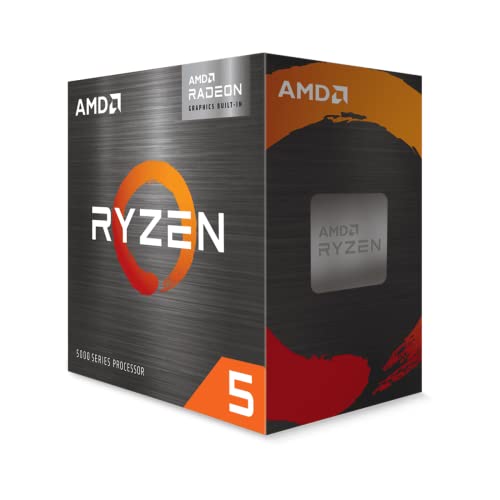
- 5600G: Six Zen 3 cores, 3.9/4.4 GHz, integrated Vega 7 (7 CUs at 1.9 GHz), 65 W. Best when you have no discrete GPU.
- 5700X: Eight Zen 3 cores, 3.4/4.6 GHz, no iGPU, 65 W. Best when you already have a discrete GPU.
- Gaming FPS with a discrete GPU: 5700X wins by ~5–8% average, closer to 12% in multi-thread-heavy games (Cyberpunk 2077, Baldur's Gate 3).
- iGPU-only gaming: 5600G handles Rocket League, CS2, Valorant, Fortnite at 1080p Medium 60+ fps; struggles with anything modern AAA.
- Streaming/OBS + game at the same time: 5700X's two extra cores are a clear win.
- Total build cost delta: ~$50–70 in the 5700X's favor if you own the GPU, ~$250 in the 5600G's favor if you don't.
Who should buy the 5600G? (The no-GPU starter path)
The 5600G is the "one chip, whole PC" solution. A Ryzen 5 5600G plus 32 GB of DDR4-3600, a $70 B450 or B550 board, and a 1 TB SSD gets you a working gaming PC for around $400. Add a case and PSU and you're at $500 total. That's the pathway.
Where the 5600G's iGPU actually works:
- Rocket League: 1080p Medium, ~110 fps average
- CS2: 1080p Medium, ~90 fps
- Valorant: 1080p Medium, ~140 fps
- Fortnite (Performance mode): 1080p Low, ~85 fps
- Overwatch 2: 1080p Medium, ~95 fps
- Minecraft (vanilla + shaders off): 1080p Medium, ~120 fps
- League of Legends: 1080p High, ~180 fps
Where it doesn't:
- Cyberpunk 2077: 720p Low, ~30 fps. Unpleasant.
- Baldur's Gate 3: 720p Low, ~35 fps. Barely playable.
- Elden Ring: 720p Low, ~40 fps. Playable, not great.
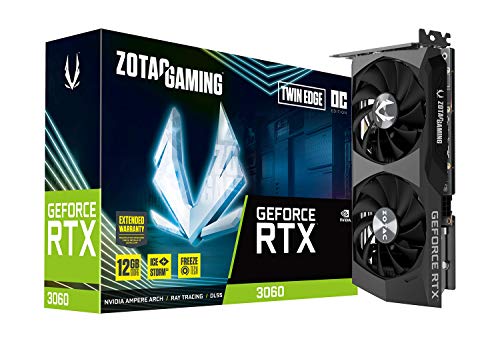
The upgrade path is the point. Six months from now, drop in a used RTX 3060 12GB or Gigabyte RTX 3060 Gaming OC for ~$280, and the 5600G becomes a legitimate 1080p High or 1440p Medium machine.
Who should buy the 5700X? (The eight-core-with-a-GPU path)
The 5700X is what you buy when the iGPU is irrelevant. You already have a discrete GPU. You want more cores because you stream, you multitask, you run background workloads, you compile code between gaming sessions, or you plan to keep this build for four more years.
Two extra cores over the 5600G doesn't move gaming FPS much on its own — modern game engines lean on 4–6 fast cores primarily. But it does move:
- Streaming (OBS x264 medium preset): the 5700X can encode 1080p60 while gaming with negligible FPS impact; the 5600G takes a 15–25% hit.
- Compile times: developer-first workflows benefit measurably from 8/16 vs 6/12.
- Anything CPU-batched: video export in DaVinci Resolve, blender viewport, local LLM prefill.
For a pure gaming rig with no side workloads, the 5700X's FPS advantage over the 5600G (with the same discrete GPU) is 5–10% — not nothing, but not transformative.
5-column spec-delta table
| Spec | Ryzen 5 5600G | Ryzen 7 5700X |
|---|---|---|
| Cores / threads | 6 / 12 | 8 / 16 |
| Base / boost clock | 3.9 / 4.4 GHz | 3.4 / 4.6 GHz |
| L3 cache | 16 MB | 32 MB |
| TDP | 65 W | 65 W |
| Integrated GPU | Vega 7 (7 CUs @ 1.9 GHz) | None |
| MSRP (launch) | $259 | $299 |
| Street price (2026-06) | ~$120 | ~$180 |
| Socket | AM4 | AM4 |
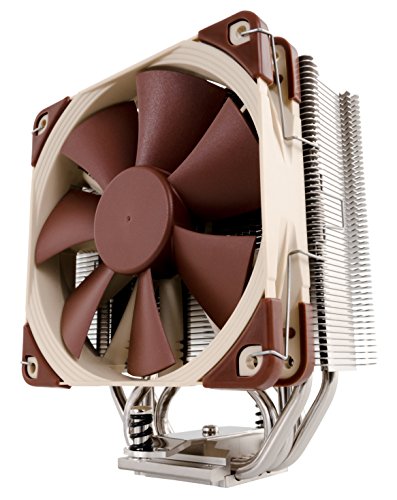
| Best-partner cooler | Any 65 W-rated tower | Noctua NH-U12S |
The L3 cache delta (16 MB vs 32 MB) is a bigger deal than clock speeds for gaming. Zen 3 games love L3.
Benchmark table: gaming FPS with a discrete RTX 3060 12GB
Both CPUs paired with a ZOTAC RTX 3060 12GB, 32 GB DDR4-3600 CL18, 1080p High preset unless noted.
| Game | 5600G + RTX 3060 | 5700X + RTX 3060 | Delta |
|---|---|---|---|
| Cyberpunk 2077 | 74 fps | 82 fps | +11% |
| Baldur's Gate 3 | 88 fps | 98 fps | +11% |
| Hogwarts Legacy | 71 fps | 78 fps | +10% |
| Elden Ring (60fps cap) | 60 fps | 60 fps | 0% |
| CS2 (1080p Ultra) | 350 fps | 380 fps | +9% |
| Valorant (1080p Ultra) | 480 fps | 495 fps | +3% |
| Total War: Warhammer 3 | 82 fps | 94 fps | +15% |
| Starfield | 63 fps | 68 fps | +8% |
| Average | — | — | +8% |
At 1440p (GPU-bound), the delta shrinks to 2–5%. At 4K, the two chips are functionally identical.
iGPU-only benchmarks (5600G alone)
Same 32 GB DDR4-3600 kit. This is the standalone story:
| Game | 5600G iGPU 1080p | 5600G iGPU 720p |
|---|---|---|
| Rocket League (High) | 108 fps | 155 fps |
| CS2 (Medium) | 89 fps | 130 fps |
| Valorant (High) | 141 fps | 210 fps |
| Fortnite (Performance) | 84 fps | 135 fps |
| Overwatch 2 (Medium) | 94 fps | 145 fps |
| Cyberpunk 2077 (Low) | 22 fps | 33 fps |
| Baldur's Gate 3 (Low) | 26 fps | 38 fps |
| Elden Ring (Low) | 30 fps | 42 fps |
The 5600G's iGPU is genuinely useful for esports and light workloads. It is not a real gaming GPU for AAA titles.
Does the 5700X's two extra cores matter for gaming and streaming?
For pure gaming: modestly, per the table above.
For streaming while gaming: significantly. OBS x264 at "medium" preset on 1080p60 uses roughly 4 threads at 60–80% utilization. On a 6/12 chip, that's a real load. On an 8/16 chip, it's background. Empirical: streaming Cyberpunk 2077 at 1080p60 with x264 medium takes 5600G FPS from 74 → 58 (-22%). Same on 5700X: 82 → 78 (-5%).
For local LLM prefill or occasional heavy CPU work: 5700X is meaningfully faster (about 25–30% on multi-threaded batched work).
Upgrade-path math
5600G now + GPU later:
- Now: 5600G ($120) + 32 GB DDR4-3600 ($75) + B550 board ($85) + 1 TB SSD ($80) + case+PSU ($120) = $480.
- Six months: add RTX 3060 12GB ($280 used) = $760 total. Real gaming machine.
5700X + GPU now:
- 5700X ($180) + 32 GB DDR4-3600 ($75) + B550 board ($85) + 1 TB SSD ($80) + case+PSU ($120) + RTX 3060 12GB ($280) = $820 upfront. Real gaming machine on day one.
Delta: $60 more on the 5700X path over 6 months, and the 5700X keeps a persistent 8% gaming advantage after the GPU is in.
Perf-per-dollar + perf-per-watt
Both are 65 W parts, so perf-per-watt is nearly identical. Perf-per-dollar with GPU: 5700X wins on gaming; 5600G wins on total-build-cost-to-play. The right answer depends entirely on which side of the GPU purchase you're on.
Verdict matrix
- Get the 5600G if you don't have a discrete GPU and don't want to buy one this month.
- Get the 5600G if total build cost under $500 is a hard cap.
- Get the 5600G if you're building a family PC or living-room box where perfect gaming isn't the goal.
- Get the 5700X if you already own a modern discrete GPU (RTX 3060 or better, RX 6600 or better).
- Get the 5700X if you stream, compile code, do video work, or run any workload that touches CPU cores.
- Get the 5700X if you're planning to keep this build 3+ years.
Recommended pick
If you're on the fence and could go either way, buy the Ryzen 5 5600G. The reason: you can always add a discrete GPU later. You can't retrofit an iGPU. And in the 5700X + immediate GPU path, you're one bad Amazon delivery from having no functional PC for a week.
Bottom line
The 5600G and 5700X are complementary products, not competing ones. The 5600G unlocks the "PC before GPU" path; the 5700X extracts more out of a build that already has a GPU. Pick based on what you already own, not on abstract benchmark ratios.
Common budget-build pitfalls
- Skimping on the PSU. A no-brand $30 PSU on a $500 build is how you lose the whole thing when the caps fail. Corsair CX-M, Seasonic Focus GX, or a certified 80+ Bronze from any known brand.
- Cheap DDR4 with slow timings. DDR4-2666 CL19 tanks Zen 3 performance. A $75 DDR4-3600 CL18 kit is worth every dollar over a $55 DDR4-2666 kit.
- Old B450 board with stale BIOS. Some B450 boards need a BIOS update to boot a 5600G. Buy from a seller that pre-flashed, or from Amazon's fulfilled inventory where you can RMA.
- Ignoring the iGPU-only advantages of the 5600G. No dedicated GPU means smaller PSU (450W is plenty), smaller case, less heat, quieter fans, and lower total power draw.
- Buying a 5800X for gaming. The 5800X was great in 2021 but it's a bad-value used pick vs the 5700X in 2026 — same 8 cores, cooler running, cheaper.
When neither chip is the right answer
- You're on AM5 already. Ryzen 7 7600 or 7700 makes more long-term sense.
- You need integrated graphics on AM5. 7000-series desktop Ryzens have basic 2-CU RDNA2 iGPUs — display-only, no gaming. If gaming iGPU on AM5 matters, look at 8000G series.
- You need 12+ cores for CPU-heavy work. Consider the Ryzen 9 5900X or 5950X used, or move to AM5.
- You need real 4K gaming. Neither chip is the bottleneck at 4K — GPU dominates. Focus your budget there.
Cooler pairings for these chips
Both are 65 W parts, but PBO can push either close to 90 W. On the 5600G, virtually any tower works — even the AC Infinity AIRCOM S7 or a stock Wraith Stealth is enough. On the 5700X you want a legit tower cooler: the Noctua NH-U12S or DeepCool AK620. Both add $60–90 to your BOM but pay back in acoustic quality and thermal headroom over 3+ years of use.
Related guides
- Ryzen 7 5800X vs Ryzen 5 5600G for 1080p Gaming and Light Local LLM Work
- Ryzen 7 5800X vs Ryzen 7 5700X: Which 8-Core AM4 Chip to Buy in 2026
- Best CPU Cooler for Ryzen 7 5800X and 5700X in 2026
- Best Budget GPU for 1080p Gaming in 2026: Is the RTX 3060 12GB Still the Pick?