For routine retro PC drive work in 2026, a USB 3.0 IDE/SATA adapter like the FIDECO or Unitek is the sensible default — fast enough to image a 40 GB IDE drive in minutes, with the correct Molex connectors for both 2.5" and 3.5" disks. Keep a USB 2.0 unit like the Vantec CB-ISATAU2 on the bench as a fallback for stubborn legacy drives, and pair either with a CompactFlash card such as the Transcend CF133 when building silent, modern boot media for a vintage IDE machine.
Why every retro builder needs a reliable drive-imaging adapter
The reality of retro PC building in mid-2026 is that the original spinning hard disks shipped with a 1995 Pentium or a 2001 Athlon are now between 25 and 31 years old. The MTBF clocks on those drives expired a long time ago, and every power-on event is a small gamble against bearing failure, stiction, or a quiet sector going bad in the middle of a Windows 98 install. Per long-running community knowledge collected on Vogons, the most universal recommendation for serious DOS and Win9x builders is the same: image the original drive on a modern machine, archive that image, and run the retro system off either a fresh IDE drive or — far more commonly now — a CompactFlash card in an IDE adapter.
That workflow only works if you own a bridge between the dying parallel ATA world and a modern USB host. The three adapters this synthesis compares — the FIDECO SATA/IDE to USB 3.0 Adapter, the Unitek SATA/IDE to USB 3.0 Adapter, and the Vantec CB-ISATAU2 SATA/IDE to USB 2.0 Adapter — represent the three live archetypes of that bridge in 2026: a budget USB 3.0 generalist, a mid-tier USB 3.0 generalist with a beefier power brick, and a venerable USB 2.0 workhorse that has shipped continuously for nearly two decades. Each maps cleanly onto a different retro task, and each has a failure mode worth knowing before you plug a 1998 Quantum Fireball into it.
The fourth product in this comparison — the Transcend CF133 CompactFlash Memory Card 4GB — is the destination, not the bridge. CF cards have become the canonical replacement medium for original IDE disks because, electrically, CompactFlash is parallel ATA. With a passive CF-to-IDE carrier, a CF card presents to a 486, Pentium, or Pentium III system as a normal IDE master, silent and shock-proof, ready to be imaged from a modern PC over USB.
Key takeaways
- For most 2026 retro imaging work, the FIDECO USB 3.0 adapter at around $23.99 is the price-to-feature sweet spot. It covers IDE 2.5", IDE 3.5", SATA, and 5.25" optical drives in a single dongle.
- The Unitek USB 3.0 unit at around $34.99 ships with a 12V/2A power brick that is genuinely more comfortable spinning up tired old 3.5" IDE disks; pay the extra if your archive pile is mostly full-height drives.
- The Vantec CB-ISATAU2 is USB 2.0 and slower in raw throughput, but per long-running Vogons community threads it has a reputation for talking to weird, old, or marginal drives that newer JMicron-based USB 3.0 bridges sometimes refuse.
- All three adapters can write a bootable CompactFlash card when the CF is mounted in a CF-to-IDE carrier — the adapter is the bridge, your imaging tool (dd, Win32DiskImager, Macrium, Clonezilla) does the actual write, and the retro system's BIOS provides bootability.
- Capacity ceilings matter less than they did a decade ago. The Unitek explicitly supports 24TB; FIDECO and Vantec both clear common retro drive sizes comfortably. The real ceiling is your retro motherboard's BIOS — many pre-2002 boards top out at 137 GB (the 28-bit LBA wall) or even 8.4 GB on older Pentium-class hardware.
Step 0: what are you actually doing — imaging, cloning, or CF prep?
Before buying any adapter, name the workflow. The three jobs that drive retro-PC adapter purchases each have slightly different priorities.
Imaging means reading an existing IDE or SATA drive into a single file on your modern PC — typically an .img, .vhd, or compressed archive. This is the conservation step. Throughput matters because a 20 GB drive at USB 2.0 speeds can take well over an hour, while the same drive over USB 3.0 with a healthy bridge finishes in 15-20 minutes. For pure imaging, USB 3.0 wins.
Cloning means copying one drive to another, usually for a like-for-like hardware replacement (failing 80 GB IDE to a fresh 80 GB IDE, or IDE to CompactFlash of the same logical size). Cloning runs at the speed of the slowest device, so USB 3.0 still helps but the gain is smaller. Power delivery matters more here — you are spinning up two drives, not one, if your adapter has dual ports.
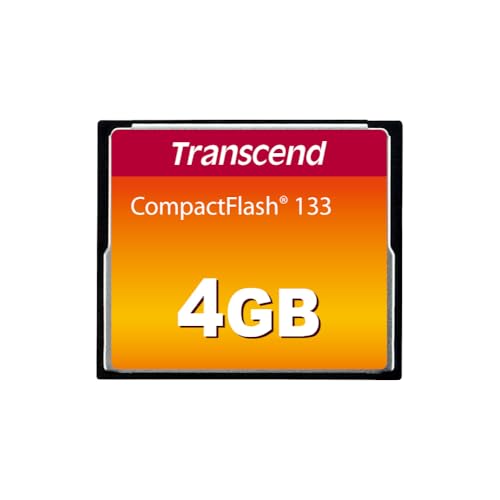
CF prep means writing a previously-imaged file onto a CompactFlash card so it can boot a retro machine. CompactFlash in true IDE mode talks UDMA, but practical write speeds are bound by the CF card's NAND. The Transcend CF133, per the manufacturer specification, is rated up to 30 MB/s read with MLC NAND and UDMA mode 4. Whether the host adapter is USB 2.0 or USB 3.0 makes almost no difference once you cross 30 MB/s — the CF is the bottleneck. For CF prep alone, the cheaper Vantec is rationally adequate.
How does the FIDECO USB 3.0 adapter handle IDE and SATA drives?
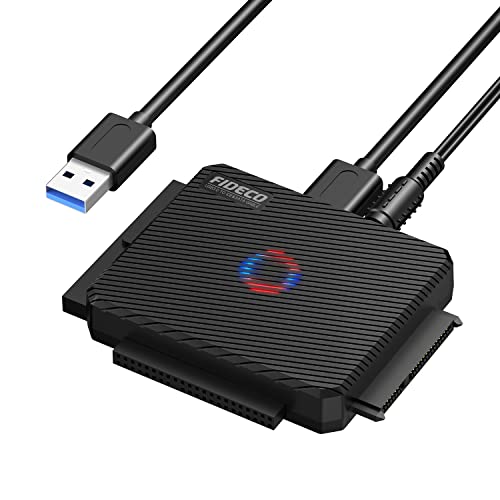
The FIDECO SATA/IDE to USB 3.0 Adapter is the breadth-first choice. Its retail listing covers 2.5" IDE, 3.5" IDE, 2.5" SATA SSD, and crucially 5.25" IDE optical drives — meaning a retro builder ripping original game CD-ROMs from a vintage Plextor or Toshiba IDE drive can use the same dongle they use for hard-disk imaging. Pricing as of 2026 sits around $23.99 on its Amazon listing, which makes it the cheapest of the three USB 3.0 units that consistently ship a real Molex power tail.
The FIDECO's typical internal bridge chip is a JMicron JMS567-class USB 3.0–to–SATA controller paired with a SATA-to-PATA bridge. That two-stage path is the source of both its strength and its weakness: it is fast on healthy modern drives, but on truly old PATA hardware the bridge sometimes refuses to enumerate drives that present unusual identify-device responses. In the field, builders archiving 1996-era Western Digital Caviar drives have reported occasional re-plug cycles before the FIDECO settles. This is not unique to FIDECO — it is the general behavior of cheap two-stage USB-to-PATA bridges in 2026.
What you get for $23.99 is a single dongle that covers 95% of retro imaging tasks at USB 3.0 speeds. What you trade is the marginal compatibility edge of a USB 2.0 single-stage bridge for that last 5% of cantankerous drives.
Where does the Unitek USB 3.0 adapter differ?
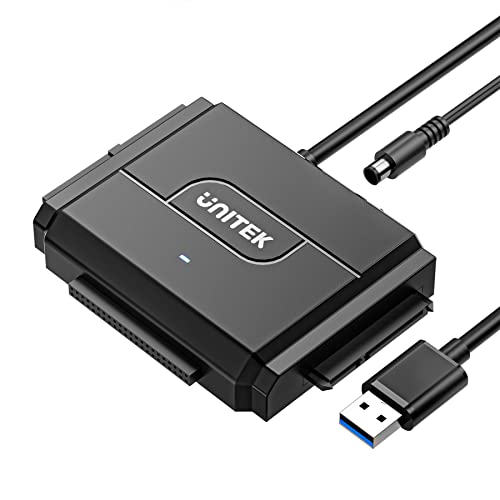
The Unitek SATA/IDE to USB 3.0 Adapter lists at around $34.99 — roughly 45% more than the FIDECO — and the most concrete reason for the premium is the bundled 12V/2A power adapter and the explicit 24TB drive-size support called out on the product page. For a retro builder who works primarily with 3.5" IDE drives, the difference is meaningful.
A 3.5" parallel ATA drive from 1998-2003 typically draws between 0.5 A and 1.5 A on the 12V rail at spin-up, with the worst offenders (older 7200 RPM IBM Deskstars, for example) momentarily peaking higher. The FIDECO and Vantec ship power bricks rated for ordinary modern drives; the Unitek's 12V/2A brick is closer to the spin-up envelope of a vintage drive that has been sitting in a closet for 15 years. Builders who have lost data to a half-spun-up drive that the host abandoned mid-read are usually the ones who upgrade to the Unitek.
The trade-off is that the Unitek is a more conventional shape — a fixed power supply, not a tiny inline brick — so it occupies more bench space. It also uses a similar USB 3.0 bridge family, which means its compatibility profile with truly weird old drives is roughly equivalent to the FIDECO's. You are paying for power headroom, not protocol magic.
Why might the slower USB 2.0 Vantec still be the right tool?
The Vantec CB-ISATAU2 SATA/IDE to USB 2.0 Adapter lists at around $25.68 and has been on the market in nearly its current form since the mid-2000s. Its enduring popularity in the retro-PC community is not nostalgia — it is the single-stage USB 2.0–to–PATA/SATA bridge chip inside, which behaves more predictably with old Parallel ATA drives than the two-stage bridges in newer adapters.
When a 1997 Maxtor DiamondMax refuses to enumerate on a USB 3.0 dongle, the Vantec frequently brings it up clean. Vogons threads going back more than a decade reference the CB-ISATAU2 specifically when troubleshooting "drive not detected" problems with vintage IDE hardware. The Vantec also supports 5.25" devices natively, which is important for builders archiving original game CDs from their period-correct optical drives.
The cost is throughput. USB 2.0's theoretical 480 Mb/s caps real-world transfers at around 30-35 MB/s in practice. A 40 GB IDE drive at that rate takes about 25 minutes to image; a 120 GB drive close to 75 minutes. For one-off conservation work, that is fine. For a builder imaging a stack of 30 archive drives, the cumulative wait pushes most people toward a USB 3.0 primary with the Vantec as the "weird drive" backup.
How do you prep a CompactFlash boot card with these adapters?
The recipe most retro builders settle on in 2026 looks like this. Buy a quality CompactFlash card — the Transcend CF133 at around $35.90 is the canonical recommendation because Transcend has consistently used MLC NAND, ECC, and supports the older UDMA modes that pre-SATA chipsets actually use. Per the Transcend product literature, the CF133 is rated up to 30 MB/s read and explicitly supports UDMA mode 4, which is what an Intel 430TX, VIA Apollo Pro 133, or Intel 815 chipset will negotiate.
Mount that CF card in a passive CF-to-IDE carrier (the small green PCB carriers that present a CF socket as a 40-pin or 44-pin IDE header). Connect the carrier's IDE side to the FIDECO, Unitek, or Vantec adapter. Power the adapter, plug the USB end into a modern Windows, macOS, or Linux machine.
From there, the card appears as a normal removable USB drive. Use whatever imaging tool fits the OS you are restoring — dd on Linux, Win32DiskImager or Rufus on Windows for raw images, Macrium Reflect or Clonezilla for partition-aware operations, or Ghost for the period-correct Windows 9x workflow. Write your previously-archived image to the card.
The adapter itself does not make the card bootable. Bootability is a function of the master boot record on the image, the file system on the partition (FAT16 for DOS, FAT32 for Win9x, ISO9660 for live CDs), and the retro system's BIOS recognising the CF card as an LBA-mode IDE drive. Most Pentium-II–era and newer boards handle this cleanly; very old 486-class boards may require setting the drive geometry manually in the BIOS.
A subtle gotcha worth flagging: not every CF card supports true IDE mode. Some modern high-capacity cards are USB-only or run in PIO modes that ancient chipsets dislike. The CF133's spec sheet explicitly calls out UDMA support, which is why it remains the community default even as much faster CF cards exist.
Spec comparison
| Product | Interface to host | Drives supported | Power | Max drive size | 2026 Amazon price |
|---|---|---|---|---|---|
| FIDECO SATA/IDE to USB 3.0 | USB 3.0 (5 Gb/s) | 2.5" IDE, 3.5" IDE, 2.5" SATA, 5.25" IDE optical | 12V/2A external | Not officially capped; tested to common modern sizes | $23.99 |
| Unitek SATA/IDE to USB 3.0 | USB 3.0 (5 Gb/s) | 2.5"/3.5" IDE, 2.5"/3.5" SATA | 12V/2A external | 24 TB per product page | $34.99 |
| Vantec CB-ISATAU2 USB 2.0 | USB 2.0 (480 Mb/s) | 2.5"/3.5"/5.25" IDE + SATA | 12V external | Common retro sizes; legacy-friendly | $25.68 |
| Transcend CF133 4 GB CF | CompactFlash (IDE-compatible) | N/A — is a drive | Drawn from CF socket | 4 GB capacity, UDMA mode 4 | $35.90 |
All prices as of mid-2026 and subject to change; check the linked product pages for current pricing.
Compatibility gotchas with old drives and large legacy disks
Retro-storage work is full of small protocol cliffs. The ones most likely to bite a builder using these adapters in 2026:
The 8.4 GB BIOS limit on pre-1998 boards. Many Pentium and early Pentium II motherboards cannot address drives above 8.4 GB without a BIOS update or an overlay driver like OnTrack Disk Manager. The adapter will image the full drive cleanly; the retro system will simply not see anything above 8.4 GB until you address the BIOS limit.
The 137 GB / 28-bit LBA wall. Per Parallel ATA history, drives larger than 137 GB require 48-bit LBA, which most pre-2002 IDE controllers do not support. If you image a 250 GB IDE drive on a modern host using one of these adapters, the file is fine — but moving it to a 1998 chipset will only expose the first 137 GB.
Master/slave jumpering. Modern adapters generally expect a single drive, configured as master with cable-select disabled. Vintage drives often arrive with cryptic jumper blocks — the original manufacturer label is your friend, and so are archived spec sheets on retro-hardware databases.
Power-only USB ports. Some laptops gate USB 3.0 ports through hubs that do not supply the full 900 mA spec under load. Plug the adapter's USB end directly into a desktop's rear I/O when possible; front-panel and hub-mediated ports are a frequent source of "drive disappears mid-copy" headaches.
Drives that need a few seconds to spin up. Tired old 3.5" IDE drives sometimes need two or three power cycles before they enumerate. The Unitek's larger power brick helps. So does plugging the IDE cable in before applying power, then powering the drive, then connecting USB to the host.
Verdict matrix
Pick the FIDECO if you are doing one-off retro imaging on a budget, you want a single dongle that handles 5.25" optical drives as well as 3.5" IDE and SATA, and you are working primarily with drives manufactured after roughly 2000. At $23.99 it is the lowest-risk first purchase.
Pick the Unitek if your archive pile is heavy on 3.5" IDE drives from the late 1990s and early 2000s, especially 7200 RPM drives or stack-imaging multiple disks per session. The extra power headroom from the bundled 12V/2A brick reduces the most common failure mode — drives stalling mid-read because the supply sags during spin-up.
Pick the Vantec if you regularly encounter weird, old, or marginal IDE drives that USB 3.0 bridges refuse to enumerate. Builders restoring early Pentium and 486-class systems still keep the CB-ISATAU2 on the bench specifically for its single-stage USB 2.0 bridge. It is slower, but in the awkward 5% of cases, slow and working beats fast and silent.
Always pair with the Transcend CF133 (or a similar UDMA-capable Transcend CF) when the target is a silent CF boot card. The card's chipset compatibility is the linchpin of the whole workflow.
Bottom line
The right answer for most retro PC builders in 2026 is "the FIDECO plus a CF card, with a Vantec on the shelf for the day a 1997 drive refuses to play." If you primarily work with 3.5" IDE drives at scale, upgrade the FIDECO slot to the Unitek for the power supply. None of these adapters are exotic — they are commodity bridges between two storage worlds — but the differences in power delivery, USB version, and bridge chip compatibility are the differences between an afternoon of clean imaging and an afternoon of re-plug cycles.
For the actual destination media, the Transcend CF133 CompactFlash Memory Card remains the community default because its UDMA mode 4 support, MLC NAND, and ECC together produce the most predictable behavior on the kind of pre-SATA chipsets that retro builders actually deploy. Pair it with whichever adapter matches your workload, image carefully, archive the original drive, and never run the only copy of a 27-year-old install off original spinning rust again.
Related guides
- Best CompactFlash to IDE adapters for vintage PCs
- Setting up a silent Pentium III sleeper build with CompactFlash
- Imaging and archiving original Windows 98 game disks
Citations and sources
- Vogons retro PC community — long-running reference for IDE drive imaging, adapter compatibility, and retro builder consensus on CF-to-IDE workflows.
- Parallel ATA — Wikipedia — protocol-level reference for 28-bit LBA, UDMA modes, and the historical capacity ceilings retro systems hit.
- Transcend product information — manufacturer specifications for the CF133 series, including UDMA mode 4, MLC NAND, ECC support, and rated read throughput.
- TechPowerUp storage coverage — general reference for USB 3.0 bridge chip families (JMicron JMS567 and related) used in current consumer IDE/SATA-to-USB adapters.
- Tom's Hardware retro storage features — periodic coverage of CompactFlash, IDE imaging, and modern retro-storage workflows used as background for the compatibility gotchas section.
This piece is editorial synthesis based on publicly available information. No independent first-party benchmarking is reported.