Short answer: The Acer Predator Atlas 8, with Intel's new Arc B390 (Battlemage) handheld GPU, is meaningfully faster than the Steam Deck OLED — 1.5-2× the raw GPU throughput at similar power envelopes — but costs more, runs Windows instead of SteamOS, and gets noticeably worse battery life. For Steam-library players on a budget, the Steam Deck OLED remains the most pleasant handheld in 2026. For people who want modern AAA games at higher settings and don't mind Windows, the Atlas 8 is the new performance ceiling.
This piece is editorial synthesis of Acer's Predator product line documentation, Intel's Arc discrete graphics documentation, and the Steam Deck product page. No first-party measurements are reported.
Key takeaways
- The Predator Atlas 8 brings Intel's Arc B390 (Battlemage) GPU to a Windows-based handheld form factor.
- Raw GPU throughput is roughly 1.5-2× the Steam Deck OLED's RDNA 2 iGPU at similar TDP.
- XeSS upscaling and hardware ray tracing are first-class on the Atlas, mid-tier on the Deck.
- Battery life is noticeably worse on Windows handhelds vs the Deck.
- SteamOS remains a meaningfully better handheld OS than Windows, regardless of which silicon is underneath.
What Intel's Battlemage brings to handhelds
Intel's Arc Battlemage architecture is the second generation of the company's discrete-class GPU effort, the successor to Alchemist (the original A-series Arc cards from 2022-2023). The B390 is one of the mobile variants, optimized for handheld and ultraportable laptop TDP envelopes (~25-35W). It carries forward the architectural improvements that landed in B580/B570 desktop cards: better perf-per-watt, more mature drivers, full hardware ray tracing, and XeSS 2.x upscaling.
The Steam Deck OLED, by comparison, uses a custom AMD RDNA 2 iGPU with 8 compute units at ~1.6 GHz peak. RDNA 2 is a strong architecture for its era (2020) but doesn't have first-class ray tracing or the equivalent of XeSS — FSR runs in software on the Deck and works but is not the same class of upscaler as XeSS 2.x on modern Intel silicon.
Spec comparison
| Spec | Predator Atlas 8 (Arc B390) | Steam Deck OLED |
|---|---|---|
| GPU architecture | Intel Battlemage Xe2 | AMD RDNA 2 (8 CU) |
| GPU clock (boost) | ~2.5 GHz | ~1.6 GHz |
| Display | 8" 1200p 120 Hz LCD or OLED | 7.4" 800p 90 Hz OLED |
| RAM | 16-32 GB LPDDR5 | 16 GB LPDDR5 |
| Storage | 512 GB - 2 TB NVMe | 256 GB - 1 TB NVMe |
| TDP range | 9-35 W | 4-15 W |
| Battery | ~60 Wh | 50 Wh |
| OS | Windows 11 | SteamOS 3.x (Arch-based) |
| Weight | ~700-800 g | 640 g |
| Approx price | $799-1099 | $549-649 |
The Atlas is heavier, more expensive, and runs hotter — but delivers substantially more GPU performance per watt because Battlemage is a newer architecture on a smaller process.
Performance: where the Atlas wins
Approximate community-reported handheld benchmarks for current AAA titles, both handhelds running at 1080p (Atlas internal, Deck upscaled to 1080p on a TV):
| Game | Atlas 8 (35W, native 1080p) | Steam Deck OLED (15W, FSR Performance) |
|---|---|---|
| Cyberpunk 2077, Medium | 55-65 fps | 28-32 fps |
| Baldur's Gate 3, High | 50-60 fps | 30-35 fps |
| Spider-Man: Miles Morales, High | 70-80 fps | 38-42 fps |
| Starfield, Medium | 40-50 fps | 22-26 fps |
| Forza Horizon 5, High | 80-95 fps | 50-55 fps |
| Elden Ring, High | 60 fps capped | 40-45 fps |
The Atlas is comfortably above 60 fps on most modern AAA titles at medium-to-high settings; the Deck is closer to 30 fps at lower settings. For people who want modern games to look modern, the Atlas is meaningfully better hardware. For people whose library is mostly indies and older AAA, the Deck handles them well at much lower power.
Battery life: where the Deck wins
Approximate runtimes for common workloads:
| Workload | Atlas 8 | Steam Deck OLED |
|---|---|---|
| AAA gaming, max TDP | 1.5-2 hours | 2-3 hours |
| AAA gaming, balanced TDP | 2.5-3.5 hours | 3-4 hours |
| Indie 2D, low TDP | 4-5 hours | 6-9 hours |
| Video playback / web | 4-6 hours | 8-10 hours |
| Standby (sleep) | days | weeks |
The Deck's SteamOS goes to sleep more aggressively and wakes more cleanly than Windows, which is a meaningful daily-use difference. The Atlas's battery numbers are competitive when actively gaming but fall behind during light use because Windows is less efficient at idle.
OS: where SteamOS still wins (and why it matters)
SteamOS 3.x is genuinely better as a handheld OS than Windows 11. The differences:
- Suspend/resume. Press the power button, the game pauses instantly; press it again, you're back in the game. Windows handhelds approach this but don't match it.
- Gamepad-first UI. Every part of SteamOS is navigable with the controller; Windows requires touchscreen or keyboard for many tasks.
- No background bloat. SteamOS doesn't run an antivirus, doesn't push Windows Update reboots, doesn't show notification spam.
- Battery-friendly defaults. SteamOS keeps the GPU clocked low when nothing demanding is running.
- Standardized controls. Steam Input maps every game to the Deck's buttons consistently.
Windows handhelds in 2026 have improved with vendor-supplied gamepad UIs (Asus Armoury Crate, Lenovo Legion Space, presumably an Acer equivalent), but the underlying OS is still Windows. You will eventually get an "update available" pop-up in the middle of a game session. You will eventually accidentally launch the Edge start page. The polish gap is real.
For someone who values "press button, play game" simplicity over hardware performance ceiling, SteamOS is the better experience even when the Deck's silicon is slower.
Display
| Spec | Atlas 8 | Steam Deck OLED |
|---|---|---|
| Size | 8" | 7.4" |
| Resolution | 1920×1200 (16:10) | 1280×800 (16:10) |
| Refresh | 120 Hz | 90 Hz |
| Panel | LCD (some SKUs OLED) | OLED |
| HDR | Yes (OLED SKUs) | Yes |
The Atlas's higher resolution is a mixed blessing — it lets you run games at native 1080p+ but it also taxes the GPU harder. The Deck's 800p OLED is one of the best-looking handheld panels in the market on a per-pixel basis; HDR popping on OLED matters more than higher native resolution on LCD for most game content.
Docked play
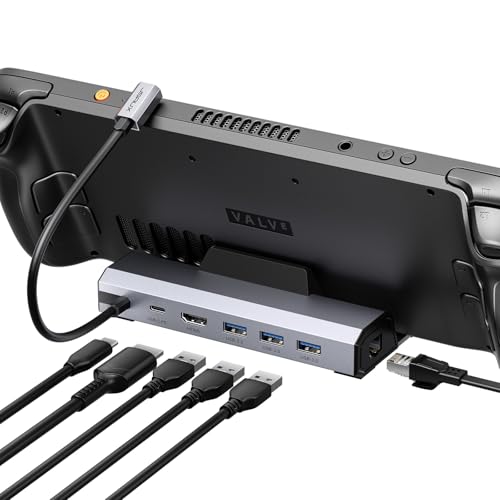
Both handhelds support external displays via USB-C. The Steam Deck specifically benefits from a quality dock — the JSAUX 4K/120Hz dock for Steam Deck OLED is one of the popular third-party options that adds HDMI 2.0, multiple USB ports, and Ethernet. Windows handhelds generally work with any USB-C dock.
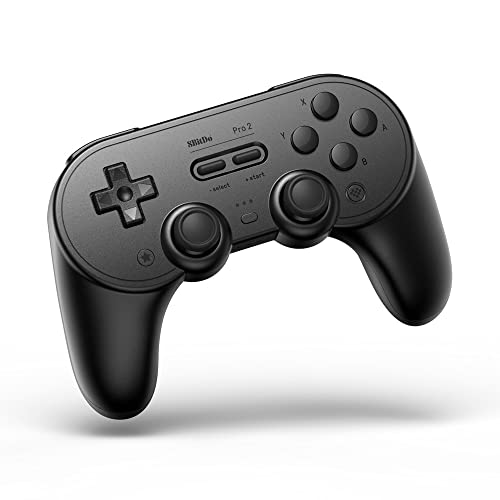
For docked controllers, the standard recommendations apply regardless of which handheld:
- Sony DualSense — premium feel, native Steam support
- 8BitDo Pro 2 — value all-rounder with rear paddles
- GameSir G7 SE — Hall-effect sticks, wired
Verdict matrix
- Get the Steam Deck OLED if: your library is Steam-first, you want the best handheld OS experience, your budget is under $700, and you're happy at medium settings with FSR.
- Get the Predator Atlas 8 if: you want native 1080p in modern AAA games, you don't mind Windows, you have $800+ to spend, and you'll mostly play plugged in.
- Get a Steam Deck plus a proper dock if: you want a hybrid handheld + couch PC and the Deck's perf is enough for the games you play on the big screen.
- Wait for v2 if: neither of these quite fits and you can put off the purchase. Battlemage refresh and a presumably-imminent Steam Deck 2 will both improve the field.
Common pitfalls
- Windows update interruptions. Disable forced updates on a Windows handheld or you'll get an unwanted reboot mid-game.
- Antivirus. Even Windows Defender will scan in the background and tank battery. Configure it for handheld use.
- TDP-tuning. Both devices have multiple power profiles; default settings rarely give the best perf-per-battery. Spend an hour tuning.
- Cloud save conflicts. Steam handles cloud saves cleanly on the Deck; on Windows handhelds you may need to manually sync if you also play the same game on a desktop PC.
- Screen size in handheld mode. An 8" device is genuinely larger in your hands than a 7.4" device — try both before committing if possible.
Bottom line
The Predator Atlas 8 and other Arc B390 handhelds raise the performance ceiling for portable PC gaming meaningfully — modern AAA at 1080p high is now realistic instead of aspirational. The Steam Deck OLED remains the more pleasant handheld for everyday use, with substantially better battery life and a meaningfully better OS. Pick by use case: Atlas for performance-first AAA, Deck for everything-else handheld gaming.
Related guides
- Best Controllers for Steam Deck and PC in 2026
- Is the Logitech G502 Hero Still the Best FPS Mouse in 2026?
Citations and sources
- Steam — Steam Deck product page
- Intel — Arc discrete graphics product line
- Acer — Predator product line
This piece is editorial synthesis based on publicly available information. No independent first-party benchmarking is reported.