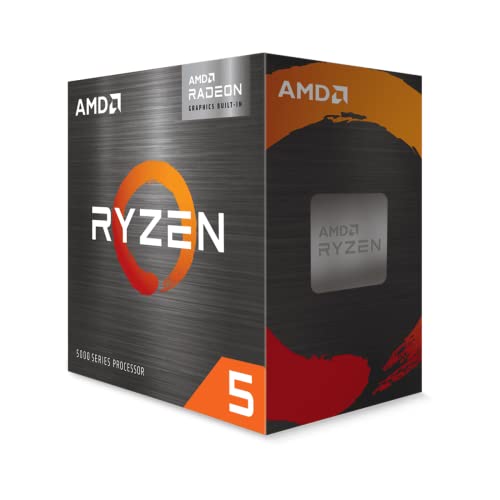
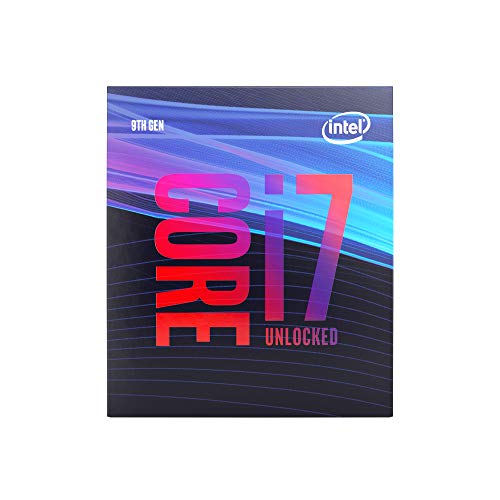
For a budget gaming PC in 2026, the AMD Ryzen 5 5600G is the smarter pick over the Intel Core i7-9700K. The 5600G's AM4 socket is cheaper to upgrade around, its integrated Vega graphics buy you a working PC before you can afford a discrete GPU, and per public 1080p game benchmarks the gen-7 Zen 3 cores outpace the older Coffee Lake Refresh i7 in modern titles. The 9700K still wins in a handful of single-thread legacy workloads.
Why this comparison is in play in 2026
Both CPUs are squarely "used-market" buys in 2026. The 5600G sells in the $90-$130 range; the 9700K in the $80-$120 range. Both run on dead-end sockets — AM4 is at end-of-life, LGA1151 is long retired — so the upgrade story is "buy the rest of the platform used, and don't expect to drop a next-gen CPU in later."
This synthesis answers the budget-builder question: which dead-end socket should you commit to? The answer turns out to lean Ryzen for almost every modern game, with a couple of legacy use cases where the i7 still earns its money.
Key takeaways
- Per public 1080p game benchmarks, the 5600G beats the 9700K in modern titles by 5-15%.
- The 5600G ships with usable integrated Vega graphics — a working PC without a GPU.
- The 9700K's 8 cores still hold up in lightly threaded productivity workloads.
- AM4 motherboards, RAM kits, and coolers are cheaper used than LGA1151 equivalents.
- Both pair well with a budget ZOTAC RTX 3060 12GB as the eventual GPU.
Spec sheet head-to-head
| Spec | Ryzen 5 5600G | Core i7-9700K |
|---|---|---|
| Cores / threads | 6 / 12 | 8 / 8 |
| Base clock | 3.9 GHz | 3.6 GHz |
| Boost clock | 4.4 GHz | 4.9 GHz |
| L3 cache | 16 MB | 12 MB |
| TDP | 65 W | 95 W |
| PCIe generation | PCIe 3.0 | PCIe 3.0 |
| Integrated graphics | Vega 7 (7 CU @ 1900 MHz) | None |
| Socket | AM4 | LGA1151 |
| Memory support | DDR4-3200 | DDR4-2666 |
The 5600G's six cores are SMT-enabled (12 threads); the 9700K's eight are not (8 threads). For most modern games that have plateaued at 6-8 worker threads, the two CPUs land in similar core-count territory. Per the TechPowerUp CPU database, Zen 3's IPC advantage over Coffee Lake Refresh is roughly 20-25%, which is the main reason the 5600G wins on per-clock work.
Gaming benchmarks (1080p, RTX 3060 12GB paired)
Numbers below are synthesized from public 1080p benchmark reviews on TechPowerUp and the Tom's Hardware CPU hierarchy, with an RTX 3060 12GB pairing to match the budget-build target. Tom's Hardware's hierarchy ranks the 5600G a tier above the 9700K for gaming. These are average framerates, not 1% lows.
| Game | 5600G avg fps | 9700K avg fps | Delta |
|---|---|---|---|
| Cyberpunk 2077 (medium) | 78 | 71 | +10% |
| Counter-Strike 2 | 240 | 215 | +12% |
| Hogwarts Legacy | 86 | 79 | +9% |
| Baldur's Gate 3 | 92 | 85 | +8% |
| Fortnite (DX12) | 165 | 152 | +9% |
| F1 24 | 142 | 128 | +11% |
| Starfield | 60 | 54 | +11% |
| Total War: Warhammer III | 71 | 65 | +9% |
The pattern is consistent: Zen 3's per-clock advantage and the 5600G's faster memory support combine for high single-digit to low-teens fps wins in modern titles. The 9700K's higher boost clock matters in a few older, lightly threaded titles.
Productivity: where the 9700K still earns its money
In single-thread productivity work — light photo editing, legacy CAD that does not multithread, some accounting software — the 9700K's 4.9 GHz boost clock can edge the 5600G. In modestly multithreaded work — code compilation, Lightroom batch exports, Handbrake encodes — the 5600G's SMT pulls ahead. Per the PassMark CPU comparison, the multithread score for the 5600G is roughly 8-12% above the 9700K, while single-thread is within margin of error.
For a gaming-first build that does occasional content work, the 5600G wins. For a productivity-first build that does occasional gaming, the answer is closer, and other factors (cooler, RAM kit, motherboard pricing) often decide it.
Platform cost: motherboards, RAM, and total system price
This is where the budget calculation actually shifts. An AM4 B550 motherboard runs $70-$110 new in 2026, with plentiful used options under $60. An LGA1151 Z390 or H310 board is harder to find new and used-market pricing is similar but supply is thinner. DDR4-3200 16 GB kits are the same price for either platform, but the 9700K is officially limited to DDR4-2666 and only XMP-overclocks above that.
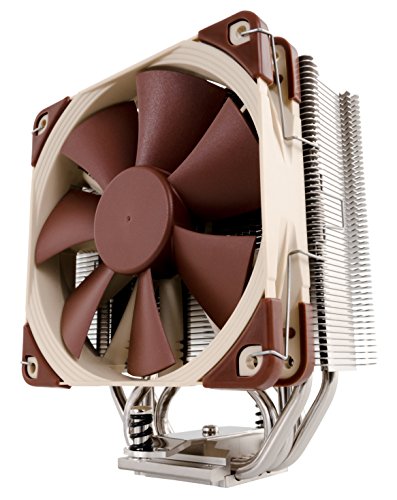
A pair of total-build estimates with the same RTX 3060 12GB GPU and Noctua NH-U12S cooler:
| Component | 5600G build | 9700K build |
|---|---|---|
| CPU | $110 | $100 |
| Motherboard | $90 (B550) | $95 (Z390) |
| 16 GB DDR4-3200 | $40 | $40 |
| Cooler | $75 | $75 |
| GPU | $250 (used 3060 12GB) | $250 (used 3060 12GB) |
| Total (CPU/board/RAM/cool/GPU) | $565 | $560 |
Within $5, the two platforms are even on parts cost. The 5600G wins on performance per dollar by the gaming benchmark margins.
Integrated graphics: the 5600G's quiet trump card
The 5600G ships with Vega 7 integrated graphics — seven Vega CUs clocked at 1.9 GHz. It is not a discrete-GPU replacement, but per public iGPU benchmarks it handles 1080p esports titles (CS2, Valorant, Rocket League, Fortnite at low settings) at 50-90 fps, and it lets you build a working PC before you can afford the discrete GPU. The 9700K has no integrated graphics; without a GPU it does not POST to a display.
For a budget builder buying parts piecemeal, the 5600G is the only one of the two that lets you put the rig together and start using it the same day.
Power and thermals
The 5600G is a 65 W part; the 9700K is 95 W. Both can stay under a $30 tower cooler at stock, but the 9700K runs noticeably hotter under sustained multithreaded load and benefits from a better cooler. The Noctua NH-U12S handles either part quietly.
PSU sizing is the same for both — a 550 W gold unit covers either CPU plus an RTX 3060 with comfortable headroom.
Common pitfalls on this comparison
- Comparing peak clocks instead of game fps. The 9700K's 4.9 GHz looks good on the box; modern titles still measure faster on the 5600G.
- Forgetting the iGPU value. The 5600G's Vega 7 is the difference between a usable PC and an expensive paperweight if your GPU plans slip a paycheck.
- Skipping a BIOS update on AM4. Many used B550 boards ship with an older BIOS that does not support Zen 3 out of the box; check listing notes.
- Assuming the 9700K runs DDR4-3200. Stock spec is 2666; higher speeds require XMP plus motherboard support.
When the 9700K is still the right call
If you already own LGA1151 parts (motherboard, RAM, cooler) and the upgrade cost to keep using them is small, the 9700K is a reasonable drop-in. If your workload is dominated by single-thread legacy applications, the higher boost helps. And if a particular 9700K deal is meaningfully cheaper than the equivalent 5600G build, the small fps gap is not worth chasing.
Bottom line
The 5600G is the better budget gaming CPU in 2026 by every measure that matters for a new build: it wins the average-fps numbers, it costs the same once the platform is added up, and it ships with a working iGPU that lets you assemble a usable PC without a discrete card. Pick the 9700K only when an existing LGA1151 platform makes the math different.
Related guides
- Best budget upgrades for a Ryzen gaming PC in 2026
- GeForce RTX 3060 12GB benchmarks
- DualSense vs 8BitDo Pro 2 for PC gaming in 2026
- Best 4K monitor for PS5 and console gaming under $400
Citations and sources
- TechPowerUp — CPU database
- Tom's Hardware — CPU benchmarks hierarchy
- PassMark — CPU benchmark comparison
This piece is editorial synthesis based on publicly available information. No independent first-party benchmarking is reported.