Yes — the Sound BlasterX G6 works on a retro Windows XP gaming PC over USB, sidestepping the PCI/ISA sound-card hunt that bedevils period-correct builds. Per Creative's documentation, the G6 implements USB Audio Class 1.0 and reports as a standard audio device, which Windows XP SP3 recognizes out of the box for basic stereo playback. For full DSP features (the Xamp, EAX-style processing, sample-rate selection) you need to install Creative's Windows driver package, which still ships through legacy download channels. The trade-off: USB audio bypasses ISA/PCI compatibility nightmares, but it cannot reproduce hardware EAX or DOS-game audio that depended on a real ISA Sound Blaster's specific behavior.
What you'll need: a quick checklist
- A retro PC with at least one USB 2.0 port (USB 1.1 will not provide enough bandwidth for 24-bit/192 kHz; you can fall back to 16-bit/48 kHz over USB 1.1 but the G6's features are gated to USB 2.0+).
- Windows XP SP3, Windows 7, or another supported retro-friendly OS. (USB Audio Class is supported natively from XP SP2 onward; SP3 is the practical floor.)
- Access to Creative's legacy driver downloads — still available through Creative's support download portal.
- A USB-A to USB-Micro-B cable (the G6's USB connector is Micro-B).
- An optional toggle: a powered USB hub if your retro motherboard's USB 2.0 power delivery is weak.
- For DOS games specifically: this is where USB audio falls short. The G6 cannot impersonate an ISA Sound Blaster for real-mode DOS games. Plan accordingly.
Why an external USB DAC sidesteps PCI/ISA sound-card headaches on a retro rig
Period-correct retro PC builds run into a familiar set of audio problems. Modern ATX motherboards do not have ISA slots. The PCI slots that exist often clash with old Creative drivers, modern southbridge chipsets, or the half-installed AC'97 codec on the board. The PCI Sound Blaster Audigy and Live! cards (still findable used) require Windows XP driver packages whose installer paths assume specific Windows-Update behavior that has long been broken. The 16-bit ISA cards — the original Sound Blaster, Sound Blaster Pro, and the AWE32 — are exquisite for DOS gaming and increasingly hard to slot into a build because the motherboards that accept them are either ancient or expensive boutique units.
A USB DAC like the Sound BlasterX G6 escapes most of this. USB Audio Class is a standardized protocol that XP and 7 handle natively for basic playback, and Creative's own Windows driver stack adds back most of the proprietary features that Creative customers care about: Sound Blaster Command (the rebranded SBX Pro Studio software), the Xamp headphone amplifier control, sample-rate selection up to 192 kHz, multi-channel virtual surround, and dialog enhancement.
The catch is the DOS layer. Real DOS games that depended on a specific Sound Blaster IRQ/DMA configuration cannot be fooled by a USB device. For DOS gaming on a retro rig, you either use a real ISA Sound Blaster or accept that you are dropping into Windows-based emulators (DOSBox, dosbox-x, or eXoDOS-style frontends) that synthesize audio in software. For Windows 95/98/XP-era games and applications, the G6 is a clean fit.
Key Takeaways
- The G6 works on Windows XP SP3 and Windows 7 over USB Audio Class with Creative's official driver for full DSP features.
- It bypasses PCI/ISA slot constraints that complicate retro motherboard choices.
- It cannot impersonate an ISA Sound Blaster for real-mode DOS games — that is still PCI/ISA territory.
- The G6's Xamp headphone amp is a real upgrade over any built-in motherboard audio of the XP era.
- For DOS-heavy retro gaming, pair the G6 (for Windows-era games) with a vintage ISA/PCI card (for true DOS audio).
Does the Sound BlasterX G6 work on Windows XP and Windows 7-era machines?
Functionally, yes. Two scenarios:
Class-compliant mode. Plug the G6 into a USB 2.0 port on a Windows XP SP3 machine; it enumerates as a USB audio device. You get 16-bit stereo playback at 44.1/48 kHz through the standard Windows mixer with zero driver installation. This is the floor. It will get you sound from games, browser audio, and basic applications.
Full Creative driver mode. Install the Sound Blaster Command software with the matching Windows XP / 7 driver from Creative's support download portal. The G6 now exposes its full feature set: 24-bit / 192 kHz playback, the Xamp headphone amplifier with adjustable gain, multi-channel virtual surround, EAX-style processing (Crystallizer, Surround, Smart Volume, Dialog Plus), and the optical S/PDIF I/O. This is what most builders actually want.
The XP driver path requires a few caveats. Creative's official XP driver for the G6 has been versioned across multiple updates; the late-stage driver builds are stable. Older builds had some plug-and-play hiccups. Stay current with the latest XP-compatible release Creative ships. Windows 7 drivers are more universally robust.
How does external USB audio compare to a period PCI Sound Blaster for compatibility?
Three dimensions of comparison.
Compatibility with applications
- Windows applications under XP/Vista/7: G6 is fully compatible.
- Windows 95/98 applications: G6 over USB has limited compatibility because USB audio support in Windows 9x is patchy. Period PCI cards win here.
- DOS games: G6 cannot impersonate an ISA Sound Blaster. Period ISA/PCI cards win decisively.
- DirectSound3D and EAX 1.0/2.0 (early 2000s Windows games): G6 emulates EAX-style processing in software, which works but is not bit-for-bit identical to hardware EAX.
- EAX 4.0/5.0 (late 2000s Windows games): G6's software stack handles most cases; some titles will look for hardware EAX flags that USB cannot expose.
Audio quality
The G6's ESS Sabre DAC at 130 dB SNR and the built-in Xamp headphone amplifier are objectively better than any PCI Sound Blaster Audigy or Live! card of the 2000s. The Audigy 2 ZS, often cited as the best of its era, has a 108 dB SNR DAC and no real headphone amp worth mentioning. If your goal is sound quality on a retro-era headphone like a Sennheiser HD580 or HD600, the G6 beats period cards by a wide margin.
Compatibility with the OS
XP SP3 and Windows 7 handle USB Audio Class cleanly. The G6 enumerates without trouble. By contrast, installing a 2002-era PCI Audigy driver on a modern XP SP3 ISO often requires the Creative Auto-Update Lite path that broke years ago — a known pain point in the retro-PC community.
What about DOS games and hardware audio (the EAX/Glide-era caveat)?
This is the only place where the G6 falls short for retro use. DOS games written in the 1990s addressed sound hardware directly — they wrote to specific I/O ports (220h for the Sound Blaster, 388h for the Adlib FM synth), they pulled IRQs (5 or 7), and they used 8-bit ISA DMA channels (1 or 5). USB audio devices cannot present themselves at I/O port 220h. DOS games therefore cannot use the G6 directly.
There are three workarounds in 2026:
- Use a real ISA Sound Blaster for DOS gaming. The original Sound Blaster, Pro 2, and AWE32 are still findable; the Creative Labs Sound Blaster Audigy 2 ZS is a strong late-era PCI alternative that retains the Sound Blaster I/O emulation for DOS via its drivers under Windows.
- Use DOSBox or dosbox-x to play DOS games inside Windows XP/7, where DOSBox synthesizes the Sound Blaster card in software and routes output to your USB audio. This is what most retro PC builders actually do for DOS titles.
- Run a dual-card build: keep an ISA or early-PCI Sound Blaster for DOS + early Windows 9x, and use the G6 for everything else. The retro-PC community has converged on this as the cleanest setup for builders who care about DOS authenticity but also want modern audio quality for Windows-era games.
Spec table: G6 vs an Audigy-class period card
| Spec | Sound BlasterX G6 | Sound Blaster Audigy 2 ZS |
|---|---|---|
| DAC chip | ESS Sabre 9018 | CS4382 |
| SNR | 130 dB | 108 dB |
| Max sample rate | 24-bit / 192 kHz | 24-bit / 96 kHz |
| Headphone amp | Xamp 600 ohm | None (line-out only) |
| Connectivity | USB Micro-B, 3.5mm out, optical I/O, mic in | PCI, multiple analog I/O, FireWire, optical |
| EAX hardware | Software simulation | EAX 4.0 ADVANCED HD hardware |
| DOS Sound Blaster I/O | No | Yes (via drivers) |
| OS support | XP SP3, 7, 8, 10, 11, macOS, Linux | Win 98 SE, 2000, XP only |
Compatibility/setup table: which OS needs which driver path
| OS | USB Audio Class only | Full Creative driver |
|---|---|---|
| Windows XP SP3 | Yes, 16/44 stereo | Yes, full features |
| Windows Vista SP2 | Yes | Yes |
| Windows 7 | Yes | Yes |
| Windows 8.1 | Yes | Yes |
| Windows 10 / 11 | Yes | Yes |
| Linux (kernel 4.x+) | Yes | No (USB Audio Class only) |
| macOS | Yes | Limited (third-party tools) |
| DOS | No | No |
The driver-install gotcha: USB Audio Class vs Creative's full driver package
Two common builder mistakes:
Installing the latest Windows 11 driver on XP. Creative ships multiple driver builds; the XP-compatible package is older and tagged separately on the download portal. Installing the Windows 11 driver on XP fails or installs partially, leaving a broken state. Always pick the driver explicitly labeled for your OS.
Not installing the Creative Driver Reset utility before swapping driver versions. If you have already installed the wrong driver, Creative's driver-reset tool (sometimes bundled, sometimes standalone) restores the device to a clean state. Without it, swapping versions can leave registry entries that prevent the new driver from taking effect.
After install, the G6's full feature set is exposed through Sound Blaster Command (formerly Connect / Sound Blaster Connect 2 — Creative has rebranded the suite multiple times). The XP-compatible build is a stripped-down version of Command with fewer cloud-tied features, which is actually a positive for retro builders who do not want their audio software phoning home.
Storage for retro Windows installs that the G6 complements
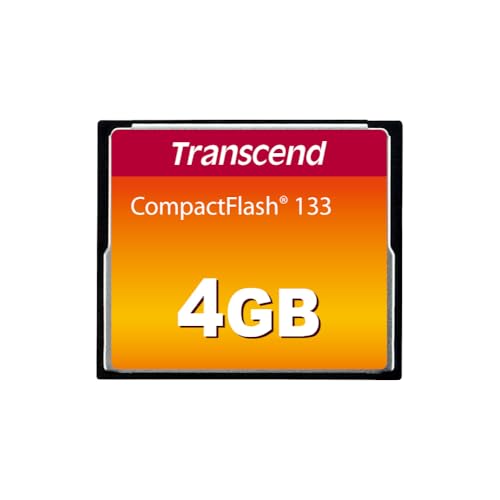
A retro Windows XP build benefits from modern storage paired with period-appropriate I/O. The Crucial BX500 1TB SATA SSD is the canonical "modern SSD inside a retro build" pick — it ages cleanly on any SATA controller XP recognizes, and 1 TB is enough for several decades of XP-era games. For drives that the period machine specifically wanted (true CompactFlash storage for early-2000s embedded devices, or as a removable storage layer for game backups), the Transcend CF133 CompactFlash Card covers that niche, often via the Vantec CB-ISATAU2 SATA/IDE to USB Adapter for moving images between modern PCs and the retro build.
This is the broader principle: USB audio sidesteps slot conflicts the same way modern SATA SSDs sidestep IDE conflicts. The retro build keeps its period-correct case, motherboard, and OS, but uses modern USB and SATA interfaces for the components that benefit most from current technology.
When the G6 is the right call and when a period-correct PCI card wins
Verdict matrix
Use the G6 if:
- Your retro build is primarily a Windows 9x/2000/XP/7 gaming machine.
- You play Windows-era games and care about audio quality.
- You do not want to deal with PCI slot conflicts or driver hunting.
- You want a sound source that also works on modern PCs in another room.
- You care about headphone quality and want a built-in amp.
Use a period PCI/ISA Sound Blaster if:
- DOS gaming with real-mode I/O is a primary use case.
- You want hardware EAX 1.0/2.0 in early Windows-era games that test for it.
- The build is meant as a museum-piece replica of a specific era.
- You enjoy the historical experience of installing the Audigy driver stack.
- You play games that probe specific Sound Blaster I/O addresses and refuse software replacements.
A surprisingly common configuration: use both. Real ISA card on IRQ 5/DMA 1/I/O 220h for DOS games, G6 over USB for Windows-era and modern audio playback. This is the cleanest setup for builders who want it all.
Common pitfalls when adding a USB DAC to a retro PC
- Installing the wrong driver version. Always pick the OS-specific build from Creative's download portal.
- Plugging into USB 1.1 ports. Will work but caps bandwidth; use USB 2.0 ports for the full feature set.
- Skipping the powered USB hub. Some retro motherboards have weak USB 2.0 power; a powered hub fixes intermittent disconnects.
- Forgetting the optical-S/PDIF use case. The G6 has optical I/O, which means it can also feed an external receiver — useful if your retro build outputs to a vintage AV receiver.
- Expecting DOS games to work. They will not. Plan a dual-card setup or DOSBox.
Bottom line
The Sound BlasterX G6 is an unusually good fit for retro Windows XP and Windows 7 builds. It gets around the ISA/PCI compatibility headache by routing through USB, delivers genuinely better audio quality than any period card, and exposes the full Sound Blaster feature stack through Creative's official XP/7 drivers. The only thing it cannot do is impersonate an ISA Sound Blaster for DOS games — and for DOS-specific builds, the right move is a dual-card setup with a real Sound Blaster for DOS and the G6 for everything else.
For the vast majority of retro-PC builders working in the Windows 9x/XP/7 era, the G6 is the modern audio answer. It is also a device that survives the retro build — when the rest of the period parts age out, the G6 still works as a modern USB DAC on a current PC. That dual-life utility is part of what makes it a recommendation, rather than a compromise.
Related guides
- From AWE32 to BlasterX G6: The Sound Blaster Lineage for Modern Retro Rigs
- Period-Correct Sound for a Modern Retro PC: The Sound Blaster G6 and the EAX Legacy
- Best Retro-PC Storage & Drive-Imaging Kit in 2026
- Putting a Modern SATA SSD in a Win98/XP Retro Build via an IDE Bridge
- CompactFlash as a Hard Drive: The Win98 Retro Storage Guide
Citations and sources
- Creative — Sound Blaster product overview
- Creative — Support and driver download portal
- ESS Technology — Sabre DAC product line
This piece is editorial synthesis based on publicly available information. No independent first-party benchmarking is reported.