To use a CompactFlash card as a hard drive in a retro PC, mount the card in a passive CF-to-IDE adapter, set the card to fixed-disk mode, connect it to the IDE bus, and partition it with FAT32 for DOS or Windows 9x. Because CompactFlash speaks the same ATA command set as IDE drives, the period machine sees it as an ordinary silent, heat-free, instantly bootable hard disk — and you can image it on a modern PC for trivial backups.
Why CF-as-HDD became the standard retro storage mod
Ask anyone who maintains a fleet of period DOS and Windows 98 machines what their first storage upgrade is, and the answer is almost always the same: replace the dying mechanical IDE hard drive with a CompactFlash card. It solves the three problems that plague vintage storage at once. Old IDE drives are loud — the whine of a 5400 RPM spindle and the clatter of seeking heads — and a CF card is silent. Old drives run hot and fail; CF generates no heat, draws little power, and has no moving parts to seize. And cloning a fragile 25-year-old drive is a nail-biting exercise, whereas imaging a CF card on a modern PC takes minutes and is perfectly repeatable.
The mod works because CompactFlash was, by design, an ATA device. That heritage means a simple passive adapter — no active electronics, no drivers — is enough to present the card to a retro motherboard as a standard IDE hard disk. You are not emulating a drive; from the machine's perspective, it is the drive. That elegance is why CF-to-IDE has been the default retro-PC storage solution for years, and why it remains the right starting point for most builds in 2026.
This guide covers the whole job: the ATA heritage that makes it work, choosing the card and adapter, the fixed-disk-mode gotcha that trips up first-timers, the capacity limits you must respect on period hardware, the real-world performance picture, and how to image the card from a modern machine. By the end you will know exactly when CF-to-IDE is the right call and when an alternative makes more sense.
Key takeaways
- CompactFlash uses the ATA command set, so a passive CF-to-IDE adapter makes it appear as a normal IDE hard drive — no drivers.
- Fixed-disk (non-removable) mode is mandatory for DOS/Win9x boot drives; cards reporting as removable confuse those operating systems.
- Keep the card modest — 4GB to 8GB is ideal; staying under the 137GB 28-bit LBA limit avoids addressing problems on old controllers.
- Image the card on a modern PC with a SATA/IDE-to-USB adapter for trivial backups and fresh installs.
- CF is plenty reliable for read-heavy retro use; avoid heavy constant writes, and consider SCSI2SD-class alternatives only for special cases.
Why CompactFlash works as an IDE drive at all
CompactFlash was introduced as a storage standard that implemented the ATA (IDE) interface in a small form factor. Internally, a CF card contains a controller that responds to the same ATA commands a hard drive does. The 50-pin CF connector maps almost directly to the 40-pin IDE bus, which is why a CF-to-IDE adapter can be entirely passive — it is little more than a pin-to-pin wiring board with a power tap.
That direct lineage is the whole trick. A retro BIOS probes the IDE channel, the CF card answers the ATA identify command like any drive, reports its geometry, and the machine proceeds to treat it as a hard disk. No special BIOS support, no driver, no translation layer. The technical background to ATA and flash storage has been documented for decades by outlets like AnandTech and TechPowerUp, and it is the foundation every CF-to-IDE build rests on.
Which CF card and adapter should you use?
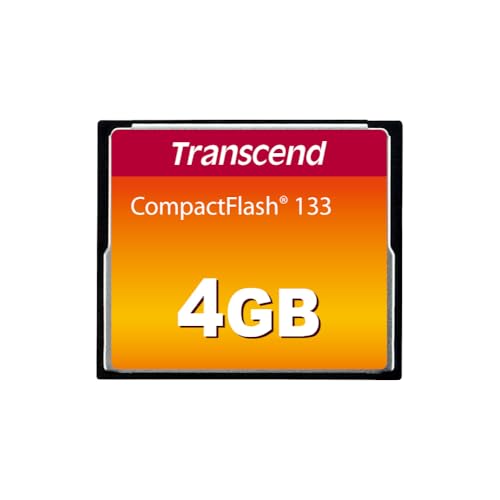
For the card, reliability and fixed-disk behavior matter more than raw speed. A quality Transcend CompactFlash card such as the Transcend CF133 is a popular, dependable choice for retro builds, with the industrial-leaning lineup known to behave well as a boot device. For the adapter, a passive CF-to-IDE board (40-pin for desktops, 44-pin for laptop/2.5" IDE) is all you need inside the machine.
| Component | What to pick | Why |
|---|---|---|
| CF card | Transcend CF133, 4-8GB | Reliable, fixed-disk friendly, period-appropriate size |
| In-machine adapter | Passive CF-to-IDE (40-pin desktop) | No drivers; pin-direct ATA mapping |
| Capacity target | ≤ 8GB | Easy FAT32, well under the 137GB LBA ceiling |
| Mode | Fixed disk (non-removable) | Required for DOS/Win9x boot |
Resist the urge to fit an enormous card. A smaller card is faster to image, easier to back up, and matches the era's expectations. We compare specific adapter options in our best CompactFlash-to-IDE adapter for Win98 SE builds and CompactFlash Win98 hard-drive guide.
How do you image the card from a modern PC?
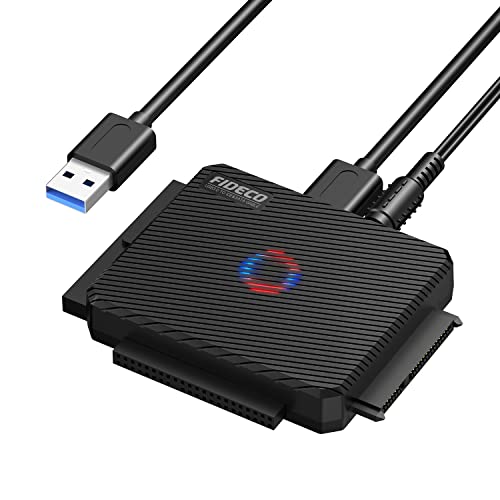
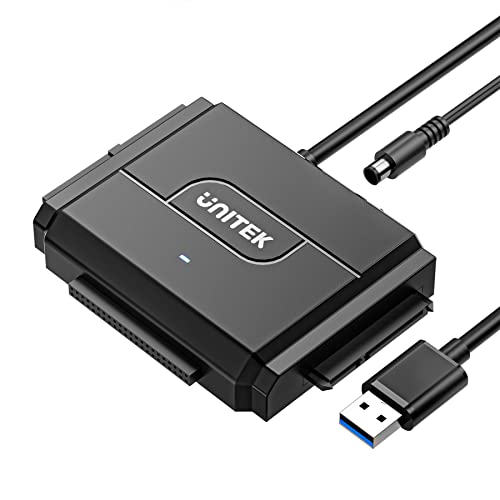
This is the quality-of-life feature that makes CF-to-IDE so much nicer than wrestling a vintage HDD. To write a prepared disk image to the card from a modern machine, use a USB adapter that can read the card — either a dedicated CF reader, or a SATA/IDE-to-USB 3.0 bridge with the CF mounted in a CF-to-IDE adapter so the bridge sees it as an IDE drive.
Adapters that do this job well include the FIDECO SATA/IDE to USB 3.0 adapter, the Unitek SATA/IDE to USB 3.0 adapter, and the USB 2.0 Vantec CB-ISATAU2. Any of them lets a modern PC see the card as external storage, where you write your image with standard imaging tools, then move the card back into the retro machine. This workflow makes restoring a known-good install trivial compared to in-machine reinstalls — keep a master image, and a corrupted card is a five-minute fix. Our vintage IDE/SATA drive-imaging walkthrough covers the full process with these adapters.
The fixed-disk mode gotcha
Here is the single most common reason a CF-to-IDE build fails to boot. Some CompactFlash cards report themselves to the host as removable media, like a memory card, rather than as a fixed disk like a hard drive. DOS and Windows 9x expect a fixed disk for the system partition, and a card presenting as removable confuses them — you may be unable to install, or the system may refuse to boot from it.
Many CF cards default to fixed-disk mode, but not all, and the behavior is not always printed on the label. Cards known to run in fixed mode — quality industrial-style CF in particular — are the safest choice for a bootable retro install. Test the card's behavior before you commit to it: if it shows up as removable on a modern PC, it will likely cause trouble as a Win98 boot drive. This is precisely why the build community gravitates toward specific, proven cards rather than whatever is cheapest.
Capacity and partition limits
Old hardware imposes real ceilings, and respecting them avoids a frustrating debugging session.
- The 137GB / 28-bit LBA limit. IDE controllers and BIOSes from the DOS/Win9x era address drives with 28-bit LBA, capping usable capacity around 137GB. Exceed it on an old controller and you get addressing errors or silent data corruption past the boundary. Staying at 8GB sidesteps this entirely.
- FAT32 sizing. FAT32 becomes unwieldy on very large volumes, and some era tools struggle past certain sizes. A modest card keeps partitioning simple and reliable.
- BIOS geometry quirks. Very old BIOSes have their own lower limits (504MB, 2GB, 8GB barriers depending on vintage). Match the card and partition scheme to what your specific board supports.
A 4GB-to-8GB card is ample for a DOS or Win98 install with a healthy library of period games, and it keeps you comfortably inside every one of these limits.
Performance reality: CF vs a period IDE HDD
Set expectations correctly: CompactFlash is not about peak throughput, it is about silence, reliability, and instant access. Against a period mechanical IDE drive, CF wins on the things that matter for retro use and is competitive-to-better on most real workloads.
| Metric | Period IDE HDD | CompactFlash (via adapter) |
|---|---|---|
| Random access / seek | Slow (mechanical heads) | Near-instant |
| Boot + load times | Audible seeking, slower | Snappy, silent |
| Noise | Whine + clatter | Silent |
| Heat / power | Warm, higher draw | Cool, minimal |
| Sustained sequential | Varies; can be decent | Adapter/card limited |
| Failure mode | Spindle/bearing failure | Flash wear (read-heavy = fine) |
For DOS games and Win98 productivity, the near-instant seek time often makes the system feel faster than the original drive despite modest sequential numbers. The era's software was tuned for slow disks; CF removes the seek penalty entirely.
Cluster alignment and write-endurance considerations
Two finer points round out a good build. First, flash performs best when writes align to its internal erase blocks; for read-heavy retro use this rarely matters, but if you do a lot of writing, sensible partition alignment can reduce write amplification. Second, flash has finite write endurance — not a concern for typical retro gaming and tinkering, which is overwhelmingly read-heavy, but a reason not to use a CF card as a scratch disk for huge, constant write loads. For normal retro use, a quality card will outlast the rest of the machine.
Period-correct build checklist
- Choose a 4-8GB CF card known to run in fixed-disk mode.
- Confirm fixed-disk behavior on a modern PC before installing.
- Use a passive CF-to-IDE adapter matched to your bus (40-pin desktop / 44-pin 2.5").
- Prepare and image the card on a modern PC via a USB-IDE/CF adapter.
- Partition FAT32, staying under the 137GB / era BIOS limits.
- Install DOS/Win98, then save a master image for instant recovery.
Compared with an SD-based alternative like SCSI2SD or a modern IDE-SD adapter, CF-to-IDE is usually cheaper, simpler, and more period-appropriate for an ATA machine. SD solutions earn their place mainly on SCSI systems or where you want SD convenience specifically.
A worked example: a silent Win98 gaming build
Picture a typical period Pentium III or early Athlon Windows 98 SE gaming rig with a failing, screaming IDE hard drive. The fix is a weekend project. Take an 8GB Transcend CF133, confirm on a modern PC that it presents as a fixed disk, and prepare it by writing a clean Win98 SE image — or partitioning it FAT32 and installing fresh — using a FIDECO or Unitek SATA/IDE-to-USB 3.0 bridge with the card in a CF-to-IDE carrier. Move the card into a passive 40-pin CF-to-IDE adapter inside the machine, set it as the primary master, and boot. The whining drive is gone; the machine boots in silence, runs cool, and loads DOS games with no seek delay.
The payoff beyond silence is resilience. Save that prepared image to your modern PC, and any future corruption — a bad shutdown, a botched driver experiment, a virus from a period shareware disc — is undone by reimaging the card in minutes. That is a workflow vintage mechanical drives never offered, and it changes how freely you can tinker with a retro install. Keep one card as your stable daily boot disk and a second, cheap card as a sandbox for experiments, swapping them in seconds.
When NOT to use CF-to-IDE
CF-to-IDE is not the answer for every machine. Skip it on SCSI-based systems, where an SD-based SCSI2SD-class device is the appropriate emulator. Reconsider it for builds with unusually heavy, constant write workloads, where flash wear becomes a real long-term concern. And on machines with very old BIOSes that choke on the card's reported geometry, you may need a smaller card or a BIOS overlay. For the broad middle — ATA/IDE DOS and Windows 9x machines used for gaming and tinkering — none of these caveats apply, and CF-to-IDE remains the simplest, most period-appropriate storage you can fit.
Bottom line
CF-to-IDE is the right call for the vast majority of DOS and Windows 9x builds: it is silent, cool, reliable, dirt-simple thanks to ATA heritage, and trivially backed up by imaging on a modern PC. Pick a quality fixed-disk-mode card in the 4-8GB range, a passive adapter for your bus, and a USB bridge for imaging, and you have storage that will outlive the rest of the retro rig. The only times to reach for an alternative are SCSI machines or builds with unusually heavy write workloads. For everything else, mount the CF and enjoy a machine that boots in silence. For the rest of a period build, see our best SSD/IDE-SATA options for retro PCs and period-correct Sound Blaster audio guide.