In brief — 2026-05-30: A new Linux kernel driver exposes voltage inputs on Raspberry Pi single-board computers through the standard hwmon interface, turning the Pi's vague lightning-bolt undervoltage warning into actual readable rail voltages. The change is most useful for Raspberry Pi 4 homelabs that crash under load and for IoT deployments that need alerting on marginal power supplies.
What happened
A driver patch series surfaced via Phoronix adds voltage-input support for Raspberry Pi SBCs to the Linux kernel's hardware monitoring subsystem. Rather than depending on the Raspberry Pi firmware's coarse "throttled" / "under-voltage detected" flags, the driver reads the board's on-die voltage sensors directly and exposes them through the standard /sys/class/hwmon/ interface that every Linux monitoring tool already understands.
This is the same plumbing that lets lm-sensors, sensors-style command-line tools, Prometheus node exporters, and Grafana dashboards graph CPU temperatures and fan speeds on a desktop PC. Until now, Pi owners had to settle for vcgencmd get_throttled — a useful but binary indicator that tells you something is wrong without telling you how wrong, when, or on which rail.
For most of the Pi 4 generation and its relatives, the underlying hardware was already capable of reporting voltage values; the kernel simply did not have a driver to surface them in the standard way. This patch closes that gap.
Why it matters for Pi 4 owners
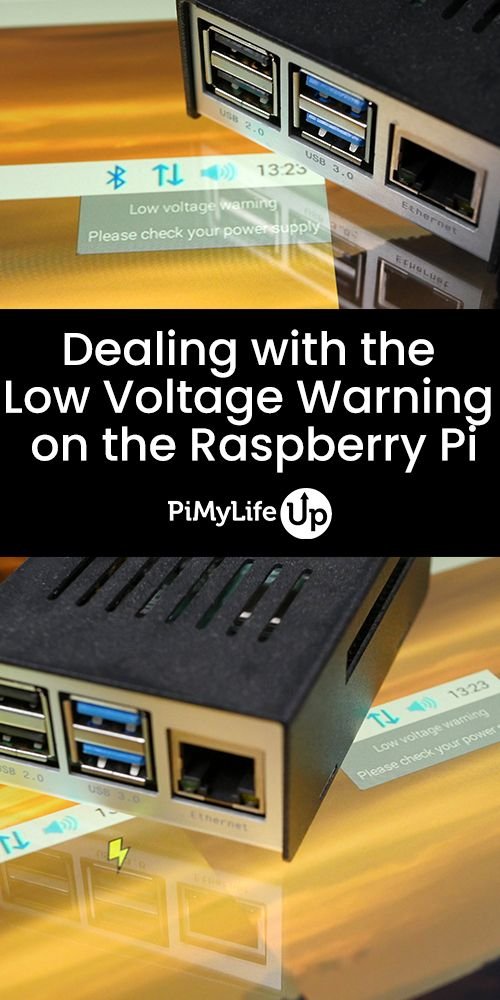
Undervoltage is the most common cause of "my Pi keeps crashing" reports in the Raspberry Pi community. The official Raspberry Pi 4 product page specifies a USB-C 5V/3A power supply, and the board's behavior degrades gracefully when fed anything weaker — but it does degrade. Symptoms range from random reboots and SD-card corruption to silent CPU throttling that drops performance by 50% with no obvious indicator beyond the screen-corner lightning bolt.
The root cause is almost always one of three things, in rough order of frequency:
- A non-PD USB-C power adapter that does not deliver the full 5V at 3A under load.
- A thin or low-quality USB-C cable whose voltage drop pushes the board out of spec.
- A high-current USB peripheral (external SSD, certain HATs) pulling enough current that the
board's input rail sags.
All three of these problems are easy to diagnose with a multimeter and impossible to diagnose from the Pi itself once you go beyond "throttled? yes/no." A native voltage-input driver turns the diagnosis into a one-line shell command, which makes the difference between "my homelab Pi is unreliable for reasons I cannot pin down" and "the 5V rail dips to 4.7V when I plug in the USB SSD, so I need to switch to an externally-powered USB hub."
How to read voltage once the driver lands
The Linux hardware monitoring documentation describes the interface this driver hooks into. Once a kernel with the driver is installed, voltage inputs appear at predictable sysfs paths and any tool that reads hwmon can graph, log, and alert on them. A few patterns common to homelab use:
cat /sys/class/hwmon/hwmon*/in0_inputreturns the raw voltage in millivolts for the
first reported rail. Iterate across the available inputs to find the rails the driver exposes for your board.
sensors(fromlm-sensors) auto-detects hwmon devices and prints a human-readable
summary including every voltage and temperature input the kernel exposes.
- Prometheus's
node_exporterreads hwmon directly and exposes voltage values as scrape
metrics, making it trivial to graph rail voltage over time alongside CPU temperature and load.
The practical move once the driver is widely available: stand up Grafana with the node_exporter Pi-monitoring dashboard, watch the rail values during your actual workload, and identify the time-correlation between a voltage dip and a crash. That same workflow is how data-center operators have caught marginal PSUs for two decades; the Pi just never had the sensors exposed cleanly enough to do it.
Why it matters for homelab and IoT deployments
A single Raspberry Pi on a workbench can be debugged with a multimeter, but a fleet of Raspberry Pi 4 boards running Home Assistant, Pi-hole, octoprint, or self-hosted AI services across a house or business is harder. Each board crashes for slightly different reasons related to its environment: which USB-C cable it ended up with, whether the wall outlet has a voltage drop under load, whether someone plugged in a thirsty peripheral last week.
The voltage-input driver makes those failures observable. Once the rail values stream into a standard time-series database, an alert can fire when any board's 5V rail dips below 4.8V for more than a few seconds, before the next crash happens. That converts the homelab maintenance pattern from "wait for a Pi to crash, then find out why" to "see the marginal Pi a week in advance and fix the power supply." For unattended deployments, that is a real operational win.
What this means for buyer choices
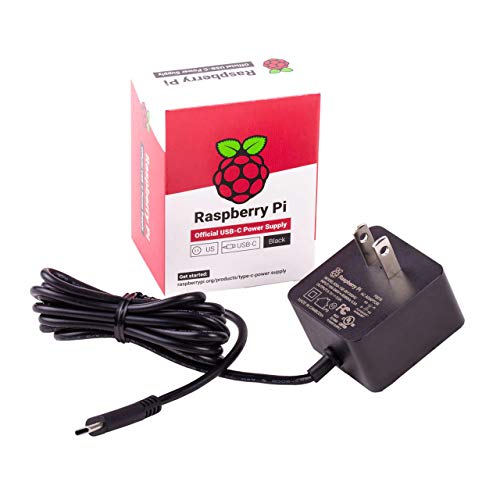
For anyone running a Pi 4 in a serious capacity, the long-running guidance was already to use the official 5V/3A power adapter (or a known-good third-party equivalent) and a thick USB-C cable. The new driver does not change that guidance — it makes it auditable. You can now answer the question "did my Pi reboot because of power, or for some other reason?" with data rather than a guess, which is the difference between a fixable problem and a mystery.
It also reinforces that the Pi 4 — and increasingly its successor boards — are not just hobby hardware. They are deployed in industrial settings, education, retail kiosks, sensor networks, and digital signage, all of which benefit when the platform exposes the operational telemetry a Linux administrator expects.
The source
The Phoronix report is the original surfacing of the driver patch series. For the upstream-kernel angle, the kernel.org release tracker will show which mainline version first ships the driver once it lands; downstream distributions (Raspberry Pi OS, Debian, Ubuntu, Arch Linux ARM) typically follow within one or two release cycles depending on their kernel-update cadence.
A practical monitoring stack for a Pi homelab
The minimum useful setup pairs the new driver with a Prometheus + Grafana stack you can deploy on the same Pi (or, better, on a separate node so you can still see metrics if the Pi itself is the problem). The flow looks like this:
- Kernel — install a kernel build that includes the new driver. On Raspberry Pi OS,
this lands in a rpi-update rolling-edge build first and then in the stable channel after testing. 2. node_exporter — runs on each Pi, scrapes the /sys/class/hwmon/ paths automatically, and serves them as Prometheus metrics on port 9100. 3. Prometheus — scrapes node_exporter on every Pi at a regular interval (15-30s is common for homelabs). Stores rail voltages, CPU temperatures, load, network throughput in a single time-series database. 4. Grafana — graphs the rails over time using the community Raspberry Pi monitoring dashboard, with custom alert thresholds for sustained voltage dips. 5. Alertmanager — fires a notification (email, Discord, ntfy push) the first time any board's 5V rail dips below 4.8V for more than 30 seconds, before the user-visible instability starts.
This is the same stack pattern any operations team would use to monitor server hardware, and it scales from one Pi to a hundred Pis without changes. The new driver makes step 1 possible; the rest of the stack has worked for years on any Linux machine that exposed hwmon data.
Historical context — why this is overdue
The Raspberry Pi has shipped a coarse undervoltage detection since the very first models, and the lightning-bolt warning has been part of the platform's culture for over a decade. But the underlying telemetry was always trapped behind firmware queries — vcgencmd get_throttled returns a bit flag, not a number, and vcgencmd measure_volts core returned core voltage but never the full set of input rails that actually matter for power-supply diagnosis.
The Pi's value proposition — cheap, well-documented, broadly compatible — depends on it being usable as a real Linux machine rather than a quirky exception. Every gap between "how you debug a server" and "how you debug a Pi" makes the Pi harder to deploy at scale. A proper hwmon-shaped voltage driver narrows that gap. It is a small change that quietly removes one of the most common reasons people decide Pis are "not serious hardware."
The trend over the last several kernel releases has been to lift more of the Pi's platform-specific quirks into standard Linux subsystems: GPIO into the gpio-cdev interface, camera into V4L2/libcamera, voltage into hwmon. Each of these moves makes the Pi feel less like a special case and more like a Linux board that happens to be small and cheap.
Common pitfalls owners should expect
Once the driver ships, the first wave of "why are my voltages reading weird" forum posts will follow. A few patterns to anticipate:
- The 5V rail can read slightly under 5.0V even on a good supply — most USB-C adapters
intentionally regulate to about 4.95V to give themselves regulation headroom. Anything above ~4.9V under load is fine; the danger zone is below ~4.8V sustained.
- Per-rail voltages do not need to be exactly 1.0V/1.8V/3.3V — depending on which
internal rail you are reading, the headline value will vary. Compare against the documented design value for that rail rather than a generic threshold.
- Spikes during boot are normal — the rails settle within a few seconds of power-on. A
one-second dip during startup is not a problem; sustained dips during load are.
- A USB-PD adapter that does not negotiate properly may sag — some adapters default to
5V/1.5A unless they receive a PD-handshake request, which the Pi's USB-C input may or may not do depending on board revision. The driver will reveal whether your specific adapter is delivering full current.
- A long USB-C extension cable changes everything — voltage drop across a thin or long
cable can be a tenth of a volt or more at 3A, enough to push a marginal supply into undervoltage. The driver will surface this immediately.
- Battery-backed UPS HATs change the math — if your Pi runs off a UPS HAT, the rail
voltages reflect the HAT's regulation rather than the wall adapter. Comparing against expected wall-adapter values will produce false alarms.
When this matters most — and when it does not
For a single Raspberry Pi 4 used as a desktop or hobby device with a known-good 5V/3A adapter, the new driver is interesting but not essential. The platform already runs reliably on a quality supply, and the lightning-bolt warning is a sufficient indicator for the rare case when it does not.
The driver becomes essential in three deployment patterns:
- Headless homelabs running 24/7 services where unscheduled reboots are operationally
expensive. Voltage telemetry lets you predict failures rather than react to them.
- Pi clusters (Kubernetes-on-Pi, distributed compute, distributed sensor networks)
where individual board failures cascade and you need to identify the marginal node before it brings down a service.
- Industrial / commercial deployments in retail, signage, kiosk, or sensor roles where
the board lives somewhere physically inconvenient and you need to be able to remotely diagnose "is this site's Pi crashing because of its environment" without a truck roll.
If your Pi 4 lives on a desk and runs once in a while, install the driver when it lands but do not rebuild your workflow around it. If your Pi runs continuously and you cannot easily reach it, this is the kind of operational data that justifies setting up a monitoring stack on its own.
Bottom line
A small, targeted kernel driver that closes a long-standing observability gap. The hardware to monitor voltage was always there; the software interface to read it cleanly was missing. With this driver in place, debugging Pi 4 instability becomes a measured operation rather than a guessing game, and homelab fleets gain the same kind of rail-voltage telemetry that server operators have relied on for decades. Pair this with the official 5V/3A adapter and a quality USB-C cable, and the lightning-bolt warning becomes a number you can act on instead of a mystery you ignore.
Related guides
- Linux Driver Set to Expose Voltage Sensors on Raspberry Pi SBCs
- Linux Driver to Expose Voltage Inputs for Raspberry Pi SBCs: What Tinkerers Get
- RetroPie on a Raspberry Pi 4 8GB: The Definitive 2026 Emulation Build
- Best Raspberry Pi Accessories for Home-Lab Builds in 2026
Citations and sources
- Phoronix — Linux kernel and graphics coverage
- Raspberry Pi — Raspberry Pi 4 Model B product page
- Linux kernel — hardware monitoring (hwmon) subsystem documentation
- kernel.org — upstream Linux releases
This piece is editorial synthesis based on publicly available information. No independent first-party benchmarking is reported.