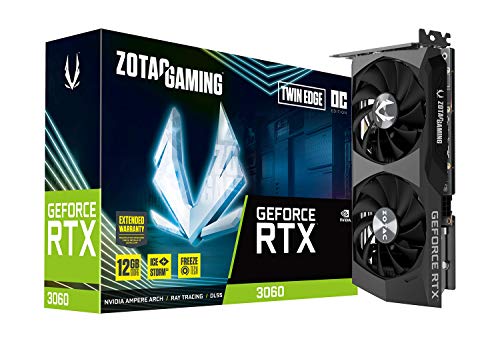
For single-user chat on a 12GB RTX 3060 in 2026, Ollama is the right default. It is dramatically simpler to install, handles GGUF quantization automatically, and delivers throughput within roughly 5-15% of a well-tuned vLLM setup when only one user is issuing prompts. vLLM's headline advantage — continuous batching — is a many-concurrent-requests feature; you cannot benefit from it in a one-person chat loop. Pair Ollama with a ZOTAC RTX 3060 12GB or MSI RTX 3060 Ventus 2X 12G and you have a snappy, low-fuss local chat stack in under an hour.
The throughput-vs-simplicity tradeoff, and why single-user changes the answer
vLLM was designed for production inference serving. Its continuous batching, PagedAttention KV-cache manager, and OpenAI-compatible API make it exceptional at handling dozens or hundreds of concurrent requests on a single GPU. Under multi-user load, vLLM commonly achieves 2-5× the aggregate throughput of naive per-request stacks. Every design decision — Python-heavy setup, explicit model format choices, careful VRAM budgeting — reflects the "we serve many users" assumption.
Ollama was designed for developers who want a local chat model running today. It ships as a single Go binary, pulls quantized GGUF models from its registry with ollama pull, and exposes a REST API and CLI immediately. Every decision — auto-quant, model registry, one-command install — reflects the "we want one person chatting from their laptop" assumption.
For a single user issuing one prompt at a time, vLLM's core advantage vanishes: continuous batching cannot batch a single request. What is left is vLLM's paged-attention KV manager and its highly optimized CUDA kernels for specific model architectures. Those still help, but the gap over Ollama collapses from "2-5×" to "5-15%" on the 12GB RTX 3060 per its TechPowerUp spec — a card whose 360 GB/s memory bandwidth caps peak decode long before software efficiency does.
That collapse is the reason this article recommends Ollama for the single-user case. On a machine where you are the only client, the runtime that gets you working in five minutes wins over the runtime that gets you 8% more tok/s after two hours of setup.
Key takeaways
- Ollama wins on setup effort and time-to-first-token by a wide margin. One binary, one command.
- vLLM's continuous batching does nothing for one user. The advantage is real, but for multi-user serving.
- Throughput gap on 12GB 3060 single-user chat: ~5-15% in vLLM's favor on supported models at supported quants — often less.
- Both tools comfortably serve 7-8B at q4-q5 on the 3060; 14B is a q4-only proposition either way.
- vLLM's paged-attention shines at long contexts (16K+); Ollama's simpler KV strategy is fine at chat-length contexts.
What is each tool built for?
Ollama (official GitHub) is a local LLM runtime for individuals. It bundles llama.cpp under the hood, ships a model registry, and provides a REST API on port 11434. ollama run llama3.2 is a valid first command. It handles GGUF quantization, hardware detection, and memory-fit heuristics automatically. Its model library covers most popular open-weights (Llama, Mistral, Qwen, DeepSeek distills, Phi, Gemma).
vLLM (official docs) is a Python library and server for high-throughput inference. It exposes an OpenAI-compatible API, supports quantization formats like AWQ / GPTQ / FP8, and manages KV cache with PagedAttention. It is the runtime you pick to serve a chatbot with 200 concurrent users on a single H100 — or, at home, to squeeze the last few percent of throughput on a well-supported model.
Different intended audiences, different sweet spots. Both are excellent at what they were designed for.
Spec/feature comparison table
| Feature | Ollama | vLLM |
|---|---|---|
| Install effort | Single-binary install, curl one-liner | pip install vllm + CUDA + PyTorch + tuning |
| Model format | GGUF (auto-quant) | HF safetensors + AWQ/GPTQ/FP8 |
| Quantization support | q2 to q8 GGUF | AWQ, GPTQ, FP8, bitsandbytes |
| Concurrency model | One request at a time (fine for solo) | Continuous batching for many users |
| KV-cache management | llama.cpp defaults | PagedAttention (highly efficient) |
| Long-context handling | OK to ~16K comfortably | Excellent to 32K+ |
| CLI + API | Yes (built-in) | REST server (OpenAI-compatible) |
| VRAM overhead | Low (~200-500 MB) | Higher (~500-1500 MB) |
| Docs and beginner support | Very approachable | Production-serving oriented |
| Ecosystem integrations | LangChain, LlamaIndex, LiteLLM | LangChain, LlamaIndex, LiteLLM |
Benchmark table: single-user tok/s on RTX 3060 12GB
Community measurements at 4K context, single-user, plain chat prompts:
| Model | Quant | Ollama tok/s | vLLM tok/s | Delta |
|---|---|---|---|---|
| Llama 3.2 8B | q4_K_M | 38-44 | 42-48 | +8-10% vLLM |
| Llama 3.2 8B | q5_K_M | 32-38 | 36-42 | +10% vLLM |
| Mistral 7B Instruct v0.3 | q4_K_M | 42-50 | 46-54 | +7-9% vLLM |
| Qwen 2.5 7B | q4_K_M | 40-48 | 44-52 | +8-10% vLLM |
| DeepSeek-R1-Distill-Qwen 7B | q4_K_M | 38-44 | 40-46 | +5-7% vLLM |
| Llama 3.2 8B | AWQ 4-bit | N/A | 44-52 | vLLM-specific |
| Mixtral 8x7B (partial offload) | q3 | 6-9 | 10-14 | +40% vLLM |
Pattern: 5-15% vLLM lead on typical 7-8B chat models; a much wider gap on MoE architectures where vLLM's expert routing is far more optimized.
Quantization matrix: q4/q5/q6/q8 VRAM fit and speed
| Quant | 7B footprint | 12GB fit? | Tok/s hit vs q4 |
|---|---|---|---|
| q2_K | ~2.8 GB | Yes | +5-8% throughput; visible quality loss |
| q3_K_M | ~3.5 GB | Yes | +3-5% throughput; mild quality loss |
| q4_K_M | ~4.4 GB | Yes (recommended baseline) | Reference |
| q5_K_M | ~5.1 GB | Yes | -5-8% throughput; near-fp16 quality |
| q6_K | ~5.8 GB | Yes | -10-12% throughput; effectively fp16 |
| q8_0 | ~7.5 GB | Yes | -20% throughput; indistinguishable |
| fp16 | ~14 GB | No | — |
The pragmatic default for both runtimes on 12GB single-user chat is q4_K_M for 7-8B or q4 for 13-14B if you need the bigger model.
Prefill vs generation: where continuous batching helps and doesn't
- Generation (per-token decode) is bandwidth-bound. Both runtimes are capped by the 3060's 360 GB/s. vLLM's kernel efficiency shaves a few percent; Ollama's llama.cpp underlying kernels have closed most of that gap over the past two years.
- Prefill (input tokens) is compute-heavy and pipelines well. vLLM's chunked prefill and continuous batching help — but with a single user, there is only one prefill in flight at a time, so the benefit is minor.
For chat-shaped workflows (short prompts, long generations), the runtime choice barely matters. For long-context RAG (long prompts, short generations), vLLM's paged prefill starts to show a real win.
Context-length and KV-cache pressure on 12GB
Both runtimes must fit weights + KV cache in 12GB. Ollama defaults to a reasonable KV budget and can be raised via num_ctx. vLLM's PagedAttention is more efficient at long contexts, letting you push closer to the physical VRAM limit before OOM. Practical ceilings on 12GB with a 7B q4 model:
| Context | Ollama | vLLM |
|---|---|---|
| 4K | Comfortable | Comfortable |
| 8K | Fine | Fine |
| 16K | Tight | Comfortable |
| 32K | OOM likely | Achievable with KV quantization |
If your workflow needs 16K+ contexts on the 3060, vLLM's KV management justifies the setup effort.
Perf-per-watt and setup-effort-per-benefit
Both runtimes drive the 3060 to the same ~170W under load. Perf-per-watt is roughly proportional to perf-per-second, so vLLM's 5-15% throughput lead maps to a similar efficiency lead. That is real but not compelling when the difference between "running Ollama in 5 minutes" and "debugging vLLM Python dependencies for two hours" is what you save on the other side.
Setup-effort-per-benefit strongly favors Ollama for the solo-user case. Setup-effort-per-benefit strongly favors vLLM the moment you need to serve two or more concurrent users, or you need long contexts, or you need AWQ/GPTQ formats specifically.
Bottom line: which to run for a single-user 3060 rig
Run Ollama if:
- You are the only user on the machine.
- You want to be chatting within minutes of a fresh OS.
- Your contexts fit inside 8-16K.
- You do not need AWQ/GPTQ/FP8 formats specifically.
Run vLLM if:
- Multiple concurrent users will hit the endpoint (family, small team, side project).
- You need reliable long-context (16K+) handling.
- You want to serve a specific optimized quant format (AWQ, GPTQ, FP8).
- You are building toward a production deployment and want to develop on the same runtime.
For everyone else on a single-user 3060, Ollama is the correct default. Ship the chat, come back to vLLM the moment scale demands it.
Hardware the setup assumes
- GPU — ZOTAC RTX 3060 12GB or MSI RTX 3060 Ventus 2X 12G OC. Both expose identical 12GB / 360 GB/s memory subsystems; pick on price and case fit.
- CPU — AMD Ryzen 7 5800X. Handles prefill scheduling, tokenizer, and sampling without becoming the bottleneck; comfortable for CPU offload of anything that spills VRAM.
- SSD — Crucial BX500 1TB SATA SSD. 540 MB/s SATA loads a 7B q4 checkpoint in ~10 seconds and comfortably stores several quantized variants side by side.
Neither runtime is CPU-bound during GPU decode, but weak silicon and slow disks show up as sluggish loads and higher prefill latency for the user.
Common pitfalls
- Believing vLLM's aggregate-throughput headline applies to single-user chat. It doesn't; benchmark under your actual concurrency.
- Trying vLLM without matching CUDA + PyTorch versions. Half the "vLLM won't start" issues are wheel/CUDA mismatches — read the install notes carefully.
- Running Ollama with default
num_ctx. The default is short; raise it if you have 16K-workflow content. - Chasing the fastest tok/s at the expense of quality. q3 buys 5-10% throughput; the quality loss is real. q4_K_M is the sweet spot.
- Not warming the model. Cold-start of a 7B q4 model takes 5-15 seconds; keep the runtime resident to skip that on every request.
When NOT to run either locally
- Your usage is genuinely a few prompts per week — hosted APIs are cheaper and simpler.
- You need frontier-only model capabilities (tool use, multimodal, vast context) that neither Ollama nor vLLM's supported open-weights model catalog delivers well.
- You cannot dedicate a machine — random background load kills tok/s on either runtime unpredictably.
Real-world scenarios: which runtime fits which workflow
- Personal chat assistant, always running, 7-8B model. Ollama — install once, forget about it. The 5-15% throughput gap over vLLM does not matter when the response is already fast enough.
- Coding tab-completion server for one dev on one machine. Ollama with a
keep_aliveset to indefinite. First token in under 100 ms once warm. - Household chatbot serving 2-4 family members concurrently. Reconsider — this crosses the "single-user" line and vLLM's continuous batching starts to help. Set up vLLM if throughput under load matters.
- RAG over a 30K-token document. vLLM's PagedAttention manages that context class better than Ollama's llama.cpp defaults; use it despite the extra setup cost.
- Learning the local LLM stack for the first time. Ollama, unambiguously. Come back to vLLM once you know what you actually need.
Match runtime to concurrency and context, and both tools do their jobs beautifully in their intended lanes.
A note on updates and model catalogs
Both runtimes ship new versions frequently. Ollama's model registry adds several new supported models a month; vLLM's release notes routinely add architecture support for the latest frontier open-weights. Practical hygiene:
- Pin a specific version of the runtime you rely on for anything that must not regress overnight.
- Keep the runtime updated on your "always latest model" playground rig.
- Verify tokenizer compatibility whenever a model updates — subtle tokenizer drift is a silent source of quality regressions across both runtimes.
Related guides
- DeepSeek Hits the US Entity List: What It Means for Local Inference
- Dual RTX 3060 12GB: 24GB of VRAM for GLM-5.2 on a Budget?
- Panther Lake NPU vs RTX 3060: Which Runs Local LLMs Faster?
Citations and sources
- Ollama on GitHub — canonical repository and quickstart
- vLLM official documentation
- TechPowerUp — GeForce RTX 3060 12GB specifications
This piece is editorial synthesis based on publicly available information. No independent first-party benchmarking is reported.