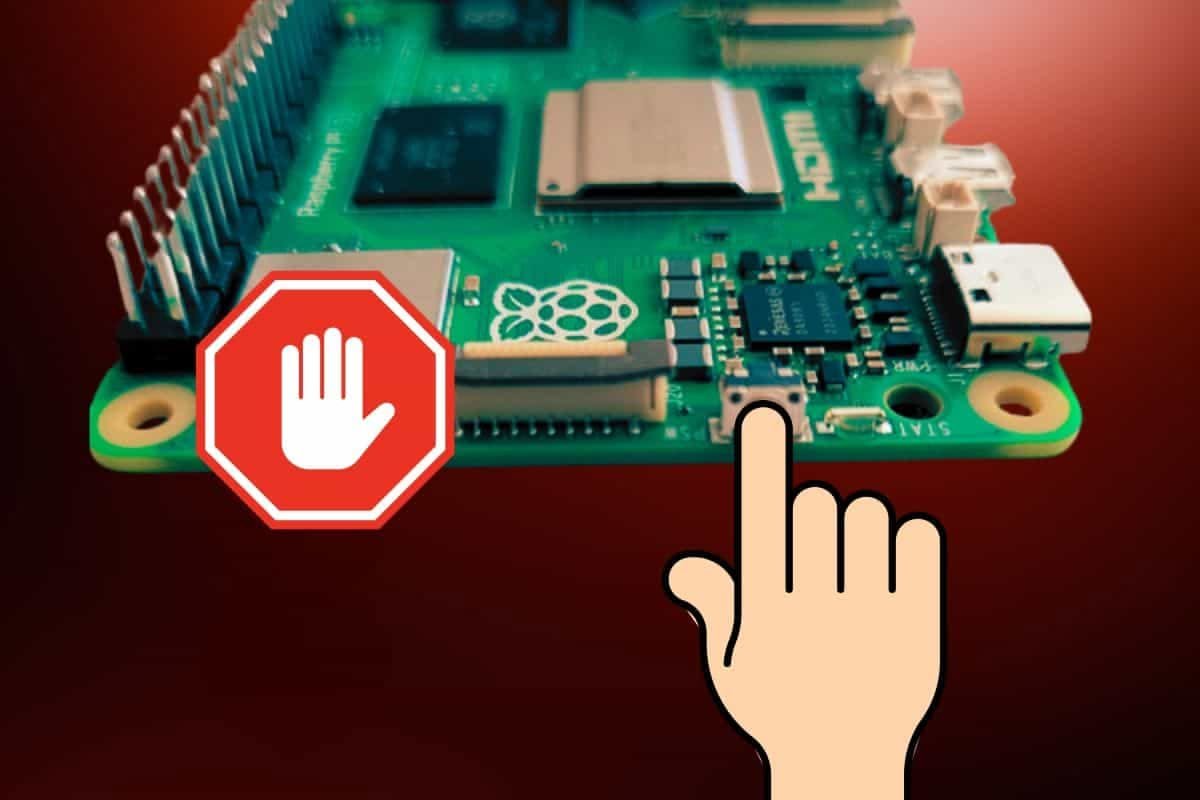
The Raspberry Pi Locator is shutting down in July 2026 because Pi supply has normalized after the multi-year shortage. Per Hackaday's coverage, the maintainer concluded the minute-by-minute stock-tracker no longer serves a need now that boards like the Raspberry Pi 4 8GB and the Pi Zero W starter kit are simply in stock at list price.
In brief — 2026-06-26 · The popular Raspberry Pi stock-tracking locator is closing in July as supply normalizes.
What happened
The Raspberry Pi Locator launched during the 2021–2023 component crunch, when boards were genuinely impossible to find at MSRP for months at a time. The site polled approved resellers — Pimoroni, The Pi Hut, Adafruit, Newark, Digi-Key, Sparkfun, Canakit — at short intervals and rang an alarm the moment a board hit availability. For roughly two years it was the only reliable way to actually buy a Pi 4 8GB at list price without getting bid up to $180–$220 on grey-market resellers.
Per the Hackaday writeup, the maintainer's reasoning is clean: the tool exists to solve a scarcity problem, and the scarcity problem is mostly gone. Approved-reseller stock pages now consistently show in-stock status for the Pi 4 8GB, the Pi Zero 2 W, and even the higher-VRAM Pi 5 variants. The maintainer noted the noise floor of false alarms (re-stocks of unrelated SKUs, page-layout changes, accessory bundles) was starting to outpace the signal value, and the right move was to wind it down cleanly rather than let it rot.
Why it matters: what Pi buyers use now that stock has normalized
If you walked away from Raspberry Pi during the shortage years, the buying experience has reverted to what it was in 2019: pick a board, pick a reseller, click buy. The Pi 4 8GB lands around $85–$110 from approved resellers as a bare board, and bundles with case, power supply, and microSD card run $130–$180 depending on what's included. The Pi Zero W starter kit — board, plastic case, power adapter — is $20–$50 depending on bundle contents.
There are three concrete consequences for makers planning projects right now:
1. You can spec a project around the board you actually want, not the board you can find. Two years ago, project tutorials had to be hedged with "if you can find a Pi 4 8GB, otherwise drop to a Pi 3 B+." That hedge is gone. If your project benefits from 8GB of RAM (containerized homelab, Jellyfin transcoding, Home Assistant with many integrations), Pi 4 8GB is in stock. If your project is sub-watt sensor work, the Pi Zero W kit is in stock.
2. Bulk buys and educational orders unblock. Schools and makerspaces that paused Pi-based curriculum during the shortage can plan around predictable supply again. Approved resellers ship 10–100 unit orders without month-long backorders.
3. The price-gouging grey market has collapsed. During the worst stretches, third-party Amazon sellers were asking $150–$200 for a $55 bare Pi 4 4GB. With approved-reseller stock back, those listings have largely converged toward MSRP plus modest markup.
What about the Pi 5?
The Pi 5 launched in late 2023 and the 8GB and 16GB SKUs are now widely available. If you're starting a new build today and your workload demands the CPU jump (the Pi 5 is roughly 2–3× faster than the Pi 4 on most benchmarks), the Pi 5 is the rational pick. The Pi 4 8GB stays relevant for three reasons: it draws less power under idle (important for always-on sensors), it's slightly cheaper, and the HAT ecosystem and case ecosystem are vastly more mature.
For first-time buyers picking between Pi 4 and Pi 5, the rule of thumb is: if your project is a home server, Pi 5 8GB. If your project is a low-power IoT or hobbyist project, Pi 4 8GB or Pi Zero W. The Pi 5's higher peak power draw means you actually need to budget for a 5V/5A USB-C PSU; the Pi 4 happily lives on the older 5V/3A supplies you already have in a drawer.
The Pi shortage in numbers (looking back)
| Period | Pi 4 8GB MSRP | Typical street price | Lead time at approved resellers |
|---|---|---|---|
| Q4 2020 (pre-shortage) | $75 | $75–$85 | In stock |
| Q3 2022 (peak shortage) | $75 | $150–$220 | 6–12 weeks backorder |
| Q2 2024 (recovery) | $75 | $85–$110 | 1–2 week lead time |
| Q2 2026 (now) | $75 | $85–$110 | In stock |
The peak shortage genuinely doubled to tripled the effective price for a Pi 4 8GB if you needed one quickly. Today, the only "premium" you pay over MSRP is the modest markup retailers add to cover handling, and bundles with case + PSU + SD card run $30–$60 over the bare-board price depending on extras.
What to use to check Pi availability now that the locator closes
You don't need a dedicated tracker for normal buying. The realistic checklist is:
- Approved-reseller stock pages. Pimoroni, The Pi Hut, Adafruit (US), Newark, Digi-Key, Sparkfun, Canakit — these are the canonical stock sources. Bookmark the SKU page for the board you want and check it once if you're worried.
- Major marketplaces. Amazon listings for Pi 4 8GB and Pi Zero W kits reflect the wider supply state — when stock pages are healthy across the approved channel, third-party Amazon sellers can't sustain inflated pricing.
- Price-history tools. CamelCamelCamel-style trackers show whether the listing you're looking at is a normal price or a temporary spike around a new board launch. Useful for kit bundles where the markup is more variable than the bare board.
The piece that's actually gone is the minute-by-minute polling and alarm functionality. For 99% of buyers in 2026, that polling isn't necessary — Pi 4 and Pi Zero W are just available.
Common pitfalls now that the locator is closing
A few traps to avoid as you adjust to the post-locator landscape.
- Don't pay shortage prices out of habit. The hardest part of normalization is unlearning the reflex to grab anything you find at any price. The current floor is the Pi 4 8GB bare board around $85 plus shipping. If you see a "kit" priced over $180 without a real reason (e.g., bundled official 7" display + case + PSU), it's probably overpriced.
- Don't conflate accessory pricing with board pricing. Power supplies, official 5V/3A USB-C bricks, and quality microSD cards (Samsung EVO Select, SanDisk Extreme) are the line items where retailers add the most margin. A "$130 starter kit" with a Pi 4 8GB, no-name PSU, and a 16GB SanDisk Ultra microSD is a worse deal than buying the bare Pi 4 8GB at $90 and adding a quality 32GB Samsung EVO Select for $10.
- Don't skip the case unless you have a plan. The Pi 4 under load throttles without a heatsink, and bare-board enthusiasm fades fast in summer. The official Pi 4 case is fine for light workloads; an Argon ONE or FLIRC aluminum case is the right pick for sustained 100% loads.
- Don't buy a Pi Zero W when a Pi Zero 2 W is the real target. The original Pi Zero W shipped in 2017 with a single-core BCM2835 at 1 GHz. The Pi Zero 2 W (2021, BCM2710A1 quad-core at 1 GHz) is the modern replacement and runs the same workloads several times faster. The original is still useful for ultra-low-power tasks; the 2 W is the better default for anything compute-y.
When the locator-style tools might come back
No supply chain is bulletproof. The structural shortage of 2021–2023 was driven by a stack of overlapping problems: a global semiconductor crunch, container shipping crises, COVID-related factory pauses, surging hobbyist demand during lockdowns, and the supply prioritization Raspberry Pi extended to industrial customers. None of those problems are guaranteed to stay solved.
Realistic scenarios where a Pi locator might genuinely re-emerge:
- A new Raspberry Pi launch (a Pi 6, a new compute module variant) where launch-day demand exceeds initial stock for the first month or two. Common across major board launches; usually clears in 4–8 weeks.
- A renewed semiconductor crunch tied to a geopolitical or natural-disaster event that hits the Broadcom-derived SoC line specifically.
- A surprise surge in a single hobbyist segment — for example, if a viral home-lab tutorial drove demand for the Pi 4 8GB beyond the steady-state production rate for a quarter.
The current closure is itself a signal that the maintainer expects normal conditions to continue. If a future shortage hits hard enough to justify the tool's revival, someone will spin up a successor; the source code and infrastructure pattern are well understood.
Worked example: planning a homelab around the post-shortage market
Two years ago, the rational play was "buy whatever you can find in stock and adapt the plan around the hardware." Today, you can run the planning the other way: pick the workload, then pick the board.
A reader recently sketched out a small homelab plan: Pi-hole + Unbound for DNS, a Jellyfin head node serving a 2TB external SSD, and a Home Assistant instance integrating ~20 devices. In 2022, that would have meant: Pi 4 4GB (the only SKU in stock), painfully tight Jellyfin transcoding limits, and Home Assistant fighting Jellyfin for the same RAM. Today, the same plan looks like:
- DNS head: Raspberry Pi Zero W kit at ~$30. Pi-hole + Unbound run comfortably on the original Pi Zero W; the workload is tiny.
- Media head: Raspberry Pi 4 8GB at ~$95 bare board, plus an SSD-backed boot and external storage. Jellyfin 1080p direct-play works fine; live transcoding 1080p H.264 to H.264 is borderline but possible, though hardware-accelerated transcoding on the Pi 4 caps around two simultaneous 1080p streams.
- Home Assistant head: Another Pi 4 8GB at ~$95. Separating Home Assistant from the media server keeps the latency profile predictable when the family is mid-stream.
Total: roughly $250 in boards plus PSUs, cases, and microSDs. That's a workable, segregated homelab built from in-stock parts — no compromises forced by what the locator happened to surface.
Practical project guidance for new buyers
If you're shopping for your first Pi today, here is a sane decision tree.
Pick the Pi Zero W ($15–$50) when:
- Power budget matters (battery-powered, solar, always-on sensor)
- Physical size matters (drone telemetry, wearables, micro-form-factor projects)
- The workload is single-purpose and lightweight (FM transmitter, GPIO controller, simple network utility)
- You want to buy 5–10 boards for distributed sensor networks
Pick the Pi 4 8GB ($85–$180) when:
- The project benefits from real RAM (Home Assistant with many integrations, Jellyfin transcoding, Docker stacks)
- You need a desktop-class general-purpose Linux box
- You're learning containerization or k3s
- The board will run a media server or a Pi-hole instance long-term
Pick the Pi 5 8GB ($80–$120) when:
- You're starting fresh and CPU performance is the bottleneck
- The project is a homelab head node where 2–3× faster matters
- You can budget a 5V/5A PSU and a heatsink/fan
What changed downstream of the locator's closure
A handful of community sites built on top of the locator's API and feed: Discord bots, browser-extension alerts, Slack integrations for makerspaces. Those will go dark with the upstream tool. Maintainers are flagging the wind-down on their respective Discords with a few weeks of lead time. If you were depending on a locator-derived alert flow for your buying habit, expect to switch to checking the approved-reseller pages directly.
Bottom line
The Raspberry Pi Locator's closure is the cleanest possible signal that the Pi supply chain has recovered. The Pi 4 8GB and Pi Zero W kit are both in stock at approved resellers, the grey-market price gouging has collapsed back to MSRP, and the day-to-day buying experience is no longer a treasure hunt. Plan projects around the board that fits the workload, not the board you can find. Per the Hackaday coverage, the maintainer is shutting down because the work is done — not because the community moved on.
For project ideas around the Pi 4 8GB, see our Pi 4 vs Pi Zero W comparison, our Jellyfin on Pi 4 8GB writeup, and the Pi 4 + Home Assistant hub guide.
Related guides
- Raspberry Pi 4 vs Pi Zero W: Which Board for Your First Project?
- Raspberry Pi 4 8GB as a Jellyfin Media Server
- Raspberry Pi 4 Home Assistant Hub
- Pi-hole + Unbound on the Raspberry Pi 4
- Build a RetroPie Console on the Raspberry Pi 4 8GB
Citations and sources
- Hackaday — Raspberry Pi Locator shutdown announcement
- Raspberry Pi 4 Model B official product page
- Raspberry Pi Zero W official product page
This piece is editorial synthesis based on publicly available information. No independent first-party benchmarking is reported.

