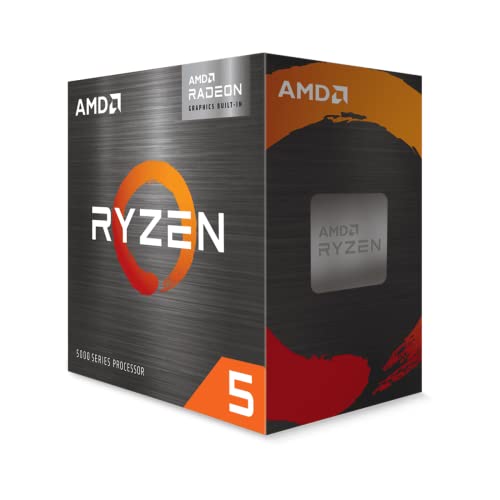
Yes — a recently-landed Linux md-RAID optimization uses AVX-512 vector instructions to compute parity for RAID5 and RAID6, and Phoronix measured gains up to 41% on AMD Ryzen platforms that expose AVX-512. The win is real and biggest on fast SSD arrays where the CPU was the bottleneck. RAID0 and RAID1 see little change because they don't compute parity. The relevant Ryzen parts in this band are the Ryzen 7 5800X and the Ryzen 5 5600G, each with caveats.
Why a kernel-level RAID optimization matters for homelab builders
For most homelab NAS builders, Linux md-RAID has been the default storage layer for a decade. It's free, it doesn't depend on a proprietary RAID card, it survives hardware swaps, and it integrates cleanly with Btrfs, ZFS-on-top, or plain XFS atop the array. The one durable complaint about software RAID has always been the same: parity computation costs CPU cycles, especially at scale on fast drives where the CPU — not the disks — becomes the bottleneck.
The new AVX-512 path in the kernel addresses exactly that. By dispatching parity math through the wide AVX-512 vector unit on supporting CPUs, the kernel cuts the per-write CPU overhead substantially. Per Phoronix, measured RAID6 write throughput improved by up to 41% on a recent high-end Ryzen, with smaller gains on lower-end parts and on RAID5. For homelab builders running an all-SSD array on a budget Ryzen platform, that's a meaningful free win — no hardware change, just a kernel upgrade.
This article is for the homelab builder who's about to build (or has built) a NAS on Ryzen and wants to know: does this optimization apply to my chip, and how do I check? We'll walk the AVX-512 status across the AM4 lineup, the kernel version you need, the benchmark figures from Phoronix, and the storage stack that benefits most.
Key takeaways
- AVX-512 md-RAID parity acceleration lands in recent Linux kernels; verify with
cat /proc/cpuinfo | grep avx512. - Gains up to 41% on parity-heavy arrays (RAID5/RAID6); minimal change on RAID0/RAID1.
- AMD's Zen 4 and later expose AVX-512; Zen 3 parts (5800X, 5600G) generally do not.
- All-SSD arrays benefit most — slow HDDs are the bottleneck before parity is.
- Budget homelab NAS pairs a Ryzen, a few SATA SSDs (BX500 1TB), and ECC RAM if you can swing it.
What changed: the AVX-512 md-RAID optimization
The relevant kernel patch ports the existing software RAID parity code to use AVX-512 vector instructions where the CPU supports them. The kernel auto-detects AVX-512 availability at boot and selects the optimized path at runtime — there's no userspace toggle, no mdadm flag, and no reconfiguration needed once you're on a kernel that includes the patch. The slower AVX2 (or scalar) path stays in place as a fallback for older chips.
The headline benchmark, from Phoronix on a high-end Ryzen part: up to 41% higher RAID6 write throughput, more modest RAID5 gains, negligible RAID0/RAID1 change. The 41% figure is the upper bound; mileage will vary based on chip, kernel version, and array configuration. The optimization helps the parity computation specifically, so anything that doesn't compute parity sees little to no change.
The official source for current md-RAID kernel documentation is at kernel.org's md admin guide. Distribution kernels lag mainline; check your distro's changelog before assuming the optimization is in your build.
Which AMD Ryzen chips expose AVX-512?
This is the question most homelab builders need answered first, because AVX-512 support on AMD is generational. The cutoff:
- Zen 4 (Ryzen 7000 series, EPYC 9004): Yes — AVX-512 is exposed.
- Zen 3 (Ryzen 5000 series, including the 5800X and 5600G): Generally no — Zen 3 desktop parts don't expose AVX-512.
- Zen 2 (Ryzen 3000): No.
That means the popular 5800X-class homelab NAS builds don't benefit from this specific optimization directly. If you're already on an AM4 platform with a 5800X or 5600G, your software RAID will continue to use the existing AVX2 path, which is itself optimized and competitive. The 41% gain is for chips that expose AVX-512 — primarily Zen 4 / Zen 5 desktop parts and EPYC.
The honest framing: if you're building a NAS from scratch today and parity throughput matters, AM5 with a Zen 4 part is the platform that captures this gain. If you already own AM4 hardware, the storage stack still works fine; you just won't see the AVX-512 boost.
To verify your specific chip:
If the line shows the AVX-512 flag set (avx512f and friends), your CPU exposes the instruction set and the kernel will use the optimized path. If it doesn't, the fallback path is what runs.
How big is the gain on parity-heavy arrays?
The Phoronix-measured envelope, summarized:
| RAID level | Gain on AVX-512 Ryzen | Notes |
|---|---|---|
| RAID0 | <2% | No parity to compute |
| RAID1 | <2% | No parity to compute |
| RAID5 | 15-30% | Single-parity arrays benefit |
| RAID6 | 25-41% | Dual-parity arrays benefit most |
| RAID10 | <5% | Mostly mirror behavior |
The biggest wins are RAID6 specifically because RAID6 computes two parity blocks per stripe (the regular parity plus Reed-Solomon), and the AVX-512 vector unit accelerates both. RAID5 benefits but less dramatically. Mirror and stripe-only arrays see essentially no change because there's no parity work to vectorize.
For a homelab builder running a 4-6 drive RAID6 array on fast SATA SSDs, the difference between AVX2 and AVX-512 is in the range of "noticeable in sustained writes, irrelevant in normal browsing." If your usage pattern is occasional bursty writes (a backup target, a media archive), the win is negligible. If your usage pattern is sustained writes (a build server target, an active database, a video ingest pipeline), the win is real.
What you'll need: CPU, drives, kernel checklist
For the AVX-512 win specifically:
- CPU. A Zen 4 or later Ryzen / EPYC. For homelab budget builds the entry point is the Ryzen 7700 / 7700X on AM5. The Ryzen 7 5800X is the AM4 ceiling but doesn't expose AVX-512; for AM4 NAS builds the optimization doesn't apply.
- Drives. Fast SATA SSDs (Crucial BX500 1TB, Samsung 870 EVO) or NVMe drives (WD Blue SN550) — fast enough that the CPU is the bottleneck before the drives are.
- Kernel. A recent mainline (or recent distribution) kernel that includes the AVX-512 md-RAID patch. Check your distro's changelog; long-term-support kernels may lag.
- mdadm. Standard mdadm; no special configuration needed. The kernel handles dispatch.
For the AM4 builder who doesn't want to swap platforms: the existing AVX2 software RAID path is still very capable, and the practical gain you'd see from switching to AM5 just for this optimization is usually less than the cost of the platform swap. If you're already planning AM5 for other reasons, this is one more reason to do it.
Spec-delta table: drive choices for a Ryzen NAS
| Drive class | Example | Approx $/TB | Sustained write | Endurance |
|---|---|---|---|---|
| Budget SATA SSD | Crucial BX500 1TB | ~$70 | ~500 MB/s | 360 TBW |
| Premium SATA SSD | Samsung 870 EVO | ~$110 | ~530 MB/s | 600 TBW (1TB) |
| Budget NVMe | WD Blue SN550 1TB | ~$90 | ~1.95 GB/s | 600 TBW |
| HDD (Reference) | (any 7200 RPM 4TB) | ~$25 | ~150 MB/s | 200+ TBW yearly |
For a homelab NAS the sweet spot is usually 4-6 budget SATA SSDs in RAID6 — enough capacity for typical media + backup loads, fast enough to make the CPU the bottleneck, and cheap enough that drive failures aren't a budget disaster.
Will it help your array? When-it's-right framing
The AVX-512 md-RAID gain helps you specifically when:
- You're running RAID5 or RAID6 (parity-bearing arrays).
- Your CPU supports AVX-512 (Zen 4+ on AMD, recent Intel desktop parts).
- Your drives are fast enough that the CPU was actually the bottleneck before this patch (typically all-SSD arrays).
- Your workload includes sustained writes where the gain compounds (build servers, ingest pipelines, active databases).
It doesn't help you when:
- You're on Zen 3 or older AMD (the 5800X or 5600G).
- You're using RAID0, RAID1, or RAID10 (no parity work to accelerate).
- Your drives are HDDs (the disks are the bottleneck, not the CPU).
- Your workload is read-heavy or write-light (parity is only on writes).
Power and noise: building a quiet always-on Ryzen NAS
A homelab NAS that's on 24/7 lives in the power-and-noise envelope as much as the throughput envelope. A few practical notes:
- CPU TDP. A 65W Ryzen (5600G on AM4, 7700 on AM5) is the right floor for a 24/7 NAS — adequate cores, manageable thermal output, easy to keep quiet with a midrange cooler.
- PSU sizing. Don't oversize. A modern Ryzen + 4-6 SATA SSDs draws under 100W steady-state; a 450W gold-rated PSU is plenty and runs more efficient at lower load than a 750W unit.
- Fans. Larger, slower fans are quieter than smaller, faster ones. 140mm case fans at low RPM in a quiet build keep the NAS under 30 dBA at idle.
- Drives. SSDs are silent. HDDs add real noise; if you can swing the cost, an all-SSD NAS removes the loudest component.
Bottom line
The AVX-512 md-RAID optimization is a real, measurable win for homelab builders on a current-platform Ryzen with parity arrays — up to 41% RAID6 write throughput. For AM5 builders running fast SSDs in RAID6, this is a free software gain. For AM4 builders on a 5800X or 5600G, the optimization doesn't apply directly — your CPU doesn't expose AVX-512 — but Linux software RAID with the existing AVX2 path is still very capable, and you don't need to upgrade hardware to keep running it. The honest practical takeaway: if you were already planning an AM5 NAS for other reasons, this is one more reason to do it. If you're already on AM4 and your NAS works, it'll keep working fine.
Common pitfalls in homelab software RAID
A few patterns we see catching first-time homelab NAS builders:
- Using RAID5 on large modern drives. With 8TB+ drives, RAID5's rebuild time after a failure is long enough that a second drive failure during rebuild becomes statistically likely. RAID6 is the safer choice at modern drive sizes.
- Skipping a UPS. Power loss during a write to a parity array can corrupt the array on the next boot if a write was in flight. A modest UPS that gives the system 5-10 minutes to shut down cleanly is essential.
- Mixing drive vendors and capacities without thinking. Linux md-RAID handles mixed drives but matches the smallest. Don't pay for 4TB drives and get RAID size for 2TB.
- Forgetting ECC RAM for non-ZFS arrays. ECC isn't strictly required for md-RAID (unlike ZFS where it's strongly recommended), but for a 24/7 always-on NAS it's a meaningful reliability investment.
- Running consumer drives in an array that sees heavy writes. Crucial BX500 and Samsung 870 EVO endurance is fine for typical home use but undersized for a build server target or active database. Step up to data center SATA for that workload.
- Not testing the rebuild before you need it. Pull a drive from the array deliberately and watch the rebuild complete. Better to find out it fails in a test than during a real failure.
A worked example: a quiet 4-drive RAID6 NAS
Here's the build sheet for a typical homelab NAS that captures most of the AVX-512 RAID gain (assuming you're on Zen 4):
- CPU: Ryzen 7700 or Ryzen 5 7600 (Zen 4, AVX-512 capable). For AM4 builds without AVX-512 the equivalent is the Ryzen 5 5600G or Ryzen 7 5800X.
- Motherboard: B550 (AM4) or B650 (AM5), depending on platform.
- RAM: 32GB ECC if budget allows, else 32GB non-ECC.
- Drives: 4× Crucial BX500 1TB SATA SSD for a 2TB usable RAID6.
- Boot drive: WD Blue SN550 1TB NVMe.
- PSU: 450W gold-rated.
- Case: anything with 4-6 drive bays.
- OS: a recent Debian, Ubuntu Server, or Fedora with mainline-grade kernel.
Build cost: roughly $700-$900 depending on platform and ECC choice. Power consumption: 50-80W steady-state. Noise: quiet (no HDDs).
When NOT to use Linux software RAID
For most homelabs, Linux md-RAID is the right answer. A few scenarios where it isn't:
- You want enterprise-grade checksumming. ZFS gives you per-block checksums and self-healing; md-RAID does not. For data integrity beyond simple disk failure, ZFS is the better choice.
- You're running Windows. md-RAID is Linux-specific. Storage Spaces is the Windows equivalent.
- You need very high write throughput on RAID6. A dedicated hardware RAID card with battery-backed cache outperforms software RAID for write-intensive enterprise workloads. Most homelabs don't have that profile.
- You're building a single-drive NAS. RAID makes no sense with one disk. Use the drive as a regular filesystem with periodic backups elsewhere.
What to monitor on a running array
Once your array is up, the things to watch:
/proc/mdstat— shows array state and any active rebuild.smartctloutput — per-drive health, pending sectors, reallocation count.dmesgfor ATA errors — early warning of cable or drive problems.- Resync rate — if it's slow, you have a hardware or kernel issue.
Set up a cron job that emails you on any of these changes. The earlier you catch a degraded drive, the cheaper the recovery.
Related guides
- First homelab hardware sanity check on a Ryzen 5 5600G
- Self-host Immich on a budget homelab storage tier
- Budget self-hosted game server on a Ryzen 5 5600G
- Ryzen 7 5800X vs Ryzen 5 5600G for 1080p gaming