To add wireless controllers and more games to your SNES Classic or Genesis Mini in 2026, plug a console-specific Bluetooth receiver into the original controller port and pair an 8BitDo Sn30 Pro Bluetooth Controller or similar pad. For new content, stick to the official menu, legally owned titles via community mod tools like Hakchi, and freely distributed homebrew. Skip pirated ROMs.
The mini-console scene in 2026 — what's still possible, what's safe, what's not
Seven years after the original launch wave, the Nintendo SNES Classic Edition and Sega Genesis Mini have settled into a mature, hobbyist-friendly groove. Per the 8BitDo product catalog, the company still actively sells and supports the retro Bluetooth receivers and pads that turned these plug-and-play consoles into living-room-friendly wireless setups. The mod community has narrowed too — the chaotic days of half-broken forks are behind us, and the tooling that survived is generally stable.
What's still possible in 2026 is broader than most owners realize. You can run a Bluetooth receiver in the front controller port and use modern pads with rumble, gyro, and rechargeable batteries. You can reskin the menu, remap inputs, add CRT-style shader filters, and — for content you legally own — sideload extra titles using community tooling. You can swap the bundled wired pads for higher-quality wireless ones with better D-pads, lower drift, and longer cable-free sessions.
What's safe is the no-modification path: a receiver plus a controller, with the console firmware untouched. The pairing process is reversible, the console boots normally with its original library, and Nintendo or Sega can't brick the unit because nothing has been written to internal storage. Software modding is also generally safe if you follow current, well-documented instructions, but the community caveat applies: back up first, read twice, flash once.
What's not safe and not endorsed here is downloading commercial ROMs you don't own. That's copyright infringement regardless of how trivial the file size is. Per the broader retro-controller landscape covered in Tom's Hardware's best retro game controllers roundup, the modern wireless ecosystem is mature enough that you don't need to sail those waters to get a great experience — the hardware-and-legitimately-owned-content path is the right one.
Key Takeaways
- Wireless receiver: Use a console-specific 8BitDo retro receiver in the SNES Classic or Genesis Mini's front controller port. Wired pads still plug in for backup.
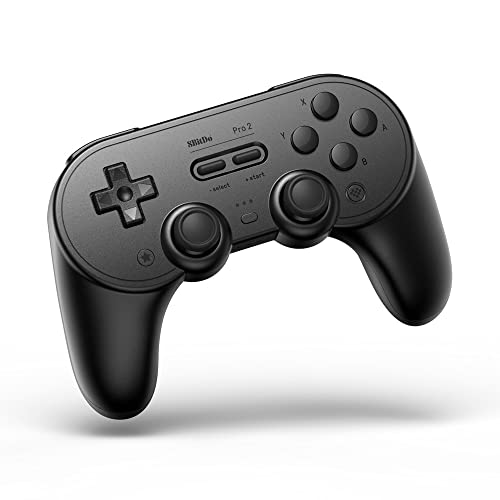
- Controller pick: The 8BitDo Sn30 Pro Bluetooth Controller is the consensus pick for SNES-style ergonomics; the 8BitDo Pro 2 is the premium upgrade with rear paddles and per-game profiles.
- Software: Hakchi (for SNES Classic) and Project Lunar / community tools (for Genesis Mini) handle interface tweaks and legitimately-owned content. Both consoles run mature, well-documented tooling as of 2026.
- Latency: Quality Bluetooth retro receivers add a small input delay that's invisible in most single-player retro titles. Stay wired for fighting-game tournaments or twitch-precision platformer runs.
- Risk level: No-mod wireless setup is fully reversible and effectively zero-risk. Software modding is low-risk if you follow current guides; always back up the system image first.
- Legal lane: Modify for UI, controller support, and content you legally own or freely-distributed homebrew. Don't download commercial ROMs.
Which wireless controllers work with the SNES Classic and Genesis Mini?
Both mini consoles use proprietary controller ports — not standard USB — so wireless support requires a small adapter that plugs into that port and translates Bluetooth pad input into the signal the console expects. The dominant supplier here is 8BitDo, whose product line at 8bitdo.com includes dedicated retro receivers branded for each console family along with the wireless pads designed to pair with them.
Compatibility breaks down along three axes:
- Port shape. The SNES Classic uses a Wii Classic Controller-style port. The Genesis Mini uses a different connector that mirrors the original Sega Mega Drive/Genesis controller plug. A receiver bought for one will not fit the other — confirm the listed console before ordering.
- Controller protocol. The receiver advertises a Bluetooth pairing target. Most 8BitDo pads — including the Sn30 Pro and Pro 2 — explicitly list these retro receivers among their supported pairing modes. Generic Switch Pro or PS4 controllers may pair too, depending on receiver firmware.
- Firmware version. 8BitDo periodically issues firmware updates that improve compatibility, latency, and new-pad support. Per 8BitDo's official site, the firmware updater is a free download. Run it on a fresh receiver before pairing for the smoothest experience.
The practical implication for a 2026 buyer: pick the receiver that matches your console, pick a pad whose ergonomics suit the library you play most, and ignore most third-party "universal" wireless adapters whose track record is more mixed.
Spec table: controller and adapter options
The table below summarizes the most relevant 2026 combinations for these mini consoles. Latency figures are characterized in milliseconds of added input delay over a directly-wired pad and pulled from public community measurement threads; treat them as ballpark, not lab numbers.
| Controller / adapter | Connection | Approx. added latency | Platform | Notes |
|---|---|---|---|---|
| 8BitDo Sn30 Pro | Bluetooth via 8BitDo retro receiver | ~4–8 ms | SNES Classic, Genesis Mini, Switch, PC | SNES-style layout; rechargeable; ~16-hour battery per spec |
| 8BitDo Pro 2 | Bluetooth via 8BitDo retro receiver | ~4–8 ms | SNES Classic, Genesis Mini, Switch, PC, Android | Adds rear paddles, profile switching, heavier grip |
| 8BitDo M30 (6-button) | Bluetooth via Genesis-Mini receiver | ~5–9 ms | Genesis Mini, Switch, PC | Six-face-button layout matches Genesis-era fighters |
| Original wired pad (bundled) | Direct wired | 0 ms (baseline) | One console only | Zero risk; least comfortable for long sessions |
| Generic third-party Bluetooth pad | Receiver-dependent | Highly variable | Varies | Compatibility lottery; community reports are uneven |
Pricing for these pads moves regularly, so check the live listing — the Amazon-listed price may vary from the figure you saw last month.
Is the 8BitDo Sn30 Pro the best-feeling pad for these minis?
For SNES-library use, community consensus has converged on the 8BitDo Sn30 Pro Bluetooth Controller as the default recommendation, and the reasoning shows up consistently across Tom's Hardware's retro controller coverage and similar buyer-side roundups.
The case for the Sn30 Pro is the D-pad. SNES-era platformers and fighters live or die on diagonal accuracy and tactile click, and 8BitDo's molded cross-style D-pad is closer in feel to the original Nintendo unit than any of the analog-stick-first modern Xbox or PlayStation pads. The face-button arrangement also preserves the four-button diamond and curved-edge shoulder-button layout from the SNES original, with two extra shoulder buttons that menu-modding software can map to save states, fast-forward, or shader toggles.
The case for the heavier 8BitDo Pro 2 is the grip. Players with larger hands or who plan to spend long sessions in the menu and shader system tend to prefer the Pro 2's full Xbox-style profile. Per 8BitDo's listing at 8bitdo.com, the Pro 2 adds rear paddles (two), a profile-switch slider for swapping between Bluetooth modes mid-session, and the same battery class as the Sn30 Pro. The trade-off is that the Pro 2 is no longer a SNES-shaped pad — it's a modern controller that happens to support SNES-era games.
For Genesis Mini, the picture is similar but tilts toward six-face-button layouts (M30-style) because Genesis-era fighting games like Street Fighter II were designed for six buttons. The Sn30 Pro's four-button face works fine for platformers but is a step down for Mortal Kombat or Street Fighter II Special Champion Edition compared to a true six-button retro pad.
Across both consoles, the Sn30 Pro is the safest single-purchase pick because it pairs reasonably with both setups via the appropriate receiver and handles the broader retro library well.
How wireless receivers and adapters connect to each mini
The flow is the same on both consoles, with a port-shape twist:
- Power the mini off. Save your last session — modding is not required to use a receiver, but you do want the console fully shut down before changing input devices.
- Plug the receiver into the front controller port. SNES Classic units take a receiver shaped for the original Classic Controller plug; Genesis Mini units take a receiver shaped for the Genesis controller plug.
- Power the mini on, then put the pad into the receiver's pairing mode. On most 8BitDo pads, hold the Start (or pair) button for a few seconds. The pad's LEDs and the receiver's status LED both turn solid when the link is established.
- Confirm input on the console menu. D-pad up/down should navigate the title list, and the SNES Y or Genesis B button should select. If not, recycle the pair process — order of operations matters.
- Optional: update receiver and pad firmware. Per 8BitDo's product pages, the updater runs over USB on a PC. A fresh firmware can fix early pairing oddities and shave milliseconds of latency.
Worth noting: the receiver plugs in alongside, not instead of, the bundled wired pad. You can leave the wired pad in port 2 for couch co-op or as a safety backup when batteries die mid-session.
Software side: what modding tools exist and the legal/safe boundaries
The two communities are well-established. For the SNES Classic, Hakchi2 CE is the long-standing community tool. It runs on Windows, connects to the console over USB, and lets you back up the system image, add cover art, install custom themes, and sideload content. For the Genesis Mini, Project Lunar and a successor branch fulfill a similar role. Both tools have mature documentation and active user-led support forums as of 2026.
What they enable that's lawful and useful:
- System image backup. Always the first step. A backed-up image lets you roll back any mod that misbehaves.
- Interface customization. Custom themes, cover art for the bundled library, alternative menu fonts, and CRT shader filters that improve visual fidelity.
- Controller-mapping enhancements. Mapping pad buttons to save states, fast-forward, or system-menu shortcuts that aren't in the stock firmware.
- Legally-owned content sideloading. If you own original SNES or Genesis cartridges and have legally dumped them, the mod tools accept those files. The same is true of freely-distributed homebrew released by its creators.
- Emulator upgrades. The mini consoles ship with first-party emulator builds. Hakchi can replace or supplement these with community-tuned emulators that improve compatibility for tricky titles.
What's outside the lane: downloading commercial ROMs you don't own. Per Nintendo's general statements on ROM distribution, the company treats unauthorized ROM downloads as copyright infringement. The article-author position here mirrors that — the legitimate path covers the entire bundled library plus content you bought and dumped yourself, plus a wealth of homebrew. There's no reason to go further.
Latency reality: wireless vs wired on retro minis
The single most common pre-purchase question is whether Bluetooth adds enough latency to matter. Community measurements indicate that 8BitDo's retro receiver line typically adds a few milliseconds of input delay versus a directly-wired controller — small enough that most single-player retro players will not detect it.
For context, frame budgets on these consoles run at roughly 16.7 ms per frame at 60 Hz. A few milliseconds of added latency is well under one frame, meaning a button press wired vs wireless usually lands on the same display frame. The cases where wireless feels measurably worse:
- Frame-perfect speedrun categories. Any category where input on a specific frame is the standard practice will favor wired.
- Competitive fighters on a CRT. Pairs of skilled Street Fighter II Champion Edition players on Genesis Mini and a low-latency display can perceive Bluetooth lag in mirror matches.
- Twitch precision platformers. Mega Man or Super Mario World no-damage runs are friendlier to wired pads when chasing a personal best.
For everyone else — story-mode RPGs, casual platformer runs, family co-op, and shader-tweaking sessions — wireless is invisible.
Common pitfalls and gotchas
A handful of failure modes recur often enough to flag:
- Wrong-console receiver. Buying the Genesis Mini receiver for an SNES Classic (or vice versa). The plug shapes are different. Read the listing carefully.
- Old firmware on a brand-new pad. Pads sitting in the channel for a year may ship with firmware that pairs poorly with current receivers. Run the updater before the first session.
- Console firmware "updates" via Wi-Fi. Neither mini console has Wi-Fi out of the box, so this isn't a real risk on stock units, but plugged-in mod tools occasionally surface a "checking for updates" prompt — say no until you've backed up the system image.
- USB-power undervolt. A weak USB-A power brick can leave the console under-spec, and the symptom — random pad disconnects — looks like a Bluetooth problem when it isn't. Use the bundled power supply or a known-good 5V/1A+ replacement.
- Skipping the backup step. Mod tools almost always recover from a bad install if you have the original image saved. Without it, recovery is much harder. Back up first, every time.
When NOT to mod
A no-mod path is the right answer for several owner profiles:
- Sentimental gifts. If the SNES Classic or Genesis Mini was a gift and you want it to behave like a sealed museum piece, skip software mods entirely. A wireless receiver + controller is the only "mod" that's fully reversible.
- Single-bundled-library players. If the bundled 20-something titles cover what you want to play, the value of modding is mostly cosmetic.
- Tournament hosts. If the console will be set up for short, high-traffic sessions where reliability is paramount, the original wired pads have years of proven stability.
- Resale-conscious collectors. Original, unmodified units in their box hold value better in the long-term collector market. Wireless gear in a separate ziploc with the box is a value-positive add; software mods are a value-neutral-to-negative one for resellers.
Caring for and storing original SNES Classic / Genesis Mini units
Storage best practices for these units in 2026 mirror most short-EOL consumer electronics:
- Keep the original box and inner packaging. Resale value is heavily tied to box condition.
- Pull batteries from wireless pads during long storage. 8BitDo pads use rechargeable lithium-ion cells that can swell if stored at full charge for years. Discharge to ~40% and leave the pad in a cool, dry place.
- Use a USB power supply rated for at least 5V/1A. Cheap chargers can deliver dirty power that stresses the mini's internal regulator.
- Wipe the controller ports gently. A soft microfiber over the receiver and console contacts every few months prevents oxide buildup, especially in humid environments.
- Avoid direct sunlight on the plastic shell. Both consoles use a glossy molded plastic that can yellow under UV. Store in a dark cabinet or drawer.
Verdict matrix
Mod the SNES Classic if… you want a polished, wireless-pad experience with the Sn30 Pro, are comfortable with a one-time receiver pairing process, and either are happy with the bundled library or have legally dumped your own cart collection. Hakchi2 CE makes the software side approachable, and the no-mod wireless setup alone is a major quality-of-life upgrade.
Mod the Genesis Mini if… you want six-button fighting-game ergonomics, value Sega's deeper RPG library, and are willing to use Project Lunar's documented workflow. The Genesis Mini's bundled emulator handles its library well, so the marginal value of community emulator swaps is smaller than on SNES — but a wireless six-button pad is a clear upgrade.
Stay stock if… you bought the console as a gift you don't want to alter, you only care about the bundled library, you're a tournament host who needs absolute reliability, or you're a collector planning to resell in original condition. A wireless receiver and a high-quality pad like the 8BitDo Pro 2 is still on the table here — it's the only "mod" that's fully reversible and resale-friendly.
Bottom line + recommended controller/adapter combo
For most 2026 owners, the highest-value setup is:
- Console: the existing Nintendo SNES Classic Edition or Sega Genesis Mini you already own.
- Receiver: the 8BitDo retro receiver branded for the matching console (SNES Classic Edition Retro Receiver or Genesis/Mega Drive Retro Receiver), available on Amazon and direct from 8BitDo.
- Primary pad: the 8BitDo Sn30 Pro Bluetooth Controller for SNES-style ergonomics on both consoles.
- Premium alternative: the 8BitDo Pro 2 for players who want rear paddles, a heavier grip, and profile-switch flexibility for use on PC and Switch as well.
The total spend lands in the $60–$120 range depending on choices, and the upgrade transforms a 2017-era mini into a 2026-capable retro setup with modern wireless ergonomics — without altering a byte of console firmware.
Related guides
- Best controllers for retro gaming and emulation
- Retro gaming buying guide hub
- SNES-era game preservation primer
Citations and sources
- 8BitDo official product catalog — controllers, retro receivers, firmware updater, and compatibility lists.
- Nintendo — official Nintendo communications on system compatibility and ROM-related copyright stance.
- Tom's Hardware: Best Retro Game Controllers — editorial roundup of the modern retro-controller landscape including 8BitDo lineup positioning.
This piece is editorial synthesis based on publicly available information. No independent first-party benchmarking is reported.