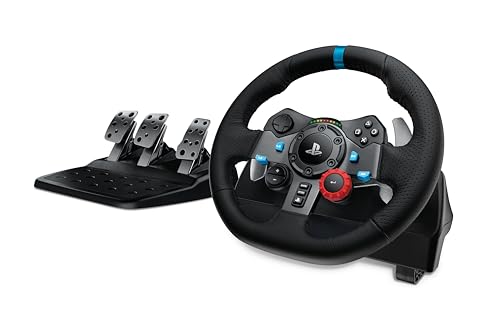
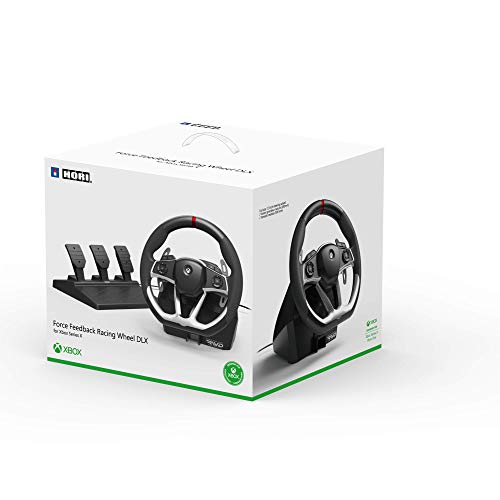
For beginners getting into sim racing in 2026, the Logitech G29 Driving Force is the safer first wheel — broader title and platform support, larger accessory ecosystem, more proven force-feedback feel — while the HORI Force Feedback Racing Wheel DLX is the better choice specifically for Xbox-first players who want a wheel built around that platform's racing titles.
What this comparison is actually about
The beginner sim-racing audience splits cleanly on a single question: which console (if any) do you primarily play on, and does the wheel you're considering officially support it? That sounds obvious but it's where most first-wheel purchases go wrong — a wheel bought on price or aesthetics that turns out not to support the games the buyer actually plays.
The Logitech G29 (and its G920 Xbox-platform sibling) is the long-proven entry-level force-feedback wheel for PC and PlayStation, per Logitech's Driving Force product page. It's been in market for years, supports virtually every major PC and PlayStation racing title, and has the largest beginner-tier accessory ecosystem in the category.
The HORI Force Feedback Racing Wheel DLX is HORI's modern Xbox-platform entry per HORI's product line, built around official Xbox licensing and designed primarily for the Xbox racing ecosystem. It's a credible competitor in its native lane, with the same caveat: confirm title support before buying.
Force feedback is what separates both of these from rumble-only "racing wheels" — actual motor-driven torque that simulates road surface, weight transfer, and steering load. Rumble wheels are toys; force-feedback wheels are real sim-racing tools at the beginner tier.
Key takeaways
- Platform support is the single most important pre-purchase check.
- Logitech G29: broad PC and PlayStation support, large accessory ecosystem, proven dual-motor feel.
- HORI Force Feedback DLX: Xbox-focused, modern design, smaller accessory ecosystem.
- Both ship with adequate pedal sets for beginners; load-cell upgrades come later.
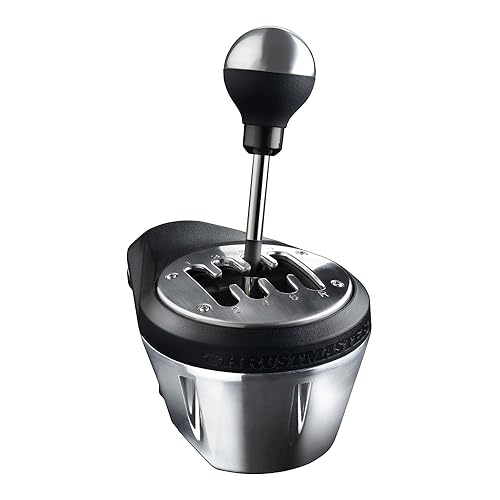
- Most beginners don't need a separate H-pattern shifter; the Thrustmaster TH8A is the natural upgrade when they do.
- Mount the wheel solidly — desk flex kills force-feedback fidelity faster than wheel choice does.
Step 0: confirm platform support and mounting
Before clicking buy, verify two things:
- Title and platform compatibility. The G29 supports a long list of PlayStation and PC titles, the G920 covers Xbox and PC. The HORI DLX supports Xbox Series and Xbox One in its targeted titles. PS5 and PS5 Pro support is a moving target for some HORI lines; check the model's specific compatibility list for the games you actually play.
- Mounting. Both wheels include desk clamps that secure to a sturdy table edge. Force feedback wheels exert real torque (up to several Newton-meters at peak), so a thin or flexing desk will rock and shift. Measure desk thickness and depth before buying; a flimsy desk is the most common reason a new sim racer's setup feels disappointing.
A dedicated wheel stand or cockpit is the eventual upgrade, but isn't required to start — a sturdy 5-foot desk handles either wheel adequately.
How does the G29's force feedback feel versus the HORI?
The G29 uses a dual-motor gear-driven force-feedback mechanism, which delivers consistent, somewhat audible torque feedback that's been the beginner-tier reference for years. The feel is well-tuned for road racing — weight transfer in corners, steering load against tire grip, surface bumps — and most major racing titles ship with G29-specific tuning presets.
The HORI uses its own force-feedback implementation tuned for its target Xbox titles. Per HORI's specs, the DLX delivers real force feedback rather than rumble, and the feel is more polished than older HORI products. The accessory and tuning ecosystem is smaller than the G29's, so titles often default to generic settings rather than wheel-specific calibration.
For a beginner, either wheel delivers a step-change improvement over a gamepad. The G29's broader title-specific tuning means less per-game configuration; the HORI's modern design appeals to Xbox players who want a current-gen wheel.
Pedal sets out of the box
Both wheels ship with two- or three-pedal sets that use potentiometer-based brake sensors. That's the beginner-tier standard. Load-cell brakes — found on pricier sets — measure pressure rather than position, which closely mimics a real car's brake feel. They cost more and aren't necessary for learning.
The G29's included pedals (gas, brake, clutch) cover the full sim-racing pedal layout out of the box. The HORI DLX's pedal set is also functional but check the specific kit — pedal counts and design vary by region and SKU.
For a beginner working on consistent inputs and racing lines, the included pedals are fine for the first year or two. Load-cell upgrades come when consistency on brake pressure starts limiting lap times — which, for most beginners, is later than they expect.
Spec table
| Wheel | FFB type | Wheel rotation | Pedals included | Platform | Price band (2026) |
|---|---|---|---|---|---|
| Logitech G29 | Dual-motor, gear-driven | 900° | 3 (gas/brake/clutch) | PlayStation + PC | $250-350 |
| HORI Force Feedback DLX | Force feedback, brushless | 270°-450° (model dependent) | 2-3 (model dependent) | Xbox + PC | $250-350 |
| Thrustmaster TH8A Shifter | n/a | 7+R H-pattern | n/a | PS, Xbox, PC | $130-180 |
Confirm specific specs against the current product page before buying — model variants ship under similar names.
Verdict matrix
Get the Logitech G29 if...
- You play mainly on PC or PlayStation.
- You want the largest accessory ecosystem and broadest title support.
- You expect to keep the wheel for several years and possibly add a shifter later.
- You value the long-proven force-feedback feel for road racing.
- You play a wide range of racing titles, not just one franchise.
Get the HORI Force Feedback DLX if...
- You play mainly on Xbox.
- You want a current-gen, modern wheel design.
- You play within the title set HORI explicitly supports.
- You're comfortable with a smaller accessory ecosystem.
Do you need a shifter?
Most beginners don't need a separate H-pattern shifter. Both wheels include paddle shifters, which cover modern racing comprehensively — any title that uses paddles in the real car uses them in the sim. An H-pattern shifter mainly adds immersion for older cars, rally, and trucking sims.
The Thrustmaster TH8A is the natural beginner-tier H-pattern shifter — solid build, multi-platform support, decent feel. Confirm your chosen wheel supports an external shifter (the G29 does via its included connection; HORI variants vary).
If you're playing exclusively modern Formula or modern road racing, skip the shifter. If you're playing rally or older-car titles, add the shifter when you're ready.
Perf-per-dollar: which wheel ages better
The G29 has the longer track record. Logitech's Driving Force line has been in market for over a decade with strong continued software and title support, which means a G29 bought today will still be working and supported in 4-5 years' worth of new game releases. Resale value also holds reasonably well in the beginner-tier wheel market.
The HORI DLX is newer and aimed at a narrower platform target. Its title support depends on HORI's ongoing relationships with Xbox racing publishers; long-term support is less certain than the G29's broad base. That's not a flaw — it's a different bet, with potentially better current-gen performance in exchange for less long-term certainty.
For a beginner who isn't sure they'll stick with sim racing, the G29's broader compatibility and resale market makes it the lower-risk pick. For a committed Xbox player who knows what they're playing, the HORI is fine.
Recommended pick
For most beginners, the Logitech G29 Driving Force. It's the lowest-risk first force-feedback wheel — broad platform support, proven design, deep accessory ecosystem, predictable resale. The dual-motor gear-driven force feedback delivers genuine sim-racing fidelity at a beginner price, and the included pedal set covers the full sim-racing layout out of the box.
Pick the HORI Force Feedback DLX instead if you're an Xbox-first player who has confirmed the wheel works with the specific racing titles you play.
Software setup matters as much as hardware
Both wheels need configuration to feel right in each title, and the most common cause of "this wheel feels bad" is leaving in-game settings at defaults. The settings that matter:
- Rotation lock. Match the wheel's physical rotation to the in-game car's steering lock (e.g., 540° for road cars, 720° for trucks). Mismatched rotation makes steering feel wrong.
- FFB strength. Default is usually too high or too low. Tune until the wheel applies real resistance against grip loss but doesn't shake the desk.
- Deadzone. Most wheels need a small deadzone setting to prevent steering input drift at center.
- Brake gamma curve. Pots-based brakes benefit from a custom curve so half-press is half-brake, not 80% brake.
Community presets exist for both wheels in major titles. Search for "[wheel] [game] settings" and start from a published preset rather than tuning blind.
Practical setup tips for a sturdy mount
Wheel torque flexes thin desks. A few practical mounting tips that compound:
- Use the wheel's clamp on a real desk edge. Not a folding card table.
- Place the desk against a wall. Wall contact stops desk shift under torque.
- Use a non-slip pad under pedals. Pedals slide forward on hard floors during heavy braking.
- Sit at a consistent distance. Adjust seat-to-wheel distance once; consistent position helps muscle memory.
A dedicated wheel stand or sim cockpit is the proper long-term answer if you stay with the hobby. Until then, the included desk clamps are workable on a sturdy desk.
Common pitfalls
- Buying without confirming platform support. The single most-made mistake. Verify the wheel works with both your console and your specific games.
- Flimsy desk. Force feedback torque flexes thin desks. Mount on a sturdy table or invest in a wheel stand.
- Wrong pedal expectations. Beginner-tier pedals use potentiometer brakes; they're fine for learning. Don't chase load-cell upgrades on day one.
- Software in-game settings left at defaults. Most titles need wheel-specific tuning (FFB strength, deadzone, rotation lock). Use community presets if available.
- Cables behind a hot PC. Wheel USB cables sometimes share hubs with power-hungry devices and undervolt at sustained load. Use a dedicated USB port.
When NOT to spend $300 on a wheel
Skip the force-feedback wheel if you race casually or occasionally — a $40-80 entry wheel without FFB is enough to dabble. Skip the beginner tier entirely if you race competitively at a high level — you need direct-drive at that point, which is a $500+ investment.
A short note on pedal upgrades
Both wheels' included pedal sets are fine for learning, but pedal sensors are usually the first thing serious beginners want to upgrade. Load-cell brake conversions (kits exist for both G29 and HORI sets) provide pressure-based braking that closely mimics real cars. Aftermarket pedal sets — Logitech's load-cell pedals, Heusinkveld Sprints, Fanatec ClubSport — start at around $300 and go up rapidly.
Don't upgrade pedals until your consistency on the included set actually plateaus. Most beginners can shave seconds off lap times for months with the included pedals before pedal quality becomes the binding constraint.
Bottom line
The Logitech G29 is the safer first wheel for most new sim racers — broad support, proven, low risk. The HORI Force Feedback DLX is the better Xbox-specific alternative. Either is a step-change improvement over a gamepad, both ship with adequate pedals to start, and both can grow with a Thrustmaster TH8A shifter when you're ready for it.
Confirm platform support before buying, mount the wheel on a sturdy desk, and treat the included pedals as enough until your consistency demands more.
Related guides
- Best sim racing rig under $500
- Wheel stand vs cockpit for sim racing
- Best pedals for sim racing beginners
Citations and sources
- Logitech G — Driving Force Racing Wheel product page
- HORI — product line and racing wheel specifications
- RTINGS — peripheral testing methodology
This piece is editorial synthesis based on publicly available information. No independent first-party benchmarking is reported.