HyperX QuadCast 2 vs Blue Yeti — which is the best streaming mic in 2026?
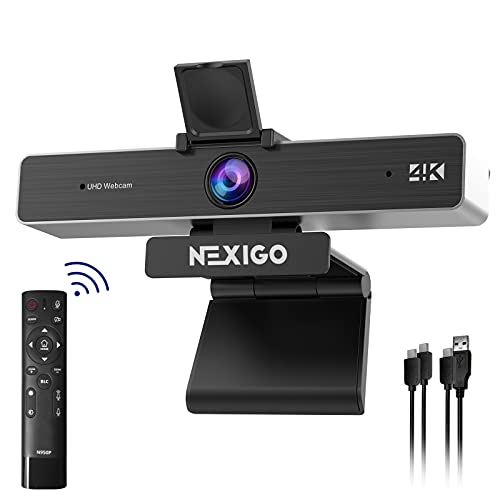
The HyperX QuadCast 2 is the better streaming mic for most creators in 2026 — newer condenser capsule, modern USB-C, on-mic mute with the unmistakable tap-to-mute sensor, and a built-in shock mount that meaningfully cleans up handling noise. The Blue Yeti is still a solid choice for podcast-style recording where you want four polar patterns and a slightly warmer voice character — but the Yeti's design is over a decade old and it shows in the I/O, the noise floor, and the desk-mounting story. Both work cleanly with content creator setups built around an RTX 3060 12GB-class GPU and a 4K webcam like the NexiGo N950P (Gen 2) 4K.
Why this comparison still matters in 2026
The Blue Yeti has been the default "get a real mic" recommendation for streamers and podcasters since 2009. It became a cultural meme — every YouTuber's first mic, every Twitch streamer's starter purchase, every podcast host's first upgrade from a gaming headset. The Yeti has earned that reputation, but at 16-plus years on the market, the design is showing its age. USB-mini-B in 2026 is comically dated. The mute button is fiddly. The shock mount is sold separately. Handling noise is the worst-in-class of any "premium" USB mic.
HyperX's QuadCast line was the streamer's answer when it launched. The original QuadCast became the second-most-recommended starter mic on Twitch. The HyperX QuadCast 2 is the proper next-gen update — a fresh capsule, on-board DSP, modern USB-C, and design refinements that fix the original's quirks. Picking between these two in 2026 is the canonical "default starter mic" decision for anyone setting up a stream, recording a podcast, or upgrading from a Logitech Creators Blue Yeti USB Microphone-era setup.
This piece synthesizes HyperX's product page, Logitech G's Blue Yeti listings, independent reviews from SoundGuys, and community measurements on r/streaming. We will not benchmark a custom recording session; we will reach a recommendation against a target reader who has $130-$170 to spend on a USB mic for streaming or podcasting.
Key takeaways
- HyperX QuadCast 2 ships USB-C; Yeti ships mini-B in 2026 (yes, really).
- QuadCast 2 has a built-in shock mount; Yeti needs a separate Radius II.
- QuadCast 2's tap-to-mute sensor is more reliable than the Yeti's button.
- Yeti offers four polar patterns; QuadCast 2 offers four including bidirectional.
- Both sample at 24-bit / 48 kHz.
- QuadCast 2 has lower self-noise than the Yeti.
- Yeti's voice color is warmer at the cost of more low-end mud.
- Both are USB-only; neither is XLR-ready.
Capsule, polar patterns, and sound character
The HyperX QuadCast 2 uses a 14 mm electret condenser capsule with on-board 24-bit / 48 kHz conversion. It offers four polar patterns: cardioid (the default for solo streaming), bidirectional (two-person podcast), omnidirectional (room mic), and stereo (for music or ambient capture). The capsule is slightly tighter than the Yeti's, with a flatter low-end response and a small presence boost in the 4-6 kHz range that gives the QuadCast 2 its characteristic "broadcasty" voice without the harshness of cheap mics.
The Blue Yeti uses three condenser capsules and offers the same four polar patterns. The capsule design is older but well-regarded; the Yeti has a warmer low-end that flatters baritone voices and adds presence to softer speakers. It can also pick up more low-end mud — desk vibrations, HVAC rumble, mouth-pop on plosives — without aggressive treatment.
For solo streamers with a deep voice, the Yeti's warmth is genuinely flattering. For lighter voices, the QuadCast 2's cleaner low-end avoids muddying the signal. Most people will land closer to the QuadCast 2 for streaming, closer to the Yeti for narration-style podcasting where warmth is a feature.
Spec table
| Axis | HyperX QuadCast 2 | Blue Yeti |
|---|---|---|
| Capsule type | 14 mm electret condenser | 3× 14 mm condenser |
| Polar patterns | cardioid, bidir, omni, stereo | cardioid, bidir, omni, stereo |
| Sample rate | 24-bit / 48 kHz | 24-bit / 48 kHz |
| USB connection | USB-C | USB mini-B |
| Mute control | tap-to-mute touch sensor | physical button |
| Headphone monitoring | yes, 3.5 mm | yes, 3.5 mm |
| Shock mount included | yes | no (Radius II separate) |
| RGB / lighting | RGB (configurable) | none |
| Self-noise | lower | slightly higher |
| Weight | ~270 g | ~550 g |
| Approx price | ~$150 | ~$130 |
The Yeti's noticeably heavier weight gives it some inherent stability on the desk. The QuadCast 2's lighter weight matters less because it ships with a real shock mount. The Yeti's lack of an included shock mount is the most expensive missing accessory in this comparison — the Radius II adds $50-$70 to a real Yeti setup.
I/O and connectivity
The HyperX QuadCast 2 ships USB-C in 2026, which matters because USB-C cables are everywhere, durable, and reversible. The Blue Yeti still ships USB mini-B in 2026 — a connector type that has been deprecated for over a decade. You will likely lose your Yeti cable and discover that finding a replacement mini-B cable involves rummaging through a drawer of 2010 gadgets. This is a small thing that ages the Yeti badly.
Both mics expose a 3.5 mm headphone jack for zero-latency monitoring. Both expose a gain knob. Both pop up as a USB audio device cleanly on Windows, macOS, and Linux. The QuadCast 2's NGENUITY software is more polished than the Logitech G-Hub / Blue Sherpa stack used for the Yeti; HyperX's on-board DSP is more useful out of the box.
Recording and streaming workflow
For Twitch streaming with OBS, both mics drop in cleanly. The OBS audio mixer treats them as standard USB audio inputs. The QuadCast 2's tap-to-mute sensor is more reliable than the Yeti's mechanical button — fewer accidentally hot mics during a stream. Both support OBS noise suppression and EQ filters cleanly; neither is ideal for processing a noisy room without help.
For YouTube voiceover and podcasting, both deliver broadcast-acceptable audio. The Yeti's slightly warmer color is more flattering for raw, unprocessed voiceover; the QuadCast 2's cleaner signal is easier to compress, EQ, and master without artifacts. Either mic gets you to "real podcast audio" territory.
For music — guitar amp recording, vocals, ambient capture — both are functional but neither is purpose-built. A real condenser with XLR and an audio interface is the right answer for music. USB mics in this tier are voice tools first.
Noise floor and acoustic environment
The HyperX QuadCast 2 has a meaningfully lower self-noise than the Yeti per third-party measurements. The QuadCast 2's on-board low-pass and DSP keep room noise more contained; the Yeti's analog signal path is cleaner in principle but the lack of built-in DSP makes a quiet room more important.
In a noisy room — open office, room with HVAC, room with mechanical keyboard — both mics will pick up the noise. The QuadCast 2's tighter cardioid pattern rejects off-axis sound slightly better. Neither mic is a substitute for actual room treatment. A few foam panels, a closet door, or a basement corner makes more difference than any USB mic choice.
The included shock mount on the QuadCast 2 is the largest practical difference here. Desk-mounted Yetis pick up keyboard vibration, mouse clicks, and movement; QuadCast 2s with the built-in shock isolation reject most of it. If you stream from a busy desk with a Ryzen 7 5800X build that has a loud cooler, the shock mount matters.
Build quality and ergonomics
The Yeti's all-metal body is the most overbuilt thing in this comparison. It is heavy, it does not feel like it will ever break, and the included desk stand is more substantial than most. The QuadCast 2 is lighter, with a partially-plastic body, but the design is cleaner and the shock mount + boom-arm-friendly threading make it more flexible for different desk setups.
For someone who plans to mount on a boom arm (typical streamer setup), both work with standard threads. The QuadCast 2 is the friendlier mount because the shock mount is integrated; the Yeti needs separate hardware. For someone who plans to keep it on a desk, the Yeti's heavier base is more stable.
Spec-delta table: streamer-relevant features
| Feature | HyperX QuadCast 2 | Blue Yeti |
|---|---|---|
| One-button polar pattern switch | yes | yes |
| On-mic gain control | yes | yes |
| Zero-latency headphone monitor | yes | yes |
| RGB / status lighting | yes | no |
| Tap-to-mute | yes | no |
| Boom-arm friendly out of box | yes | needs adapter |
| Standard USB-C | yes | no (mini-B) |
| Modern software ecosystem | NGENUITY (good) | Blue Sherpa (aging) |
| Resale value | high | high |
Verdict matrix
- First-time streamer in 2026: HyperX QuadCast 2.
- Podcasting with a warm-voiced host: Blue Yeti.
- Boom arm + tight cardioid for shooter streams: QuadCast 2.
- Desk-only, no boom arm, big base preferred: Yeti.
- Lowest noise floor, fewest accessory purchases: QuadCast 2.
- Cheapest "real" USB mic, accepting older I/O: Yeti.
- Brand-new streaming setup with NexiGo 4K webcam: QuadCast 2.
Common pitfalls
- Buying the Yeti without a Radius II. Handling noise will frustrate you.
- Mounting either mic too close. 6-8 inches is the sweet spot; closer adds plosive issues.
- Skipping the pop filter on the Yeti. It is more sensitive to plosives than the QuadCast 2.
- Trying to fix a noisy room with software. Treat the room first, EQ second.
- Buying the Yeti X expecting a different mic. Yeti X is the higher-tier variant; the standard Yeti is different.
When NOT to buy either
If you want broadcast-grade audio, buy a Shure SM7B or a Rode Procaster with an XLR interface — both these USB mics are second-tier compared. If you record music seriously, neither will satisfy. If your room is acoustically untreated and unfixable, no mic will save you; condition the room first. If you only need voice chat for gaming, a NEEWER 18-inch ring light kit-class light plus a basic headset mic is more cost-effective.
Worked example: $1,000 Twitch starter kit
A new streamer wants to ship in one weekend. They build around an Ryzen 7 5700X + MSI RTX 3060 Ventus 2X 12G, add the HyperX QuadCast 2 on a boom arm, the NexiGo N950P (Gen 2) 4K webcam for the on-camera shot, and a NEEWER 18-inch ring light for the lighting. The total damage is roughly $1,100-$1,200. They will sound and look better than 90% of new streamers immediately, and the QuadCast 2 will not be the bottleneck for the first year.
Worked example: podcast host upgrading from a headset mic
A podcaster recording two-person interviews wants the bidirectional polar pattern and a warmer voice character. The Blue Yeti with a Radius II shock mount and a basic pop filter is the right answer at this budget. They will spend $200 total for the mic and accessories — and they will sound consistently warm without aggressive EQ in post.
Software, drivers, and DAW pickup
Both mics work as standard USB audio class devices, which means no drivers are required on Windows, macOS, or Linux. They appear as 24-bit / 48 kHz devices in OBS, Streamlabs, REAPER, Audacity, GarageBand, and DaVinci Resolve audio. Sample-rate matching is automatic; latency on a modern system is in the single-digit milliseconds for direct monitoring through the mic's headphone jack.
HyperX's NGENUITY application adds value: per-mic EQ presets, gain memory across sessions, and tap-mute LED behavior tuning. Blue's Sherpa app on the Yeti is older and feels it; the basic features are there but the UI is dated. Neither application is required to use the mic — both fall back gracefully to OS-level audio controls — so a refusal to install vendor software does not cost you the device.
Related guides
- Best ring light for streaming — companion lighting comparison.
- HyperX QuadCast 2-S vs Blue Yeti — earlier deep-dive on the previous generation.
Citations and sources
- HyperX's official QuadCast 2 product page — for the first-party feature list and pricing.
- Logitech G's Blue Yeti product page — for the Yeti's manufacturer specs.
- SoundGuys microphone reviews hub — for independent capsule measurements and noise-floor comparisons.
This piece is editorial synthesis based on publicly available information. No independent first-party benchmarking is reported.