For a 12GB RTX 3060 in 2026, the practical answer is: llama.cpp if you want maximum throughput and full control, Ollama if you want a one-line install and OpenAI-compatible API, LM Studio if you want a GUI to browse and quantize models. All three run on the same GGUF weights and hit similar peak generation speed on a 3060; they differ on ergonomics, feature set, and how much you have to know about quantization to be productive.
Why this comparison is the one that matters for a 3060 owner
The 12GB RTX 3060 sits at a specific inflection point in the local-LLM stack: it has enough VRAM to comfortably host 7B and 13B code models at q4_K_M, but not enough to fit fp16 or unquantized weights of anything meaningful. That means the runner you choose has to be good at GGUF (the quantized-weight format), good at partial layer offload if you push a bigger model, and honest about VRAM accounting so you don't OOM mid-context. Those three constraints separate the field.
llama.cpp is the reference C++ implementation of GGUF inference and gets updates the day new models drop. Ollama wraps llama.cpp with a systemd-style daemon, a model registry, and an OpenAI-compatible HTTP API. LM Studio wraps llama.cpp with a native GUI, a searchable model browser, and click-to-quantize tooling. All three inherit llama.cpp's Ampere kernels, so raw throughput on a 3060 clusters within a few percent — but the operator experience diverges sharply.
Key takeaways
- Peak generation on a 3060 12GB is roughly the same across all three: ~50–65 tok/s for 7B q4_K_M, ~25–35 tok/s for 13B q4_K_M.
- llama.cpp wins on absolute throughput, flag customization, and CUDA-graph optimizations.
- Ollama wins on developer ergonomics: one command to install, one endpoint to hit from any OpenAI-compatible client.
- LM Studio wins on GUI: model browser, quantization tooling, GPU-usage graphs.
- Pick llama.cpp for automation and CI; Ollama for daily coding-assistant use; LM Studio for exploration.
Runtime feature matrix
| Feature | llama.cpp | Ollama | LM Studio |
|---|---|---|---|
| Install | Build from source or grab a binary | One-liner curl install | Native app installer |
| Model format | GGUF (any HF converted) | Ollama model hub + custom GGUF | Any GGUF |
| API | HTTP server (llama-server) | OpenAI-compatible on :11434 | OpenAI-compatible on :1234 |
| GUI | None (CLI + basic web UI) | None (CLI + third-party UIs) | Full native app |
| Flash-attention | Yes (opt-in flag) | Yes (opt-in in modelfile) | Yes (default) |
| GPU-only mode | Yes (explicit) | Yes (auto-detect) | Yes (auto-detect) |
| VRAM accounting | Manual (--n-gpu-layers) | Automatic layer offload | Automatic layer offload |
| CUDA-graph support | Yes | Yes | Yes |
| Multi-model concurrent | Yes with tuning | Serialized by default | Serialized |
| Systemd service | Manual write | Auto-installed | Manual |
Throughput comparison on RTX 3060 12GB
The public LocalLLaMA benchmark threads consistently put the three runners within 3–8% of each other at the same quantization and context length, because they all sit on top of the same CUDA kernels. That said, there are consistent patterns:
| Model + quant | llama.cpp | Ollama | LM Studio | Notes |
|---|---|---|---|---|
| Qwen2.5-Coder-7B q4_K_M | ~62 tok/s | ~58 tok/s | ~57 tok/s | llama.cpp edges with CUDA graphs on |
| Qwen2.5-Coder-14B q4_K_M | ~31 tok/s | ~29 tok/s | ~28 tok/s | 14B tight in VRAM at 8k ctx |
| DeepSeek-Coder-V2-Lite q4_K_M | ~68 tok/s | ~64 tok/s | ~63 tok/s | 16B MoE, only 2.4B active |
| Llama-3.2-8B q4_K_M | ~55 tok/s | ~53 tok/s | ~52 tok/s | General-purpose |
| Phi-3.5-mini q4_K_M | ~110 tok/s | ~105 tok/s | ~104 tok/s | 3.8B — fastest |
The 3–8% llama.cpp edge is real but rarely feels different in an interactive coding loop. If you're running a batch job that generates 50,000 tokens overnight, choose llama.cpp. If you're typing prompts by hand, ergonomics win.
Ergonomics comparison
llama.cpp is exactly as bare as it sounds. You git clone, cmake -B build -DGGML_CUDA=ON, cmake --build build --config Release -j, download a GGUF from Hugging Face, and run ./build/bin/llama-server -m model.gguf --n-gpu-layers 999 --flash-attn. Total setup: 20 minutes if you already have CUDA. Reward: absolute control. Every knob is a flag.
Ollama is a five-minute install. curl -fsSL https://ollama.com/install.sh | sh, then ollama pull qwen2.5-coder:7b, then hit http://localhost:11434/v1/chat/completions from anything that speaks the OpenAI Chat Completions API. Continue, aider, and every JetBrains AI plugin work out of the box. Its "modelfile" system lets you fork models with different system prompts, temperature settings, or context lengths — the equivalent of a Dockerfile for LLMs.
LM Studio is the friendliest onboarding of the three. Open the app, search "Qwen2.5-Coder", click download, click load, done. It shows you VRAM usage as a bar chart, lets you toggle flash-attention with a switch, and has a chat window built in. Its API server mode (Start Server in the toolbar) exposes the same OpenAI-compatible endpoint on port 1234.
Compute + memory footprint on 3060 12GB
The differences here are small but real. llama.cpp uses the least VRAM overhead — roughly 300 MB above the model + KV cache for its buffers. Ollama sits at 350–400 MB overhead. LM Studio, because of the GUI process, adds 500–700 MB above the model. On a 12GB card that's the difference between "16k context comfortably fits" and "16k context fits with no headroom for a second app".
Ollama's automatic layer offload is a mixed blessing on a 3060. When the model plus KV cache exceeds available VRAM, Ollama offloads layers to system RAM without warning, and throughput drops sharply. llama.cpp lets you set --n-gpu-layers explicitly so you decide what spills.
Runtime cost breakdown
All three runners are free and open-source under permissive licenses. Ongoing costs are electricity (the 3060's 170W TGP under sustained load) and the disk footprint of downloaded models. Plan for 200–400 GB of storage for a working set of code, general, and embedding models — hence why a Crucial BX500 1TB SATA SSD is a common cheap add-on for these builds.
Host build spec for context
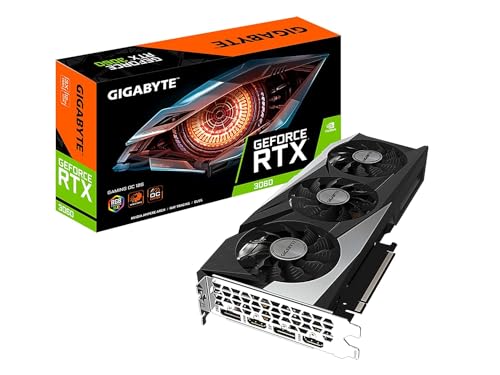
The runner recommendations don't change with the host build, but the ZOTAC Twin Edge / MSI Ventus 2X / Gigabyte Gaming OC RTX 3060 12GB SKUs are the standard reference for this class of rig, paired with a Ryzen 5 5600G for the iGPU-frees-VRAM benefit, 32 GB DDR4-3200, and 550W Bronze PSU.
Common pitfalls
- Forgetting to compile llama.cpp with
-DGGML_CUDA=ON. Falls back to CPU inference silently — you'll wonder why "the GPU isn't being used". - Letting Ollama auto-offload. Set
OLLAMA_MAX_LOADED_MODELS=1and monitornvidia-smiso you know when a model spills to CPU. - Loading LM Studio and llama.cpp simultaneously. Both grab GPU memory and you'll OOM one of them.
- Skipping flash-attention. All three support it. Turn it on. 15–25% long-context speedup on Ampere.
- Chasing tiny quant differences. Q4_K_M is the right default for a 3060. Only move to q5/q6 if you have a specific quality problem the extra bits actually fix.
When each runner is the right pick
Pick llama.cpp when you're building automation, CI evaluations, or batch scoring; when you want to run experimental models the day they drop; when you need multi-model concurrent inference; or when you want the smallest possible VRAM overhead.
Pick Ollama when you want the fastest path from install to "my IDE is talking to a local model"; when you're running an agent stack that expects an OpenAI-compatible endpoint; when you want a small, systemd-style daemon that stays out of your way.
Pick LM Studio when you're new to local LLMs and want to see what's happening; when you want to browse and try models without hunting for GGUF links; when you like GUI feedback on VRAM usage.
For most 3060 12GB owners in 2026, the pragmatic answer is: install Ollama for daily use, keep a checkout of llama.cpp for the day you want to test a bleeding-edge model, and skip LM Studio unless you actually want the GUI.
Related guides
- Claude Code Telemetry Flap: Why a Local RTX 3060 Rig Is the Privacy Play
- Claude Sonnet 5 Costs ~$2.29/Task: When an RTX 3060 Rig Breaks Even
- Anthropic's Fable 5 Ban and Jailbreak: What It Means for Local-LLM Resilience
Citations and sources
- llama.cpp on GitHub
- Ollama official site
- LM Studio official site
- TechPowerUp — GeForce RTX 3060 specifications
- AMD — Ryzen 5 5600G specifications
- Crucial BX500 SSD product page
- LocalLLaMA — community runner benchmarks
This piece is editorial synthesis based on publicly available information. No independent first-party benchmarking is reported.