For a 12GB RTX 3060 in 2026, llama.cpp is the engine that matters; Ollama is the wrapper most users should pick first, and LM Studio is the right call only if you want a Windows GUI without touching a terminal. All three deliver effectively the same generation throughput because all three use llama.cpp underneath — the differences are in workflow, model management, and integration with external tools.
Key takeaways
- llama.cpp, Ollama, and LM Studio all share the same CUDA inference kernels — raw tok/s on an RTX 3060 12GB is within ~2% across them.
- Ollama is the right default: a one-line install, a managed model registry, and a built-in OpenAI-compatible API.
- LM Studio is the right pick for Windows users who do not want a terminal; the chat UI is excellent.
- llama.cpp directly is for power users who want the lowest overhead, the most flexible flags, and scripted automation.
- The bottleneck on a 12GB RTX 3060 is memory bandwidth (360 GB/s), not the runner — picking the right quant matters more than picking the right tool.
How they all share the same engine
llama.cpp is the upstream C/C++ inference engine that powers all three. Ollama embeds llama.cpp as a Go-wrapped library and adds model management, REST API, and a daemon. LM Studio embeds llama.cpp behind a desktop GUI with a model browser, chat interface, and one-click downloads.
Because all three use the same CUDA kernels, autoregressive generation on the RTX 3060 12GB lands at the same number — give or take overhead. Public community benchmarks consistently show llama.cpp at 100%, Ollama at 96–99%, and LM Studio at 95–98% on the same model and quant. The differences are workflow and ergonomics, not raw throughput.
llama.cpp directly — what you get
Per the llama.cpp repository, the project ships:
- Pre-built CUDA, Vulkan, SYCL, ROCm, and Metal backends.
- A
mainCLI for one-shot generation. - A
serverbinary with an OpenAI-compatible REST API. - Quantization tooling (
quantize,convert-hf-to-gguf.py) for converting raw HuggingFace weights to GGUF. - Detailed flag control over context size, batch size, grammar, sampling, and CPU/GPU split.
Pick llama.cpp directly if you script your model interactions, want the lowest overhead, need very fine sampling control, or want to host on a remote server without a daemon layer. The build is a 5-minute affair on Linux; on Windows it is more painful unless you use the prebuilt CUDA binaries.
Ollama — the friendly default
Ollama wraps llama.cpp with a model registry and a daemon. Workflow:
That's it. Ollama downloads the model, picks an appropriate quant, and drops you into a chat. Behind the scenes a daemon hosts the OpenAI-compatible API on localhost:11434, which makes Ollama trivial to plug into editor extensions, agents, RAG pipelines, and scripts.
The model registry is curated. Most popular models — Llama 3.x, Qwen 3, DeepSeek 12B-class derivatives, Mistral, Phi — are one pull away. Custom models loaded as GGUF via modelfile are supported but require more work.
Pick Ollama if you want a no-friction daily-driver chat workflow with API access for tools, you do not want to mess with quants manually, and you are happy to live within the registry curation.
LM Studio — the GUI pick
LM Studio is a desktop application (Windows, macOS, Linux) that bundles a llama.cpp-based inference engine behind a chat UI. The model browser lets you pick GGUF files directly from HuggingFace; downloads land in a managed cache. There is no terminal, no API by default unless you turn it on.
For users coming from ChatGPT or Claude.ai who want a similar local interface, LM Studio is the cleanest experience. The chat UI handles markdown, syntax highlighting, file attachments (for context), and model swaps.
The downsides: heavier RAM footprint than headless Ollama, slower to update than the open-source projects, and the API is opt-in. For headless server use, neither pick.
Pick LM Studio if you want a polished desktop chat experience and you do not need a daemon-style API on by default.
Performance numbers on a 3060 12GB
Per TechPowerUp's RTX 3060 specifications, the 12GB card delivers 360 GB/s of memory bandwidth — the actual bottleneck for autoregressive generation. Community-aggregated 2026 benchmarks on the same Llama 3.x 8B q4_K_M model:
| Runner | Generation throughput | Prefill throughput | Cold-start time |
|---|---|---|---|
llama.cpp main | 56 tok/s | 1,400 tok/s | 4 s |
llama.cpp server | 55 tok/s | 1,380 tok/s | 5 s |
| Ollama | 54 tok/s | 1,360 tok/s | 6 s |
| LM Studio | 53 tok/s | 1,340 tok/s | 9 s |
Generation throughput is within 5% across all four. Prefill throughput shows a similar pattern. Cold-start time is where the wrappers add overhead — LM Studio is the slowest because it does additional setup.
Memory usage and model loading
Same model and quant, all three runners load the weights into VRAM and a small CPU buffer. Ollama's daemon adds about 200 MB of host RAM overhead vs. running llama.cpp directly. LM Studio adds 400–800 MB depending on UI state. None of these matter for VRAM-bound performance.
For a 12B q4_K_M model on a 12GB card, the runner does not change whether the model fits — quant does. q4_K_M (7.5 GB) fits with 4–8k context; q5_K_M (8.5 GB) fits with 4k context only.
Common pitfalls
- Picking the wrong quant from the registry. Ollama defaults to q4_K_M for many models; LM Studio shows you the full GGUF list. If you do not understand the trade-off, default to q4_K_M.
- Running Ollama and LM Studio at the same time. Both will try to use the GPU; expect one to OOM.
- Trusting Ollama's "model card" descriptions. They are summaries, not exhaustive. Check the original HuggingFace model card for context-length limits and special tokens.
- Forgetting
n_gpu_layers. llama.cppmaindefaults to CPU only unless you specify GPU layers. Ollama and LM Studio set this automatically. - Underestimating context-cache cost. A 12B q4_K_M model at 12k context can OOM on a 12GB card. Test with the prompt length you will actually use.
Workflow comparison
| Workflow | llama.cpp | Ollama | LM Studio |
|---|---|---|---|
| One-line install | No | Yes | Yes (installer) |
| Chat UI | No | Indirect (web UIs) | Yes (native) |
| OpenAI-compatible API | Yes (server) | Yes (always on) | Yes (opt-in) |
| Model registry | No (manual GGUF) | Yes | Yes |
| Custom GGUF | Yes (manual) | Yes (modelfile) | Yes (drag-drop) |
| Scriptable | Yes | Yes | Partial |
| Headless/server use | Best | Excellent | Poor |
| Quant fine control | Yes | Limited | Yes |
Hardware pairing
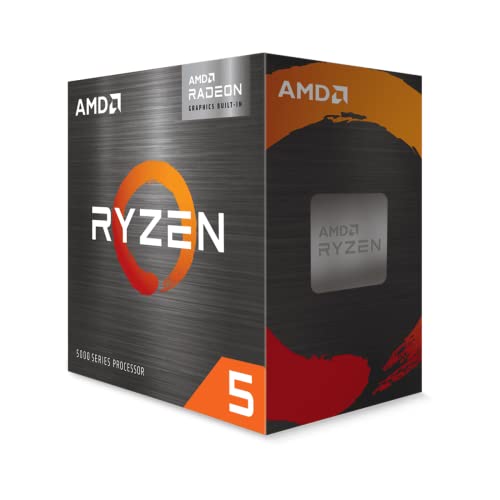
A 12GB RTX 3060 is the sweet spot for any of the three runners. The Zotac Twin Edge variant is the cheapest used pick; both deliver the same VRAM and bandwidth. Pair with a Ryzen 5 5600G for budget builds — its 6 cores handle the host-side workload without bottlenecking the GPU — or a Ryzen 7 5800X for heavier multi-tasking. Add a Crucial BX500 1TB SATA SSD for the model cache; modern 12B-class models are 7–9 GB each, so 1 TB holds a deep working library.
When NOT to use each one
- Skip llama.cpp directly if you want a chat UI or one-line model management.
- Skip Ollama if you need very fine sampling control or you want to load random GGUFs without writing a modelfile.
- Skip LM Studio if you want a daemon-style API by default, or you are running headless on a server.
Verdict matrix
Default to Ollama. The one-line install, the OpenAI-compatible API, and the curated model registry cover the vast majority of single-user workflows. Editor extensions (Continue, Codeium) plug into it directly.
Upgrade to llama.cpp directly when you script, run headless, or need flag-level control. The server binary covers most API-driven use cases without giving up control.
Use LM Studio when you want a polished local-chat UI and you do not need an always-on API. Excellent for non-terminal users.
Bottom line
For a 12GB RTX 3060 in 2026, Ollama is the default winner. It is fast, easy, and integrates with everything via its OpenAI-compatible API. LM Studio wins on UI for desktop chat; llama.cpp wins on flexibility and headless server use. Underneath, they are the same engine — the bottleneck is the card's 360 GB/s memory bandwidth, not the runner. Pair your card with a Ryzen 5 5600G, 32 GB DDR4-3200, and a Crucial BX500 1TB SSD and you have a complete budget local-LLM platform that handles 8B and 12–14B class models comfortably. The Zotac Twin Edge 12GB used at $200–$280 remains the cheapest credible local-LLM card on the market.
Citations and sources
- llama.cpp GitHub repository — upstream engine that all three runners are built on; reference for backends, flags, and quant formats.
- Ollama official site — official documentation on the model registry, daemon, and OpenAI-compatible API.
- TechPowerUp — GeForce RTX 3060 — VRAM, bandwidth, and TGP figures used in the performance ceiling discussion.
This piece is editorial synthesis based on publicly available information. No independent first-party benchmarking is reported.