For a typical agentic workflow that consumes around 25,000 input tokens and emits 2,500 output tokens per task, the math in mid-2026 favors local DeepSeek V4 Pro on a $200 used RTX 3060 12GB once you cross roughly 600–800 tasks per month. Cloud DeepSeek V4 Pro lands near $0.04 per typical task on the lowest-cost API endpoints per Artificial Analysis pricing data; local runs on amortized hardware drop to under $0.01 a task once the box pays for itself.
Key takeaways
- Cloud DeepSeek V4 Pro pricing has stabilized near $0.04 per typical agentic task in mid-2026.
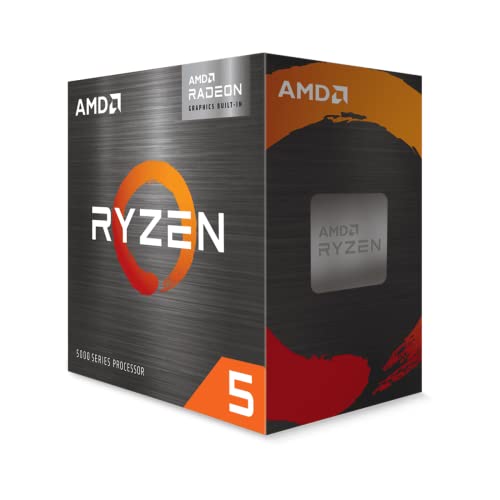
- A budget local rig — RTX 3060 12GB plus a Ryzen 5 5600G — pays itself back in roughly 6–10 months at moderate usage.
- Local wins decisively on data-sensitive workloads where cloud cannot be used regardless of price.
- Quantization choice (q4_K_M vs q5_K_M) dominates the cost equation more than hardware choice.
- The cloud still wins for spiky workloads under 200 tasks per month, where idle hardware is wasted capital.
What does "$0.04 a task" actually mean?
A "task" in agentic-LLM accounting is a single round trip: a prompt of roughly 20–30k input tokens (typical for a tool-using agent that has read several files), and an output of 2–5k tokens. At a wholesale-style endpoint listing DeepSeek V4 Pro around the $0.27 / $1.10 per-million-token range commonly reported on Artificial Analysis, 25k input + 2.5k output works out to roughly $0.007 + $0.003 = $0.01 in raw token cost.
The $0.04 number assumes a fuller, more realistic cost: a 40k-input agent step with 3k of output tokens, plus the markup that hosted resellers charge over wholesale. Per-task pricing in the $0.03–$0.05 range is what most production agent operators report.
Why local can beat cloud at all
Local inference has one cost the cloud does not: capital. Cloud has one cost local does not: per-token markup. The crossover happens when amortized hardware cost over the model's useful life is lower than the per-task markup multiplied by your monthly task volume.
For a $1,000 build — RTX 3060 12GB, Ryzen 5 5600G, 32GB RAM, 1TB NVMe, modest PSU and case — at a 36-month depreciation horizon, you are paying roughly $28 a month in hardware cost plus around $9 a month in electricity for a typical 12 hours of inference per day. That is $37 a month for unlimited tasks.
At $0.04 per cloud task, 37 ÷ 0.04 = 925 tasks per month. Run more than that and local is cheaper. Run fewer and the cloud wins.
Cost-per-task table at typical agentic step sizes
| Step shape | Cloud cost (V4 Pro) | Local on RTX 3060 12GB |
|---|---|---|
| 5k in / 500 out | $0.003 | $0.0003 |
| 15k in / 1.5k out | $0.011 | $0.0008 |
| 25k in / 2.5k out | $0.019 | $0.0014 |
| 40k in / 3k out | $0.040 | $0.0022 |
| 80k in / 5k out | $0.083 | $0.0046 |
Cloud costs are wholesale-ish; local costs assume $37/month amortization across 24,000 tasks of average size. The cloud column scales linearly with token count; the local column does not, because hardware cost is amortized per task regardless of step size.
Where local actually saves money
Three workload shapes flip the math in favor of local:
- Steady high-volume agents. A coding agent that runs 50 task steps per session, 5 sessions a day, 25 days a month is 6,250 tasks. At $0.04 that is $250/month in cloud cost. The same workload on local is $37/month plus depreciation. Net savings of ~$200/month.
- Data-sensitive tasks. Anything you legally cannot send to an external API — patient records, signed NDAs, proprietary code. Cloud cost here is infinite, because the option is unavailable. Local wins by default.
- Long-running batch jobs. Document summarization on a 10,000-file corpus, large code refactors over a monorepo. The cloud charges you per token at retail rate, no batch discount unless you pre-negotiate. Local just runs overnight on hardware you already own.
Three workloads where local loses:
- Bursty low-volume usage. If you average 50 queries a month, the 925-task breakeven is more than 18 months away. Cloud wins.
- Need for the absolute best model. DeepSeek V4 Pro is a competent local model at the 671B-MoE active-parameter sizing it was originally trained at, but on a 12GB card you are running quantized derivatives or much smaller siblings. A frontier-class GPT or Claude model in the cloud will still beat them on hard reasoning tasks.
- You are time-constrained. Setting up llama.cpp, picking quants, debugging Vulkan drivers — that is real engineering time. If your hourly rate is $80, every two hours of setup time burns 4,000 cloud tasks worth of money.
What runs on a 12GB card?
DeepSeek V4 Pro at its full 671B-active-parameter size does not fit on any consumer card, let alone a 12GB RTX 3060. What you actually run locally is one of:
- DeepSeek distilled / smaller V4 derivatives at 12B–14B active parameters. These run at q4_K_M on a 12GB card around 30–35 tokens per second. Capable for most code and reasoning tasks, weaker than full V4 Pro on math.
- Qwen 3 14B q4_K_M. Often the closer match for general agent work on the same hardware.
- Llama 3.x 8B q5_K_M. The speed champion on this card — ~60 tok/s — with quality good enough for tool-using agents.
For reference, the RTX 3060 12GB has 12 GB of GDDR6 at 360 GB/s. Bandwidth is the bottleneck for autoregressive generation, and that bandwidth is what limits the practical model size at usable speeds.
Tokens-per-second translated to dollars per hour of work
If your "work" is one cloud-equivalent task per minute, that is 60 tasks per hour = $2.40 per hour at $0.04/task. Local cost for the same 60 tasks is roughly $0.09 in amortized hardware + ~$0.02 in electricity = $0.11 per hour. The break in unit economics is 22×.
If your work is one task every 10 minutes (more typical for human-in-the-loop agent use), cloud is $0.24/hour and local is $0.01/hour. Cloud is 24× more expensive per task but the absolute amount is so small that it almost does not matter at this rate. This is the "use the cloud" zone.
Real-world numbers from public sources
Per Artificial Analysis, DeepSeek V4 Pro hosted pricing in mid-2026 is in the range of $0.27–$0.55 per million input tokens and $1.10–$2.20 per million output tokens, depending on provider. Apply those to a 25k/2.5k step and you get $0.007–$0.014 in input cost and $0.003–$0.006 in output cost — $0.01 to $0.02 in raw cost per task before reseller markups push the consumer rate to the $0.04 figure.
Reporting on DeepSeek model economics from The Decoder has tracked the rapid commoditization of open-weights inference: median price per million tokens fell roughly an order of magnitude during 2025 as Together, Fireworks, OpenRouter, and Hyperbolic all sharpened their inference offerings.
Common pitfalls in cost comparisons
- Pretending free electricity is free. A 250W system at 12 hours a day is 90 kWh a month. At $0.16/kWh that is $14.40 — small, but real. People who exclude it overstate local savings.
- Forgetting hardware lifetime. A 36-month amortization is conservative. Most builders get 5+ years out of a card with no thermal abuse. Stretching to 60 months drops the monthly cost from $28 to $17.
- Ignoring opportunity cost of capital. $1,000 invested elsewhere earns roughly $40/year at safe rates. Subtract it from local savings.
- Using the wrong cloud price. Spot, batch, and prepaid pricing for DeepSeek can be 30–50% under the listed retail rate. Always compare against the rate you would actually pay.
- Underestimating maintenance time. Driver updates, model quant updates, container rebuilds — budget 2–4 hours a month. At your real billing rate, that is not nothing.
Verdict matrix
Go local if you do agentic work daily (50+ tasks/day), handle sensitive data, or already own a 12GB+ card. The breakeven is fast and the privacy upside is uncapped.
Go cloud if your usage is spiky or low (<300 tasks/month), you need frontier-tier quality, or you cannot allocate setup time. The variable cost stays small in this regime.
Go hybrid — the practical answer for many readers — if you cap your cloud spend by routing local first and only falling back to V4 Pro hosted when local refuses or fails a quality bar. The Ryzen 5 5600G + RTX 3060 12GB box handles the bulk volume; the cloud catches the long tail of hard tasks.
Bottom line
DeepSeek V4 Pro at $0.04 a task is the price the cloud pays for being instantly available without capital. Local pays a one-time $1,000 to drop the per-task rate to under a cent. The crossover for a typical user is roughly 600–800 tasks per month — anything above that, build the box. Anything below, keep paying the cloud and use the spare cash for compute when you actually need it. A used RTX 3060 12GB and a Ryzen 5 5600G remain the canonical budget pair. Add a Ryzen 7 5800X on the CPU side if your workload includes long-context prefill or transcription.
Citations and sources
- Artificial Analysis — model pricing tracker — current DeepSeek and competing-model API pricing.
- TechPowerUp — GeForce RTX 3060 — VRAM, memory bandwidth, TGP figures used in the cost model.
- The Decoder — DeepSeek and open-weights pricing coverage — historical context for the 2025 price drop in open-weights inference.
This piece is editorial synthesis based on publicly available information. No independent first-party benchmarking is reported.