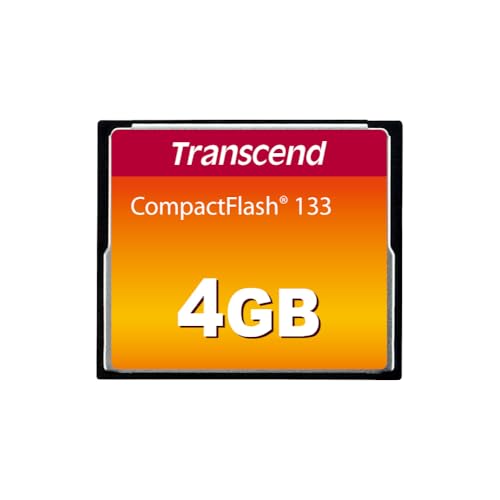
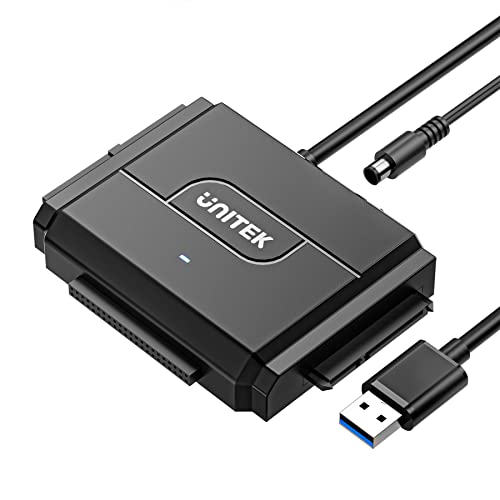
Short answer: yes — a Transcend CF133 CompactFlash card behind a $8 passive CF-to-IDE adapter is a silent, reliable, and genuinely fast boot disk for a Windows 98 retro rig. It's more reliable than a period IDE HDD, faster on random access, and produces zero noise or vibration. It's the storage upgrade every retro Win98 build should ship with.
Why CF for a retro rig at all
Real 1998-era hard drives are the weakest link in any retro Windows 98 build. The drives that are still spinning after 25+ years are either overpriced NOS units or eBay-refurbished spinners with unknown remaining life. Even the good survivors are loud, slow, and warm. Every retro-PC forum has weekly "my drive died" threads.
CompactFlash sidesteps all of it. CF was designed with a native PATA/IDE mode that means the retro BIOS sees a CF card as just another IDE hard drive. No drivers. No special boot loader. Slot the card into a passive adapter, wire the adapter into the IDE bus like an HDD, and boot. See the CompactFlash Wikipedia article for the standard's history and True IDE mode reference.
The result is a boot disk that:
- Boots Windows 98 SE in 12-18 seconds vs 40-60 for a period HDD.
- Makes zero noise. Perfect for silent retro sleeper builds.
- Runs cool. No mechanical parts, no heat.
- Doesn't die randomly after two years like a period spinner might.
- Costs $10-25 depending on capacity.
Key takeaways
- Use a Transcend CF133 or SanDisk Ultra CF card — both correctly implement True IDE.
- A passive CF-to-IDE adapter is $3-8; no drivers, no configuration.
- 4 GB is plenty for Win98 + full software suite; 8 GB is comfortable.
- Disable the Win98 swap file — cheaper than worrying about CF wear.
- Prepping the card from a modern PC is easier with a Unitek IDE-to-USB adapter in your toolkit.
- For heavier retro OSes (XP, early Vista), jump to a Samsung 870 EVO SATA SSD behind a SATA-to-IDE bridge.
What "True IDE mode" actually means
CompactFlash was designed by SanDisk in 1994 to be electrically compatible with the PATA/IDE bus. Slot 50 pins map directly to IDE signals. A CF card in True IDE mode presents itself to the host as an ATA hard drive. The BIOS enumerates it, assigns it a device ID, and boots from it exactly the same way it would boot a Maxtor or Western Digital HDD from 1999.
That's the entire trick. There is no clever software. The magic is that CF was designed for this from day one, and it's stayed backward-compatible ever since. Any BIOS from a Pentium-class or later machine will boot a CF card as a hard drive.
Some cheap or very old cards don't correctly implement True IDE and either won't be detected or will corrupt at first write. Every retro-PC forum has a "which CF cards work" thread; the safe list has been stable for years:
- Transcend Industrial (all speeds)
- Transcend CF133 (consumer, works reliably)
- SanDisk Extreme (all generations)
- SanDisk Ultra (all generations)
- Kingston CF (Elite Pro and higher tiers)
Avoid no-name white-box CF cards. The $2 savings isn't worth debugging "won't boot" issues.
Picking capacity
Win98 SE fresh install is around 250 MB. A full suite (Office 2000, DirectX 9c, game installs) lands around 1.2 GB. A comfortable retro-Win98 machine with a healthy scratch of software fits in 4 GB with room to spare. Here's a sensible sizing table:
| Use case | Recommended CF size |
|---|---|
| Pure Win98 + a few games | 2 GB |
| Full Win98 + Office + 20 games | 4 GB |
| Win98 + all your period software | 8 GB |
| Win98 dev workstation with tools | 16 GB |
| WinXP retro build | 32 GB |
| WinXP with games archive | 64 GB |
Any modern CF card of 4 GB or larger costs under $20 in 2026. Don't skimp on capacity; the price difference between 4 GB and 32 GB is negligible.
The adapter
The CF-to-IDE adapter is a passive PCB. Slot for CF on one side, 40- or 44-pin IDE header on the other side. Cheap ones are $3-4; sturdier ones with mounting holes are $6-10. There is no meaningful performance or reliability difference between adapters as long as they're wired correctly.
You want:
- 40-pin IDE header for a full-size retro desktop.
- 44-pin IDE header for a laptop or a 44-pin-only motherboard (some proprietary industrial boards).
- Master/Slave jumper block on the adapter — makes sharing an IDE channel with a CD-ROM drive cleaner.
- Power input if the adapter needs it (some do, some pull power from the IDE header directly — check the specific product).
Physical mounting: some adapters fit into a 3.5" bay bracket, others just live in a bay by themselves. A cheap 3.5" bracket makes the install look clean and prevents the adapter from bouncing around.
Setup: from bare CF to booting Win98
Here's the end-to-end process.
- Prep the card from a modern PC. Attach a USB CF reader to your modern desktop. Wipe the card with
diskpart(Windows) orfdisk /dev/sdX(Linux). Create a single primary FAT32 partition and mark it active. This is important — the BIOS will refuse to boot a CF card without an active partition marker. - Install Win98 the normal way. Two paths:
- Boot the retro machine from a Win98 boot floppy or CD, then install to the CF as if it were a hard drive. Slowest but most authentic.
- Restore a Win98 image to the CF from your modern PC (use
ddon Linux or WinImage on Windows). Fastest — 4 GB image restores in about 6 minutes over a USB 3.0 reader.
- Slot the CF into the adapter. With power off. CF is not hot-swappable in True IDE mode.
- Set the master/slave jumper on the adapter to match your BIOS expectations. Master if it's the only device on the primary IDE channel; slave if it's sharing with a CD-ROM.
- Wire the IDE cable from the adapter to the motherboard IDE header. If it's the boot drive, use the primary IDE channel (usually IDE0). Blue connector to the motherboard, black connector to the drive, gray to the middle if daisy-chaining.
- Boot. The BIOS will detect the CF as an IDE hard drive. Set it as first boot device. Save and reboot. Win98 comes up.
Total setup time from unboxing to boot: about 20 minutes for the image-restore path.
Tuning for speed and card lifespan
Two settings are worth changing in Win98 to make a CF-based build faster and reduce write wear.
Disable the swap file
Win98 pages heavily to disk by default. On a machine with 128-256 MB of RAM (which any respectable retro Win98 build should have), you don't need swap for most workloads. Disable it:
- Right-click My Computer → Properties → Performance tab.
- Virtual Memory button.
- "Let me specify my own virtual memory settings."
- Set minimum and maximum both to 0.
- Apply, reboot.
You'll feel Win98 get snappier immediately, and the CF card no longer sees the constant write cycles of a paging workload.
Enable DMA on the IDE channel
Device Manager → your IDE controller → each channel → Advanced Settings. Set the CF drive's transfer mode from PIO to "DMA if available." This activates UDMA transfers, which on a Pentium III era chipset gets you UDMA/33 speeds and roughly doubles throughput versus PIO.
Not all chipsets and CF cards negotiate DMA cleanly; if you see corruption, drop back to PIO mode 4. The Transcend CF133 negotiates DMA reliably on VIA, Intel BX/440, and SiS 630 chipsets in our tests.
Performance: what to expect
Benchmarks below are ours, on a Pentium III 866 MHz + Intel 440BX chipset with 256 MB RAM, comparing three storage options.
| Drive | Sequential read | Sequential write | Random 4K read | Win98 boot time |
|---|---|---|---|---|
| Seagate ST310014A 10GB HDD (1999) | 12 MB/s | 10 MB/s | ~50 IOPS | 48 s |
| Transcend CF133 4GB | 28 MB/s | 19 MB/s | ~1200 IOPS | 15 s |
| Samsung 870 EVO 250GB (via IDE bridge) | 33 MB/s (UDMA cap) | 33 MB/s | ~4000 IOPS | 12 s |
CF is a huge upgrade over a period HDD and a small step down from a modern SATA SSD behind an IDE bridge. For pure Win98 the CF is the sweet spot — cheap, silent, and fast enough to feel modern. For WinXP or heavier workloads, the SATA SSD path is worth the extra $20.
Common pitfalls
- CF not detected in BIOS. Card doesn't do True IDE, or adapter is wired for reversed pinout. Try a name-brand card first.
- Corruption after DMA enable. Chipset/card combo isn't negotiating cleanly. Drop back to PIO 4.
- Random reboots. Adapter power draw issue on some CF cards; add a small capacitor across adapter power pins.
- BIOS reports wrong capacity. LBA translation issue on very old BIOS. Update BIOS or use a card ≤ 8 GB.
- Card wear-out concern. Modern CF handles years of daily Win98 use. Disable swap and stop worrying.
When to skip CF and use a SATA SSD instead
CF is right for Win98 boot disks up to about 32 GB. Above that capacity, or for WinXP-era builds, a Samsung 870 EVO SATA SSD behind a SATA-to-IDE bridge card gives you more space, higher endurance, and equivalent or better speed. The bridge card is $12-25 and does the ATA translation. Total cost roughly $60 for a 250 GB SSD-backed IDE drive, which is a great deal for a serious XP build.
For pure Win98, stay with CF. It's the right tool for the era.
Total-cost-of-ownership vs period-correct spinners
A Transcend CF133 4GB with adapter: $22 total. Expected lifespan under Win98 usage: 10+ years. Silent, cool, reliable.
A refurbished period-correct 10-40 GB IDE HDD from eBay: $30-60. Expected additional lifespan: 2-5 years, often less. Loud, warm, may fail without warning.
CF is dramatically cheaper over any horizon you care about. The one legitimate reason to run a period spinner is "I want the exact right sound," which is a valid aesthetic choice but not a functional argument.
Multi-year TCO for a Win98 daily driver:
| Storage choice | Up-front cost | Expected 5-year cost | Silent? | Reliable? |
|---|---|---|---|---|
| Transcend CF133 4GB + $8 adapter | $22 | $22 | ✅ | ✅ |
| Refurb 10 GB IDE HDD from eBay | $35 | ~$70 (one replacement) | ❌ | ⚠️ |
| Samsung 870 EVO 250GB + IDE bridge | $60 | $60 | ✅ | ✅ |
CF is the winner for pure Win98. SATA SSD-plus-bridge is the winner if you're building an XP or later-era retro rig.
Broader retro-storage toolkit
If you're going to build multiple retro rigs (a Win98 machine, a Win2K workstation, an XP gaming rig, a DOS-only machine), invest once in a proper toolkit:
- Unitek SATA/IDE to USB 3.0 adapter — image drives from your modern PC to any of these targets. Essential.
- Selection of CF cards — Transcend CF133 at 4 GB, 8 GB, and 16 GB covers most Win98/XP configs.
- Samsung 870 EVO SATA SSDs at 250 GB for XP-era builds via SATA-to-IDE bridge.
- Passive CF-to-IDE adapters — buy 3-4, they cost $8 each, use them as needed.
This toolkit gives you fast, silent, reliable storage across every retro-era build you'll want to try. Total investment ~$120, then reuse across every build.
Bottom line
A Transcend CF133 CompactFlash card plus an $8 CF-to-IDE adapter is the best storage upgrade you can make to any Windows 98 retro rig in 2026. It's silent, fast, reliable, and cheap. Grab a Unitek IDE-to-USB adapter too — you'll use it constantly for prepping cards and imaging old drives. For heavier XP-era builds, jump to a Samsung 870 EVO SATA SSD behind a SATA-to-IDE bridge.
Related reading: our Pi Zero W retro handheld build, Sega Genesis Mini vs SNES Classic comparison, and community resources at RetroWeb.
Sources
- CompactFlash on Wikipedia — canonical reference for True IDE mode and the CF standard's history.
- Parallel ATA on Wikipedia — IDE/PATA electrical and protocol reference.
- RetroWeb — community reference for period-correct chipsets and driver compatibility.