A community reverse-engineering write-up highlighted by Adafruit's blog on 2026-06-21 pulled the plastic shell off Creative's Katana V2X soundbar and revealed something more interesting than a random consumer audio product: the same DSP-and-codec architecture family that shipped inside the Sound BlasterX G6, running closed firmware on a Cortex-M-class microcontroller, with debug pads still exposed on the main board. The teardown documented the SoC package, the I2S bus routing between the DSP and the class-D amp stage, and a small serial header that talked to a stock ARM debug probe at 3.3 V. It confirms what long-time Creative watchers already suspected — Katana is a Sound Blaster in a bar-shaped enclosure.
In brief — 2026-06-21 · Adafruit highlights a Creative Katana V2X soundbar teardown that traces the internal DSP back to Creative's Sound Blaster lineage, connects the audio processing chain to the same family used in the Sound BlasterX G6, and exposes debug pads that hint at what a determined firmware hacker could pry open next.
What happened: the teardown, in plain terms
The write-up that Adafruit spotlighted is the sort of methodical, photograph-per-step teardown the DIY audio community lives on. You get shots of every board face, chip package IDs decoded from the laser marks, a bus diagram sketched from continuity checks, and a small table of the exposed test points with measured voltages. The reverse-engineer identified a Creative-branded DSP handling the surround virtualization, a separate stereo DAC pair feeding the tweeter and mid channels, and a class-D amp stage running around 60 W per channel peak into the four internal drivers.
The interesting part is not the amp. Class-D at that wattage is table stakes in 2026 — any $30 Bluetooth speaker has one. The interesting part is what sits between the USB input and that amp: a Creative DSP core running proprietary firmware doing Scout Mode-style directional emphasis, Crystalizer high-frequency restoration, and a virtual 7.1 downmix. That is the same feature vocabulary Creative has shipped since the Sound Blaster Live! era in 1998, updated for modern gaming use cases and stamped into a soundbar chassis.
The teardown also flagged the debug pads. Four unpopulated through-holes on the corner of the main board carried what looked like a serial-wire debug interface — a clock line, a data line, ground, and a reset. Nothing was written, nothing was dumped, and the write-up was careful not to describe extraction of any signed firmware. But the pads exist, which is the point. A $250 consumer soundbar is not usually a hackable target. This one might be.
Why it matters: Creative's DSP lineage and the Sound BlasterX G6 connection
If you have never owned a Creative product, this teardown reads as trivia. If you have, it reads as a family tree.
The Sound BlasterX G6 — Creative's external gaming DAC/headphone-amp for PC, PS5, and Switch — uses the same category of DSP running the same category of features. Scout Mode, which boosts the frequency bands where footsteps and reloads live, is a G6 flagship feature. The Katana V2X soundbar exposes essentially the same tuning surface, just aimed at a couch instead of a headset. The reverse-engineer's contribution is showing, at the silicon level, that Creative is deliberately reusing DSP architecture across categories.
You can buy the Sound BlasterX G6 today for around $150. It ships 32-bit / 384 kHz playback, a 130 dB DNR DAC, and a dedicated headphone amp with impedance modes for cans up to 600 ohms. That is objectively a lot of hardware for the money — the SNR figure alone puts it ahead of most integrated motherboard audio by a factor of 10 in noise floor. And now we know why the pricing works: Creative amortizes the DSP across an entire product family. The Katana teardown is proof that family is real.
For context on how deep that family goes, the Sound Blaster brand has shipped in one form or another since 1989. The first Sound Blaster was a 22 kHz mono card with an FM synth chip and a joystick port. By 1994 the AWE32 was doing 32-voice wavetable synthesis on an EMU8000. By 1998 the Live! and its EMU10K1 defined PC gaming audio for a generation. Every major Creative product since traces back to that DSP lineage.
The DSP lineage deep-dive: EMU10K1 to Katana
To understand why the Katana teardown matters, walk the family tree.
- 1998, EMU10K1 (Sound Blaster Live!) — The first Creative DSP that mattered for gaming. 32 hardware audio channels, 8-point interpolation, EAX 1.0/2.0 environmental effects. This is the chip that shipped in tens of millions of gaming PCs and set consumer expectations for "3D audio" for the next decade. Every Windows XP-era shooter with reverb-through-a-door effects was leaning on this silicon.
- 2005, X-Fi (CA20K1) — The successor. 51 million transistors, more than a Pentium II. Onboard SRAM for large sample sets, native 24-bit / 96 kHz throughout the pipeline, and Crystalizer as a marketing headline. The X-Fi was the last consumer sound card that mattered as a product category before integrated motherboard audio caught up.
- 2013, CA0132 (Sound Core3D) — The pivot. Instead of a giant PCIe card, Creative shrank the DSP into a package small enough to embed in motherboards, headsets, and eventually external USB devices. Scout Mode debuted here. The CA0132 is the direct ancestor of what shipped in the G6.
- 2018, Sound BlasterX G6 — External USB DAC/amp. 130 dB DNR, headphone amp with 600-ohm-capable output stage, discrete opamp architecture. Everything Creative learned in 30 years of DSP miniaturization, packaged for people who wanted better audio than motherboard chipsets but did not want to install a card.
- 2024, Katana V2X — Same DSP category, different chassis. The reverse-engineer's teardown is the receipt: Creative is running its consumer DSP inside a soundbar aimed at TV and console gaming, with USB-C input for PC use. The DSP running Scout Mode on your headphones and the DSP running Scout Mode on your soundbar are relatives.
This lineage matters because it explains why Creative products sound the way they sound. There is a house tuning — a specific mid-forward, bass-controlled, upper-mid emphasis that surfaces in Crystalizer, in Scout Mode, in the Katana's virtual surround. Once you have heard it in the G6, you hear it in the Katana. The reverse-engineer showed us the silicon reason.
State of PC gaming audio in 2026
Zoom out. Where does PC gaming audio actually live right now?
External USB DACs are the default. The internal sound card is dead. Motherboards ship with Realtek ALC-series codecs that are fine for spreadsheets and terrible for anything with dynamic range. Anyone who cares about audio in 2026 owns an external USB DAC — the Sound BlasterX G6 at $150, a FiiO K7 at $200, a Schiit Modi + Magni stack at $220, or a JDS Labs Element IV at $500. The USB-C connection has killed every legacy interconnect except optical toslink, which persists mostly because game consoles still ship it.
Dolby Atmos is table stakes for premium gaming audio. Windows 11 ships Spatial Sound with Dolby Atmos for Headphones as a $15 store add-on. Most premium gaming headsets — SteelSeries Arctis Nova Pro, Audeze Maxwell, HyperX Cloud III — ship with Atmos support or a Sonar-style software pipeline that competes with it. Creative's Super X-Fi, which does head-related-transfer-function personalization via ear photos, is a credible alternative on the G6 and adjacent products.
Streaming has bent the market. The rise of Twitch and YouTube gaming means microphone hardware sits on the same desk as headphones now. A HyperX QuadCast 2 at $150 or a Blue Yeti at $100 sits on almost every serious streaming desk. That has pulled interface prices down and pushed feature convergence — every mid-range DAC now advertises a mic-monitoring mode, a chat/game mix, and a low-latency USB path for streaming.
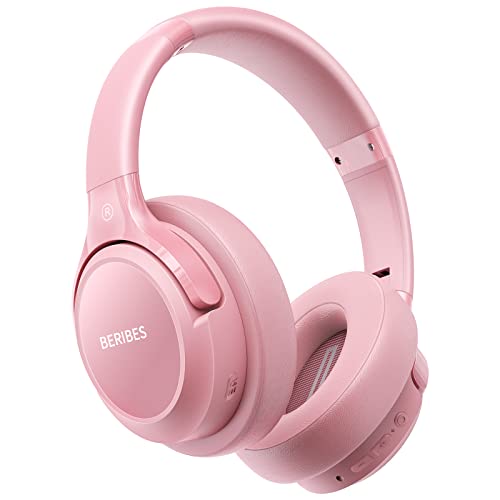
Bluetooth is finally usable for gaming. Low-latency codecs — aptX Adaptive, LC3plus — brought Bluetooth latency below 40 ms end-to-end, which is playable for anything short of competitive shooters. Wireless headsets from Logitech, Sony, and SteelSeries all ship with a 2.4 GHz USB dongle for the low-latency path and Bluetooth for the "I'm listening to a podcast on my phone" path. Even budget picks like BERIBES Bluetooth Over-Ear Headphones at around $30 will get you 40-hour battery life and passable audio for casual use.
Audiophile and gaming markets have merged. The DAC-amp combo is now the standard purchase. Buyers no longer accept a $60 gaming headset with a proprietary USB dongle as "gaming audio." They buy a $150 pair of studio monitors or a $300 pair of open-back headphones and drive them from an external DAC/amp. The G6 exists in this market — it is fundamentally a gaming-flavored version of a category audiophiles have owned for a decade.
Against that backdrop, Creative reusing its DSP across a soundbar makes commercial sense. The company sells to gamers, to home-theater buyers, to people who want a personalized HRTF, and to console owners who want an optical toslink to work. One DSP family, four product categories.
What this means for DIY audio hackers
The Katana teardown lands at a moment when consumer audio devices are increasingly closed, increasingly network-connected, and increasingly firmware-defined. Every Sonos speaker, every HomePod, every JBL Bluetooth speaker with a companion app is running a DSP on top of a proprietary firmware blob. If you cannot see inside that firmware, you cannot fix bugs, you cannot re-tune EQ curves, you cannot repurpose the hardware after the vendor drops support.
Here is what a DIY audio hacker can take from a teardown like this one.
- Debug pads are the crown jewels. Nine times out of ten a consumer audio device exposes a serial-wire debug interface or a UART on unpopulated pads. Photograph them, meter them, label them. A $15 Segger J-Link EDU Mini can talk to most Cortex-M targets. Even if firmware is signed and cannot be flashed, you can often halt the CPU, read register state, and reconstruct the firmware bring-up sequence.
- Chip package IDs are searchable. Every laser-marked package number leads somewhere — a datasheet, a Chinese distributor page, an FCC filing that referenced the part. If the exact number is unfamiliar, strip the last two digits (revision codes) and search again.
- I2S buses are the plumbing. Audio devices route digital audio between chips over I2S — a bit clock, a word clock, and one or more data lines. If you can find the I2S bus with a logic analyzer, you can tap it. You are not reversing firmware, you are reading the audio it produced. That is enough to characterize DSP behavior without ever touching the code.
- Class-D amp stages are commodity. Do not spend teardown time on the amp — it is almost certainly a TI or NXP chip you can look up in five minutes. Spend the time on the DSP and the codec.
- Closed firmware is a product-longevity problem. The DSP running Scout Mode on the Katana today is running signed firmware. When Creative stops shipping updates in six or eight years, that firmware is what you get, forever. If a bug surfaces — a specific input format the DSP mishandles, a memory leak in the Bluetooth stack, a security flaw — you have no path to fix it. Reverse-engineering exists partly as an insurance policy against vendor abandonment.
- Document, do not distribute. The right teardown ethic is what the Adafruit-linked write-up demonstrated: publish the analysis, publish the photographs, publish the pinouts. Do not publish extracted firmware, do not publish tools that defeat signing, and do not publish anything that puts the target vendor in a legal position to attack the community.
The bigger lesson: a company like Creative amortizing a DSP across a G6, a Katana, and probably three more future SKUs means when you learn one, you learn the family. Community knowledge compounds.
Bottom line: who should care and why
If you are a PC gamer with a stock motherboard audio chain, care because a $150 Sound BlasterX G6 will improve your setup more than a $400 headset will. The teardown is a reminder that Creative's DSP is real hardware doing real work, not marketing polish over a Realtek chip.
If you are a streamer, care because your audio chain matters to viewers more than your video. Pair a G6 with a QuadCast 2 or a Blue Yeti and you have a $250-$300 audio front-end that will outperform most $500 all-in-one solutions.
If you are a couch gamer eyeing a soundbar, the teardown does not tell you to buy the Katana V2X specifically. It tells you Creative's soundbar is a Sound Blaster in a bar chassis, which is either a feature or a bug depending on how you feel about Scout Mode replacing your dialogue clarity.
If you are a DIY audio hacker, care because this is exactly the kind of write-up that expands the community's shared knowledge base. Every teardown of a consumer DSP product makes the next one faster.
If you are Creative, care because your product lineage is legible now. A community reverse-engineer showed the world that Katana is a G6 in a soundbar. That is a strong or weak position depending on whether the G6 is a product you are proud of. As of 2026 the G6 still sells at MSRP, six years after launch, which suggests the answer is "proud."
Related coverage
- Best budget gaming audio setups for 2026
- Which GPU for which local LLM — the 2026 VRAM guide
- GameSir G7 SE vs DualSense — the PC controller call in 2026
Sources
- Adafruit — https://blog.adafruit.com/ (teardown highlight, 2026-06-21)
- Creative — Sound BlasterX G6 product page
- Wikipedia — Sound Blaster (product lineage, DSP history)