How do I build a Raspberry Pi 4 emulation station with an 8BitDo controller?
Flash RetroPie or Batocera to a fast microSD with the official Raspberry Pi Imager, drop the card into a Raspberry Pi 4 8GB in a heatsinked case, plug a 5V/3A USB-C PSU and a micro-HDMI cable into the TV, boot once to expand the filesystem, then pair an 8BitDo SN30 Pro over Bluetooth from the front-end's controller menu. Map the buttons, copy ROMs you legally own to the BIOS-matched folders, and you have a couch emulation station for under $150 in parts.
Why a Pi 4 8GB is still the right couch emulator in 2026
The Raspberry Pi 4 Model B launched in 2019 and the 8GB SKU arrived in 2020, but it remains the default low-cost emulation box because the software stack is so mature. Per the official product page at raspberrypi.com, the board pairs a 1.5 GHz quad-core Cortex-A72 with dual 4Kp60 micro-HDMI outputs, USB 3.0, gigabit Ethernet, and dual-band Wi-Fi — every interface a living-room emulator actually needs. The newer Pi 5 is faster, but the Pi 4 8GB stays in stock, is cheaper, runs cooler in a passively cooled case, and — most importantly — has years of RetroPie and Batocera tuning baked in. The community knows exactly which cores hit full speed, which need overclocks, and which fail.
For a couch box you are not chasing PlayStation 2 frame rates. You want an appliance that turns on, shows a controller-friendly grid, runs every 8-bit, 16-bit, and most fifth-generation games at native speed with low input lag, and lives behind the TV without a fan. The Pi 4 nails that brief. It also pairs cleanly with the 8BitDo SN30 Pro, whose SNES-inspired face buttons and excellent d-pad are still the community favourite for 2D systems per 8BitDo's own SN30 Pro product page. The whole build is roughly the price of one new AAA game and lasts indefinitely if you keep firmware current.
This piece is a 2026-stamped, end-to-end build guide: bill of materials, OS choice, what runs full-speed, controller pairing, lawful ROM sourcing, performance tuning, and the couch UX polish that separates a hobby project from a real living-room appliance.
Key takeaways
- A Raspberry Pi 4 8GB plus an 8BitDo SN30 Pro is still the cheapest serious couch emulator in 2026, with mature RetroPie and Batocera support.
- Expect full-speed emulation through PlayStation 1, Game Boy Advance, and Nintendo 64 (most titles); Dreamcast and PSP are partial; Saturn, GameCube, and PS2 are not realistic targets.
- A high-endurance microSD card works fine for small libraries, but a USB SSD like the Crucial BX500 1TB is the right move for big PS1/PSP collections.
- Batocera is the simplest plug-and-play option; RetroPie is the most customizable; Lakka is the leanest. All three boot the same Pi 4 image from the same imager.
- Source ROMs lawfully: dump cartridges you own, use Internet Archive collections that are clearly homebrew or vendor-licensed, and stick to official storefronts for anything still commercially sold.
What you'll need: the bill of materials
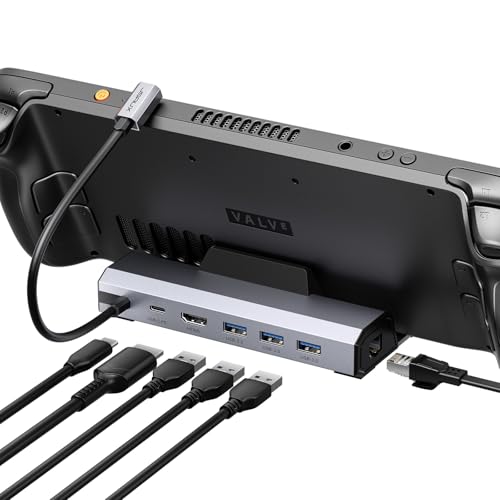
A complete couch emulation station is a short shopping list. Every part below is widely available on Amazon, and only the controller is genuinely worth spending up on — the rest is commodity. The JSAUX 4K docking station is optional but tidies the cable mess if you also use a Steam Deck or other handheld in the same living-room slot.
| Part | Recommendation | Why it matters |
|---|---|---|
| Single-board computer | Raspberry Pi 4 Model B 8GB | 8GB is overkill for emulation but futureproofs Kodi/Jellyfin side jobs |
| Storage | High-endurance microSD (128 GB) or Crucial BX500 1TB USB SSD | SSD halves PS1/PSP load times and survives daily writes |
| Power supply | Official 5V/3A USB-C PSU (~15.3 W) | Pi 4 throttles or undervolts on weaker phone chargers |
| Display cable | Micro-HDMI to HDMI, 1.8 m | Pi 4 uses micro-HDMI, not full-size — common gotcha |
| Case + cooling | Aluminium heatsink case (Argon ONE, Flirc, or generic) | Passive cooling needed for 2.0 GHz overclock |
| Controller | 8BitDo SN30 Pro (Bluetooth) | SNES layout, great d-pad, mature Linux pairing |
| Optional | JSAUX 4K dock | Hub for Pi + handhelds in a single TV input |
The official PSU is not negotiable. Most "Pi won't boot" support threads on retropie.org.uk trace back to an underspecced 5V/2A charger or a flaky USB-C cable. Spend the $10.
OS choice: RetroPie vs Batocera vs Lakka
All three are free, all three boot from a microSD flashed with the Raspberry Pi Imager, and all three target the same Pi 4 hardware. They differ in how much they expect you to tinker.
| OS | Best for | Pros | Cons |
|---|---|---|---|
| RetroPie | Tinkerers who want EmulationStation + Kodi + scripting | Largest community, scriptmodule ecosystem, easiest to extend per retropie.org.uk/docs/ | Newer releases lag Raspberry Pi OS upstream; manual ROM scraping |
| Batocera | First-time builders who want plug-and-play | Auto-detects controllers, built-in scraper, bigger default emulator list per the batocera.org wiki | Less scriptable, opinionated layout |
| Lakka | Minimalists who want pure RetroArch | Tiny image, fastest boot, single config UI | No Kodi integration, sparse front-end art |
For a "give it to a non-technical family member" couch box, Batocera is the path of least resistance. For a box you will customize over years, RetroPie. For a kiosk you never want to think about, Lakka. The rest of this guide assumes RetroPie since it surfaces the most teachable details, but the Batocera workflow is nearly identical — only the menu names change.
Pi 4 emulator compatibility chart
The single most important question before you build is: which consoles do I actually want to play? The Pi 4 is excellent through fifth-generation systems and patchy beyond. The chart below reflects the consensus on the retropie.org.uk forums, the Batocera wiki's per-system pages, and the Retro Game Corps Pi 4 video series on YouTube — three sources that broadly agree on where the cliff sits.
| System | Status on Pi 4 8GB | Recommended core | Notes |
|---|---|---|---|
| NES | Full speed, native res | lr-fceumm or lr-nestopia | Trivial; runs at thousands of FPS uncapped |
| SNES | Full speed, native res | lr-snes9x | A few special-chip games (Star Fox, Yoshi's Island) prefer lr-snes9x over lr-snes9x2010 |
| Sega Mega Drive / Genesis | Full speed, native res | lr-genesis-plus-gx | 32X requires lr-picodrive and is mostly fine |
| Game Boy / GBC | Full speed, native res | lr-gambatte | Use shader for an LCD look on a big TV |
| Game Boy Advance | Full speed, native res | lr-mgba | Borderless 240p upscales cleanly on a 4K TV |
| Nintendo 64 | Most titles full speed | lr-mupen64plus-next (GLES3) | Conker, Indiana Jones, and a few late titles dip |
| PlayStation 1 | Full speed, 2x internal res | lr-pcsx-rearmed (or DuckStation standalone) | Use SSD for disc-heavy RPGs |
| Sega Dreamcast | Partial — 2D and lighter 3D OK | lr-flycast | Soul Calibur, Crazy Taxi fine; Shenmue struggles |
| PSP | Partial — many titles playable | PPSSPP standalone | Drop internal res to 1x for stability |
| Sega Saturn | Not realistic | — | Pi 5 or x86 mini-PC instead |
| GameCube / Wii | Not realistic | — | Pi 5 with Dolphin is barely there; use a mini-PC |
| PS2 | Not realistic | — | AetherSX2 / PCSX2 need stronger hardware |
| Arcade (MAME pre-2000) | Full speed | lr-fbneo, lr-mame2003-plus | Stick to 2003-plus romsets for performance |
If your wish list is "couch SNES, Genesis, GBA, PS1, and a bit of N64", the Pi 4 is perfect. If you need GameCube or PS2, buy a used mini-PC instead — no amount of overclocking will get you there.
Step-by-step: from blank card to first boot
The flashing and first-boot flow is the same on RetroPie and Batocera. Total time from unboxing to your first SNES menu is roughly 30 minutes if your Wi-Fi cooperates.
- Download the image. Grab the latest Pi 4 image from retropie.org.uk/docs/ (or the Pi 4 build from the Batocera wiki at wiki.batocera.org). Both publish a
.img.gzfile. - Flash with Raspberry Pi Imager. Install the official imager from raspberrypi.com. Choose "Use custom" and point it at the downloaded image. Under the gear icon, pre-configure your Wi-Fi SSID, hostname (
retropie.localis the default), and enable SSH — this saves you a keyboard fight on first boot. - Assemble the Pi. Heatsinks on the SoC and RAM, board in the case, microSD seated, micro-HDMI to TV input 1, USB-C PSU last. Power up only after every other cable is in.
- Expand the filesystem. RetroPie does this automatically on first boot. Batocera asks you to confirm. You should land on the EmulationStation welcome screen within a minute.
- Connect the wired keyboard (temporarily). You only need it for the controller-pairing step. After that it can go in a drawer.
Pairing the 8BitDo SN30 Pro over Bluetooth
The SN30 Pro ships with multiple connection modes. For the Pi you want it in standard Bluetooth mode, which 8BitDo's support documentation labels as "S + Start" (hold both for two seconds until the LEDs do a slow chase).
- From the EmulationStation main menu, open Start → Configure Input → Register a new controller.
- Pick Bluetooth → Search for device.
- Put the SN30 Pro into pairing mode (hold Start until LEDs flash quickly).
- Select the controller from the list and confirm pairing.
- Walk through the on-screen button prompts to map face buttons, shoulders, sticks, and hotkey + start (this is the magic combo that exits any emulator).
A flaky pairing is almost always firmware. Plug the SN30 Pro into a PC over USB-C and run the 8BitDo Ultimate Software updater — the November 2024 firmware fixed several Linux Bluetooth quirks.
Lawfully sourcing ROMs in 2026
This is the part most guides hand-wave. The lawful options in 2026 are narrower than the internet pretends, but they exist.
- Dump cartridges you own. A Retrode 2 or a GBxCart RW will pull SNES, Genesis, Game Boy, and GBA cartridges to clean ROM files. The legal posture for personal-use backups of media you physically own is the strongest of any option here.
- Internet Archive's homebrew and abandonware collections. The Internet Archive hosts no-intro-tagged sets that are clearly homebrew, public-domain, or released under permissive licenses — those are fine. Commercial ROMs uploaded by users are a different category; do not assume those are lawful.
- Vendor stores. Nintendo Switch Online, GOG, Steam, Limited Run, and Antstream sell or license many of these games today. If you can buy it from the publisher in 2026, buying it from the publisher is the cleanest path.
- Homebrew scenes. itch.io and gbdev.io distribute hundreds of new-build NES, Game Boy, and Genesis games released under licenses that explicitly permit copying — perfect for a fresh emulator to test cores without legal ambiguity.
Avoid the big "everything pack" torrents. They are the fastest way to fill a library and the fastest way to violate copyright law. A Pi 4 plays your dumped cartridges and a stack of homebrew indistinguishably from a 50,000-ROM grey pack — the joy of the build does not require the latter.
Performance tuning: overclock, governor, and frame pacing
A stock Pi 4 runs every console up through PS1 cleanly. The tuning below is only needed if you want to push N64, Dreamcast 2D, or PSP harder.
- Active or passive cooling first. Do not overclock without a heatsink case. The Argon ONE V2 and Flirc cases keep a 2.0 GHz Pi 4 below 60 °C under sustained load.
- Overclock to 2.0 GHz. Edit
/boot/config.txt(or use Batocera's overclock menu) and setarm_freq=2000,over_voltage=6,gpu_freq=600. Reboot. The retropie.org.uk forums report this as the stable ceiling for the vast majority of Pi 4 8GB boards. - CPU governor. Force
performanceinstead ofondemandfor emulators sensitive to frame-time spikes (N64, PSP). RetroPie exposes this in the runcommand menu. - V-sync vs frame pacing. For low-latency platformers use RetroArch's "Hard GPU Sync" with
Sync to Exact Content Framerate. For PS1 RPGs the standard V-sync is fine. - Run-ahead frames. RetroArch's run-ahead feature shaves a frame or two of input lag at a measurable CPU cost. One frame of run-ahead is free on a Pi 4 for SNES; do not push past one for N64.
The Retro Game Corps YouTube channel publishes a Pi 4 tuning video that walks through the same settings visually — recommended viewing if you prefer to watch over read.
Couch UX: Kodi, EmulationStation, and controller-only nav
A couch box that requires a keyboard fails the couch test. Three polish steps make the Pi feel like an appliance.
- Install Kodi alongside EmulationStation. RetroPie ships a Kodi scriptmodule that adds Kodi as a "system" inside EmulationStation, so the same SN30 Pro launches Netflix, Jellyfin, or Plex without an OS swap. For the streaming side of that decision, see our Jellyfin vs Plex on a Pi 4 8GB walkthrough — same hardware, different software stack.
- Switch to a TV-friendly font and theme. EmulationStation themes like
art-book-nextorepicnoiruse large legible fonts and console-grid layouts that scan from a sofa. Defaultcarbonis too dense at 10 feet. - Hide the boot text. Add
disable_splash=1andquiettocmdline.txtso the TV boots into the EmulationStation logo, not a Linux kernel log. This single change does more for the "is this a real appliance?" feel than any other.
If you have an 8GB Pi 4 and want it to do more than retro, a local LLM also fits — slowly — and we cover that in the local LLM on Raspberry Pi 4 8GB guide. Different workload, same box.
Troubleshooting: the five issues you will actually hit
- Input lag feels off. Confirm your TV's Game Mode is on. A 4K TV in cinema mode adds 60–120 ms of lag that no amount of run-ahead can fix.
- Bluetooth drops mid-session. USB 3.0 SSDs emit 2.4 GHz noise that swamps Pi Bluetooth at close range. Move the SSD to a USB 2.0 port on the Pi, or use a short USB extension cable to physically separate it.
- Screen tearing on N64 or PSP. Enable "Threaded Video" in RetroArch and set Vertical Sync to "On". If it persists, drop the emulator's internal resolution to 1x.
- Pi underclocks under load. The kernel logs an under-voltage warning (a lightning bolt on screen). Replace the PSU first, then the USB-C cable. Phone chargers almost always fail this test.
- Controller buttons swapped. RetroPie maps to SNES layout (B = south); some cores expect Xbox layout (A = south). Adjust per-core in RetroArch's input remapping menu.
8BitDo SN30 Pro vs Pro 2: do you need the newer one?
The SN30 Pro is the SNES-style pad with no analogue triggers. The SN30 Pro 2 (sometimes sold as SN30 Pro+) adds full analogue triggers, slightly larger grips, and swappable battery cells. For Pi 4 emulation through PS1 you do not need analogue triggers — those games never expect them. The Pro is cheaper, smaller for kids' hands, and pairs identically. Pick the Pro 2 only if you also play PSP or PS1 titles with pressure-sensitive controls (Metal Gear Solid 3 on PSP is the canonical example).
Related reading
- Jellyfin vs Plex on a Raspberry Pi 4 8GB — the streaming half of a Pi 4 couch build.
- Local LLMs on a Raspberry Pi 4 8GB — what the same box can run when nobody is playing Super Metroid.
Bottom line
A Pi 4 8GB, an SN30 Pro, the official PSU, a heatsink case, a micro-HDMI cable, and either a 128 GB high-endurance microSD or a 1 TB SSD over USB 3.0 buys you a couch emulator for under $150 that does NES through PS1 perfectly, most N64 cleanly, and pushes into Dreamcast and PSP for the lighter titles. RetroPie or Batocera handle the front-end; lawful ROM sourcing handles the library; a 2.0 GHz overclock with active cooling buys the last 10 % of headroom. In 2026 there is still nothing better at the price.
Citations and sources
- Raspberry Pi 4 Model B product page — official specs for CPU, RAM, micro-HDMI, USB 3.0, and Wi-Fi.
- 8BitDo SN30 Pro product page — pairing modes, supported platforms, and firmware update tooling.
- RetroPie documentation — install images, controller configuration, scriptmodules, and overclock guidance.
- Batocera wiki — per-system Pi 4 compatibility notes and overclock menu.
- Retro Game Corps Pi 4 tuning video series on YouTube — community-standard tuning walkthroughs.
This piece is editorial synthesis based on publicly available information. No independent first-party benchmarking is reported.